How to Tell If a Necklace Is Gold: Expert Testing Guide
Learn how to tell if a necklace is gold with our expert troubleshooting guide. Discover hallmark decoding, acid tests, and density checks.

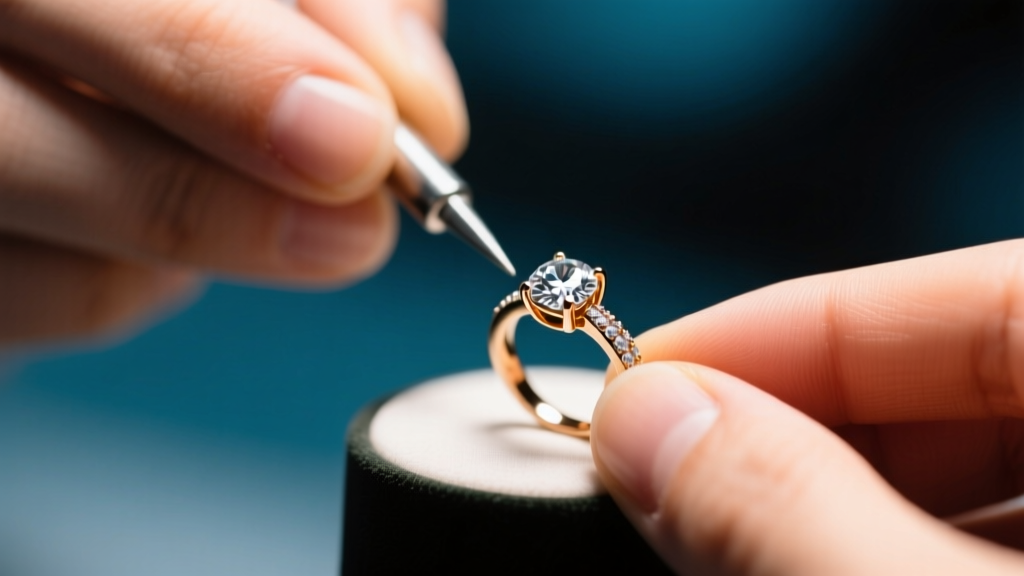
Whether you are evaluating an inherited estate piece, a thrift store find, or a chain purchased from an online marketplace, verifying the authenticity of precious metals is a critical skill. Counterfeit manufacturing techniques have become increasingly sophisticated, meaning visual inspection alone is no longer sufficient. If you are wondering how to tell if a necklace is gold, you must approach the process as a metallurgical troubleshooting exercise. This guide moves beyond basic internet hacks, providing professional-grade diagnostic steps to separate solid gold chains from gold-plated, gold-filled, and entirely counterfeit alternatives.
The First Line of Defense: Decoding Hallmarks and Stamps
The most logical starting point is examining the manufacturer's hallmark. In the United States, the Federal Trade Commission (FTC) requires that gold jewelry be accurately stamped with its karatage, usually accompanied by a maker's mark. However, stamps can be faked, worn away, or entirely missing on vintage pieces.
Use a 10x or 30x jeweler's loupe to inspect the clasp, the jump ring, or the first few links of the chain. Here is a troubleshooting matrix for common stamps you will encounter:
| Stamp / Marking | Meaning | Actual Gold Content | Troubleshooting Note |
|---|---|---|---|
| 750 / 18k | 18 Karat Gold | 75.0% Pure Gold | Common in high-end European and US chains. Check for solder joints, which may be lower karat. |
| 585 / 14k | 14 Karat Gold | 58.5% Pure Gold | The standard for durable US chains. Highly resistant to tarnish. |
| 417 / 10k | 10 Karat Gold | 41.7% Pure Gold | Minimum karatage to be legally sold as 'gold' in the US. Prone to tarnishing over time. |
| GF (e.g., 1/20 14k GF) | Gold Filled | 5% Gold by Weight | A thick layer of gold mechanically bonded to a brass core. Not solid gold, but highly durable. |
| HGE / HGP | Heavy Gold Electroplate | Less than 0.5% Gold | Usually 2.5 microns of 10k+ gold over brass. Will eventually wear through to the base metal. |
| GP / GEP | Gold Plated | Microscopic trace | A flash plating (less than 0.175 microns). Will tarnish or rub off within months of daily wear. |
Non-Destructive At-Home Troubleshooting Tests
If the hallmark is missing, faded, or you suspect a counterfeit stamp, proceed to non-destructive physical tests. These methods exploit the unique physical properties of elemental gold.
The Magnet Test (and Its Clasp Caveat)
Gold is diamagnetic, meaning it is slightly repelled by a magnetic field rather than attracted to it. To perform this test, use a strong neodymium magnet (N52 grade is recommended). If the chain leaps toward the magnet, it contains ferromagnetic metals like iron, nickel, or cobalt, and is not solid gold.
Troubleshooting Caveat: The internal spring mechanism inside a lobster clasp or spring-ring clasp is almost always made of steel. It is entirely normal for the clasp to stick to the magnet while the rest of the chain does not. Always test the links in the middle of the necklace, far away from the clasp assembly.
The Ceramic Streak Test
Gold is a soft, dense metal that leaves a distinct streak when dragged across an unglazed ceramic surface. Find an unglazed ceramic tile or a specialized testing stone. Gently drag the edge of a chain link across the surface.
- Real Gold: Leaves a shiny, golden-yellow streak.
- Pyrite (Fool's Gold) or Brass: Leaves a dark gray, greenish, or black streak.
Warning: This is a micro-destructive test. It will leave a small scratch on the link. Never use this test on high-polish or mirror-finish chains where cosmetic damage is unacceptable.
Chemical and Professional Verification Methods
When physical tests yield ambiguous results, chemical and spectrometric analysis becomes necessary. This is especially true when dealing with heavy gold electroplate (HGE) that mimics the color and weight of solid gold.
Acid Testing Kits and the 'Deep Scratch' Problem
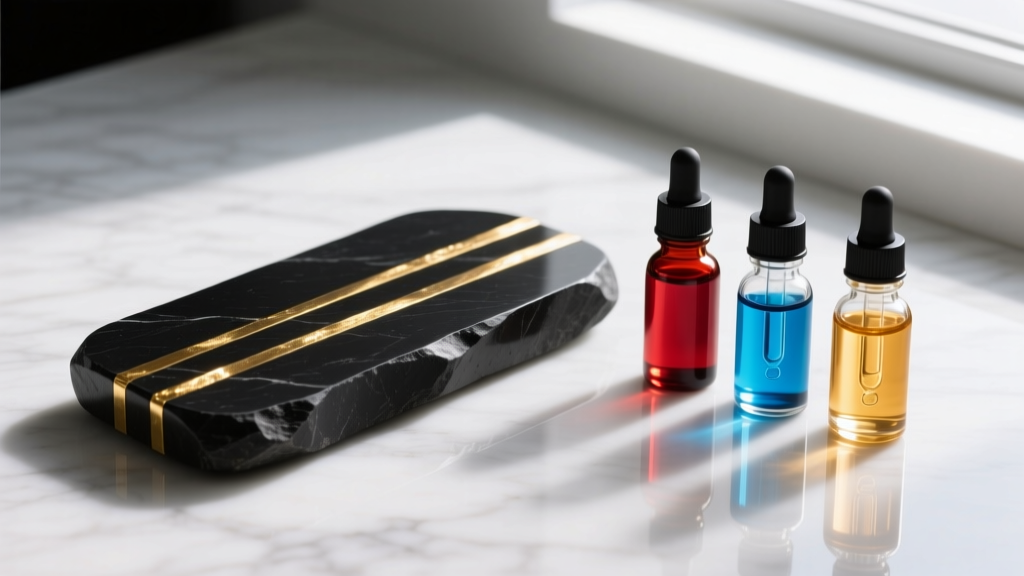
Acid testing relies on the reaction of nitric acid to base metals. A standard kit includes a black basalt touchstone and bottles of acid calibrated for 10k, 14k, 18k, and 22k gold. You rub the chain on the stone to leave a metallic streak, then apply a drop of acid.
The Troubleshooting Trap: If a chain is heavily plated (e.g., 5 microns of 14k gold over brass), a surface rub on the touchstone will deposit only the gold layer. The 14k acid will not dissolve the streak, giving you a false positive. To accurately test a suspected plated chain, you must use a jeweler's file to cut a deep notch into an inconspicuous link, exposing the core, and apply the acid directly to the notch. If the metal inside bubbles or turns green, it is a base metal core.
X-Ray Fluorescence (XRF) Spectrometry
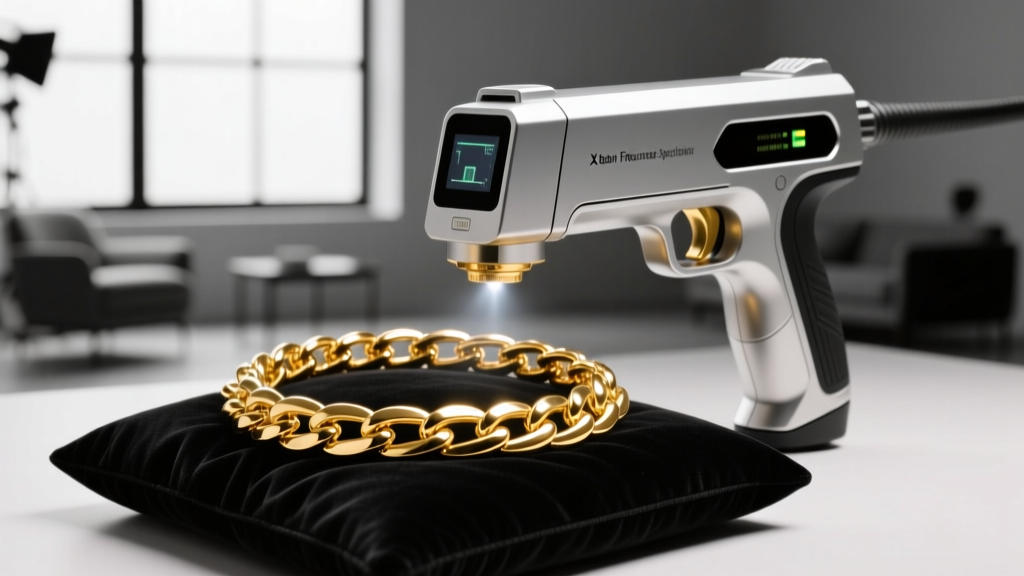
For definitive, non-destructive verification, professional jewelers use XRF analyzers. According to the Gemological Institute of America (GIA), XRF technology bombards the metal with X-rays, measuring the fluorescent light emitted to determine the exact elemental composition of the alloy. This instantly reveals if a chain is an 18k gold alloy, or if it contains hidden tungsten or lead cores. If you are evaluating a high-value investment chain (like a heavy 22k Cuban link), paying a local jeweler for an XRF scan is the most financially sound troubleshooting step.
Troubleshooting Common Gold Necklace Scams
Understanding how counterfeiters manipulate metallurgical properties will help you identify sophisticated fakes that bypass basic tests.
The Tungsten Core Deception
Tungsten has a density of 19.25 g/cm³, which is nearly identical to 24k pure gold (19.32 g/cm³) and very close to 22k gold. Scammers will manufacture hollow gold chains and fill the core with tungsten powder or rods. These chains will pass the water displacement (Archimedes) density test and the magnet test. The only way to troubleshoot a suspected tungsten core without XRF is to perform an ultrasonic thickness test or use the deep-file acid test mentioned above.
The Solder Weight Scam
In lower-quality chains, the solder used to close the individual links is often a much lower karat than the chain itself, or contains heavy amounts of silver and copper to lower its melting point. If you are calculating the melt value of a scrap chain, be aware that the solder joints can account for up to 15% of the total weight in intricate chains like the Figaro or Rope styles, effectively lowering the overall purity of the piece.
Summary Checklist for Verification
The 4-Step Gold Necklace Verification Protocol:
- Inspect: Use a 30x loupe to find hallmarks on the clasp and jump rings. Cross-reference with the maker's mark.
- Magnetize: Pass a neodymium magnet over the center links. (Ignore the steel clasp spring).
- File & Test: If the chain lacks stamps or feels suspiciously heavy/light, file a deep notch into a bottom link and apply 14k nitric acid.
- Verify: For chains valued over $1,000, bypass at-home chemistry and request an XRF scan from a certified gemologist or scrap refinery.
Determining the authenticity of a gold necklace requires a systematic approach. By combining hallmark analysis with targeted physical and chemical troubleshooting, you can confidently verify your jewelry and protect yourself from increasingly deceptive counterfeit market practices.


