The Necklace Mathilde: Diamond vs. Paste Jewelry Explained
Discover the gemological truth behind the necklace Mathilde lost. Learn how to tell diamonds from paste, moissanite, and CZ in our 2026 beginner guide.

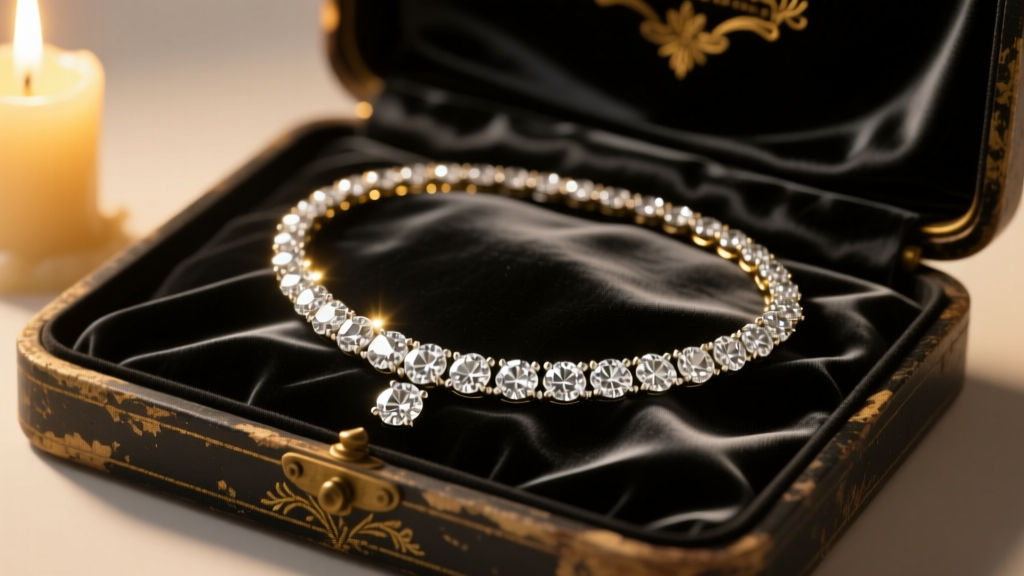
Guy de Maupassant’s 1884 literary masterpiece, The Necklace (La Parure), is a cautionary tale about vanity, pride, and the devastating cost of assumptions. At the center of this tragedy is a single piece of jewelry: a dazzling diamond necklace borrowed by the protagonist, Mathilde Loisel. When she loses it, she and her husband spend a decade in grueling poverty to replace it with a genuine diamond equivalent, only to discover the original was 'paste'—costume jewelry made of cut glass.
For modern jewelry enthusiasts and beginners, the story of the necklace Mathilde wore is more than just a classic piece of literature; it is a masterclass in gemology, material science, and the historical evolution of diamond simulants. In this beginner-friendly explainer, we will dissect the anatomy of a rivière necklace, compare 19th-century paste to 2026’s advanced lab-grown alternatives, and provide you with a practical framework for identifying genuine diamonds versus high-quality simulants.
The Anatomy of a Rivière Necklace
While Maupassant does not explicitly use the word 'rivière' in the original French text, the description of the necklace—a continuous, unbroken stream of diamonds set in a simple, elegant mounting—perfectly aligns with the classic rivière (French for 'river') style. Understanding this specific jewelry design is crucial to understanding the financial ruin it caused.
Key Structural Features of a Rivière
- Uniform or Graduated Stones: A traditional rivière features round or oval gemstones of the same size, or slightly graduated from the center outward.
- Minimalist Mounting: The metalwork (usually silver or gold) is kept to an absolute minimum to allow maximum light entry, creating the 'river of light' effect.
- Prong Settings: Stones are typically held by three or four delicate prongs. In the 1880s, these prongs were often hand-cut and slightly irregular, a key identifier for antique pieces.
- The Clasp Mechanism: Antique necklaces often utilized a simple barrel clasp or a hook-and-eye closure, which lacked the modern safety latches we rely on today—perhaps explaining how Mathilde lost it on the cobblestone streets of Paris.
What Exactly Was 'Paste' Jewelry?
To understand the twist ending of the story, we must look at the history of paste jewelry. According to Lang Antiques, 'paste' refers to hand-cut leaded glass that was highly popular in the 18th and 19th centuries. The most famous iteration was Strass glass, invented by Georges Frédéric Strass in the 1730s.
Strass discovered that by adding a high percentage of lead oxide to glass, he could dramatically increase its refractive index (RI) and dispersion (fire). When backed with metallic foil, paste stones glittered brilliantly under candlelight, easily fooling the untrained eye in dimly lit Parisian ballrooms. However, glass is incredibly soft compared to crystalline carbon.
Gemological Breakdown: Diamond vs. Paste vs. Modern Simulants
If Mathilde were shopping for a replacement necklace today in 2026, she would have a vast array of materials to choose from. The Gemological Institute of America (GIA) categorizes simulants based on their optical and physical properties. Below is a comparative guide to the most common 'diamond' materials.
| Material | Mohs Hardness | Refractive Index (RI) | Visual Characteristics | 2026 Est. Price (per carat) |
|---|---|---|---|---|
| Natural Diamond | 10 | 2.42 | Brilliant white light return; natural inclusions visible under 10x magnification. | $3,500 - $8,000+ |
| Lab-Grown Diamond (CVD/HPHT) | 10 | 2.42 | Identical to natural; may show specific growth patterns under UV fluorescence. | $300 - $800 |
| Moissanite | 9.25 | 2.65 - 2.69 | Intense 'disco ball' rainbow fire (double refraction); highly dispersive. | $50 - $150 |
| Cubic Zirconia (CZ) | 8 - 8.5 | 2.15 - 2.18 | Flawless to the naked eye; tends to look 'glassy' and can cloud over time. | $5 - $20 |
| Vintage Paste (Lead Glass) | 5 - 6 | 1.70 - 1.80 | Softer facet edges; often backed with metallic foil; scratches easily. | Antique Value Only |
How to Spot a Simulant (Without Ruining a Friendship)
Mathilde’s fatal flaw was assuming the necklace was real based on its presentation (a black satin box) and her friend’s social status. Today, you do not need to ruin your life to verify a stone's authenticity. Here are three non-destructive tests you can perform at home or at a jewelry counter.
1. The Fog Test (Thermal Conductivity)
Diamonds are exceptional heat conductors. If you breathe heavily onto a genuine diamond, the fog will dissipate almost instantly (within 1-2 seconds). If you perform the same test on CZ, Moissanite, or vintage paste glass, the condensation will linger for several seconds because these materials retain heat differently.
2. The 10x Loupe Inspection
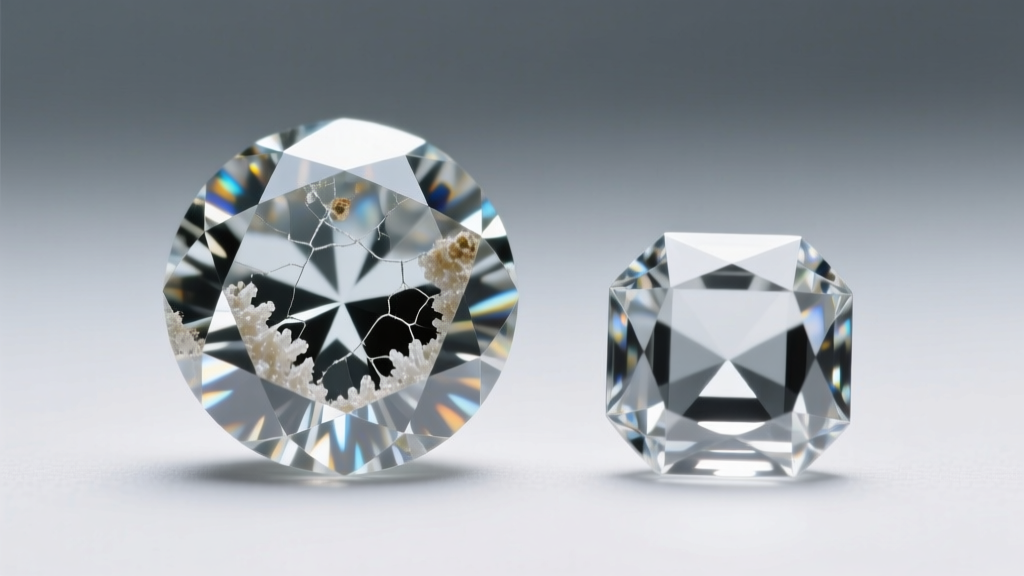
Using a standard jeweler's loupe, examine the girdle (the outer edge) and the facet junctions of the stones. Paste and CZ will often show 'abraded' or rounded facet edges because they are softer and wear down over time. Moissanite will exhibit 'double refraction'—if you look through the crown (top) of the stone at an angle, the back facet lines will appear doubled. Diamonds will have razor-sharp facet edges and single refraction.
3. The UV Fluorescence Test
Many natural diamonds (roughly 30%) exhibit blue fluorescence under ultraviolet light due to trace amounts of nitrogen or boron. While not all diamonds fluoresce, a 40-stone rivière necklace where every single stone reacts identically under UV light is almost certainly lab-grown or simulated, as natural diamonds are rarely perfectly matched in fluorescence.
The Financial Math: What Did the Replacement Cost?
In the story, the replacement necklace costs Mathilde and her husband 36,000 francs in 1884. Adjusted for inflation and the modern purchasing power of luxury goods, that equates to well over $150,000 today. But what would a 15-carat total weight (CTW) diamond rivière necklace actually cost in the 2026 market?
The 2026 Pricing Reality: A 15 CTW natural diamond rivière (F-G color, VS clarity) set in 18k white gold will easily command between $65,000 and $90,000 at retail. However, the exact same visual aesthetic can be achieved with a lab-grown diamond rivière for roughly $4,000 to $7,000, or a high-grade Moissanite version for under $1,500.
This massive price discrepancy highlights the tragedy of Mathilde’s assumption. Had she simply asked her friend, 'Is this genuine, or is it a beautiful paste replica?' she could have replaced the lost glass necklace with an identical piece of 19th-century Strass jewelry for a fraction of a franc, saving herself ten years of backbreaking labor.
Modern Styling: Achieving the 'Mathilde' Look Safely
The allure of a sweeping, brilliant diamond necklace remains a staple of red-carpet and black-tie fashion. If you want to channel the elegance of the necklace Mathilde wore without the financial peril, consider these modern styling and purchasing strategies:

Opt for Lab-Grown Diamonds for Everyday Luxury
Advancements in Chemical Vapor Deposition (CVD) mean that lab-grown diamonds in 2026 are chemically, physically, and optically identical to mined diamonds. They test as 'diamond' on standard thermal testers but cost 80% to 90% less. This allows you to invest in a heavier carat weight (like a 10 CTW tennis necklace) that would be financially out of reach in the natural market.
Embrace High-End Moissanite for Evening Wear
If your goal is pure visual impact under dim, romantic lighting (much like the Parisian ballroom in Maupassant's story), Moissanite is a phenomenal choice. Its higher refractive index means it actually sparkles more than a diamond. Look for 'crushed ice' or 'antique cushion' cut Moissanite stones, which mimic the chunkier, less precise facet patterns of 19th-century antique diamonds, giving your necklace an authentic vintage feel.
Always Check the Clasp Security
Mathilde’s entire ordeal stemmed from a mechanical failure: a broken or slipped clasp. When buying or wearing any fine necklace, ensure it features a modern lobster clasp with a figure-eight safety catch, or a tongue-and-groove box clasp with dual side-safeties. For heavy, high-carat rivière necklaces, a safety chain is non-negotiable.
Final Thoughts
The story of the necklace Mathilde lost is a timeless reminder that true value lies in knowledge, not assumptions. Whether you are examining an antique paste heirloom, investing in a lab-grown diamond tennis necklace, or simply learning to identify the refractive properties of cubic zirconia, understanding your materials is the ultimate luxury. By mastering the gemological basics, you can build a jewelry collection that is both breathtaking and financially secure—ensuring your own jewelry story has a much happier ending.


