The Story The Necklace Summary: Real vs. Paste Jewelry Care
Discover how literary lessons from The Story The Necklace summary apply to modern jewelry care. Learn expert cleaning tips for fine diamonds and paste gems.

The Literary Lesson: Why Material Identification Matters
If you have ever searched for the story the necklace summary for a literature class, you already know the devastating plot of Guy de Maupassant’s 1884 masterpiece. Mathilde Loisel borrows what she believes to be a diamond necklace, loses it, and spends a decade in grueling poverty to replace it with a real 36,000-franc diamond piece—only to eventually discover the original was paste (costume glass) worth a mere 500 francs. While modern jewelry buyers in 2026 are unlikely to face Mathilde's exact tragic fate, her story highlights a critical, often overlooked aspect of jewelry ownership: understanding your materials. The care, maintenance, and cleaning protocols for fine jewelry versus paste simulants are vastly different. Applying fine jewelry cleaning methods to antique paste pieces will destroy them, while treating high-end diamonds like cheap glass will leave them dull and lifeless.
In this comprehensive guide, we bridge the gap between literary cautionary tales and modern gemological science, providing actionable, expert-level maintenance protocols for both authentic precious stones and their historical or modern simulants.
Fine Jewelry Maintenance: Diamonds, Gold, and Platinum
Fine jewelry requires maintenance that addresses both the gemological properties of the stones and the metallurgical realities of the settings. Diamonds, ranking a 10 on the Mohs hardness scale, are virtually impervious to scratching, but their crystal structure makes them highly susceptible to grease and oil accumulation.
The Diamond Degreasing Protocol
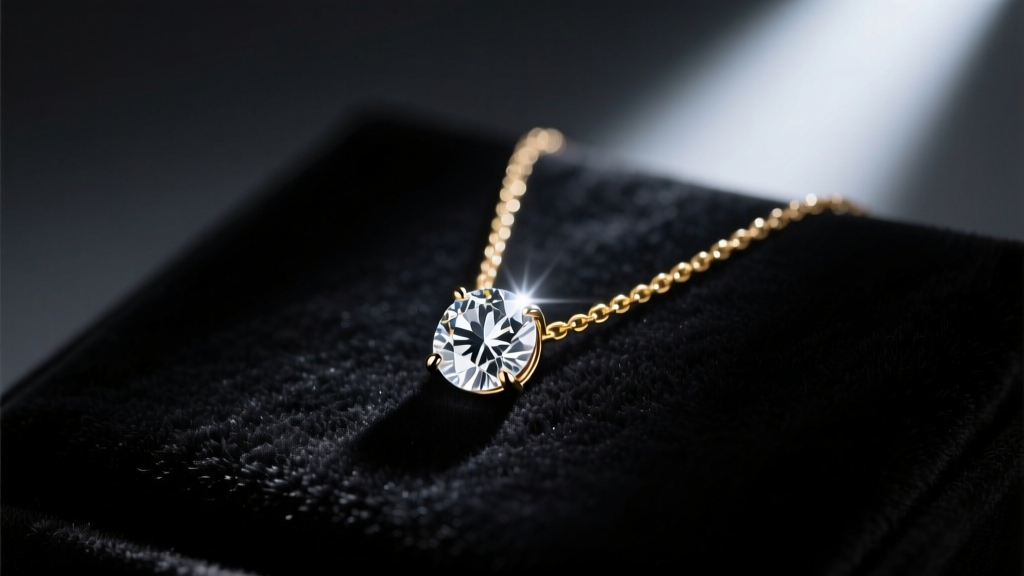
Diamonds are lipophilic, meaning they attract and hold onto oils from your skin, lotions, and cooking. This oil film drastically reduces the stone's refractive index, killing its brilliance. To restore a diamond pendant:
- Solution: Mix warm water (not hot) with three drops of a high-quality degreasing dish soap (like Dawn).
- Agitation: Soak the necklace for 15 minutes. Use a soft-bristled baby toothbrush to gently agitate the pavilion (the underside of the diamond) where grime accumulates.
- Rinsing: Rinse under a gentle stream of lukewarm water. Ensure the drain is securely plugged.
- Drying: Use a lint-free microfiber cloth. Never use paper towels, as the wood fibers can leave microscopic scratches on high-polish platinum or gold settings.
Warnings for Treated Diamonds
Not all diamonds can be cleaned aggressively. If your necklace features a fracture-filled diamond (treated with a glass-like resin to mask internal inclusions), you must never use ultrasonic cleaners or steamers. The high-frequency vibrations (typically 40-45 kHz) and sudden thermal shocks can cloud the filler or shatter the stone entirely. Stick to mild, lukewarm soapy soaks.
Precious Metal Chain Care
Gold (14k, 18k) and Platinum (950 Pt) chains require different approaches. Platinum is a dense, malleable metal that develops a natural 'patina' (micro-scratches) over time. While a jeweler can repolish it, at-home maintenance should involve gentle wiping with a dedicated jewelry polishing cloth impregnated with micro-abrasives. Gold chains, particularly delicate cable or rope chains, trap dead skin cells and soap scum between the links. An ultrasonic cleaner is highly effective for solid gold chains, provided there are no porous gemstones (like opals or emeralds) attached.
Paste and Costume Jewelry: The 'Fake' Diamond Protocol
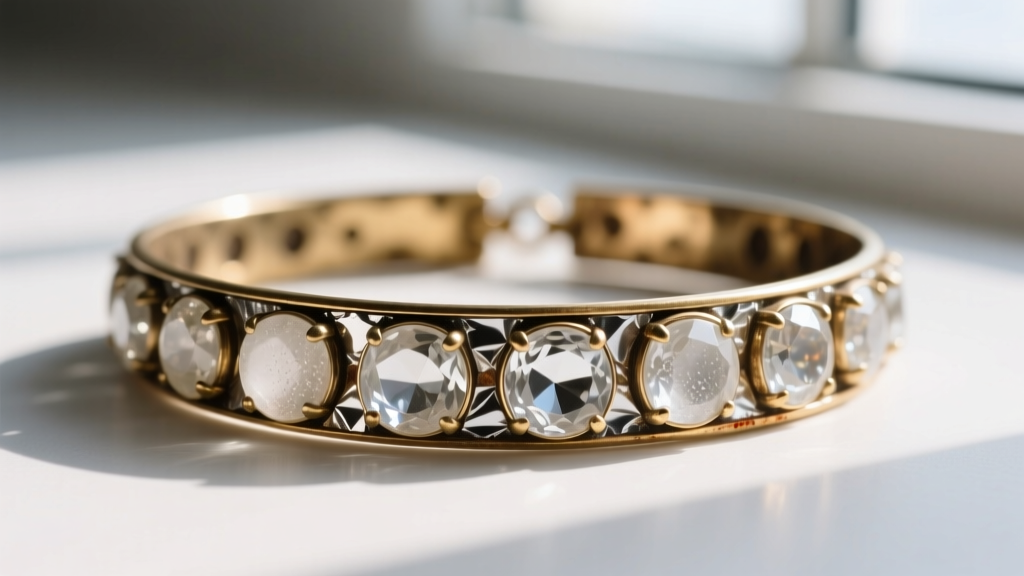
In Maupassant's tale, the 'fake' necklace was likely made of cut glass or early rhinestones set in brass or pinchbeck. Today, 'paste' encompasses everything from vintage foil-backed glass to modern cubic zirconia (CZ) and moissanite. Cleaning these requires extreme caution.
The Danger to Foil-Backed Rhinestones
Antique and vintage costume jewelry often relies on a delicate metallic foil glued to the back of the glass stone to reflect light. Never submerge foil-backed jewelry in water. Moisture will seep under the bezel, oxidize the foil, and turn the stone permanently black. Instead, use a slightly damp cotton swab to clean the surface of the glass, avoiding the metal setting entirely, and dry immediately with a soft cloth.
Modern Simulants: CZ and Moissanite
Cubic Zirconia (Mohs 8-8.5) and Moissanite (Mohs 9.25) are durable but possess different surface tensions than diamonds. CZ is highly porous at a microscopic level and can absorb chemicals, leading to a cloudy appearance over time. Clean CZ with a mild ammonia-free glass cleaner or isopropyl alcohol, which evaporates quickly without leaving residue. Avoid harsh abrasives, which can scratch the surface of lower-grade simulants and expose the base metal underneath plated settings.
Base Metal and Plating Preservation
Costume necklaces are frequently made of brass, copper, or pot metal, and plated with gold vermeil or rhodium. Abrasive polishing pastes (like tripoli or rouge) will strip this plating in seconds. For tarnished base metals, use a specialized liquid dip formulated for costume jewelry, but limit the soak to under 30 seconds, followed by an immediate and thorough water rinse to halt the chemical reaction.
| Material Type | Recommended Cleaner | Ultrasonic Safe? | Steam Safe? |
|---|---|---|---|
| Natural Diamond (Untreated) | Degreasing dish soap | Yes | Yes |
| Fracture-Filled Diamond | Mild soapy water | No | No |
| Foil-Backed Glass/Paste | Dry microfiber / damp Q-tip | No | No |
| Cubic Zirconia (CZ) | Isopropyl alcohol | Yes (with caution) | No |
| Gold Vermeil / Plated Brass | Mild soap, no abrasives | No | No |

The Chemistry of Tarnish and Environmental Degradation
Understanding the chemical enemies of your necklace is just as important as knowing how to wash it. Tarnish is not dirt; it is a chemical reaction. Sterling silver (92.5% silver, 7.5% copper) reacts with sulfur compounds in the air to form silver sulfide, the black layer we recognize as tarnish. Gold, particularly lower karats like 10k and 14k, contains alloy metals like copper and zinc that can oxidize or react with chlorine.
The Chlorine Threat
Wearing a gold chain necklace in a swimming pool or hot tub is a catastrophic mistake. Chlorine reacts with the copper and zinc alloys in gold to form chloroauric acid and other corrosive salts. This causes 'stress corrosion cracking,' which can cause the delicate prongs holding your pendant to snap without warning. Always remove necklaces before swimming or using harsh household bleach.
Proper Storage Mechanics
Storage is your first line of defense against environmental degradation. Do not toss necklaces into a communal jewelry box where chains can tangle and scratch softer stones. Store silver necklaces in airtight ziplock bags with 3M anti-tarnish strips, which absorb atmospheric sulfur. For gold and platinum, use a cedar-lined armoire or individual soft flannel pouches to prevent micro-scratching and dust accumulation.
Appraisal and Verification: Don't Repeat Mathilde's Mistake
The ultimate tragedy of The Necklace was born from a lack of verification. Mathilde assumed the piece was real based on the wealth of the friend who lent it. In the modern era, with lab-grown diamonds, high-end moissanite, and advanced simulants flooding the market, visual identification is entirely unreliable.
Before investing time and money into specialized cleaning or insurance for a vintage or inherited necklace, have it verified. Professional jewelers use Thermal Conductivity Testers to distinguish diamonds (which dissipate heat rapidly) from glass and CZ (which are thermal insulators). For metal purity, XRF (X-ray Fluorescence) Spectrometers can determine the exact elemental breakdown of a chain or setting without damaging the piece. According to the Gemological Institute of America (GIA), understanding the precise nature of your simulants is vital for both valuation and long-term care.
"A piece of jewelry is only as valuable as your understanding of its material reality. Treat paste with the delicacy of a historical artifact, and treat diamonds with the rigorous degreasing they require to shine."
By applying these targeted, material-specific maintenance protocols, you ensure that whether your necklace is a priceless family heirloom or a brilliant piece of costume jewelry, it will retain its beauty and structural integrity for generations. Don't let a lack of knowledge turn a beautiful accessory into a decade-long burden of regret. For more in-depth guides on gemological care, consult the GIA's official diamond care resources and stay informed on the latest conservation techniques.


