Tiara Necklace Buying Guide: Metals, Fit & 2026 Trends
Discover how to choose the perfect tiara necklace. Our expert buying guide covers collar sizing, metal grades, clasp security, and 2026 styling trends.

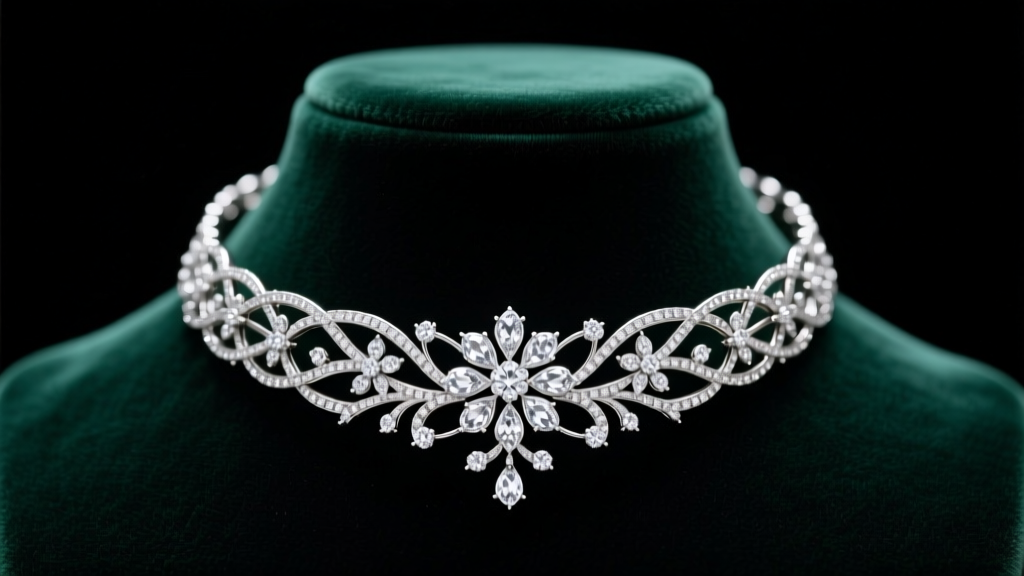
What Exactly is a Tiara Necklace?
In the lexicon of fine jewelry, a tiara necklace (often referred to as a tiara collar or festoon collar) is a highly structured piece designed to frame the décolletage much like a traditional tiara frames the face. Unlike standard chains or pendants that drape freely, a true tiara necklace features upward-reaching motifs, rigid wirework, or articulated crests that sit prominently on the upper chest and collarbone. In 2026, these pieces have surged in popularity for both bridal suites and high-fashion editorial styling, bridging the gap between regal heritage and modern architectural jewelry.
However, buying a tiara necklace requires a vastly different approach than purchasing a standard chain. The structural demands, precise sizing requirements, and complex clasp mechanics mean that buyers must evaluate these pieces with a critical eye toward engineering, not just aesthetics. This guide breaks down the exact specifications you need to look for when investing in a tiara collar.
Metal Purity and Structural Integrity
The foundation of any tiara necklace is its armature—the metal framework that supports the weight of the gemstones and maintains the upward crest of the design. Because these necklaces are subject to constant tension and bending as the wearer moves, the choice of metal is a matter of structural survival.
Platinum 950 vs. 18k Gold Alloys
For rigid tiara collars, Platinum 950 (95% platinum, typically alloyed with 5% ruthenium or iridium) is the undisputed gold standard. Platinum possesses a unique property called 'malleability without memory loss.' When a platinum wire is bent to create intricate filigree or a crown-like crest, it holds that shape indefinitely without becoming brittle. Furthermore, platinum's high tensile strength ensures that the delicate prongs holding pavé diamonds will not snap under the torque of a heavy collar.
18k White Gold is the most common alternative, offering a similar bright white luster at a lower price point. However, 18k gold is softer and more prone to work-hardening. Over time, the repeated micro-bends of putting on and taking off a rigid gold collar can cause the metal to fatigue and eventually fracture at the solder joints. If you opt for 18k gold, ensure the design features articulated hinges rather than a single continuous rigid band.
The Critical Role of Clasp Mechanics
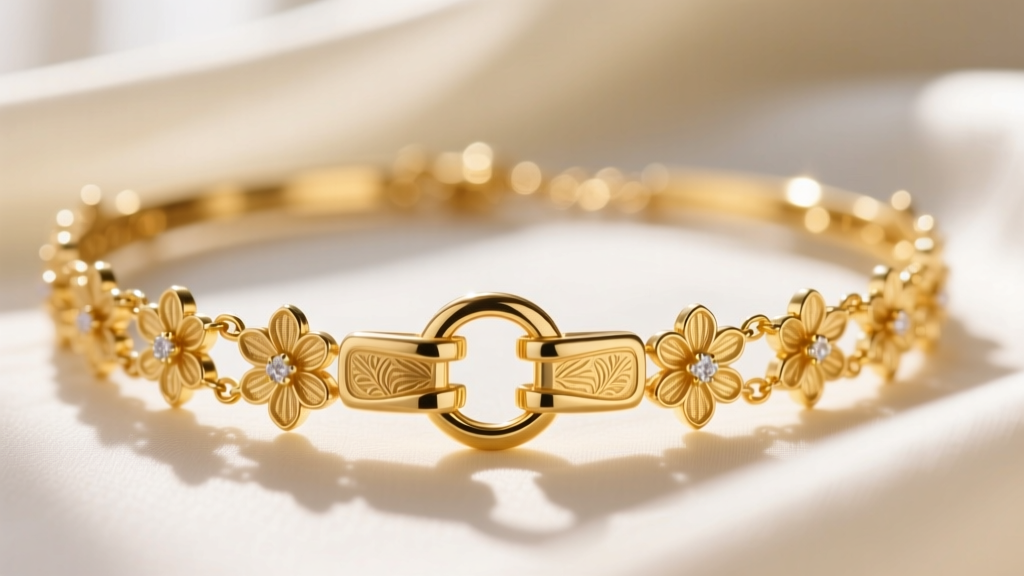
A tiara necklace can easily weigh between 25 and 60 grams due to the density of the metal armature and the volume of melee diamonds. Standard lobster clasps or spring rings are entirely inadequate and pose a severe drop risk. When inspecting a tiara collar, you must look for a box clasp with a tongue-and-groove mechanism.
The tongue (a folded piece of spring-tempered metal) slides into the box and clicks securely into place. Crucially, this must be supplemented by double figure-eight safety catches—one on each side of the clasp. These secondary wire loops hook over a pin on the opposite side of the box, ensuring that even if the primary tongue mechanism fails or is accidentally depressed, the necklace remains secured around the neck. If a retailer offers a heavy tiara festoon with anything less than a dual-safety box clasp, walk away.
Sizing Framework: Achieving the Perfect Collar Fit
The most common point of failure when buying a tiara necklace online is improper sizing. Unlike a princess-length necklace that rests on the chest, a tiara collar must sit precisely at the base of the neck or the hollow of the collarbone. A piece that is even half an inch too large will slide down the chest, destroying the upward 'crown' illusion, while a piece too small will choke the wearer and warp the metal.
| Neck Base Measurement | Recommended Tiara Collar Length | Fit Profile & Silhouette |
|---|---|---|
| 12.5 - 13.0 inches | 13.5 inches | Snug Collar; sits directly in the collarbone hollow |
| 13.25 - 13.75 inches | 14.25 inches | Standard Collar; rests just above the clavicle line |
| 14.0 - 14.5 inches | 15.0 inches | Upper Choker; allows for slight movement and breathing room |
| 14.75 - 15.5 inches | 16.0 inches | Relaxed Festoon; drapes slightly lower, altering the crest angle |
Pro Tip: Always measure your neck with a flexible tailor's tape at the exact height you want the necklace to sit, keeping the tape snug but not tight. Add exactly 0.5 to 0.75 inches to that measurement for a comfortable collar fit.
Gemstone Architecture: Pavé, Prong, and Tension
The visual impact of a tiara necklace relies heavily on how light interacts with its surface. Because the motifs are often dense and intricate, jewelers rely heavily on melee diamonds (stones weighing less than 0.20 carats).
According to GIA's diamond grading standards, buyers should specifically inquire whether the melee used in the tiara collar is 'full-cut' or 'single-cut.' Full-cut melee diamonds feature the standard 57 or 58 facets of a larger round brilliant, providing maximum light return and the coveted 'crushed ice' sparkle. Single-cut melee, which only has 17 or 18 facets, can look glassy and flat, especially in the dim lighting of evening events. For a high-impact tiara silhouette, insist on full-cut stones, even if they are as small as 0.015 carats.
According to master jewelers, the hallmark of a true tiara collar is not just the height of its motifs, but the articulation of its backing. A rigid piece that does not flex with the wearer's clavicle will inevitably warp over time.
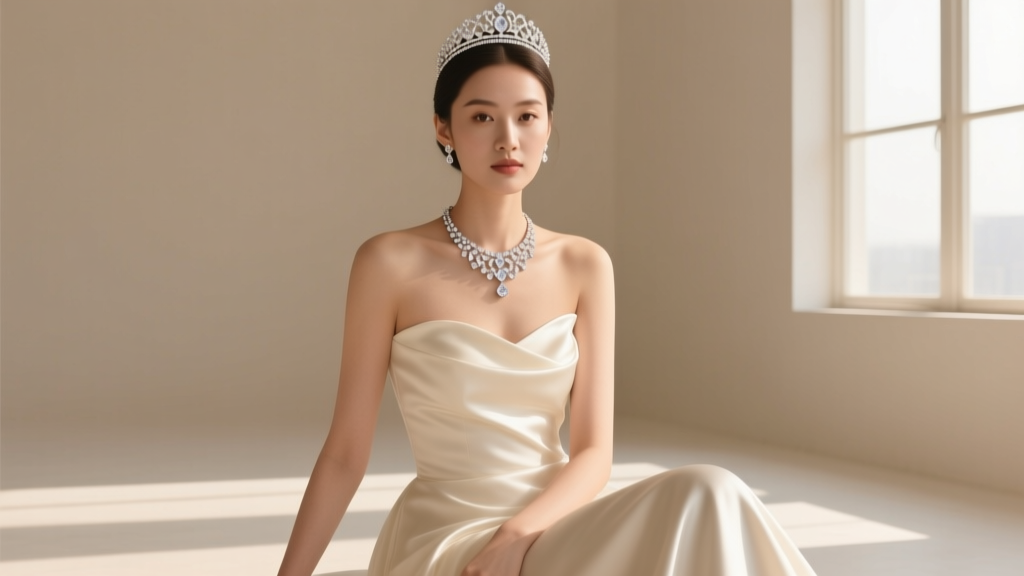
2026 Pricing Tiers and Market Value
The market for tiara necklaces has diversified significantly, driven by advancements in lab-grown diamond technology and CAD/CAM casting techniques. Here is what you can expect to pay in the current market:
- Entry Fine ($1,800 - $4,500): Typically crafted in 14k gold, featuring lab-grown melee diamonds and semi-precious center stones (like morganite or aquamarine). The wirework is often cast rather than hand-forged, resulting in slightly thicker, less delicate lines.
- Mid-Tier Bridal ($5,000 - $14,000): The sweet spot for most buyers. These pieces feature 18k gold or platinum armatures, premium lab-grown or natural earth-mined diamonds, and intricate hand-assembled articulation. Expect secure box clasps and full-cut melee.
- Haute Joaillerie ($18,000 - $60,000+): Bespoke, hand-forged Platinum 950 pieces featuring VVS/VS clarity natural diamonds. These necklaces often include convertible elements, allowing the central tiara motif to be detached and worn as a brooch or hairpiece.
Maintenance and Long-Term Care
The intricate wirework and dense pavé settings of a tiara necklace make it highly susceptible to trapping skin oils, lotions, and environmental dust, which can quickly dull the diamonds. However, you must never use an ultrasonic cleaner on a tiara collar. The high-frequency vibrations can easily shake loose the tiny beads or micro-prongs holding the melee diamonds in place, especially on older or heavily worn pieces.
Instead, follow the cleaning protocols recommended by Jewelers of America: soak the necklace in a bowl of warm water with a few drops of mild, ammonia-free dish soap for 15 minutes. Gently agitate the water, then use a baby hairbrush (which has ultra-soft bristles that won't scratch gold or platinum) to lightly sweep the back of the settings where dust accumulates. Rinse with distilled water and pat dry with a lint-free microfiber cloth. Store the necklace flat in a silk-lined box; never hang a rigid tiara collar, as gravity will slowly pull the metal out of its engineered curvature.


