Expert Care Guide: Cleaning Your Tibetan Coral Necklace
Learn how to safely clean, restring, and store your Tibetan coral necklace. Expert tips on preserving porous organic gems and avoiding damage.

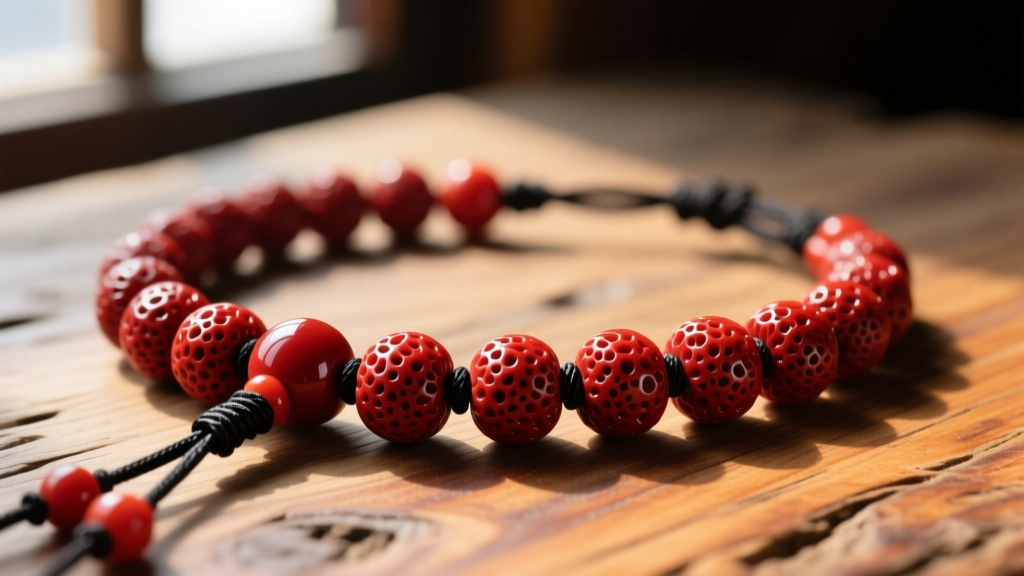
A Tibetan coral necklace is more than just a piece of jewelry; it is a historical artifact and an organic gemstone that demands specialized maintenance. Whether your piece is an antique heirloom featuring genuine Mediterranean Corallium rubrum traded along the ancient Silk Road, or a vintage strand of dyed bamboo coral, the material is inherently delicate. Unlike crystalline gemstones such as diamonds or sapphires, coral is composed primarily of calcium carbonate, making it highly susceptible to acids, heat, and harsh chemicals. In this comprehensive guide, we break down the exact protocols for cleaning, restringing, and preserving your Tibetan coral necklace to ensure it survives for generations.
The Organic Reality: Why Tibetan Coral Needs Special Care
To properly care for your necklace, you must first understand its mineralogical profile. According to the Gemological Institute of America (GIA), coral is an organic gemstone with a Mohs hardness rating of just 3.5 to 4.0. This means it can be easily scratched by a copper coin, let alone harder jewelry pieces stored in the same drawer.
Furthermore, coral is highly porous. Its microscopic surface channels readily absorb oils, lotions, perfumes, and sweat. The lactic acid and sebum naturally produced by human skin can slowly etch the calcium carbonate surface over time, leading to a dull, chalky appearance. This porosity also means that submerging your necklace in water or chemical baths can cause structural degradation, internal fracturing, or severe dye bleeding in treated stones.
The Step-by-Step Cleaning Protocol
Forget ultrasonic cleaners, steamers, and commercial jewelry dips. Cleaning a Tibetan coral necklace requires a gentle, methodical approach that prioritizes surface preservation over deep chemical extraction.
Phase 1: Dry Dusting (The Weekly Routine)
The safest way to maintain your coral is to prevent grime buildup before it sets into the pores.
- Tool: Use a clean, untreated, ultra-soft microfiber cloth or a natural goat-hair makeup brush.
- Technique: Gently wipe each individual bead, paying special attention to the areas around the drill holes where skin oils and dust accumulate.
- Frequency: Perform this after every wear to remove acidic sweat and cosmetic residue.
Phase 2: Damp Wiping (For Stubborn Grime)
If dry dusting is insufficient, you can use a slightly dampened cloth, but you must control the moisture levels strictly.
- Dampen a corner of a microfiber cloth with distilled water (never tap water, as chlorine and fluoride can react with the calcium carbonate).
- Wring the cloth out completely until it is barely moist.
- Wipe each bead individually. Do not let water pool around the drill holes, as this will rot the internal silk threading.
- Immediately dry the beads with the dry side of the cloth.

The Chemistry of Damage: Agents to Avoid at All Costs
Because calcium carbonate ($CaCO_3$) is highly reactive to acids, introducing the wrong cleaning agent will permanently etch your beads. Below is a breakdown of common household substances and their destructive effects on Tibetan coral.
| Chemical Agent | Common Source | Reaction with Coral | Result |
|---|---|---|---|
| Acetic Acid | Vinegar, some glass cleaners | Dissolves calcium carbonate | Severe pitting, loss of polish |
| Ammonia | Window cleaners, silver dips | Alkaline degradation of organic matrix | Chalking, color fading |
| Chlorine | Tap water, swimming pools | Oxidizes organic pigments | Bleaching, structural brittleness |
| Citric Acid | Lemon juice, fruit residues | Rapid acid etching | Dull, matte spots on the surface |
| Ultrasonic Waves | Ultrasonic jewelry cleaners | Cavitation bubbles implode in pores | Micro-fractures, bead shattering |
Restringing and Structural Maintenance
The integrity of a Tibetan coral necklace relies heavily on its stringing material. Due to the sharp edges often found inside the drill holes of antique beads, synthetic threads can fray and snap without warning. Mineralogical data from Mindat.org highlights the specific gravity and density of coral, meaning a heavy, oversized bead strand puts immense tension on the cord.
Best Practices for Restringing
- Material: Always use 100% natural silk cord (such as Griffin brand). Silk is soft enough not to abrade the drill holes but possesses high tensile strength.
- Sizing: Use a No. 4 or No. 6 silk thread depending on the bead hole diameter. The thread should fill the hole snugly to prevent the beads from grinding against one another.
- Knotting: Every single bead must be individually knotted. This prevents bead-on-bead abrasion and ensures that if the strand breaks, you only lose one bead rather than the entire necklace.
- Clasp Protection: Use French wire (also known as gimp) where the silk loops through the metal clasp. This prevents the metal from slicing through the silk over time.

Storage and Environmental Controls
How you store your Tibetan coral necklace is just as critical as how you clean it. Organic gems are highly sensitive to their environment.
- Light Exposure: Prolonged exposure to direct UV sunlight can cause the natural red and pink pigments in coral to fade. Always store the necklace in a dark, opaque jewelry box.
- Humidity: Extreme dryness can cause the organic matrix within the coral to shrink and crack. Conversely, high humidity can promote mold growth on the silk thread. Maintain a stable room humidity level of around 40-50%.
- Isolation: Never store your coral necklace loose in a drawer with diamond, sapphire, or quartz jewelry. The harder stones will easily scratch the coral's surface. Store it in a dedicated soft flannel or velvet pouch.
Troubleshooting: Dye Bleed and Chalking
A significant portion of modern "Tibetan coral" on the market is actually dyed howlite, magnesite, or bamboo coral. This distinction drastically alters your maintenance troubleshooting.
Dealing with Dye Bleed
If you wipe your necklace with a damp cloth and red pigment transfers to the fabric, your beads are dyed. Stop using any moisture immediately. For dyed stones, strictly adhere to the dry dusting method. If the dye is actively rubbing off on your skin or clothing, the piece requires professional sealing by a lapidary expert using a museum-grade, reversible conservation wax.
Reversing Mild Chalking
If genuine antique coral has developed a chalky, dull white film due to years of acid exposure from skin contact, do not attempt to polish it with abrasive compounds. Instead, you can gently buff the beads with a tiny amount of natural jojoba oil applied via a microfiber cloth. Jojoba oil closely mimics natural human sebum but lacks the acidic properties that cause etching. This will temporarily restore the luster and deepen the red hue without damaging the calcium carbonate structure.
By respecting the organic origins and chemical vulnerabilities of your Tibetan coral necklace, you ensure that its rich, crimson beauty remains intact. Treat it not as an indestructible stone, but as a delicate piece of natural history that requires a thoughtful, conservative approach to maintenance.


