Tiny Diamond Cross Necklace: 2026 Value & Budget Guide
Discover the true value of a tiny diamond cross necklace in 2026. We break down melee diamond pricing, metal costs, and where to find the best ROI.

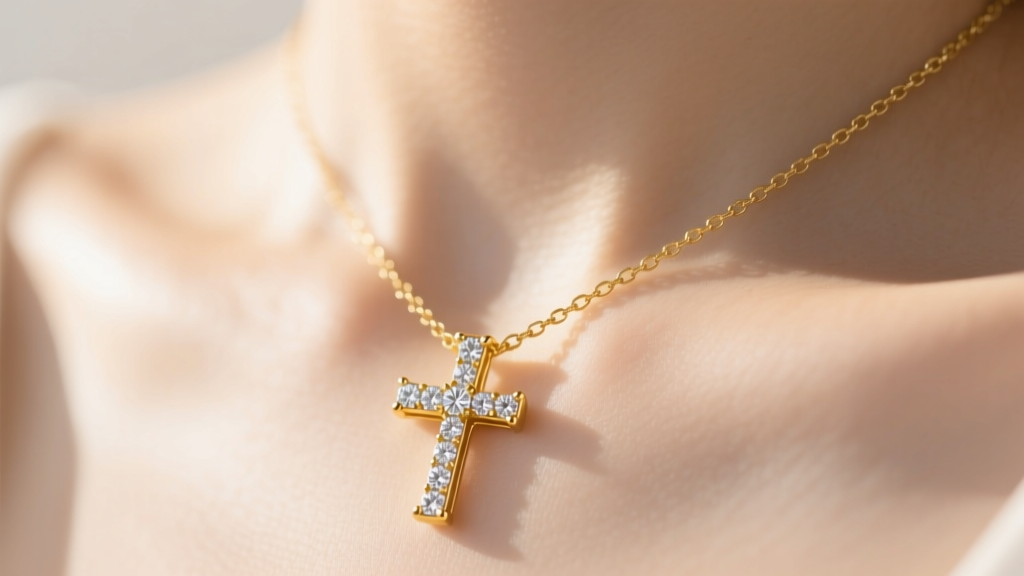
The dainty jewelry trend has firmly cemented the tiny diamond cross necklace as a modern wardrobe staple. Unlike heavy, traditional statement pieces, these micro-pendants offer a subtle, layered aesthetic that transitions seamlessly from casual wear to formal events. However, the word 'tiny' often tricks consumers into assuming the price tag will be equally small. In 2026, the market for micro-diamond jewelry is more saturated than ever, and navigating the pricing tiers requires a deep understanding of melee diamonds, chain metallurgy, and retail markups. This comprehensive budget and value assessment will help you determine exactly what you should be paying for a tiny diamond cross, and where retailers are quietly inflating their margins.
The True Cost of 'Tiny': Defining the Micro-Cross
Before assessing value, we must define the parameters of a 'tiny' cross. In the fine jewelry sector, a micro-cross pendant typically measures between 8mm and 14mm in height. The width usually spans 6mm to 10mm. Because the surface area is so limited, the total diamond carat weight (CTW) generally ranges from 0.03 to 0.15 carats. When you are purchasing a necklace in this size category, you are not paying for large, solitaire-grade stones. You are paying for precision setting labor, high-quality melee diamonds, and the structural integrity of a delicate chain. Understanding this distinction is the first step in evaluating whether a $300 price tag is a steal or a rip-off.
The Melee Diamond Factor: Where Budget Meets Brilliance
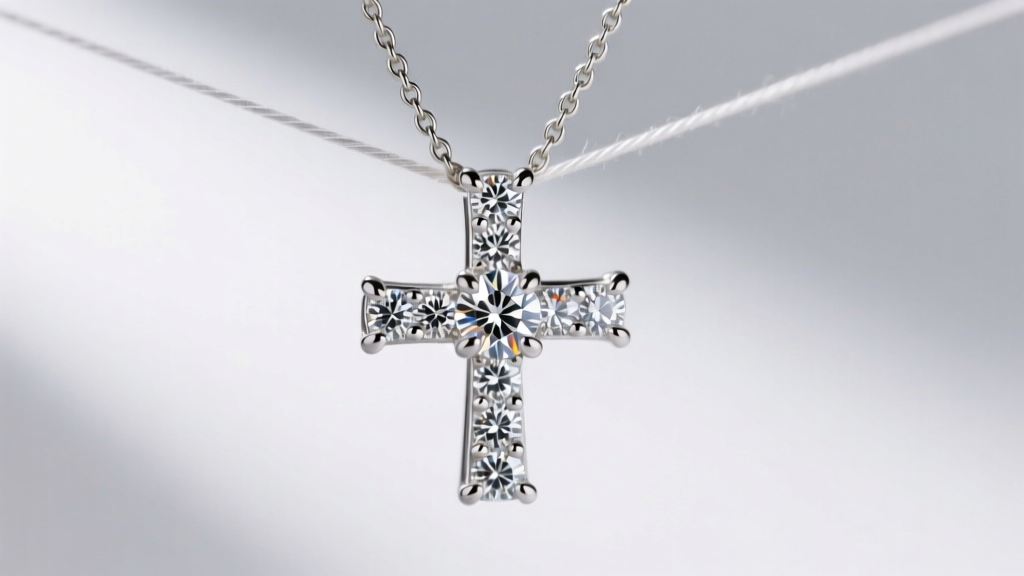
The diamonds used in tiny crosses are classified as 'melee.' According to the Gemological Institute of America (GIA), melee diamonds are small stones typically weighing under 0.20 carats each. In a micro-cross, the individual stones often weigh between 0.005 and 0.02 carats (roughly 1mm to 1.5mm in diameter). Because these stones are so small, retailers rarely provide individual grading reports for color and clarity. Instead, they use batch grades (e.g., G-H color, SI1-SI2 clarity). However, the most critical factor that impacts both the budget and the visual beauty of your tiny cross is the cut style of the melee.
There are two types of melee diamonds used in manufacturing:
- Single-Cut Melee: These feature only 17 or 18 facets. They are significantly cheaper to produce but lack the complex light return of larger diamonds, often appearing glassy or flat in low lighting.
- Full-Cut Melee: These boast the standard 57 or 58 facets of a brilliant-cut diamond. They cost roughly 15% to 25% more than single-cut melee but offer vastly superior sparkle and scintillation.
Budget Rule: Always demand full-cut melee for your cross pendant. The slight premium is non-negotiable if you want the cross to catch the light rather than blending into your skin tone.
2026 Market Pricing: Natural vs. Lab-Grown Tiny Crosses
The most significant shift in the 2026 jewelry market is the total normalization of lab-grown diamonds. For micro-pendants, lab-grown stones offer identical optical and chemical properties to mined diamonds at a fraction of the cost. Below is a realistic pricing matrix for a 14k solid gold tiny cross necklace (15-inch chain, 1.2mm width) based on current wholesale and direct-to-consumer retail averages.
| Total Carat Weight (CTW) | Diamond Origin | Estimated Retail Price (2026) | Value Assessment |
|---|---|---|---|
| 0.05 CTW | Lab-Grown | $250 - $400 | Excellent entry-level value |
| 0.05 CTW | Natural Mined | $600 - $950 | High markup, poor ROI |
| 0.10 CTW | Lab-Grown | $350 - $550 | Sweet spot for budget buyers |
| 0.10 CTW | Natural Mined | $900 - $1,400 | Standard mall-brand pricing |
| 0.20 CTW | Lab-Grown | $500 - $800 | Best brilliance-to-cost ratio |
| 0.20 CTW | Natural Mined | $1,600 - $2,500+ | Luxury tier, brand-dependent |
If a retailer is charging over $1,000 for a 0.05 CTW lab-grown tiny cross, you are paying a massive 'brand tax' rather than paying for intrinsic material value.
Chain Weight and Metal Alloys: The Hidden Budget Killers
Consumers obsess over the pendant but forget that the chain accounts for up to 60% of the necklace's total manufacturing cost. A tiny cross requires a delicate chain, but 'delicate' should not mean 'fragile.' The Jewelers of America emphasizes the importance of proper alloy mixing for daily-wear durability.
Consider a standard 16-inch 14k solid gold cable chain. If the chain is a dainty 1.0mm width, it weighs approximately 1.4 grams. With 14k gold containing 58.3% pure gold, and the spot price of gold hovering around $65 per gram in early 2026, the intrinsic melt value of the chain is roughly $53. However, retail markup for drawing, soldering, and assembling micro-links pushes the wholesale chain cost to $85-$110. If a brand charges $800 for a tiny cross necklace, and the diamonds are only 0.05 CTW lab-grown (worth roughly $40), you are paying a $500 premium purely for the brand logo and marketing overhead.
Metal Grade Breakdown for Micro-Necklaces
- 10k Gold (41.7% pure): The most budget-friendly, but highly prone to brittleness. A 10k chain under 1.2mm is likely to snap if caught on a sweater. Avoid for daily wear.
- 14k Gold (58.3% pure): The undisputed champion of value and durability. It offers the perfect balance of rich color, structural integrity for fine links, and reasonable pricing.
- 18k Gold (75% pure): Offers a warmer, deeper yellow hue but is softer. 18k micro-chains require careful handling and are best reserved for occasional wear rather than 24/7 layering.
- Platinum: Extremely durable and hypoallergenic, but the density of platinum means even a micro-chain will carry a heavy price premium, often doubling the base cost of the necklace.

Retailer Value Matrix: Who Offers the Best ROI?
Where you buy is just as important as what you buy. Here is how different retail channels stack up in terms of true value for tiny diamond crosses:
1. Direct-to-Consumer Online Jewelers (e.g., Blue Nile, James Allen, Angara) These platforms offer the highest transparency. You can usually find the exact CTW, metal weight, and diamond origin. Their overhead is lower, meaning a 0.10 CTW natural diamond cross might cost $850 here compared to $1,400 at a brick-and-mortar mall jeweler. Verdict: Best overall ROI and transparency.
2. Trendy DTC Brands (e.g., Mejuri, Gorjana) These brands excel at marketing and modern aesthetics, but they are notoriously vague about diamond specifics. They often list 'diamond' without specifying if it's natural or lab-grown, and rarely disclose the exact carat weight. You are paying for the curated aesthetic and the packaging. Verdict: High style, moderate material value.
3. Custom Etsy Jewelers If you vet the seller properly (looking for CAD designs and verified reviews), independent jewelers can cast a custom micro-cross using your choice of full-cut melee and a specific chain gauge. Verdict: Best for personalized value and exact material control.
Red Flags: Avoiding Overpriced Illusion Settings
When shopping on a strict budget, beware of the 'illusion setting.' Some manufacturers use heavily ridged, highly polished white gold or platinum heads to make a cluster of 0.01-carat diamonds look like a single 0.10-carat stone from a distance. While this inflates the perceived size of the cross, it destroys the diamond's ability to reflect light, turning the pendant into a flat, metallic-looking shape. Furthermore, avoid gold vermeil or gold-plated sterling silver for daily-wear micro-crosses. The friction against the collarbone, combined with exposure to perfumes and natural skin oils, will wear through the standard 2.5-micron gold plating within 12 to 18 months. You will be left with a tarnished brass or silver base that requires expensive re-plating, entirely negating your initial budget savings.
Final Verdict: Maximizing Your Budget
To get the absolute best value for a tiny diamond cross necklace in 2026, target a 14k solid gold setting with a 1.0mm to 1.2mm cable or box chain. Opt for lab-grown, full-cut melee diamonds in the 0.08 to 0.12 CTW range. This specific combination provides maximum brilliance, everyday durability, and a price point that should comfortably sit between $350 and $550. By understanding the mechanics of melee diamonds and chain metallurgy, you can bypass the brand taxes and invest in a micro-cross that offers genuine, lasting value.


