Tiny Diamond Necklace Guide: Best Metals & Settings
Discover the best metals and settings for a tiny diamond necklace. Compare 14k vs 18k gold, platinum, and bezel vs prong settings for lasting wear.

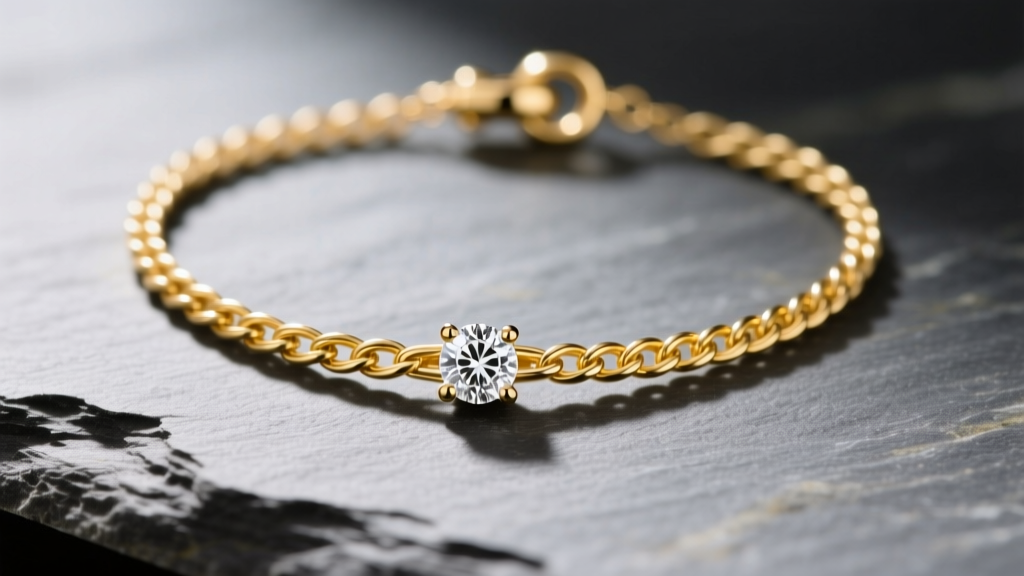
The Anatomy of a Tiny Diamond Necklace
The appeal of a tiny diamond necklace lies in its understated elegance and versatility. Whether worn as a solo minimalist piece or layered with heavier chains, a sub-20-point diamond pendant is a staple of modern jewelry wardrobes. However, the very delicacy that makes these necklaces beautiful also makes them highly susceptible to structural failure if the material properties are not carefully matched to the wearer's lifestyle.
Unlike heavy statement pieces, a tiny diamond necklace relies on ultra-fine chains (often between 0.8mm and 1.2mm in thickness) and micro-settings. This means the tensile strength of the chain metal, the malleability of the setting, and the precision of the stone's cut are magnified in importance. A poor material choice can lead to snapped chains, lost stones, or severe metal fatigue within months. In this comprehensive guide, we break down the exact metallurgical and gemological properties you need to consider before investing in fine, delicate jewelry.
Chain Metal Comparison: 14K vs. 18K vs. Platinum
The chain is the literal lifeline of your pendant. For a tiny diamond pendant weighing less than 1.5 grams, you need a metal that offers high tensile strength without requiring a visually bulky chain. According to the Jewelers of America, understanding the alloy composition of precious metals is critical for predicting long-term wear and tear.
- 14K Gold (58.5% Pure Gold): Alloyed with copper, silver, and zinc, 14K gold is the industry standard for delicate chains. It boasts a Vickers Hardness (HV) of approximately 140-160, making it highly resistant to stretching and snapping under minor tension.
- 18K Gold (75% Pure Gold): With a higher pure gold content, 18K gold is softer (HV 120-130) and more prone to micro-abrasions. While it offers a richer yellow hue, an 18K cable chain under 1.0mm is at a higher risk of link deformation over time.
- Platinum (95% Pure Platinum): Platinum is denser and heavier than gold. While its Vickers Hardness (HV 110-125) is technically lower than 14K gold, platinum is highly malleable. When scratched or stressed, platinum displaces rather than loses metal, making it incredibly durable for micro-clasps and jump rings.
| Metal Type | Vickers Hardness (HV) | Tensile Strength | Price Premium (vs 14K) | Best Chain Style for Tiny Pendants |
|---|---|---|---|---|
| 14K Yellow/White Gold | 140 - 160 | High | Baseline | 0.9mm - 1.1mm Cable Chain |
| 18K Yellow/White Gold | 120 - 130 | Medium | +40% to +60% | 1.0mm - 1.2mm Box Chain |
| 950 Platinum | 110 - 125 | Very High (Density) | +150% to +200% | 0.8mm - 1.0mm Wheat Chain |
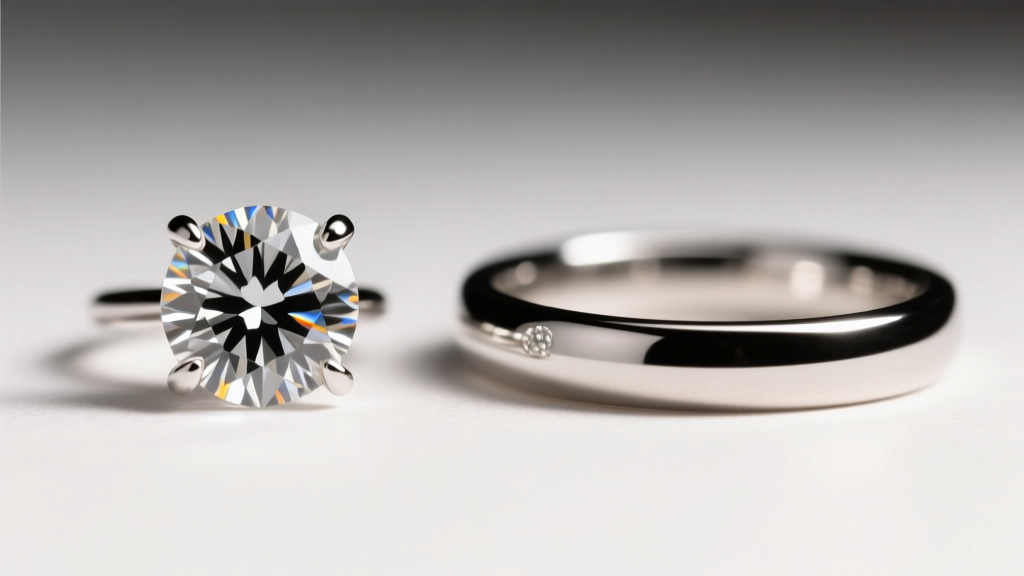
Setting Mechanics for Sub-15pt Diamonds
Diamonds weighing between 0.05ct and 0.15ct (measuring roughly 2.4mm to 3.4mm in diameter) require specialized setting techniques. The goal is to secure the stone's girdle without obscuring its light return or creating snag points that catch on knitwear and silk.
Bezel Settings: The Durability Champion
A bezel setting encircles the diamond with a continuous rim of metal. For a 0.10ct stone, a well-crafted bezel will feature a metal wall thickness of exactly 0.25mm to 0.30mm. This provides maximum protection for the diamond's girdle—the most vulnerable point for chipping. Bezel settings are highly recommended for active individuals or those who wear their tiny diamond necklace daily, as the smooth profile eliminates the risk of prong snagging. The trade-off is a slight reduction in visible surface area, which can make a 0.10ct stone look closer to 0.08ct.
Micro-Prong Settings: Maximum Light Return
Micro-prong settings use four to six tiny metal claws to hold the stone. For sub-15pt diamonds, these prongs are often milled down to 0.8mm in width. While this allows maximum light entry from the crown and pavilion, enhancing the stone's brilliance, it requires periodic maintenance. Prongs on delicate necklaces are subject to micro-bending when the chain is pulled or caught. If you choose a micro-prong setting, opt for 14K white gold or platinum, as the alloys used in these metals provide better structural memory and prong rigidity than high-karat yellow gold.
Diamond Quality: Natural vs. Lab-Grown Melee
When shopping for a tiny diamond necklace, consumers often overpay for gemological characteristics that are physically impossible to see with the naked eye at this scale. The Gemological Institute of America (GIA) notes that the 4Cs interact differently in melee and sub-carat stones than they do in large center stones.
- Cut is King: For a 3.0mm diamond, an Excellent or Ideal cut is non-negotiable. A poorly cut tiny diamond will look like a piece of dull glass, regardless of its color or clarity. The facets are so small that precision symmetry is required to bounce light back to the eye.
- Color (G-H is the Sweet Spot): In stones under 0.20ct, the human eye cannot easily distinguish between a D (colorless) and a G (near colorless) grade, especially when set in yellow or rose gold. Paying a premium for D-F colors in a tiny pendant is generally a poor allocation of budget.
- Clarity (SI1 is Eye-Clean): Inclusions in a 0.10ct stone are microscopic. An SI1 (Slightly Included) clarity grade is completely eye-clean at this size. Avoid I1-I3 grades, as heavy carbon inclusions can compromise the structural integrity of a tiny stone during the setting process.
- Lab-Grown vs. Natural: Lab-grown diamonds offer identical optical and physical properties at a fraction of the cost. For a 0.10ct pendant, a high-quality lab-grown stone might cost $80-$120, whereas a comparable natural stone can range from $250-$450. For everyday minimalist jewelry, lab-grown is an increasingly popular, pragmatic choice.
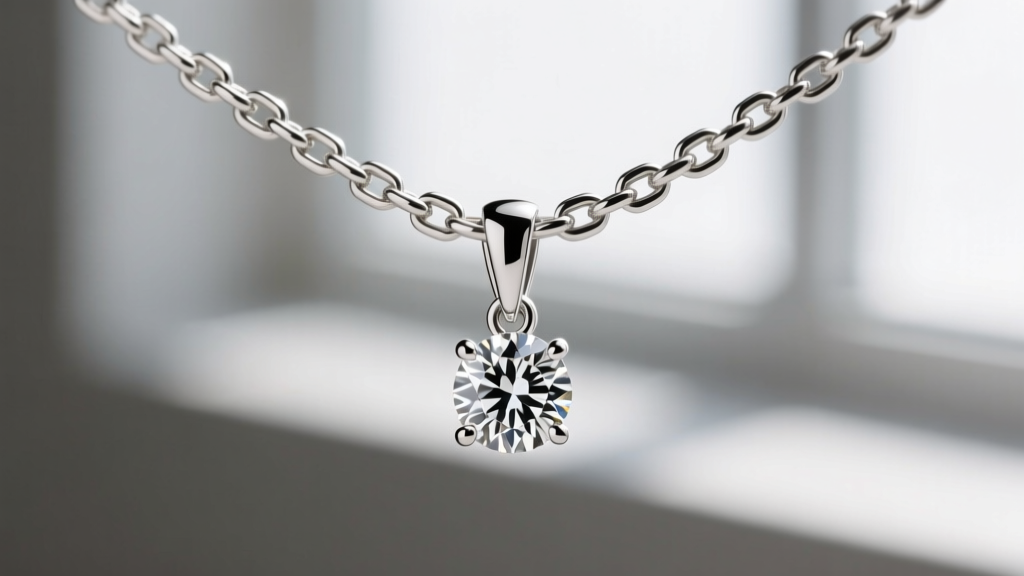
Real-World Troubleshooting: Chain Snapping & Stone Loss
Even the finest materials will fail if the engineering of the necklace is flawed. Here are the most common failure modes for tiny diamond necklaces and how to avoid them:
- The Sliding Pendant Issue: On smooth chains like box or snake chains, the pendant bail often slides to the back of the neck, resting against the clasp. Solution: Look for chains with a soldered center ring or a silicone O-ring stopper built into the chain to keep the pendant perfectly centered.
- Lobster Clasp Spring Fatigue: The internal spring in micro-lobster clasps (under 5mm) is the first point of failure. Solution: Upgrade to a 6mm or 7mm lobster clasp, or opt for a spring-ring clasp if the chain is under 1.0mm, as the circular tension distribution is often more reliable for ultra-fine wire.
- Jump Ring Separation: The jump ring connecting the pendant bail to the chain is a major vulnerability. Solution: Ensure the jump ring is laser-welded or soldered shut. A simple mechanical split-ring will eventually pull apart under the lateral stress of daily movement.
- Chain Kinking: Rope and herringbone chains are notorious for kinking, which weakens the metal's crystalline structure and leads to snapping. Solution: Stick to cable, box, or wheat chains for pendants, as their geometric link structures naturally resist twisting and kinking.
Final Verdict & Buying Framework
Choosing the right tiny diamond necklace requires balancing aesthetics with metallurgical reality. For the ultimate everyday, low-maintenance piece, a 0.10ct to 0.15ct lab-grown diamond in a 14K gold bezel setting, suspended on a 1.0mm cable chain with a soldered jump ring, offers the perfect intersection of brilliance, durability, and value.
If you prioritize maximum sparkle and plan to wear the necklace primarily for office or evening wear, a micro-prong setting in platinum or 14K white gold on a delicate box chain will provide superior light return. By focusing on the structural integrity of the chain and the precision of the setting, rather than overpaying for invisible diamond clarity grades, you ensure your minimalist necklace remains a lifelong staple rather than a fragile liability.


