Troubleshooting a Vintage Tommy Singer Necklace: Repairs & Care
Learn how to authenticate, repair, and maintain a vintage Tommy Singer necklace. Expert troubleshooting for chip inlay, silver tarnish, and clasps.


Owning a vintage Tommy Singer necklace is akin to holding a piece of Southwestern art history. Renowned for his masterful chip inlay, heavy gauge silverwork, and intricate squash blossom designs, the late Navajo silversmith Tommy Singer (1940–2014) created pieces that are highly coveted by collectors today. However, because many of these necklaces were crafted in the 1970s and 1980s, they are now encountering age-related structural and cosmetic issues. Whether you have inherited a family heirloom or purchased a piece from an estate sale, troubleshooting a vintage Tommy Singer necklace requires specialized knowledge of mid-century Native American lapidary techniques.
In this comprehensive guide, we will break down the most common problems associated with vintage Singer pieces—from failing chip inlay and improper polishing damage to clasp failures—and provide actionable, expert-level solutions to restore and authenticate your jewelry.
The Legacy of Tommy Singer: Why Provenance and Materials Matter
Before attempting any repairs, it is crucial to understand the materials Tommy Singer utilized. Unlike contemporary mass-produced Southwestern jewelry, Singer’s work relied on heavy sterling silver (.925) sheet metal, often ranging from 14 to 18 gauge for central naja pendants and belt buckle backs. His chip inlay was not merely decorative; it was a structural component, utilizing a specific matrix of crushed Sleeping Beauty turquoise, Mediterranean red coral, and jet, bound together by a two-part lapidary epoxy.
Understanding this material composition is the first step in troubleshooting. Hardware store adhesives and standard silver cleaning dips will irreparably damage the historical integrity and monetary value of a genuine Singer piece. According to the Indian Arts and Crafts Board, preserving the original materials and techniques is paramount for maintaining the legal and cultural authenticity of Native American jewelry.
Troubleshooting Common Tommy Singer Necklace Issues
1. Chip Inlay Chipping, Clouding, and Loss
The most frequent issue with any vintage chip inlay necklace is the degradation of the epoxy matrix. Over decades, exposure to UV light, skin oils, and temperature fluctuations can cause the epoxy to shrink, yellow, or lose its bond, leading to loose stones or entire sections of inlay popping out.
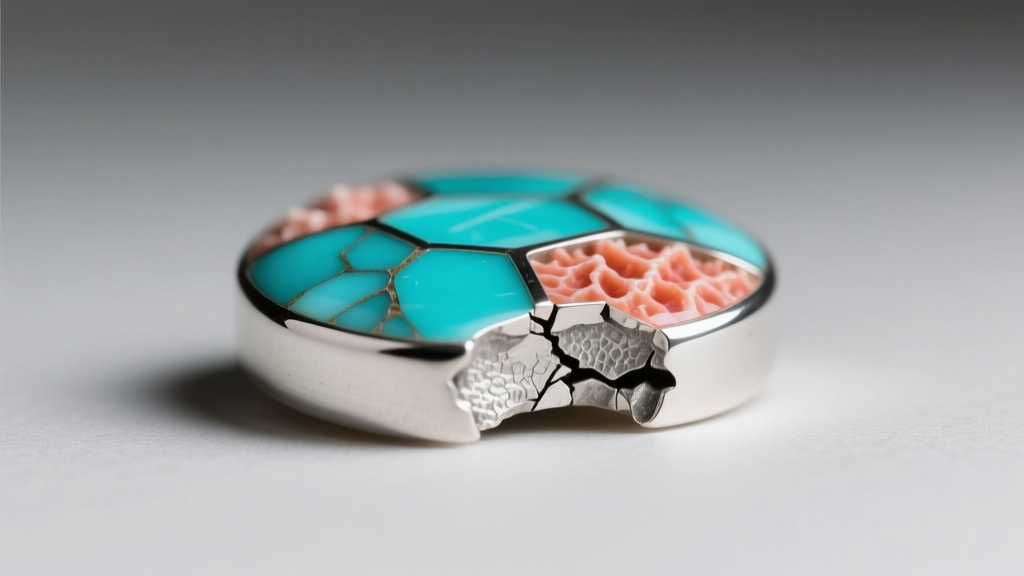
The Fix: Never use cyanoacrylate (Super Glue) to reattach loose chips. Cyanoacrylate dries brittle, lacks gap-filling properties, and will eventually turn white, ruining the aesthetic. Instead, use a conservation-grade or lapidary-specific epoxy, such as Hughes 220 or Epoxy 330. These formulations have a longer working time, resist yellowing, and can be mixed with finely crushed turquoise or coral dust to fill gaps seamlessly.
- Preparation: Use a wooden toothpick or a soft brass brush to gently clean the cavity of old, degraded adhesive. Do not use metal picks, as they will scratch the sterling silver bezel walls.
- Mixing: Mix your two-part lapidary epoxy on a glass palette. If filling a void, incorporate a small amount of matching crushed stone dust into the wet resin.
- Application: Pack the mixture tightly into the cavity using a wax-tipped tool, ensuring it sits slightly proud (higher) than the silver bezel.
- Curing and Sanding: Allow 24 hours for a full cure. Once hardened, wet-sand the epoxy flush with the silver using progressive grits of wet/dry sandpaper (600, then 1000, then 1500 grit).
- Polishing: Finish with a cerium oxide paste on a soft felt buff to restore the glass-like shine of the stone and resin.
2. Severe Silver Tarnish and Oxidation Damage
Tommy Singer intentionally utilized heavy oxidation (antiquing) in the recesses of his silverwork to create high contrast against the bright turquoise and coral. A common and disastrous mistake made by new collectors is using chemical silver dips (like Tarn-X) or ultrasonic cleaners to remove tarnish.
The Problem: Chemical dips contain thiourea, which strips all oxidation, leaving the piece flat, white, and historically inaccurate. Worse, the chemical bath can seep into microscopic gaps in the chip inlay, dissolving the epoxy bond and causing the stones to fall out weeks later. Ultrasonic vibrations will similarly shake loose aging inlay.
The Fix: For routine maintenance, use a mild solution of warm water and phosphate-free dish soap with a soft baby toothbrush. For heavier tarnish on the raised silver areas, use a high-quality impregnated polishing cloth (such as a Sunshine Cloth). Fold the cloth to a sharp edge to carefully polish the raised silver beads and the face of the naja, deliberately avoiding the recessed, oxidized areas and the inlay pockets. As noted by the jewelry repair experts at Ganoksin, mechanical polishing is always preferred over chemical stripping for multi-material inlay pieces.
3. Clasp and Link Failures
Vintage squash blossom necklaces are heavy. A multi-strand Singer necklace can easily weigh over 150 grams. The original hook-and-eye clasps or early lobster clasps often suffer from metal fatigue at the solder joints.
The Fix: Inspect the solder joints where the clasp meets the silver end-cones. If you see hairline cracks, the piece must be re-soldered using hard silver solder (which melts at a higher temperature, around 1450°F) to ensure the joint can withstand the weight of the necklace. Avoid soft solder, which lacks the tensile strength for heavy Navajo silverwork. If a clasp must be replaced, source period-correct, heavy-gauge sterling silver findings to maintain the necklace's vintage integrity.
Authentication Guide: Spotting a Genuine Tommy Singer Piece
Because Tommy Singer's work commands premium prices—often ranging from $2,500 to over $15,000 for complex squash blossom sets—the market is flooded with reproductions and outright counterfeits. Troubleshooting your necklace also means verifying its authenticity.
| Feature | Authentic Tommy Singer | Mass-Produced Imitation |
|---|---|---|
| Silver Weight | Heavy (14-18 gauge sheet metal) | Thin, lightweight machine stampings |
| Inlay Matrix | Custom-mixed epoxy, tight stone packing | Clear resin, visible gaps, dyed howlite |
| Hallmark | "T. SINGER" or stylized "TS" (struck deep) | Laser etched, shallow, or poorly cast "T" |
| Findings | Hand-soldered hook/eye or heavy lobster | Flimsy machine-made spring rings |
| Bead Construction | Two-part soldered silver beads, seamless | Stamped halves with visible seam lines |
Decoding the Hallmark
Tommy Singer’s hallmark evolved throughout his career. Early pieces from the 1970s may feature a simple "T.S." or his full name. His most recognized and widely used hallmark from the 1980s onward is "T. SINGER" in a distinct, slightly serifed font, almost always accompanied by "STERLING". Authentic hallmarks are struck with a steel stamp into the raw silver before the final polishing and oxidation, meaning the letters should have soft, rounded edges and sit flush within the patina. If the hallmark looks laser-engraved, perfectly crisp without patina inside the letters, or is stamped over the oxidation, it is highly likely to be a reproduction.
Sourcing Replacement Materials for Vintage Navajo Inlay
If your troubleshooting reveals that a significant portion of the coral or turquoise is missing, sourcing historically accurate replacement material is vital. Tommy Singer frequently used Sleeping Beauty turquoise (known for its pure, matrix-free sky-blue color) and Mediterranean red coral. Since the Sleeping Beauty mine closed in 2012, sourcing genuine, untreated rough for crushing can be expensive and difficult. Avoid modern stabilized turquoise or block turquoise, as the plastic resin content will react differently to sanding and polishing than the natural stone and vintage epoxy matrix. Connect with specialized lapidary suppliers who deal in New Mine Lander or Kingman turquoise, which can serve as visually appropriate substitutes when original material is unavailable.
When to Call a Master Silversmith vs. DIY
While cleaning and minor epoxy touch-ups can be handled by a careful collector, certain troubleshooting scenarios require a professional. If the silver bezel wall surrounding the inlay is worn thin or cracked, or if the naja pendant requires structural re-soldering, seek out a jeweler who specializes exclusively in vintage Native American artifacts. Standard retail jewelers often lack the specific lapidary tools (like flat lap machines) and historical context required to restore a Tommy Singer necklace without diminishing its provenance and value. Treat your Singer piece not just as jewelry, but as a museum-grade artifact, and your troubleshooting efforts will preserve its legacy for decades to come.


