Troubleshooting Your Drape Necklace: Fixes for Tangling & Slipping
Fix your slipping or tangled drape necklace with expert troubleshooting tips. Learn weighting hacks, clasp fixes, and styling tricks for a perfect drape.

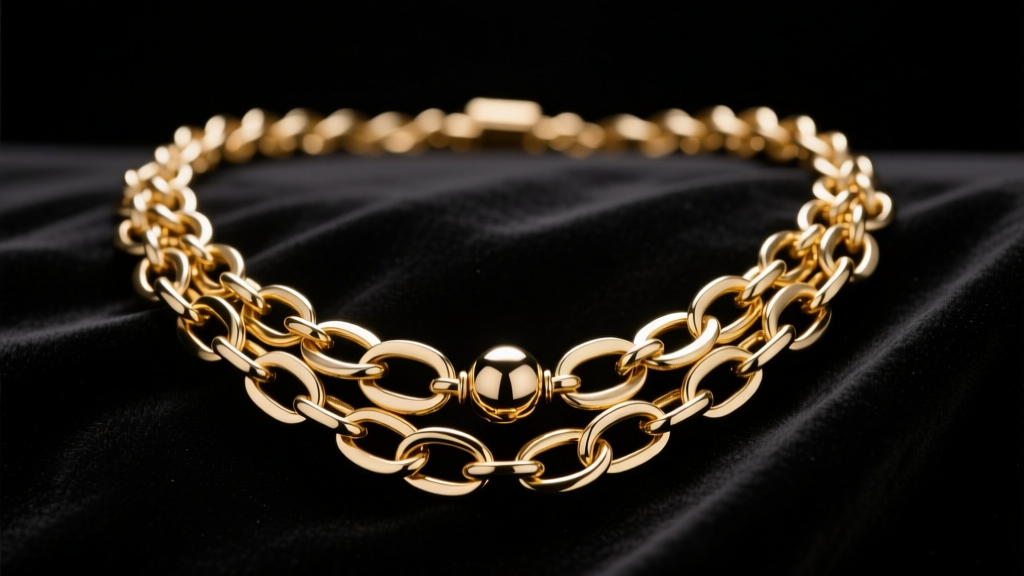
Drape necklaces—encompassing lariat styles, Y-chains, and multi-strand collars with a central drop—are among the most elegant silhouettes in fine jewelry. However, their very design defies basic physics. The combination of a flexible collar and a free-swinging drop creates a pendulum effect that leads to three universal frustrations: relentless tangling, asymmetrical slipping off the shoulder, and catastrophic clasp failures. As a jewelry stylist, I see these issues ruin the wearability of otherwise stunning pieces. In this guide, we will move past generic styling advice and dive into the metallurgical and mechanical troubleshooting required to fix your drape necklace permanently.
The Physics of the Drape Necklace (and Why It Fails)
To troubleshoot a drape necklace, you must first understand its center of gravity. Unlike a standard choker or princess-length chain that rests statically against the clavicle, a drape necklace features a primary collar supporting a secondary vertical drop. When you move, the vertical drop generates kinetic energy. If the drop is too light, it swings upward, wrapping around the primary collar. If the primary collar is too smooth, the entire piece migrates laterally across the skin, causing the drop to slide off-center. Solving these issues requires manipulating weight distribution and surface friction.
Troubleshooting Issue #1: The Endless Tangling
The most common complaint with lariat and Y-style drape necklaces is the drop chain wrapping around the neck chain. This happens when the terminus of the drop lacks sufficient mass to counteract the upward swing caused by walking or gesturing.
The Tungsten Micro-Weight Solution
Standard jewelry weights are often too bulky to add to the end of a delicate 1.0mm or 1.2mm chain without ruining the aesthetic. The professional fix is to add a tungsten micro-bead to the terminus of the drop. Tungsten has a density of 19.3 g/cm³ (nearly identical to gold and twice as dense as silver). By crimping a 2mm to 3mm tungsten bead (weighing approximately 1.5 to 2.5 grams) to the very end of the drop, you drastically lower the center of gravity. This increased gravitational pull keeps the drop taut and hanging straight, effectively eliminating the pendulum swing that causes tangling.
The Silicone O-Ring Slider Hack
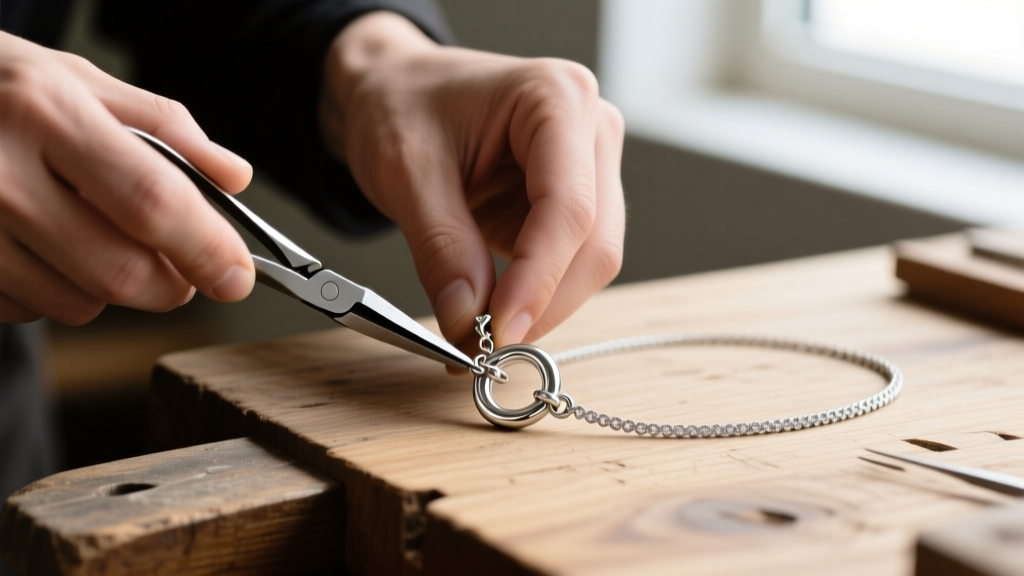
If your drape necklace features a Y-intersection where the drop chain loops through the main collar, friction at this junction is your enemy. Replace the metal loop or jump ring with a 1.5mm inner-diameter silicone O-ring. Silicone provides high friction against metal, allowing you to slide the intersection to your desired depth while ensuring it locks in place and prevents the drop from wrapping around the collar during wear.
Troubleshooting Issue #2: Asymmetrical Slipping
There is nothing more annoying than constantly readjusting a drape necklace that refuses to stay centered. Slipping is almost entirely a function of chain topology and the fabric you are wearing. Smooth chains possess a near-zero coefficient of friction against materials like silk, satin, or even dry skin.
Chain Friction Comparison Chart
Before attempting a fix, identify your chain type. According to manufacturing standards outlined by suppliers like Rio Grande, the surface texture of the chain dictates its grip.
| Chain Type | Surface Topology | Friction on Silk/Skin | Tangling & Slipping Risk |
|---|---|---|---|
| Snake | Smooth, Flush Plates | Very Low | High |
| Herringbone | Flat, Interlocking | Very Low | High |
| Box | Geometric, Sharp Edges | Medium | Medium |
| Rope | Spiral, Twisted Links | High | Low |
| Wheat | Braided, Textured | High | Low |
How to Anchor a Low-Friction Chain
If you own a snake or herringbone drape necklace and refuse to swap the chain, you must artificially introduce friction. The most effective, non-damaging method is the silicone friction sleeve. Purchase 1.0mm inner-diameter silicone tubing (commonly sold for jewelry stringing or fishing). Cut a 1.5cm segment and thread the back of your necklace chain through it. Position this hidden sleeve at the nape of your neck. The silicone will grip your skin securely, acting as an invisible anchor that prevents lateral migration without damaging the metal or your clothing.
Troubleshooting Issue #3: Multi-Strand Clasp Failure
Multi-strand drape necklaces (often featuring 3 to 5 cascading chains) rely heavily on rectangular tube clasps equipped with figure-8 safety catches. When these necklaces fail, it is rarely the main tongue-and-groove mechanism that breaks; it is the delicate figure-8 safety wire.
Restoring Figure-8 Tension
The figure-8 wire is designed to snap over a small pin on the opposite side of the clasp. Over time, the repeated bending of this wire causes work-hardening in the sterling silver or gold alloy. As noted in metallurgical care guides by the Jewelers of America, work-hardened metals lose their elasticity and become brittle. If your safety catch no longer "snaps" shut, do not force it. Using a pair of nylon-jaw pliers (never bare steel chain-nose pliers, which will mar the finish), gently squeeze the loop of the figure-8 wire to restore its tension. If the wire has already snapped due to brittleness, you must take it to a bench jeweler to be annealed and re-soldered, or replaced entirely.
Upgrading to Magnetic Slide Clasps
For a permanent fix to multi-strand clasp fatigue, consider upgrading to a multi-strand neodymium magnetic slide clasp. These clasps (typically measuring 5x12mm or 8x15mm) feature powerful rare-earth magnets encased in brass or silver, with a secondary mechanical locking sleeve that slides over the magnetic connection. They distribute the tensile stress of 3-5 chains evenly across a wide surface area, completely eliminating the pinpoint stress that destroys traditional figure-8 catches.
"When repairing multi-strand drape pieces, always inspect the jump rings connecting the chains to the clasp. The lateral pull of a heavy drape necklace often warps standard open jump rings into an oval shape, compromising the structural integrity of the entire piece. Always replace them with soldered closed jump rings or heavy-duty split rings."
— Master Bench Jeweler Guidelines, Halstead Bead

Preventative Maintenance and Storage
Troubleshooting a drape necklace also involves how you store it. Tossing a lariat into a jewelry box guarantees a tangled mess by morning due to the static electricity and kinetic movement of the drawer.
- The Straw Method: Thread the drop chain of your lariat necklace through a standard plastic drinking straw before clasping it. The rigid straw prevents the drop from crossing over the main collar during storage.
- Anti-Tarnish Strips: Because drape necklaces have a high surface-area-to-volume ratio (especially multi-strand styles), they tarnish faster than solid pendants. Store them in sealed polyethylene bags with 3M anti-tarnish strips to prevent silver sulfide buildup, which increases chain friction and exacerbates tangling.
- Ultrasonic Warnings: Never put a multi-strand drape necklace with magnetic or glued components into an ultrasonic cleaner. The high-frequency vibrations will shatter the neodymium magnets and dissolve jewelry adhesives. Stick to gentle GIA-recommended mild soap and warm water baths with a soft baby toothbrush.
Summary Troubleshooting Checklist
Before giving up on a problematic drape necklace, run through this quick diagnostic checklist:
- Is it tangling? Add a 2g tungsten micro-bead to the drop terminus or use a silicone O-ring at the Y-intersection.
- Is it slipping? Identify the chain type. If it is a snake or herringbone chain, add a 1.5cm silicone friction sleeve at the nape.
- Is the clasp failing? Check for work-hardening on the figure-8 safety wire. Restore tension with nylon-jaw pliers or upgrade to a magnetic slide clasp.
- Are the jump rings warping? Replace all open jump rings at the clasp connection points with soldered closed rings.
By applying these mechanical and material fixes, you can transform a frustrating, high-maintenance drape necklace into a reliable, perfectly hanging statement piece that stays exactly where you put it.


