Why Your Orange Necklaces Fade, Crack, and How to Fix Them
Discover why your orange necklaces fade or crack. Learn expert troubleshooting tips for carnelian, amber, and sunstone care, plus styling fixes.

The Science Behind Fading Orange Gemstones
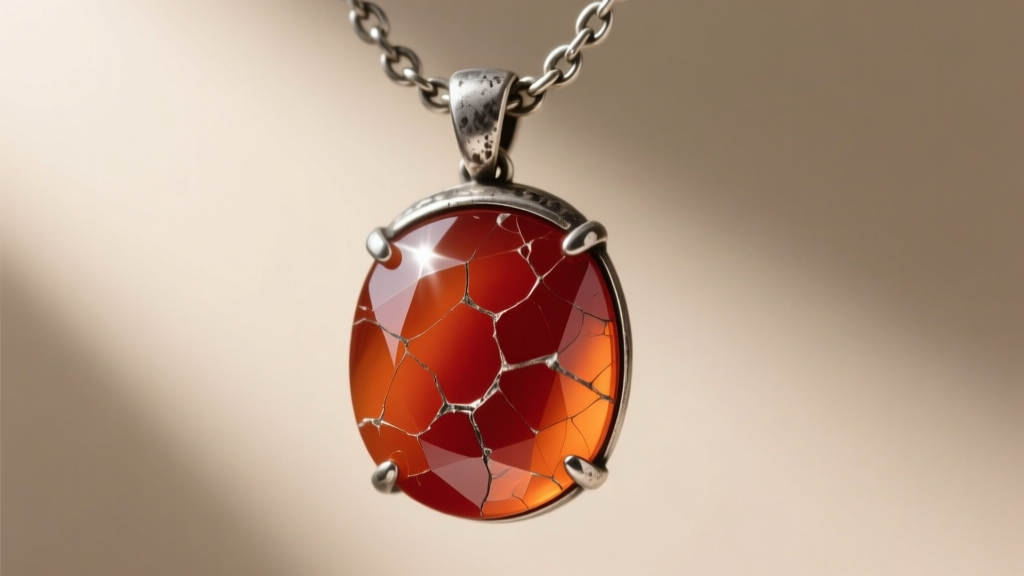
Orange necklaces are celebrated for their vibrant, sun-drenched hues, but they are also some of the most problematic pieces in a jewelry box. Whether you are wearing a fiery spessartite garnet, a translucent amber drop, or a deeply saturated carnelian cabochon, warm-toned gemstones are uniquely susceptible to environmental degradation. The core issue lies in their chemical composition and the treatments used to enhance their color. Many orange gemstones on the market are not naturally occurring in their vivid states; they are heat-treated, irradiated, or dyed. When these stones are exposed to ultraviolet (UV) light, harsh cosmetics, or rapid temperature fluctuations, their molecular structures react, leading to fading, clouding, or structural failure.
Understanding the specific mineralogy of your orange necklace is the first step in troubleshooting its decline. According to the Mindat.org mineral database, the physical properties of these stones vary wildly, meaning a one-size-fits-all approach to cleaning and storage will inevitably ruin your jewelry.
| Gemstone | Mohs Hardness | UV / Heat Sensitivity | Primary Failure Mode |
|---|---|---|---|
| Carnelian (Dyed Agate) | 6.5 - 7 | High (UV breaks down dye) | Color fading to muddy brown |
| Amber (Fossilized Resin) | 2 - 2.5 | Extreme (Heat causes melting) | Crazing, clouding, surface scratching |
| Spessartite Garnet | 7 - 7.5 | Low (Highly stable) | Girdle chipping from prong tension |
| Sunstone (Feldspar) | 6 - 6.5 | Moderate | Cleavage plane fracturing |
Troubleshooting Common Orange Necklace Disasters
Problem 1: The "Washed Out" Carnelian
Symptom: Your once-vibrant red-orange carnelian pendant has turned a dull, muddy brown, or the color appears to be bleeding onto your skin when you sweat.
The Fix: True, untreated carnelian is stable, but over 80% of commercial carnelian is actually gray agate that has been dyed using iron oxide or synthetic organic dyes, then baked. UV exposure breaks down these dye molecules. If the stone is fading, you cannot reverse the chemical breakdown. However, if the issue is surface dirt masking the color, wash it in a 1:10 dilution of pH-neutral dish soap and distilled water. If the dye is bleeding onto your skin, the stone was likely dyed with cheap organic compounds. Stop wearing it against bare skin. A professional lapidary can sometimes re-polish the surface to remove the top 0.5mm of degraded, porous material, but if the dye has fully oxidized, the stone must be replaced.
Problem 2: Amber Clouding and Crazing
Symptom: Your transparent orange amber necklace has developed an opaque, milky appearance and a network of microscopic surface cracks known as "crazing."
The Fix: Amber is organic and highly sensitive to moisture loss and chemical exposure. Crazing occurs when the resin dries out too quickly, often due to storage in low-humidity environments or exposure to alcohol-based perfumes. To stabilize minor crazing, jewelers sometimes use Opticon, a specialized resin sealer that penetrates micro-fractures. However, for home care, never put amber in an ultrasonic cleaner; the high-frequency vibrations will shatter it. Clean only with a damp microfiber cloth. To prevent future crazing, store your amber necklace in a sealed polyethylene bag with a lightly damp (not wet) cotton ball to maintain a stable 40-50% humidity level, as recommended by the Gemological Institute of America (GIA).
Problem 3: Spessartite Garnet Chipping at the Girdle
Symptom: You notice tiny, sharp shards missing from the edges (the girdle) of your spessartite garnet pendant where the metal prongs grip the stone.
The Fix: Spessartite garnet possesses excellent hardness but poor toughness due to its crystalline structure. If your jeweler set the stone with excessive prong tension (over 15 lbs of pressure), the metal will slowly fracture the garnet's girdle over time. Take the necklace to a master setter and request a tension reduction. For stones larger than 3 carats, insist on a bezel setting or a heavy 0.8mm V-prong at the corners to distribute the pressure evenly and protect the vulnerable edges.
Hardware and Setting Failures in Warm-Toned Jewelry
The metal you choose to hold your orange gemstone drastically affects both its structural integrity and its visual impact. A common troubleshooting complaint is that orange necklaces look "dirty" or "muddy" after a few months of wear. This is rarely the stone's fault; it is usually the hardware.
- The Sterling Silver Tarnish Clash: Sterling silver (925) oxidizes and turns black when exposed to sulfur in the air. Black tarnish against a warm orange stone creates a harsh, visually jarring contrast that makes the orange look brown. If you love silver, ensure it is rhodium-plated to prevent tarnish.
- Chain Thickness vs. Pendant Weight: Orange gemstones like carnelian and amber are often cut into large, heavy cabochons. Hanging a 25-gram amber pendant on a delicate 0.9mm chain will cause the chain's jump rings to warp and the clasp to fail. Always pair heavy orange pendants with a minimum 2.0mm rope or box chain to distribute the weight and prevent metal fatigue.
- Rose Gold Overload: While 14k rose gold is a popular pairing for orange stones, the copper in the alloy can sometimes make the orange stone look overly red, destroying its unique peach or yellow-orange undertones. If your stone looks too red, switch the chain to 18k yellow gold or platinum to restore its true color profile.
Styling Troubleshooting: When Orange Clashes with Skin Tones
Orange is notoriously difficult to style. On cool or highly melanated skin tones, a solid orange necklace can sometimes create an unflattering, sallow contrast. If you love your orange sunstone or fire opal necklace but feel it washes you out, use the "Bridge Metal" technique.
The Bridge Metal technique uses a contrasting metal setting or chain to act as a visual buffer between your skin tone and the warm gemstone, neutralizing the clash and allowing the stone's color to pop without overwhelming your complexion.
If you have cool undertones, ensure your orange pendant is set in white gold, platinum, or sterling silver. The cool metal acts as a bridge. Alternatively, layer your 16-inch orange necklace with a 20-inch lapis lazuli or turquoise chain. The complementary blue tones on the color wheel will neutralize the orange's warmth against your skin, creating a sophisticated, balanced look.
The 2026 Restoration Protocol for Orange Pendants
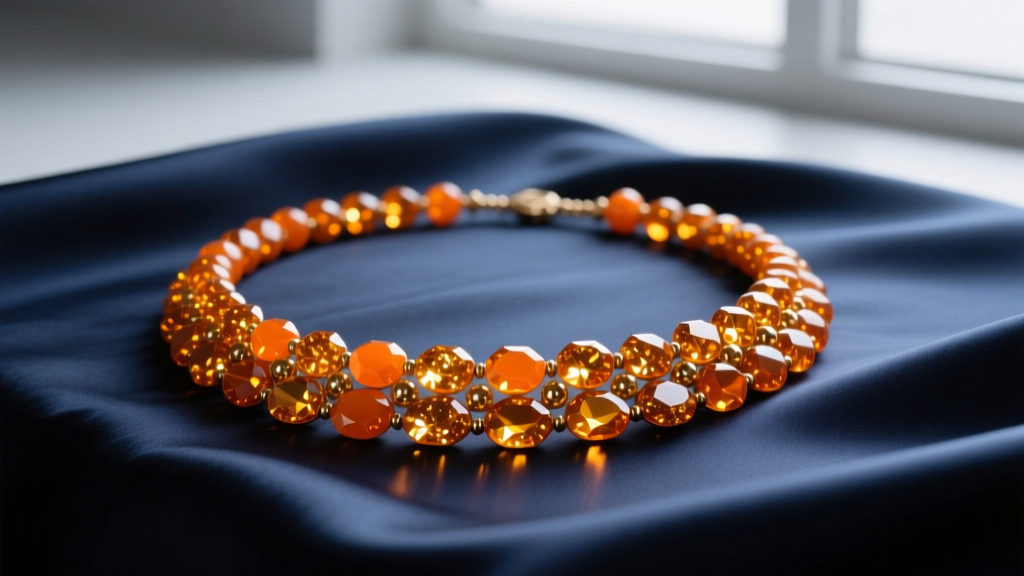
If your orange necklace has seen better days, follow this strict, step-by-step restoration protocol before attempting any DIY cleaning methods.
- The Loupe Test: Examine the stone under a 10x jeweler's loupe. Look for dye concentration in the cracks (common in carnelian) or surface crazing (common in amber). If you see dye pooling, avoid all liquid cleaners.
- The Ultrasonic Ban: Never use ultrasonic or steam cleaners on any orange gemstone except untreated spessartite garnet. The heat and vibrations will destroy amber, fracture sunstone, and strip dyed carnelian.
- The Rehydration Step: For dried-out amber, gently wipe the surface with a drop of pure, unrefined jojoba oil. Let it sit for 10 minutes, then buff it off with a clean microfiber cloth. This temporarily restores the resin's luster and hides micro-scratches.
- The Prong Check: Use a wooden toothpick to gently push against the prongs holding your garnet or sunstone. If there is any movement or clicking, the prongs have worn down and must be re-tipped by a jeweler immediately to prevent stone loss.
By understanding the specific vulnerabilities of orange gemstones, you can transition from simply reacting to damage to proactively preserving your jewelry. For more detailed care instructions on specific garnet varieties, consult the GIA Garnet Care Guide. Proper troubleshooting ensures your orange necklaces remain as vibrant and fiery as the day you acquired them.


