Troubleshooting Your Necklace with Heart Pendants: Flipping & Tarnish
Is your necklace with heart pendants constantly flipping or tarnishing? Learn expert troubleshooting tips to fix bail issues, balance, and metal decay.

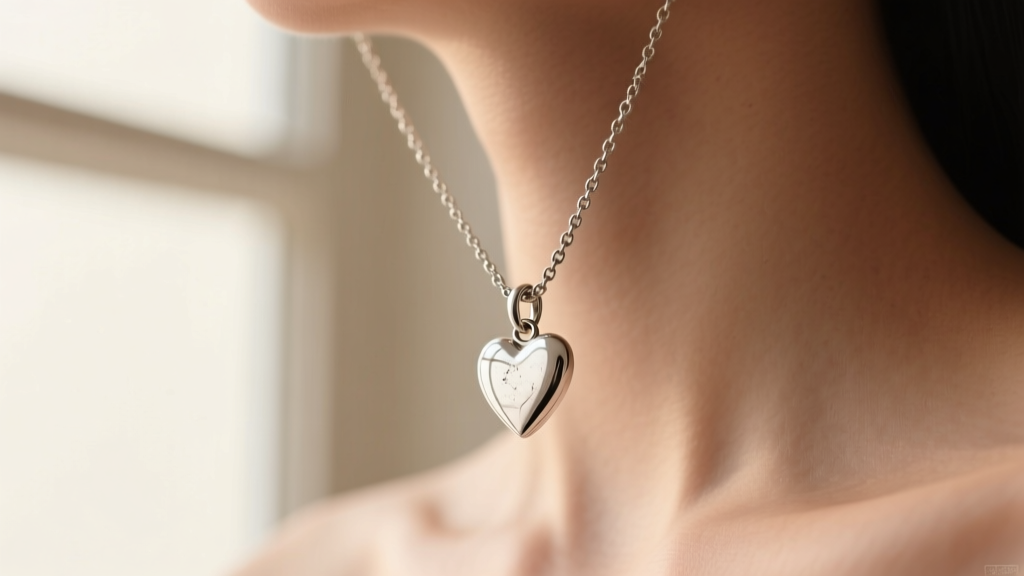
A necklace with heart charms is a timeless staple in jewelry boxes worldwide, often carrying deep sentimental value. However, from a structural and metallurgical perspective, heart-shaped pendants are notoriously problematic. Unlike symmetrical geometric shapes or simple teardrops, the unique topography of a heart—complete with a top-heavy cleft and an asymmetrical center of gravity—creates specific mechanical failures. Add in the chemical realities of everyday wear, and your favorite piece can quickly become a source of frustration.
As a jewelry specialist, I frequently see clients struggling with three main issues: the pendant constantly flipping upside down, the chain tangling in the top cleft, and premature metal decay. In this comprehensive troubleshooting guide, we will dissect the physics and chemistry behind these failures and provide actionable, professional-grade solutions to restore your necklace with heart pendants to its former glory.
The Physics of the Flip: Why Heart Pendants Won't Lay Flat
The most common complaint regarding a necklace with heart charms is the "flip"—the pendant rotates 180 degrees, showing the back of the metal against the skin instead of the decorative front. This is rarely a defect in the casting; it is a physics issue related to the center of mass and the chain-to-bail ratio.
Heart pendants are inherently top-heavy. The two lobes at the top contain more metal volume than the tapered bottom point. If the bail (the loop that connects the pendant to the chain) is soldered exactly at the top center, the chain pulls upward while the heavy top lobes pull downward, creating a pivot point. When the chain is too thick or rigid, it forces the bail outward, pushing the pendant's face away from the chest until gravity flips it entirely.
Troubleshooting the Flip
- Downsize the Chain Width: If you are using a 3.0mm or 4.0mm rope or curb chain, the rigidity of the links will push against the bail. Switch to a flexible chain under 2.0mm, such as a fine cable or wheat chain, allowing the pendant to hang naturally without structural resistance.
- Upgrade to a Sliding Bail: Fixed bails lock the pendant at a strict angle. A sliding bail (a tube or loop that allows the chain to pass through freely) lets the pendant self-correct and find its natural center of gravity.
- Counterweighting: For custom or high-end pieces, a jeweler can drill a micro-hole near the bottom point of the heart and insert a dense tungsten or platinum pin. This lowers the center of mass, anchoring the pendant face-forward.
The Cleft Catch: Preventing Chain Tangling in the Heart's Dip
The V-shaped dip at the top of the heart, known as the cleft, acts as a natural hook. As you move, the chain slides back and forth through the bail. If the chain features textured or interlocking links, it can easily slip out of the bail's arc and wedge itself into the cleft, causing severe tangling and micro-abrasions on the gold or silver.
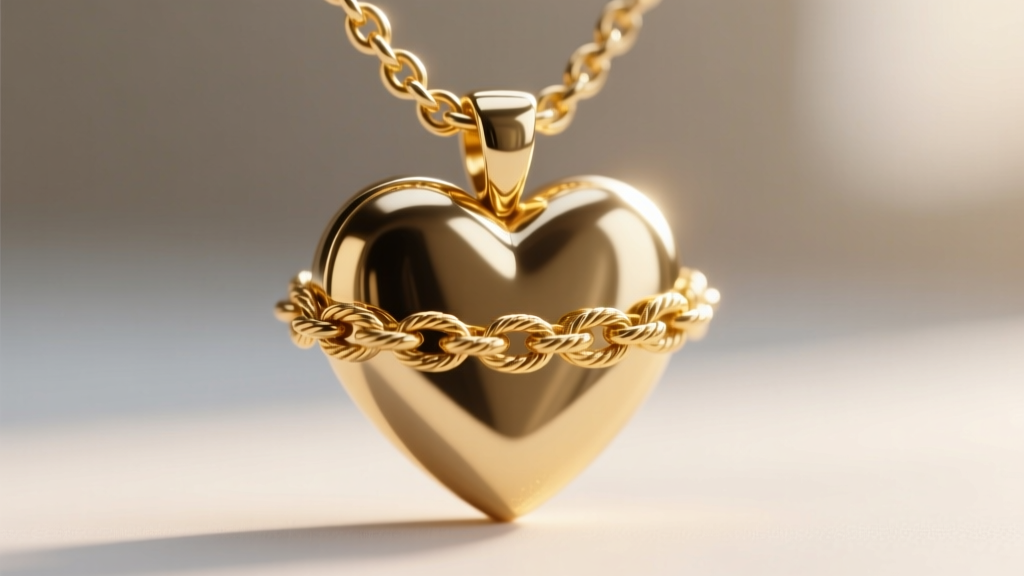
To solve this, we must evaluate both the chain type and the finishing of the pendant itself. According to the Jewelers of America, friction between mismatched metal textures is a leading cause of premature wear in daily-wear jewelry.
Chain Selection and Bail Modification
| Chain Type | Tangle Risk in Heart Cleft | Troubleshooting Recommendation |
|---|---|---|
| Rope Chain | High (Micro-hooks catch the cleft) | Avoid entirely with heart pendants unless using an oversized bail. |
| Box Chain | Low (Smooth, flat exterior) | Highly recommended; glides through the bail without catching. |
| Snake Chain | Very Low (Continuous tube) | Best for delicate hearts, but prone to kinking if bent. |
| Cable Chain | Medium (Oval links can twist) | Use only if links are soldered and lie perfectly flat. |
Pro-Tip: If your heart pendant has a sharp, 90-degree inner angle at the cleft, take it to a jeweler to have the inner V lightly filed and polished with rouge. Rounding off this microscopic edge removes the "hook" effect without altering the visual design of the necklace.
Metal Decay: Troubleshooting Tarnish and Skin Discoloration
Because necklaces with heart pendants are frequent gift items, the market is flooded with low-grade alloys disguised as precious metals. If your pendant is turning your skin green or developing a black, flaky patina, you are dealing with base metal oxidation.
Sterling silver (925) is an alloy of 92.5% pure silver and 7.5% copper. It is the copper that reacts with hydrogen sulfide and moisture in the air (and in your sweat) to create copper sulfide—the black tarnish you see on your jewelry. The Federal Trade Commission (FTC) Jewelry Guides strictly regulate how these metals are stamped and sold, yet mislabeling remains rampant in fast-fashion jewelry.
Identifying and Fixing Metal Failures
- The Green Skin Effect: If the skin beneath the heart pendant turns green, the core metal is likely brass or copper with a microscopic flash-plating of gold or silver. Fix: There is no permanent fix for flash-plated jewelry. Coat the back of the pendant with a jeweler-approved clear nano-ceramic coating (like Jewelry Shield) to create a barrier between the copper and your skin.
- Flaking Gold Vermeil: Vermeil requires a base of sterling silver plated with at least 2.5 microns of 10k gold. If it flakes, it is standard gold-plated brass. Fix: Have a professional jeweler strip the remaining plating via electrolysis and re-plate it with a heavy 3.0-micron layer of 14k or 18k gold.
- Stubborn Silver Tarnish: For genuine 925 silver hearts that have turned completely black, avoid harsh chemical dips which strip the rhodium plating. Instead, use an electrochemical reaction: line a glass bowl with aluminum foil, add boiling water, a tablespoon of baking soda, and a pinch of salt. Submerge the pendant for 3 minutes. The sulfur transfers from the silver to the aluminum, restoring the shine instantly.
Bail Wear and Tear: The Hidden Weak Point
The bail is the unsung hero of any necklace, and on a heart pendant, it takes immense mechanical stress. Every time you move, the jump ring (the circular link connecting the chain to the bail) acts like a microscopic saw blade, slowly cutting through the bail's metal. This is known as "friction sawing."
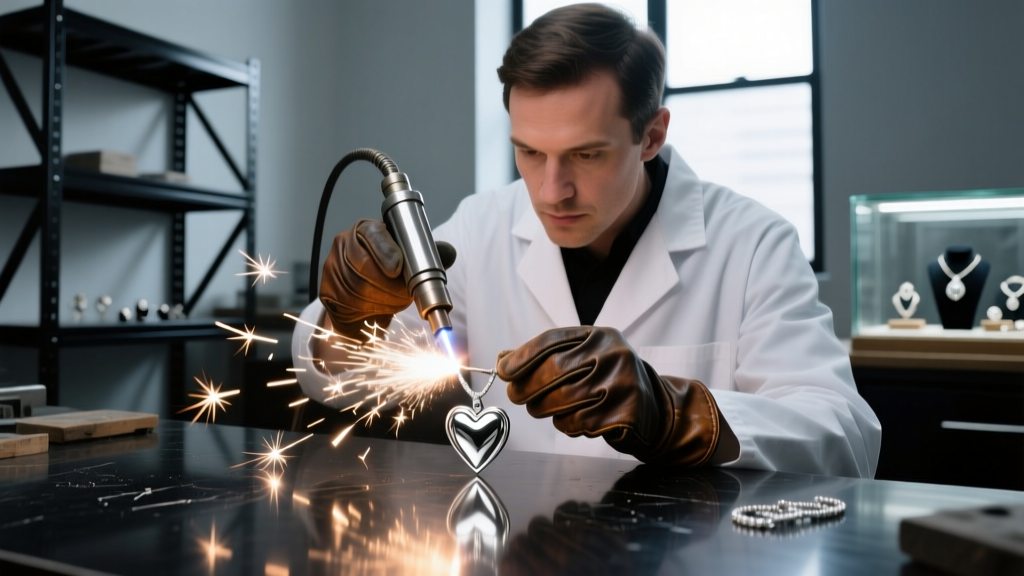
Most commercial heart pendants come with 22-gauge or 20-gauge jump rings, which are too soft and thin for daily wear. Over 3 to 5 years, the jump ring will saw completely through the top of the heart, leading to the loss of the pendant.
"Never trust a 20-gauge jump ring on a sentimental pendant. Upgrading the connection hardware is the single most cost-effective way to save a piece from being lost forever." — Master Bench Jeweler Standard
The Hardware Upgrade Protocol
Take your necklace to a local bench jeweler and request the following specific upgrades:
- Remove the standard jump ring.
- Install a 16-gauge or 14-gauge solid jump ring. Ensure it is "solid" (meaning the wire is completely closed and soldered shut, not just pushed together).
- Material matching: If the pendant is 14k gold, use a 14k gold jump ring. If it is platinum, use platinum. Mixing metal hardness levels (like putting a steel ring on a soft gold bail) will accelerate the friction sawing process.
- Laser Welding: If the bail itself is already worn thin (a groove is visible where the chain rests), ask the jeweler to use a laser welder to add a bead of matching metal to the groove, rebuilding the bail without the heat damage associated with traditional torch soldering.
Step-by-Step Rescue Guide for Your Favorite Necklace
If your necklace with heart charms is currently sitting in a drawer because it tangles, flips, or tarnishes, follow this diagnostic checklist to bring it back into your daily rotation:
- Inspect the Bail: Use a jeweler's loupe or your phone's macro camera to look inside the bail loop. If you see a deep groove, schedule a laser weld rebuild immediately.
- Test the Cleft: Run a piece of cotton thread through the bail and pull it into the top V of the heart. If the thread snags, the cleft needs professional polishing.
- Swap the Chain: Remove heavy, textured chains. Thread the heart onto a 1.5mm box chain or a 1.2mm snake chain to eliminate both the cleft-catch and the center-of-gravity flip.
- Verify the Stamp: Look for a "925", "14K", or "18K" stamp on the back of the heart or the bail. If there is no stamp, assume it is base metal and apply a protective skin-barrier coating to prevent oxidation.
By understanding the mechanical quirks of the heart shape and the chemical realities of precious metal alloys, you can easily troubleshoot and preserve your favorite jewelry. A necklace with heart pendants should be a joy to wear, not a daily puzzle to untangle.


