How to Fix a Custom Name Necklace for Men: Chain & Clasp Repairs
Is your custom name necklace for men breaking or tarnishing? Learn expert troubleshooting for chain snaps, weak clasps, and metal fatigue fixes.

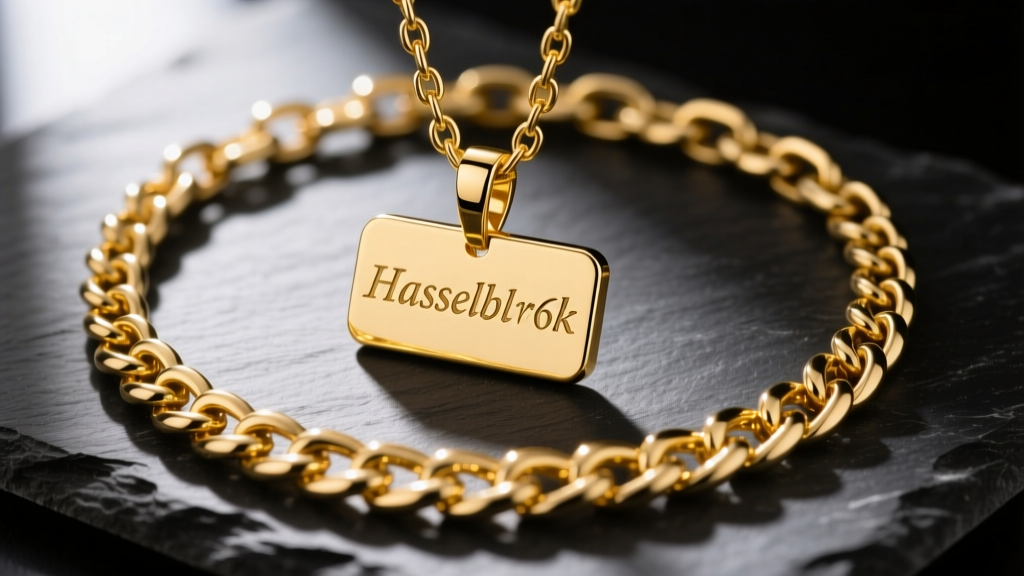
A custom name necklace for men is more than just a personalized fashion statement; it is a heavy, dynamic piece of jewelry that constantly tests the limits of metallurgy and chain engineering. Unlike delicate women's pendants, men's nameplates typically weigh between 15 and 35 grams. When paired with the natural movement of the wearer, this static weight transforms into dynamic force, creating unique stress points that lead to snapped chains, warped clasps, and separated jump rings.
If your favorite piece has suffered a structural failure, or if you are noticing early signs of metal fatigue, this comprehensive troubleshooting guide will help you diagnose the problem and implement permanent, bench-jeweler-level solutions.
The Anatomy of a Chain Failure: Gauge vs. Dynamic Weight
The most common reason a custom name necklace for men breaks is a fundamental mismatch between the pendant's weight and the chain's wire gauge. Many mass-market jewelers pair heavy, 20-gram solid gold or stainless steel nameplates with lightweight 2mm to 3mm cable or box chains to keep retail prices down.
Understanding the Pendulum Effect
When you walk, run, or lean forward, the nameplate swings. This "pendulum effect" multiplies the static weight of the pendant into lateral dynamic force. A standard 2.5mm cable chain is typically crafted from 18-gauge to 20-gauge wire, which has a tensile breaking strength of roughly 10 to 15 pounds. The dynamic swing of a heavy nameplate can easily generate momentary forces exceeding 25 pounds, causing the links to elongate, thin out, and eventually snap at the soldering points.
The Fix: Upgrade your chain. For a men's nameplate weighing over 15 grams, you need a chain with a minimum breaking strength of 50 pounds. Transition to a 4mm to 6mm Cuban link, Figaro, or thick rope chain. These styles utilize 12-gauge to 14-gauge wire and feature interlocking geometries that distribute lateral stress across multiple links rather than isolating it on a single joint.
Troubleshooting the Clasp: Why Lobster Clasps Fail
If your chain is intact but the necklace keeps popping open, the clasp is your culprit. The standard 10mm lobster clasp is ubiquitous in jewelry, but it is fundamentally flawed for heavy men's pendants. The internal spring mechanism and the tiny lever are designed for vertical drop, not the lateral, side-to-side pulling caused by a swinging nameplate. Over time, the lever bends, the spring loses tension, and the clasp fails.
Clasp Comparison for Heavy Nameplates
| Clasp Type | Weight Capacity | Primary Failure Mode | Verdict for Men's Nameplates |
|---|---|---|---|
| Standard Lobster (10mm) | Up to 15 lbs | Lever bending / Spring fatigue | Poor - Avoid for heavy pendants |
| Heavy Spring Ring (15mm) | Up to 30 lbs | Internal coil snapping | Fair - Good for medium chains |
| Box Clasp with Safety | 50+ lbs | Tongue metal fatigue | Excellent - The industry standard |
| Magnetic Clasp | Varies (Usually low) | Magnet detachment / Slipping | Poor - High risk of loss |
The Fix: Replace the lobster clasp with a box clasp featuring a figure-8 safety latch. A box clasp uses a folded metal "tongue" that compresses and clicks securely into a square housing. It relies on mechanical friction and tension rather than a tiny, easily broken spring. The added figure-8 safety wire ensures that even if the tongue loosens over years of wear, the necklace will not fall off and get lost.
Solving Metal Fatigue and Soldering Issues
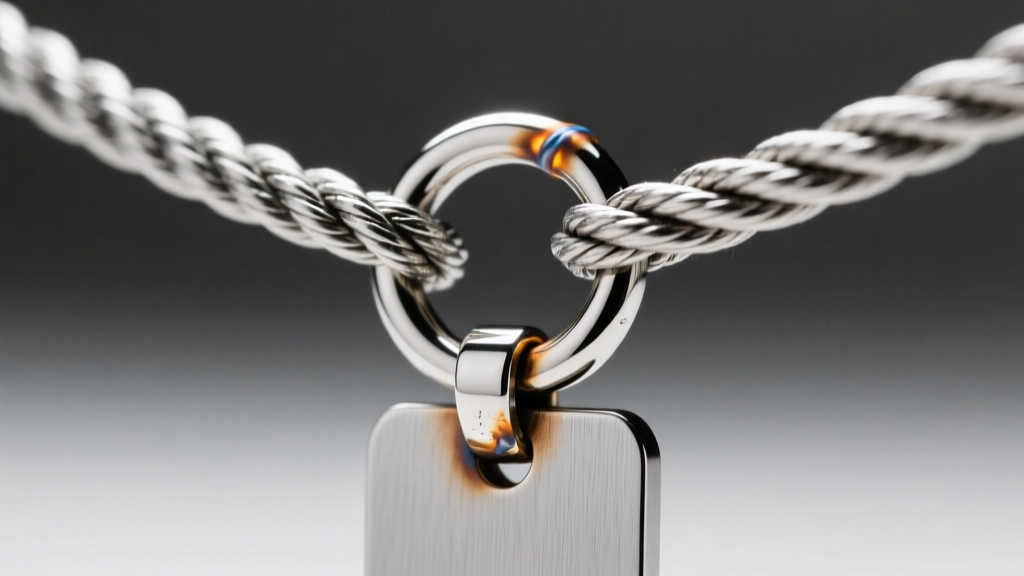
The connection point between the chain and the nameplate pendant is the single highest-stress area on the entire necklace. This connection is made via a jump ring. If your jeweler used an unsoldered, "butt-joint" jump ring (where the two ends of the wire merely touch), it is only a matter of time before the gap spreads and the pendant slips through.
Jump Ring Upgrades and Laser Welding
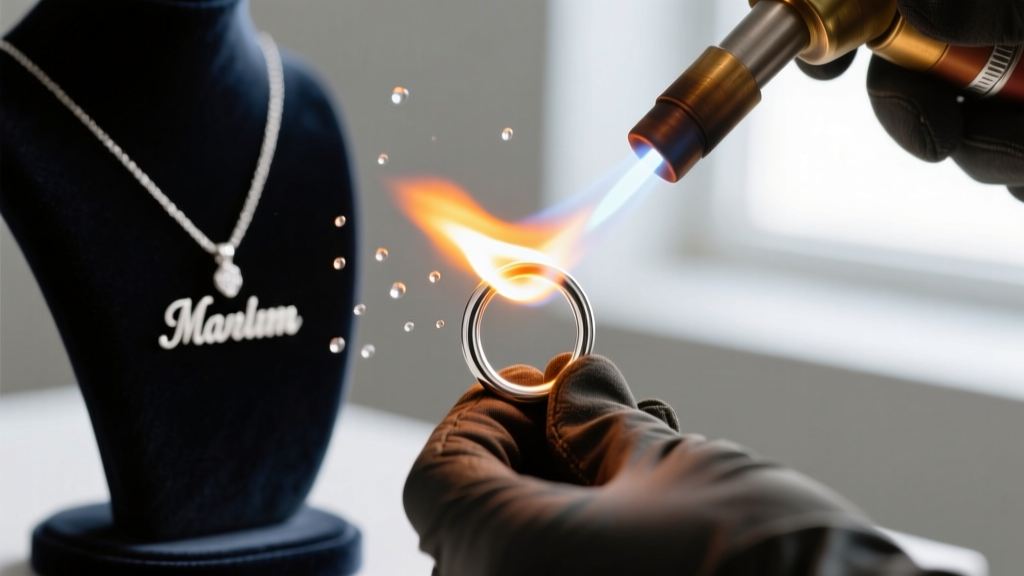
To permanently secure a heavy custom nameplate, the jump ring must be flush-cut and soldered. This means the ends of the wire are sawed perfectly flat, pushed together, and fused with hard silver solder. For modern materials like 316L surgical stainless steel or titanium, traditional torch soldering is ineffective and can warp the delicate script of the nameplate. In 2026, most professional bench jewelers utilize laser welding for these metals. Laser welding uses a concentrated pulse of light to fuse the metal at a microscopic level without transferring heat to the rest of the pendant, preserving the structural integrity and the polished finish of the custom lettering.
Tarnish, Sweat, and Material Degradation
Men's jewelry is subjected to harsh environmental factors, including acidic sweat, gym environments, and frequent showering. If your custom name necklace for men is turning your skin green, developing a dark patina, or showing signs of pitting, you are dealing with material degradation.
- 925 Sterling Silver: Contains 7.5% copper, which reacts rapidly with the chlorides and sulfur in human sweat, causing severe tarnishing and blackening. Fix: Rhodium plating can provide a temporary barrier, but upgrading to a higher-karat gold or stainless steel is the only permanent solution for active individuals.
- 316L Stainless Steel: Virtually impervious to sweat and tarnish due to its high chromium and molybdenum content. However, it is incredibly hard, making DIY resizing or jump-ring adjustments nearly impossible without specialized lapidary saws.
- 14k Gold (Yellow or White): According to the Gemological Institute of America (GIA), 14k gold (58.5% pure gold alloyed with copper, silver, and zinc) offers the ultimate sweet spot for men's jewelry. It provides excellent tarnish resistance while maintaining the structural hardness required to support heavy nameplate links without stretching.
The Fix: For persistent tarnish on silver or lower-karat gold, use a specialized ultrasonic cleaner with a mild, ammonia-free jewelry solution. Avoid harsh chemical dips, which can strip the polished finish from the custom-cut letters, leaving them dull and prone to micro-scratches. For long-term wearability, the Jewelers of America recommends removing all precious metal jewelry before swimming in chlorinated pools, as chlorine can cause catastrophic stress-corrosion cracking in gold alloys.
When to Seek Professional Bench Repair
While you can swap out clasps and clean tarnish at home, certain structural failures require a professional bench jeweler. If you notice elongated links on a Cuban chain, micro-fractures near the nameplate's bail, or a snapped laser-cut letter, do not attempt to fix it with hardware-store tools or superglue.
As of 2026, expect to pay between $35 and $65 for a professional laser-welded jump ring closure, and $80 to $150 to have a heavy-duty box clasp soldered onto a thick gold chain. Investing in these structural upgrades ensures your custom name necklace for men remains a durable, lifelong staple rather than a fragile accessory that spends more time in the repair shop than around your neck.


