Troubleshooting Your Necklace 3 Hearts: Tangles & Chain Fixes
Is your necklace 3 hearts design constantly tangling or kinking? Learn expert troubleshooting tips to fix chain knots, upgrade clasps, and stop tarnish.

The Engineering Flaws of Multi-Pendant Designs
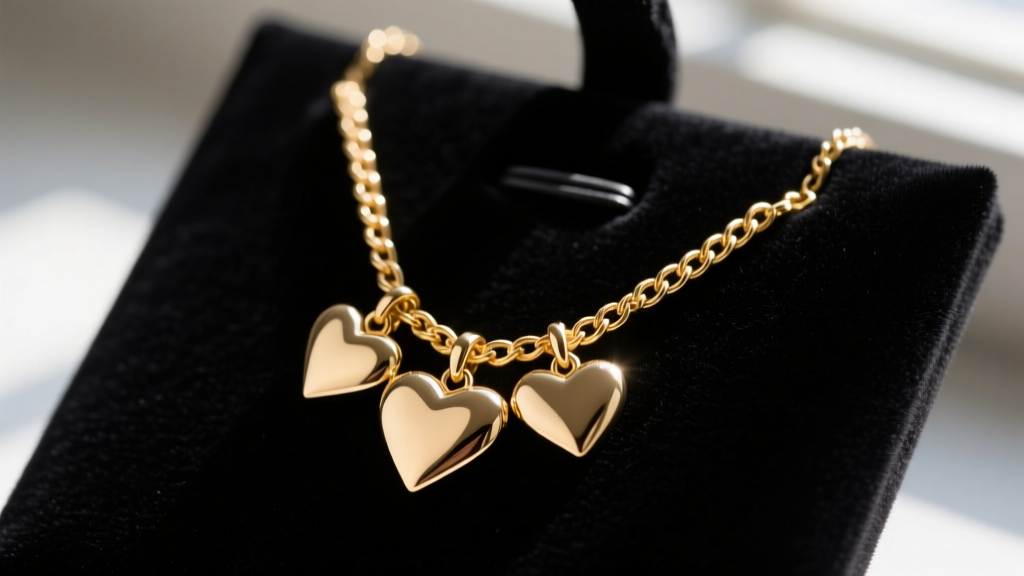
The classic necklace 3 hearts layout is a beloved staple for representing family bonds, past/present/future timelines, or deep friendships. However, from a bench jeweler's perspective, multi-pendant necklaces suffer from specific mechanical flaws. When you suspend three independent weights on a single continuous chain, you introduce dynamic friction, uneven tension, and a high probability of the "pendulum effect"—where the pendants slide together, tangle, and eventually warp the chain links. As of 2026, while laser-welding and advanced alloy casting have improved pendant durability, the fundamental physics of a triple-heart necklace still requires proactive troubleshooting and strategic hardware upgrades to ensure longevity.
Problem 1: The "Triple Pendulum" Tangling Effect
The most common complaint with a necklace 3 hearts design is that the pendants constantly slide down the slope of the décolletage, stacking on top of one another. This stacking causes the bails (the loops that connect the heart to the chain) to rub against each other, leading to micro-abrasions and severe tangling.
Solution A: Strategic Silicone Spacing
For a non-destructive fix, utilize micro-silicone jewelry spacers. These are tiny, translucent discs that slide onto the chain and sit flush against the sides of the heart bails. By placing one spacer on the left and right of the center heart, and spacing the outer hearts exactly 1.5 inches apart, you lock the trio into a fixed formation without altering the metal. Silicone is hypoallergenic, invisible against the skin, and grips the chain just enough to resist gravity.
Solution B: Crimp Bead Stationing
If your necklace utilizes a flexible beading wire (like 0.018-inch Accu-Flex) rather than a traditional metal link chain, you can use 2mm sterling silver or 14k gold-filled crimp beads to create permanent "stations." Using a micro-crimping tool, compress the crimp bead directly on the wire adjacent to the heart bail. Warning: Never use flat-nose pliers to flatten a crimp bead on a multi-pendant wire necklace; the sharp folded edges will eventually shear the nylon-coated steel wire, causing the necklace to snap and the hearts to scatter.
Problem 2: Chain Kinking and Weight Imbalance
Three solid metal hearts carry significant cumulative weight. If the chain is too delicate or the weave is incompatible with multi-directional movement, the chain will kink, permanently damaging the structural integrity of the links. Snake chains and herringbone chains are notoriously poor choices for a necklace 3 hearts setup because their flush, tubular weaves cannot articulate under the shifting weight of three pendants, leading to irreversible kinking.
Chain Weave Compatibility Chart
| Chain Weave Type | Suitability for 3 Hearts | Failure Mode / Risk |
|---|---|---|
| Box Chain | Excellent (Highly Recommended) | Very low risk. Geometric links articulate smoothly and resist kinking under heavy pendants. |
| Rope Chain | Very Good | Low risk. Twisted links distribute weight evenly, though bails can occasionally catch in deep grooves. |
| Cable Chain | Moderate (Gauge Dependent) | Moderate risk. Standard 22g cable chains will stretch. Upgrade to 18g or 16g for triple pendants. |
| Herringbone | Poor (Avoid) | High risk. Flat-laid links will bend and permanently kink under the shifting pendulum weight. |
| Snake Chain | Poor (Avoid) | High risk. Tightly wound bands trap hair and dent easily when the three hearts collide. |
According to the Blue Nile Jewelry Care Guide, matching the chain tensile strength to the pendant weight is critical for preventing irreversible stretching. For a standard trio of 1-inch solid hearts, a 1.5mm to 2.0mm Box chain is the optimal benchmark.
Problem 3: Jump Ring Friction and Clasp Failure
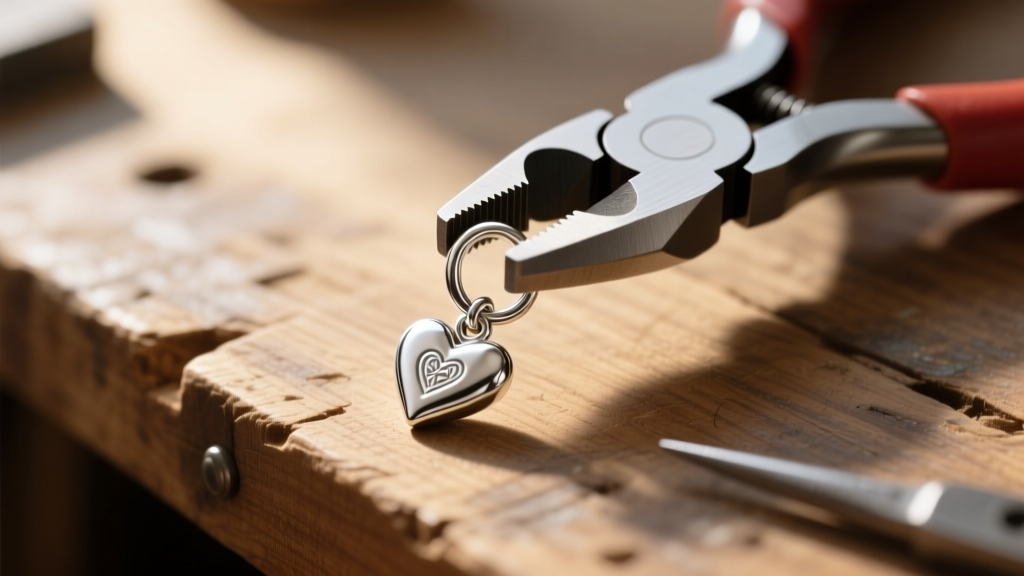
Mass-produced fashion jewelry often attaches pendants using unsoldered, 22-gauge jump rings. When subjected to the dynamic, swinging motion of three hearts, these thin rings slowly twist open. Once the gap widens, the heart pendant slips off the chain and is lost.
Upgrading to Soldered Hardware
To permanently troubleshoot this vulnerability, take your necklace to a bench jeweler to have the pendant bails upgraded to 18-gauge or 16-gauge soldered jump rings. Soldering involves using a micro-torch or laser welder to fuse the seam of the jump ring shut with a matching karat gold or silver alloy. This transforms the ring from a mechanical weak point into a continuous, unbreakable loop. Furthermore, replace any standard spring-ring clasps with a 12mm or 14mm lobster clasp. The heavier triple-heart setup requires the robust internal spring mechanism of a lobster clasp to prevent accidental unhooking when the chain is pulled taut.
Problem 4: Galvanic Tarnish in Mixed-Metal Hearts
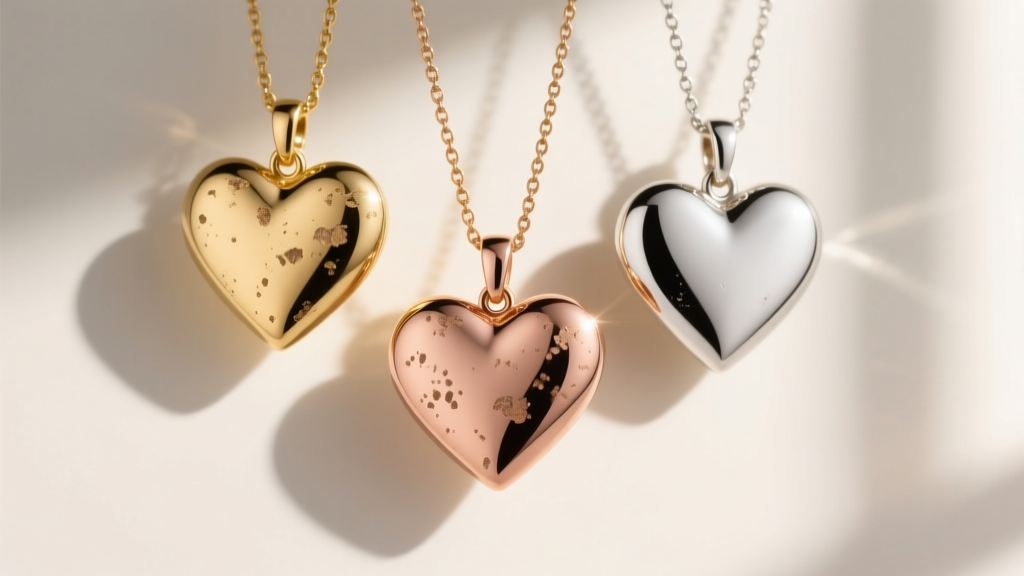
Many modern necklace 3 hearts designs feature mixed metals—for example, a 925 sterling silver heart flanked by 14k yellow gold vermeil and rose gold-plated hearts. While visually striking, mixing base metals and plating types creates a breeding ground for galvanic corrosion and uneven tarnish transfer.
The Science of Mixed-Metal Abrasion
When dissimilar metals constantly rub against each other in the presence of moisture (like perspiration), a mild galvanic cell is created. This accelerates the oxidation of the lesser noble metal. The sterling silver heart will tarnish rapidly, and the resulting silver sulfide will physically rub off onto the gold-plated hearts, giving them a dull, grayish haze that is incredibly difficult to polish out without stripping the delicate gold vermeil layer.
Troubleshooting and Maintenance Protocol
- Isolation: If you wear a mixed-metal trio daily, apply a microscopic layer of Renaissance Wax to the sides of the heart pendants where they make contact. This museum-grade microcrystalline wax acts as a frictionless barrier against galvanic transfer.
- Targeted Cleaning: Never submerge a mixed-metal necklace in a commercial silver dip (like Tarn-X). The harsh thiourea chemicals will instantly strip the gold vermeil and rose gold plating. Instead, use a dedicated GIA-recommended untreated polishing cloth to gently buff only the sterling silver heart, folding the cloth to avoid touching the plated hearts.
- Storage: Store the necklace laid flat in an anti-tarnish intercept bag. Hanging a triple-heart necklace on a standard jewelry tree allows the pendants to swing and scratch each other's plating in the dark.
Summary Checklist for Long-Term Wear
Troubleshooting a necklace 3 hearts design doesn't necessarily mean you need to stop wearing it; it simply requires upgrading the engineering to match the aesthetic. By switching to a rigid Box chain, utilizing silicone micro-spacers to maintain the trio's formation, and upgrading to 18-gauge soldered jump rings, you can transform a fragile, tangling-prone piece into a durable, everyday heirloom. Regular inspection of the bails and mindful cleaning of mixed-metal variants will ensure your three hearts remain perfectly aligned and brilliantly polished for years to come.


