Troubleshooting Your Real Natural Pearl Necklace: Fakes & Fixes
Discover how to authenticate, clean, and restring your real natural pearl necklace. Expert troubleshooting for yellowing, fakes, and silk knotting.

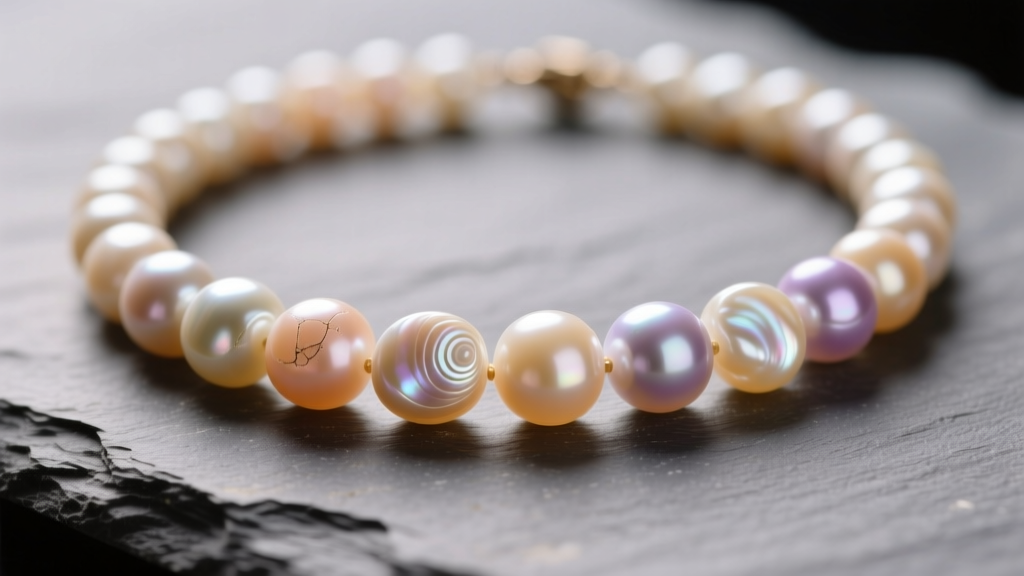
The Terminology Trap: What "Real Natural" Actually Means
When troubleshooting high-end organic jewelry, we must first address a pervasive gemological misunderstanding. In the jewelry trade, the phrase real natural pearl necklace carries a highly specific meaning that differs vastly from consumer parlance. A true "natural" pearl is formed entirely by chance in the wild, without any human intervention or nucleation. Conversely, a "cultured" pearl is real (not plastic or glass) but requires a human to insert a nucleus or mantle tissue into the mollusk. According to the Gemological Institute of America (GIA), natural pearls account for a microscopic fraction of the global market, mostly confined to antique estates and high-end auction houses.
If you are troubleshooting a strand you believe to be a true natural pearl, you are likely dealing with an incredibly valuable antique. If it is a modern purchase, it is almost certainly a real cultured pearl. Regardless of its origin, organic pearls share the same chemical vulnerabilities and structural quirks. This guide provides expert-level troubleshooting for authentication, nacre degradation, and structural failures.
Authentication Dilemmas: Spotting Fakes and Misrepresentations
The most common issue owners face is verifying authenticity. Imitation pearls are manufactured from glass, ceramic, or plastic beads coated with a synthetic pearlescent substance (often guanine crystals derived from fish scales or modern mica-based paints).
The Myth of the "Tooth Test"
Pop culture often suggests rubbing a pearl against your teeth; a gritty feeling indicates a real pearl, while a smooth feel indicates a fake. While this test successfully identifies glass or plastic imitations, it completely fails to distinguish between a real natural pearl and a real cultured pearl. Both possess a crystalline aragonite surface that feels gritty against enamel. Furthermore, performing this test on a soft, high-luster natural pearl risks introducing oral bacteria and acidic micro-abrasions to the delicate surface.
Expert Authentication Protocols
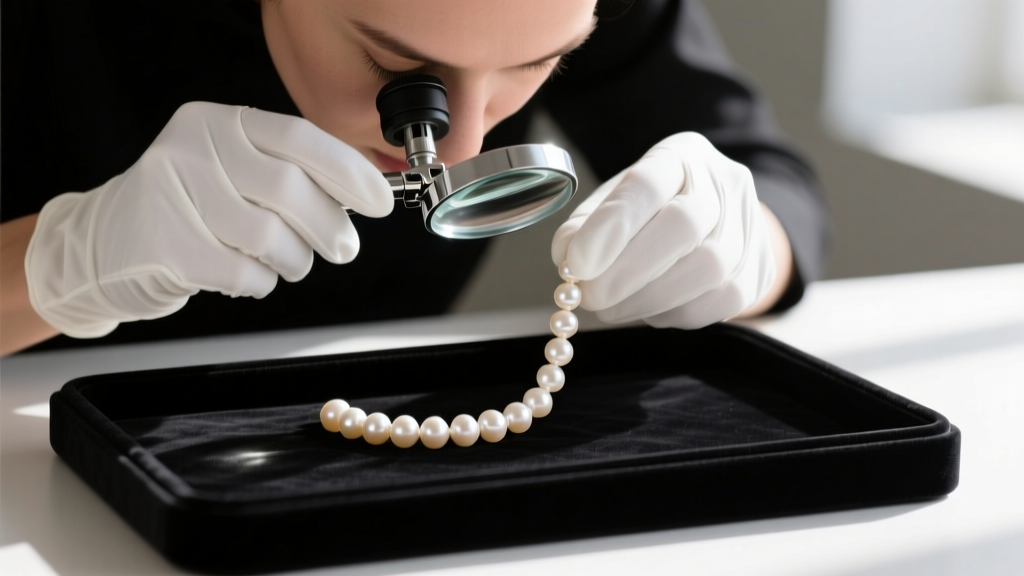
To properly troubleshoot authentication, professionals rely on magnification and radiography:
- 10x Loupe Inspection: Examine the drill hole. Imitation pearls often show peeling or flaking of the synthetic coating around the drill edges. Real pearls will show sharp, clean drill holes with distinct layers.
- Surface Mapping: Under magnification, real pearls exhibit a labyrinthine pattern of overlapping aragonite platelets. Imitations appear perfectly smooth or show an artificial, uniform "grainy" texture.
- X-Ray Microradiography: This is the only definitive method to prove a pearl is truly "natural." As detailed by the GIA Pearl Guide, X-rays reveal the internal structure. Cultured pearls show a solid mother-of-pearl nucleus surrounded by a relatively thin layer of nacre, while true natural pearls display concentric rings of nacre extending to the very center, or a tiny, irregular hollow cavity.
Troubleshooting Nacre Degradation and Yellowing
Pearls are organic gems composed of roughly 90% aragonite (calcium carbonate) and 10% conchiolin (an organic protein matrix). This dual composition makes them uniquely susceptible to environmental damage. If your pearls are losing their luster, developing a yellow tint, or showing surface crazing (micro-cracks), you are witnessing the breakdown of the conchiolin or the etching of the aragonite.
Chemical Exposure and Acid Etching
Calcium carbonate is highly reactive to acids. Human perspiration has a pH ranging from 4.5 to 7.0. If you wear your necklace against bare skin during hot weather or exercise, the lactic acid in your sweat will slowly dissolve the outer layers of nacre, resulting in a dull, chalky appearance. Similarly, the alcohol and essential oils found in perfumes and hairsprays will degrade the organic conchiolin, leading to irreversible yellowing.
The Fix: Never use ultrasonic cleaners, steamers, or ammonia-based jewelry dips. These will instantly destroy the nacre. For mild surface dirt, wipe the strand with a slightly damp microfiber cloth moistened with distilled water. For stubborn oils, use a single drop of pH-neutral castile soap on a soft cloth, wiping each pearl individually, and immediately dry them with a clean, lint-free towel.
Dehydration and Crazing
Pearls contain trace amounts of water (roughly 2%). When stored in overly dry environments—such as a safety deposit box or a heated room without a humidifier—the conchiolin dries out, causing the nacre to shrink and crack.
"To prevent dehydration cracking, pearls should be worn regularly. The natural humidity and minimal oils from the human body help maintain the structural integrity of the conchiolin matrix."If your pearls have already suffered from severe dehydration crazing, there is no chemical fix. The structural damage is permanent, and the affected pearls must be replaced by a professional jeweler.
Structural Failures: Silk Stretching and Knot Slippage
A genuine pearl necklace is strung on silk thread, chosen for its softness and ability to knot securely. However, silk is a natural protein fiber that stretches when exposed to moisture, body weight, and time. A common troubleshooting scenario is a strand that appears "loose" or shows visible gaps between the knots and the pearls.
Selecting the Correct Silk Gauge
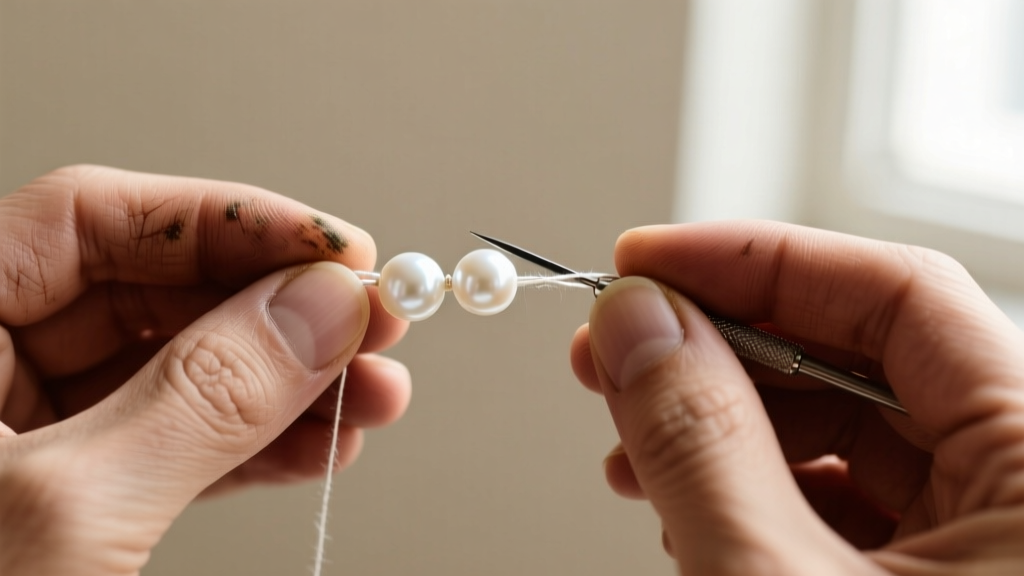
When restringing is required, using the wrong thread gauge is a primary cause of future failure. Silk thread is categorized by size. Using a thread that is too thin will cause the knot to slip through the drill hole; using one that is too thick will cause friction and eventual fraying inside the pearl channel.
- Size #1 (0.40mm): Best for seed pearls and small Akoya pearls (3mm - 5mm).
- Size #2 (0.45mm): The industry standard for most 6mm - 7mm cultured and natural strands.
- Size #4 (0.55mm): Required for larger 8mm - 9mm pearls with wider drill holes.
- Size #6 to #8 (0.65mm - 0.80mm): Reserved for heavy South Sea and Tahitian pearls (10mm+).
The Importance of French Wire (Gimp)
If the silk thread near the clasp of your necklace is fraying or snapping, the strand was likely constructed without French wire. French wire (also known as gimp) is a microscopic, hollow coil of fine metal (usually gold-filled or sterling silver) that is threaded over the silk at the point where it loops through the metal clasp ring. This coil acts as a protective sleeve, preventing the metal clasp from sawing through the delicate silk fibers during movement. Always insist on French wire when having a valuable strand restrung.
Hardware Corrosion and Clasp Upgrades
Vintage and antique pearl necklaces often feature original hardware that is no longer structurally sound. Early 20th-century clasps were frequently made from base metals, low-karat gold (9k or 10k), or silver that is prone to severe oxidation. Furthermore, the traditional "spring ring" clasp relies on a tiny internal steel spring that inevitably rusts and fails when exposed to ambient humidity over decades.
The Fix: Upgrade the hardware. Have a bench jeweler replace aging spring rings or fragile barrel clasps with a solid 14k or 18k gold box clasp featuring a double safety latch. A box clasp distributes the tension of the strand more evenly and prevents the necklace from accidentally unfastening if the primary mechanism is bumped.
Quick Reference: Pearl Troubleshooting Matrix
| Observed Problem | Root Cause | Expert Solution |
|---|---|---|
| Chalky, dull surface patches | Acid etching from sweat, cosmetics, or improper cleaning chemicals. | Wipe with distilled water. For severe etching, professional pearl polishing (removing a microscopic layer of nacre) may be required. |
| Yellowing / Darkening | Conchiolin degradation due to UV exposure, lack of wear, or chemical contact. | Store away from direct sunlight. Wear against the skin to rehydrate. Severe yellowing is irreversible. |
| Visible gaps between knots | Silk thread stretching from moisture absorption and the weight of the pearls. | Immediate restringing. Do not wear the strand, as the weakened silk is highly prone to snapping. |
| Fraying thread near the clasp | Absence of French wire (gimp); metal clasp sawing into the silk. | Restring the necklace and mandate the use of gold-filled or precious metal French wire at both terminal ends. |
| Coating peeling at drill holes | The strand is an imitation (glass or plastic bead with synthetic coating). | Authentication confirmed as fake. No restoration possible; replacement with genuine pearls is recommended. |
Final Thoughts on Pearl Maintenance
Maintaining a real natural pearl necklace—or a high-quality cultured strand—requires a paradigm shift from traditional metal jewelry care. You are not maintaining a static mineral; you are preserving a dynamic, organic artifact. By understanding the chemical boundaries of aragonite, respecting the mechanical limits of silk, and utilizing proper gemological authentication, you can ensure your pearl strand survives for generations. For comprehensive care guidelines, always refer to the GIA Pearl Care and Cleaning protocols before attempting any at-home restoration.


