Troubleshooting Common Issues With Gold Butterfly Necklaces
Learn how to fix tangles, repair broken clasps, and restore the shine of your gold butterfly necklaces with our expert jewelry troubleshooting guide.
The Unique Anatomy of Butterfly Pendants and Chain Snags
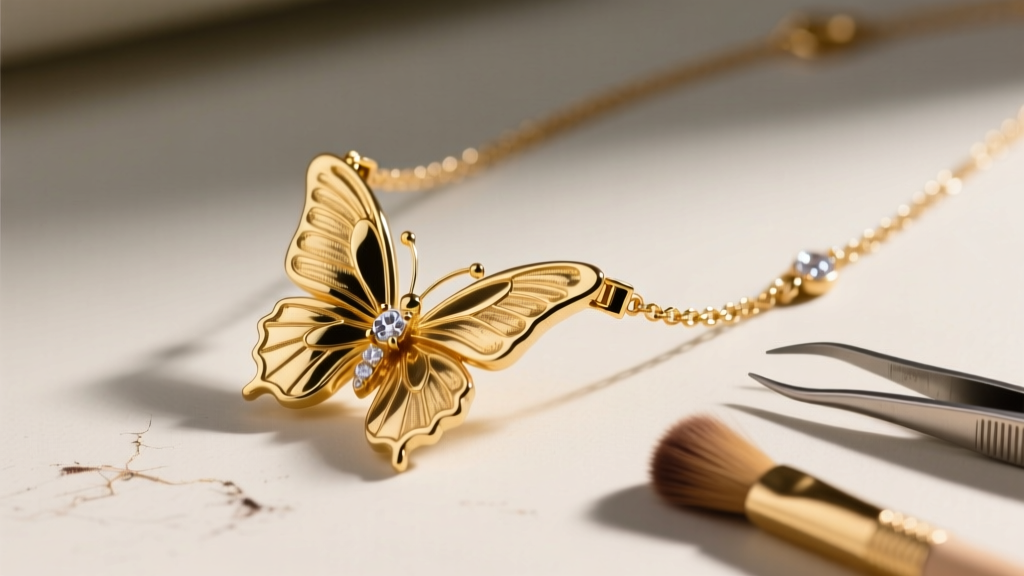
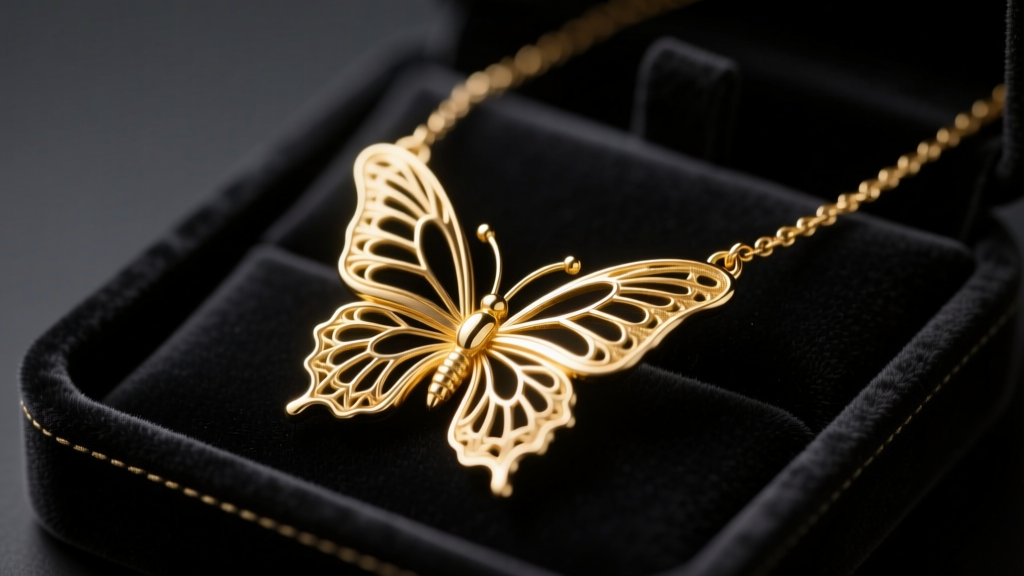
Gold butterfly necklaces are a staple in both minimalist and maximalist jewelry collections, but their intricate geometry creates specific maintenance challenges. Unlike simple geometric pendants, the protruding wings, delicate antennae, and textured thorax of a butterfly design act as natural catch-points. When paired with certain chain styles, these pendants are highly susceptible to tangling, snagging, and localized metal fatigue. According to the Jewelers of America, the majority of necklace repairs stem from chain-pendant incompatibility and improper storage. Understanding the structural vulnerabilities of your gold butterfly necklace is the first step in troubleshooting its most common issues.
The problem is often exacerbated by the chain type. Box chains, while popular for their modern aesthetic, feature sharp, interlocking square links that easily catch on the tapered edges of butterfly wings. Conversely, smooth cable chains or rounded rolo chains allow the pendant to glide more freely. If you find your necklace constantly knotting just above the bail (the loop connecting the pendant to the chain), the issue is likely friction between the bail and the chain links, compounded by the pendulum-like swinging of the asymmetrical butterfly wings.
Step-by-Step Guide to Untangling Delicate Chains
When a fine gold chain tangles around a butterfly pendant, the immediate instinct is to pull. This is a critical error. Gold alloys, particularly 14k and 18k, are subject to work-hardening. When the metal is bent or pulled under tension, its crystalline structure compresses, making it brittle and prone to micro-fractures. To safely detangle your necklace without compromising the structural integrity of the gold, follow these professional methods.
The Baby Powder or Cornstarch Method
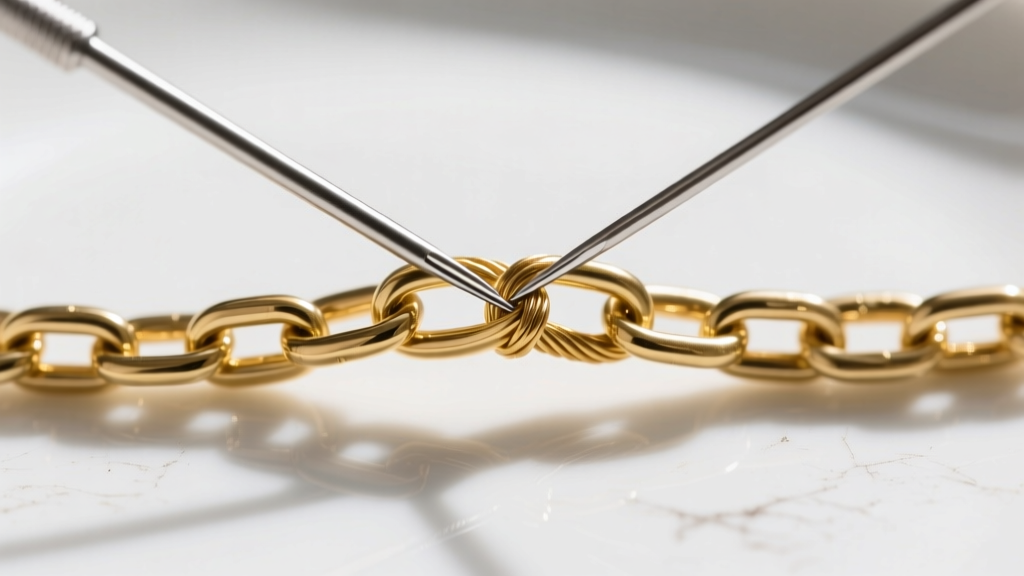
Friction is the enemy of untangling. Lay the knotted necklace flat on a clean, hard surface like a glass or ceramic tray. Generously dust the knot with baby powder or cornstarch. The fine particles act as a dry lubricant, reducing the surface friction between the microscopic gaps in the chain links. Using two fine-tipped sewing needles or beading awls, gently work the powder into the center of the knot. Do not pull the ends of the chain; instead, use the needles to push the links inward toward the center of the tangle to create slack.
The Olive Oil and Magnification Technique
For severe, multi-layered knots where the butterfly wings are deeply entangled, dry lubricants may not suffice. Apply a single drop of extra virgin olive oil directly to the knot. The oil provides superior slip but will require a thorough degreasing afterward. Use a jeweler's loupe (10x magnification) to identify the exact link that is bearing the most tension. Carefully insert a 0.8mm beading needle into that specific link and gently twist to expand the gap. Once the primary tension link is loosened, the surrounding tangle will naturally collapse.
Troubleshooting Metal Fatigue and Clasp Failures
A frequent complaint with gold butterfly necklaces is the premature snapping of the chain near the clasp or the pendant bail. This is rarely a defect in the gold itself, but rather a mismatch between the chain gauge and the pendant's dynamic weight. A butterfly pendant with a wide wingspan creates a pendulum effect, generating kinetic stress on the chain links closest to the clasp every time the wearer moves.
Upgrading your clasp can also resolve slipping issues. Standard 5mm spring ring clasps often fail because the internal tension spring degrades, or the small lever becomes bent, preventing the ring from closing flush. Upgrading to a 6mm or 8mm lobster clasp provides a more secure, self-closing mechanism that is easier to operate and less prone to accidental unhooking.
| Chain Style | Typical Gauge | Max Pendant Weight | Butterfly Snag Risk |
|---|---|---|---|
| Cable | 0.8mm - 1.0mm | 3.5g | Low |
| Box | 0.9mm - 1.2mm | 5.0g | High |
| Rolo | 1.2mm - 1.5mm | 8.0g | Medium |
| Figaro | 1.0mm - 1.5mm | 6.0g | Medium |
Restoring Enamel and Gold Finishes Without Damage
Many gold butterfly necklaces feature vibrant wing details achieved through enameling. Troubleshooting discoloration or dullness requires identifying whether your piece uses vitreous enamel (fired glass) or cold enamel (epoxy resin). The vast majority of contemporary, affordable gold butterfly pendants utilize cold enamel. This distinction is critical because standard jewelry cleaning methods will destroy cold enamel.
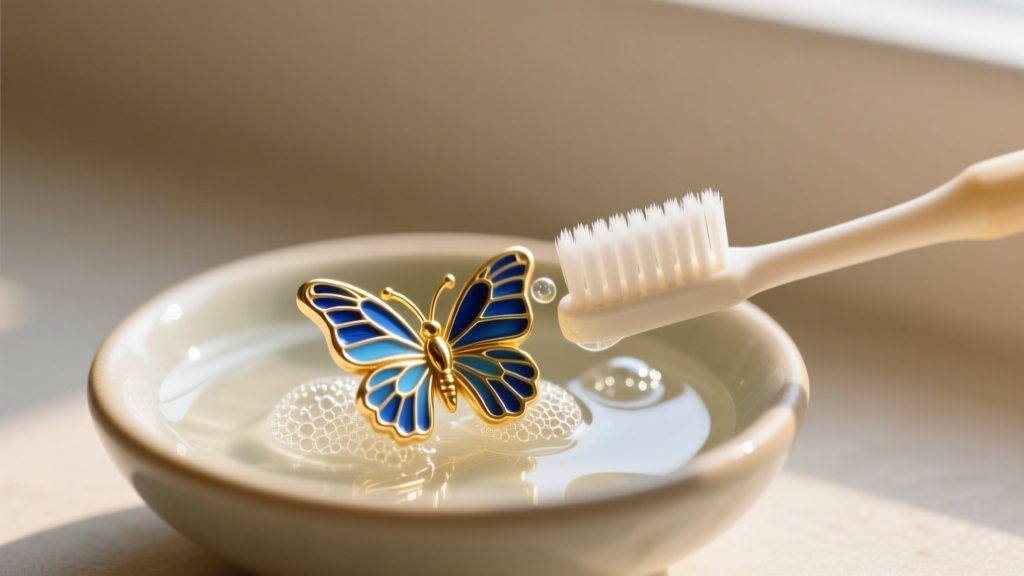
Ultrasonic cleaners, which operate at high frequencies (typically 40kHz) to cavitate dirt away, will shatter or cloud cold enamel instantly. Similarly, harsh chemical dips and ammonia-based cleaners will strip the epoxy's topcoat, leaving the wings looking milky and scratched. To safely restore the shine of an enameled gold butterfly necklace, use a solution of 1 part mild, phosphate-free dish soap to 10 parts lukewarm water. Soak the piece for no more than three minutes, then gently agitate the gold areas with a soft-bristled baby toothbrush. Avoid brushing directly over the enamel; instead, let the soapy water flow over it, and pat dry with a lint-free microfiber cloth.
Expert Note: The Federal Trade Commission (FTC) requires gold vermeil to have a minimum gold thickness of 2.5 microns over a sterling silver base. If your butterfly pendant is losing its gold tone rapidly or turning green, it is likely gold-plated brass, not true vermeil, and requires complete re-plating by a professional.
Preventative Storage Solutions for Intricate Pendants
Because the wings of a butterfly pendant act as natural hooks, storing these necklaces in a communal jewelry box is a guarantee for future tangles and scratches. The gold wings can easily scratch softer gemstones or become scratched by heavier chains. To prevent this, adopt a segmented storage strategy.
First, always fasten the clasp before storing the necklace. An open clasp is a primary culprit for chain knotting. Second, utilize individual anti-tarnish polyethylene bags. These bags are treated with proprietary polymers that absorb sulfur and moisture from the air, significantly slowing the oxidation process of the copper and silver alloys present in 10k and 14k gold. For long-term storage, consider hanging the necklace on a multi-tiered jewelry stand with velvet-padded hooks, allowing the butterfly pendant to hang freely without touching any other surfaces.
When to Seek Professional Jeweler Intervention
While many maintenance tasks can be handled at home, certain structural failures require professional equipment. If the bail of your butterfly pendant has worn completely through, or if the chain has suffered a clean break due to metal fatigue, do not attempt to solder it yourself. As of 2026, most reputable jewelers utilize laser welding for these micro-repairs. Laser welders offer pinpoint accuracy, fusing the gold without generating the widespread heat that would melt the pendant's cold enamel or alter the temper of the surrounding chain links. For deep scratches on the gold wings, a jeweler can perform a multi-stage polishing process using progressively finer rouge compounds, restoring the mirror finish without compromising the intricate wing veining. For more information on gold alloy properties and repair standards, consult the Gemological Institute of America (GIA) educational resources.


