Troubleshooting Male Necklace Lengths: Fix Fit and Sizing
Struggling with awkward chains? Learn how to troubleshoot male necklace lengths, fix fit issues, and choose the right drop for your body type and collar.


Buying a chain online or in-store only to find it sits awkwardly on your chest is a universal frustration. Whether it is choking your neck, hiding completely beneath your collar, or causing a pendant to constantly flip backward, improper sizing ruins the aesthetic. Troubleshooting male necklace lengths requires more than just guessing your size; it demands an understanding of neck circumference, torso proportions, and the mechanical relationship between chains and pendants. This guide provides actionable, expert-level solutions to fix the most common fit and styling issues men face with necklaces.
The Most Common Male Necklace Length Mistakes
Before fixing the problem, you must identify the specific failure mode of your current chain. Most men fall victim to one of three sizing errors:
- The Choker Effect: An 18-inch chain on a man with a neck circumference over 16 inches will sit tightly against the Adam's apple. This restricts movement, causes skin irritation, and visually thickens the neck.
- The Hidden Drop: A 20-inch chain worn under a standard crew-neck t-shirt will often disappear entirely into the fabric folds, only revealing itself when you bend over.
- The Belly Button Plunge: Chains measuring 26 to 30 inches are designed to hang over clothing. When worn under an unbuttoned shirt on a shorter torso, they droop too low, disrupting your body's visual proportions and tangling in chest hair.
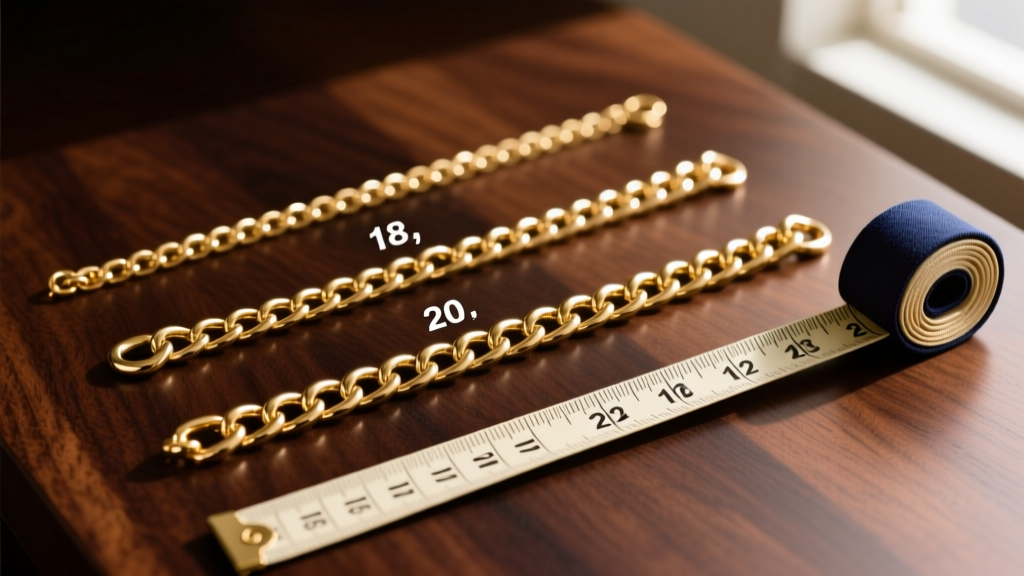
To avoid these issues, always measure your neck with a soft tailor's tape. Add 2 inches to your exact neck measurement to find your absolute minimum comfortable chain length. According to jewelry manufacturing standards outlined by Rio Grande, accounting for the clasp hardware and jump rings is also critical, as heavy chains require larger, bulkier clasps that can eat up to half an inch of your total length.
The Standard Male Necklace Length Chart & Body Type Fixes
Use this troubleshooting matrix to diagnose your current chain and find the correct replacement length based on your specific build.
| Chain Length | Drop Position | Best Body Type | Troubleshooting Fix |
|---|---|---|---|
| 18 Inches | Base of neck / Collarbone | Slender builds, necks under 15 inches | If choking, add a 2-inch extender chain or size up to 20 inches. |
| 20 Inches | Mid-chest / Just below collar | Average builds, 15-17 inch necks | If hiding under shirts, switch to V-necks or size up to 22 inches. |
| 22 Inches | Lower chest / Sternum | Broad shoulders, muscular builds | Ideal for pendants. If flipping occurs, check the bail-to-chain ratio. |
| 24 Inches | Mid-sternum | Tall men, thick necks (17+ inches) | Too long for crew necks. Reserve for open collars or over-shirt wear. |
| 30 Inches | Lower torso | Streetwear styles, layering | Never wear under a shirt. Use a heavy gauge (5mm+) to prevent tangling. |
Troubleshooting Collar and Neckline Clashes
A perfectly sized chain can still look wrong if it clashes with your neckline. The intersection of metal and fabric dictates the visual flow of your outfit.
Crew Necks and High Collars
Crew neck t-shirts and sweaters have a tight, circular ribbing that sits high on the collarbone. An 18-inch or 20-inch chain will either get swallowed by the ribbing or sit awkwardly right on top of the seam. The Fix: Opt for a 22-inch or 24-inch chain that drops well below the collar's hemline, or choose a highly textured chain (like a rope or wheat chain) that catches the light and stands out against the fabric.
V-Necks and Unbuttoned Shirts
V-necks naturally frame the chest, creating a geometric arrow pointing downward. The Fix: Mirror this geometry with a 20-inch chain featuring a V-shaped or teardrop pendant. Avoid thick, wide chains like Cubans here, as they compete with the exposed skin and disrupt the clean lines of the V-neck.
Button-Down Dress Shirts
When wearing a dress shirt with the top button undone, a 22-inch chain often gets caught on the inner placket when you move. The Fix: Wear an 18-inch chain that sits entirely above the open collar, acting as a subtle accent, or go for a 26-inch chain that hangs entirely outside the shirt over the fabric.
DIY Fixes for Chains That Are Too Short or Too Long
If you already own a chain that fits poorly, you do not necessarily need to buy a new one. With basic jewelry tools, you can troubleshoot the length at home.
Fixing a Chain That Is Too Short
You can easily add a custom extender. Purchase a 2-inch length of matching cable or curb chain. Using two chain-nose pliers, twist open a 20-gauge jump ring (never pull it apart, as this weakens the metal). Attach the extender chain to the existing clasp side. On the opposite end of the extender, attach a larger 14-gauge jump ring so your existing lobster clasp has something secure to grab onto. For heavy chains over 20 grams, always use GIA-recommended soldered jump rings for the anchor points to prevent the chain from snapping under its own weight.
Fixing a Chain That Is Too Long
For leather or cord necklaces, simply re-tie the closure using a sliding square knot or a macramé adjustable closure. For metal chains, you must remove links. If the chain has a uniform link pattern (like a box or curb chain), use wire cutters to snip the desired number of links from the clasp end. Reattach the clasp using a fresh, matching jump ring. If the chain has a complex pattern, take it to a jeweler to have the clasp laser-welded to the new endpoint to preserve the structural integrity.
Solving the 'Flipping Pendant' Problem
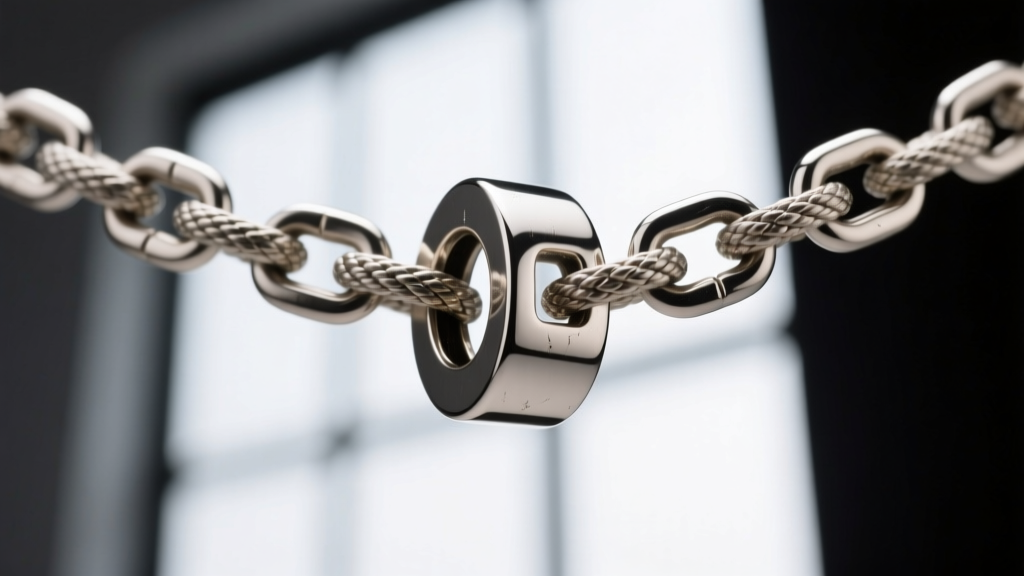
Nothing is more annoying than a pendant that constantly flips backward, hiding the design and showing the flat back against your chest. This is a mechanical issue caused by an improper center of gravity or a mismatched bail-to-chain ratio.
The Bail-to-Chain Ratio: The bail (the loop connecting the pendant to the chain) must have an inner diameter at least 1.5 times larger than the width of the chain. If you are using a 4mm Cuban chain, the bail's inner hole must be at least 6mm. If it is too tight, the chain binds inside the bail, forcing the pendant to rotate and flip.
The Center of Gravity Fix: If the bail is correctly sized but the pendant still flips, the pendant is likely top-heavy. You can troubleshoot this by adding a small, clear silicone o-ring or a tiny rubber jewelry stopper on the chain just outside the bail. This creates friction, preventing the pendant from sliding freely and forcing it to stay centered on your chest.
Expert Sizing Tips for Thick Necks and Broad Shoulders
Men who lift weights or naturally possess thick necks (17 inches or more) and broad trapezius muscles face unique sizing challenges. Standard retail sizing completely ignores these proportions.
If you have a thick neck, an off-the-rack 20-inch chain will sit like a choker. You must start your baseline at 22 inches. Furthermore, broad shoulders stretch the skin of the chest laterally. When you raise your arms, a chain that fits perfectly while standing still may suddenly pull tight across your chest. To troubleshoot this, always test the fit of a chain while moving your arms in a full circular motion before purchasing. Finally, opt for chains with a slight bit of flex and drape, such as rope, wheat, or mariner chains. Rigid chains, like thick box chains or herringbone, will kink, bend, or snap when subjected to the lateral tension of broad shoulders.


