Beginner's Guide to Buying a Turquoise Eagle Necklace
Learn to choose, authenticate, and style a turquoise eagle necklace. Discover stone grades, silver purity, and Native American craftsmanship.

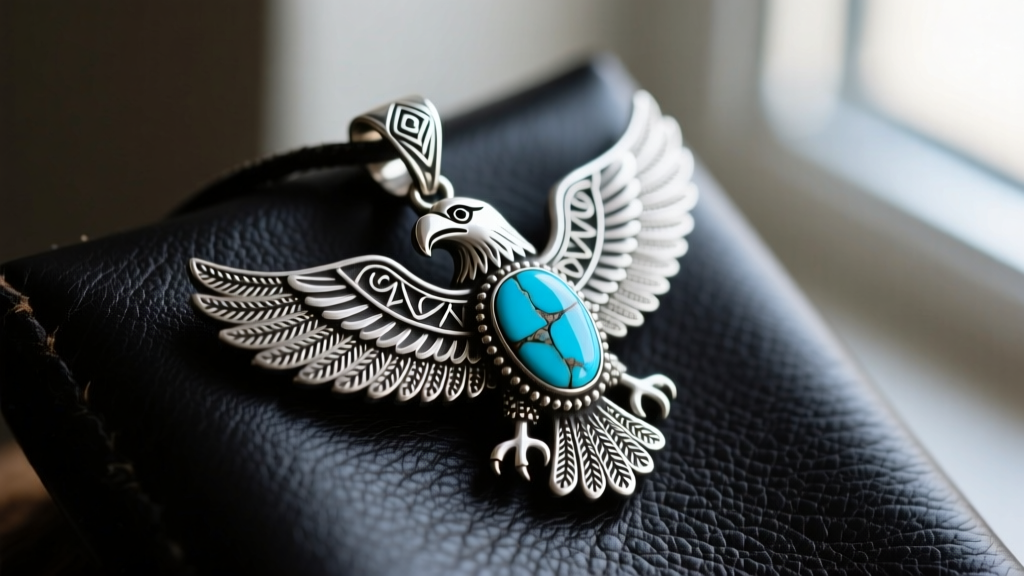
The turquoise eagle necklace is far more than a simple fashion accessory; it is a wearable piece of history, deeply rooted in Southwestern and Native American artistry. For beginners stepping into the world of Southwestern jewelry, the market can be overwhelming. Between mass-produced imitations, treated stones, and misleading silver stamps, finding an authentic, high-quality piece requires a bit of education. This guide breaks down everything you need to know about turquoise grades, silver purity, lapidary techniques, and how to properly pair your pendant with the right chain.
The Symbolism and Origins of the Eagle Motif
In Native American cultures, particularly among the Navajo (Diné) and Zuni tribes, the eagle—often stylized as the Thunderbird—represents courage, wisdom, and a spiritual connection to the heavens. When you purchase a turquoise eagle necklace, you are typically looking at one of two distinct artistic traditions:
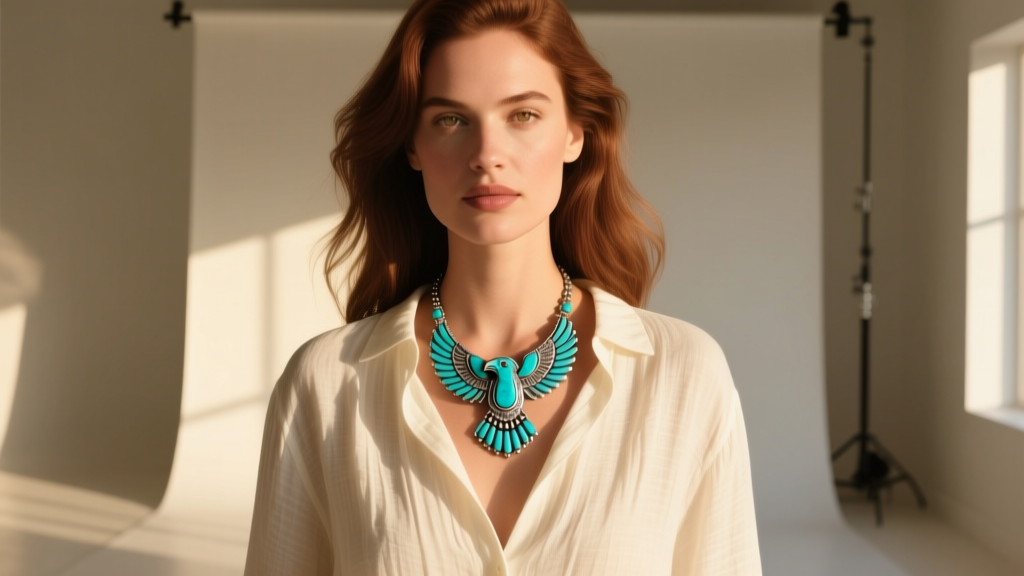
- Zuni Petit Point and Needle Point: Zuni artisans are master lapidaries. They cut tiny, precise teardrops and ovals of turquoise (petit point) or long, thin needles of stone (needle point) to build intricate, mosaic-like eagle shapes set in delicate silver bezels.
- Navajo Sandcast and Heavy Silverwork: Navajo silversmiths traditionally focus on the metal. A Navajo eagle pendant might feature a heavy, sandcast silver eagle with a single, large, domed turquoise cabochon serving as the body or the focal point of the wings.
Understanding which style you prefer will dictate your budget and the specific hallmarks you should look for when authenticating the piece.
Decoding the Materials: Turquoise and Silver
The value and longevity of your necklace depend entirely on its raw materials. Here is what you need to look for.
Turquoise: Natural vs. Stabilized
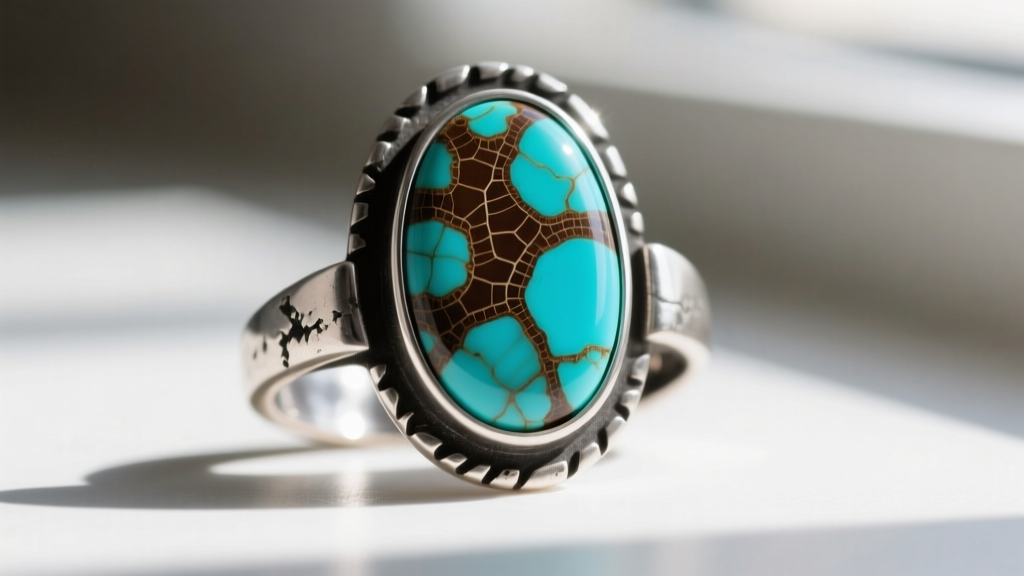
Turquoise is a relatively soft, porous stone, rating between 5 and 6 on the Mohs hardness scale. Because of this, the vast majority of turquoise on the market is stabilized. Stabilization involves infusing the porous stone with a clear epoxy resin under pressure. This is an accepted, permanent treatment that hardens the stone and enhances its color. However, it must be disclosed by the seller. Natural turquoise is untreated, highly prized, and significantly more expensive. As of 2026, with legendary mines like Sleeping Beauty closed for years, natural, un-stabilized turquoise commands a massive premium.
For a deeper dive into gemstone treatments, the Gemological Institute of America (GIA) provides excellent baseline data on how to identify dyed and reconstituted stones.
Silver Purity: Sterling vs. Coin
Authentic Southwestern jewelry is almost exclusively crafted in silver. Look for the .925 stamp, indicating Sterling Silver (92.5% pure silver). However, if you are buying a vintage turquoise eagle necklace from the 1930s to 1960s, you may encounter Coin Silver. Melted down from silver coins, this alloy is roughly 90% pure silver and lacks a standardized stamp, often testing slightly lower on an XRF analyzer than modern sterling.
The Authenticity Matrix: Spotting Fakes
The market is flooded with counterfeit Southwestern jewelry. To protect yourself, familiarize yourself with the Indian Arts and Crafts Act of 1990, which makes it illegal to misrepresent Native American-made goods. Use the table below to differentiate between genuine materials and common fakes.
| Material Type | Visual Characteristics | Price Range | Verdict |
|---|---|---|---|
| Natural Turquoise | Vibrant color, natural matrix, may have minor pitting | $300 - $1,500+ | Investment Grade |
| Stabilized Turquoise | Uniform color, hardened, glassy luster when polished | $80 - $350 | Excellent for Daily Wear |
| Dyed Howlite | Chalky white base, dyed blue, matrix looks painted/spidery | $15 - $45 | Avoid (Imitation) |
| Reconstituted 'Block' | Turquoise dust mixed with resin, uniform, lacks real matrix | $20 - $60 | Avoid (Low Quality) |
Sizing, Weight, and Chain Selection
A common beginner mistake is buying a heavy, handcrafted turquoise eagle pendant and hanging it on a flimsy chain. Handmade Zuni and Navajo pendants can easily weigh between 20 and 45 grams. If you use a thin 1mm snake chain, it will kink, weaken, and eventually snap under the pendant's kinetic movement.
Choosing the Right Chain Gauge
For a pendant weighing over 15 grams, you need structural integrity. Opt for a 2.5mm to 4mm rope chain or a 3mm box chain made of solid .925 sterling silver. These weaves distribute weight evenly and resist kinking. Furthermore, check the bail (the loop at the top of the pendant). A heavy eagle pendant requires a bail with an inner diameter of at least 6mm to 8mm to smoothly glide over a thicker rope chain without causing friction damage to the silver.
Care and Maintenance for Longevity
Turquoise is highly sensitive to chemicals, oils, and sudden temperature changes. To ensure your necklace lasts a lifetime, follow these strict care protocols:
- Never use ultrasonic cleaners. The high-frequency vibrations can shatter natural turquoise and strip the polish from stabilized stones.
- Avoid chemical exposure. Perfumes, lotions, and hairsprays can seep into the stone's matrix, permanently dulling its color. Always put your necklace on after applying cosmetics.
- Clean with a damp microfiber cloth. If the silver oxidizes (tarnishes), use a dedicated silver polishing cloth on the metal only, avoiding the turquoise cabochon.
- Store properly. Keep the necklace in an anti-tarnish bag, laid flat. Hanging heavy pendants for long periods in a jewelry box can warp the chain over time.
Pricing Guide: What Should You Actually Pay?
When shopping for a turquoise eagle necklace, price is a strong indicator of origin and material quality. Here is a realistic breakdown of the 2026 market:
- $25 - $75: Mass-produced, imported jewelry. Usually features dyed howlite or reconstituted block turquoise set in silver-plated brass. Good for costume wear, but holds no intrinsic or resale value.
- $120 - $300: Authentic Native American craftsmanship using stabilized turquoise and solid .925 sterling silver. This is the sweet spot for beginners wanting genuine artistry without the investment-grade price tag.
- $400 - $2,000+: Master-crafted pieces featuring rare, natural turquoise (such as high-grade Lander Blue or Bisbee) and heavy-gauge sterling or coin silver. Often signed by renowned artisans and accompanied by a certificate of authenticity.
Expert Tip: When buying from an online retailer or gallery, always ask for the specific mine origin of the turquoise and the artist's tribal affiliation. Reputable dealers will gladly provide this provenance, which is essential for both insurance appraisals and supporting indigenous artists ethically.
By understanding the lapidary techniques, silver weights, and stone treatments, you can confidently navigate the market. A genuine turquoise eagle necklace is a timeless investment that bridges the gap between historical artistry and modern personal style.


