Ultimate Care Guide for Your Turquoise Star Necklace
Learn expert cleaning and maintenance tips to protect your turquoise star necklace from damage, discoloration, and tarnish. Preserve its vibrant color.


Understanding Turquoise: Porosity and Vulnerability
Turquoise is a captivating, opaque gemstone that has been prized for centuries, but its unique chemical composition makes it one of the most vulnerable stones in jewelry. According to the Gemological Institute of America (GIA), turquoise is a porous hydrous phosphate of copper and aluminum. It ranks between 5 and 6 on the Mohs hardness scale, meaning it is significantly softer than quartz, diamonds, or sapphires. This porosity allows the stone to easily absorb oils, lotions, and chemicals, which can permanently alter its vibrant blue or green hue.
Furthermore, the majority of turquoise on the market today is stabilized. Because natural turquoise is often too soft and chalky to be cut into precise shapes like a detailed star pendant, it is typically treated with a clear epoxy resin or polymer under pressure. While stabilization improves durability, the GIA Gem Care Guide warns that harsh chemicals, extreme heat, and ultrasonic vibrations can break down these resins, causing the stone to crack, cloud, or lose its polish.
The Star Shape Factor: Unique Maintenance Challenges
When caring for a turquoise star necklace, the geometry of the pendant introduces specific maintenance challenges. The sharp points of the star are structural weak points. If the necklace is dropped or bumped against a hard surface, the turquoise at the tips is highly susceptible to chipping, especially if the stone is set in a bezel that leaves the very edges exposed.
Additionally, the intricate angles and inner crevices where the metal setting meets the stone act as traps for sebum (skin oils), dead skin cells, and cosmetic powders. Over time, this buildup creates a dull, greyish film around the star's points that standard wiping cannot remove. Understanding how to safely extract this debris without scratching the relatively soft stone is critical for long-term preservation.
Daily Wear Rules: The 'Last On, First Off' Protocol
The most effective way to maintain your turquoise star necklace is to prevent contamination in the first place. Adopt the strict 'Last On, First Off' rule:
- Last On: Put your necklace on only after you have applied and allowed your skincare, sunscreen, perfume, and hairspray to fully dry. Sunscreens containing zinc oxide and titanium dioxide can leave a stubborn, chalky white film deep within the crevices of the star setting.
- First Off: Remove the necklace immediately upon returning home, before showering, swimming, or doing household chores. Chlorine in pools and harsh household cleaners like bleach or ammonia will rapidly degrade the polish and potentially bleach the copper-rich stone.
Avoid wearing your turquoise star pendant during high-sweat activities like exercising. The acidic nature of human sweat can cause natural, untreated turquoise to shift from a bright robin's egg blue to a dull, muddy green over time.
Step-by-Step Cleaning Guide for Turquoise Star Pendants
Never use commercial jewelry dips, ultrasonic cleaners, or steam cleaners on turquoise. The high-frequency vibrations of an ultrasonic machine can shatter the stone along its natural matrix lines, while steam can melt stabilization waxes and resins.
What You Will Need
- Untreated, lint-free microfiber cloths
- Extra-soft baby toothbrush (with bristles trimmed short)
- Wooden toothpicks (never metal pins or needles)
- Lukewarm distilled water
- Mild, phosphate-free dish soap (optional, for heavy buildup)
The Cleaning Process
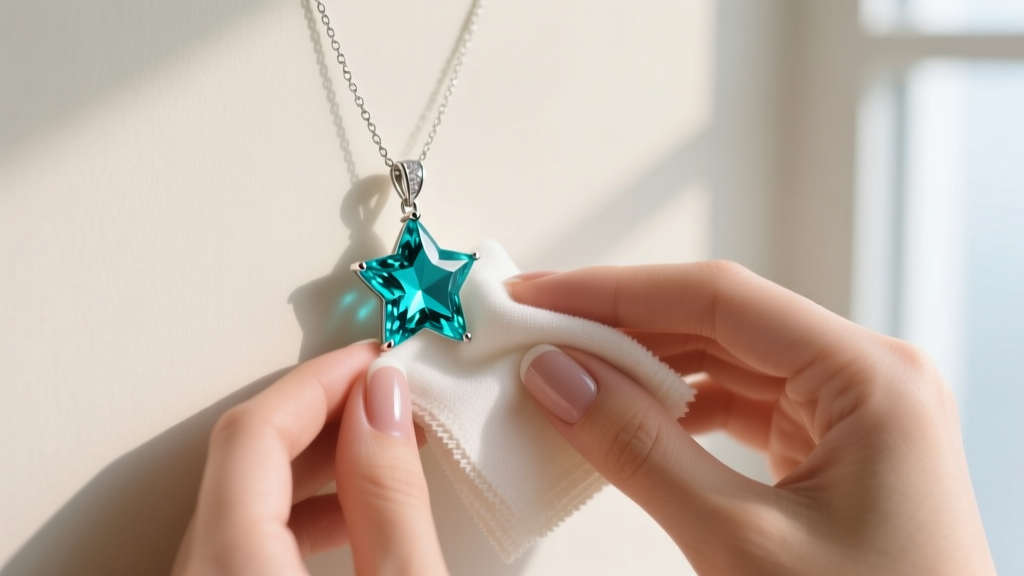
- Dry Wipe First: After every wear, gently wipe the turquoise star with a dry microfiber cloth to remove surface oils and dust.
- Dampen for Deep Cleaning: If the stone looks dull, slightly dampen a corner of the microfiber cloth with distilled water. Wring it out until it is barely moist. Gently rub the face of the turquoise.
- Target the Star Crevices: For dirt trapped in the sharp inner angles of the star, use a dry wooden toothpick to gently dislodge the debris. Do not scrape the stone itself; only pick at the dirt.
- Soft Brushing: If grime persists around the prongs or bezel, dip the extra-soft baby toothbrush in plain water, shake off the excess, and gently flick the bristles over the crevices. Do not scrub in circles, as trapped silica dust can act like sandpaper and scratch the turquoise.
- Dry Immediately: Use a dry portion of the microfiber cloth to immediately absorb all moisture. Never let turquoise air dry, as water spots can form on the polished surface.
Cleaning the Metal Setting (Silver vs. Gold)
Turquoise star necklaces are most commonly set in sterling silver, which is prone to oxidation and tarnish. The challenge lies in removing the silver tarnish without applying tarnish-removing chemicals to the turquoise.
Use a specialized jeweler's polishing cloth (such as a Sunshine cloth) that contains micro-abrasives and anti-tarnish agents. Fold the cloth to create a sharp edge, and carefully run it along the silver rails, prongs, and bail of the star pendant. Crucial Warning: Do not let the treated side of the polishing cloth touch the turquoise. The micro-abrasives will permanently dull the stone's polish, and the chemical agents can cause discoloration. If the silver is heavily tarnished in hard-to-reach areas near the stone, use a cotton swab lightly dipped in rubbing alcohol to clean the metal, ensuring the swab is not wet enough to drip onto the gem.
Storage and Long-Term Maintenance
Proper storage is just as important as cleaning. Because turquoise is a 5-6 on the Mohs scale, it will be easily scratched if it comes into contact with harder materials.
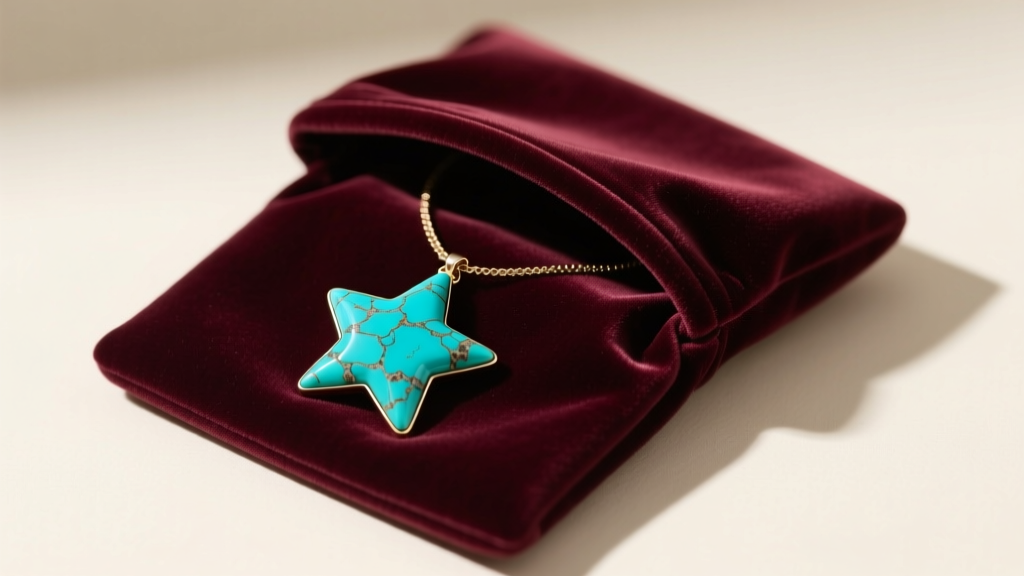
- Isolate the Pendant: Always store your turquoise star necklace in a soft, individual flannel or velvet pouch. Never toss it into a communal jewelry box where diamond, sapphire, or topaz pieces can scrape against it.
- Control the Environment: Store the pouch in a cool, dark, and dry place. Prolonged exposure to direct sunlight can cause the color of some turquoise to fade due to UV radiation.
- Anti-Tarnish Strips: Place a 3M anti-tarnish strip inside the storage pouch or jewelry box drawer. These strips absorb sulfur compounds in the air, significantly slowing down the oxidation of the sterling silver setting without requiring you to polish the metal as frequently.
Troubleshooting Common Turquoise Issues
Even with meticulous care, issues can arise. Use this diagnostic table to address common problems with your turquoise star necklace.
| Issue | Probable Cause | Actionable Solution |
|---|---|---|
| Stone turning greenish | Absorption of skin oils, sweat, or cosmetics over time. | Unfortunately, oil-induced color shifts in natural turquoise are often permanent. Prevent this by wiping after every wear. Stabilized stones resist this better. |
| White, chalky film in star crevices | Buildup of sunscreen, lotion, or hard water spots. | Use a wooden toothpick to gently lift the residue. Follow with a barely damp baby toothbrush and dry immediately. |
| Cloudy or dull surface polish | Micro-scratches from dust, or accidental contact with silver polish. | The stone requires professional re-polishing by a lapidary. Do not attempt to buff it at home with rotary tools. |
| Silver setting heavily blackened | Oxidation from humidity and sulfur in the air. | Use a silver polishing cloth strictly on the metal. For severe tarnish, take it to a jeweler who can use a laser welder or precise buffing wheel while masking the stone. |
When to See a Professional Jeweler
While daily maintenance and light cleaning can be done at home, certain situations require professional intervention. If your turquoise star necklace suffers a chipped point, a loose prong, or a cracked stone, do not attempt to glue it yourself. Cyanoacrylate (super glue) will seep into the porous turquoise and ruin it. Take the piece to a certified bench jeweler who understands the thermal and chemical sensitivities of porous gemstones. They can safely tighten the star setting or consult with a lapidary to re-cab and polish the damaged turquoise without compromising the integrity of the metalwork.
By respecting the delicate nature of turquoise and adhering to these targeted cleaning protocols, your turquoise star necklace will retain its celestial brilliance and structural integrity for generations to come.


