Material Guide: Choosing the Best Metal for a 20 in Necklace
Discover how different metals affect the drape, weight, and durability of a 20 in necklace. Compare gold, silver, platinum, and titanium.

The Physics of the 20-Inch Drop: Why Material Matters
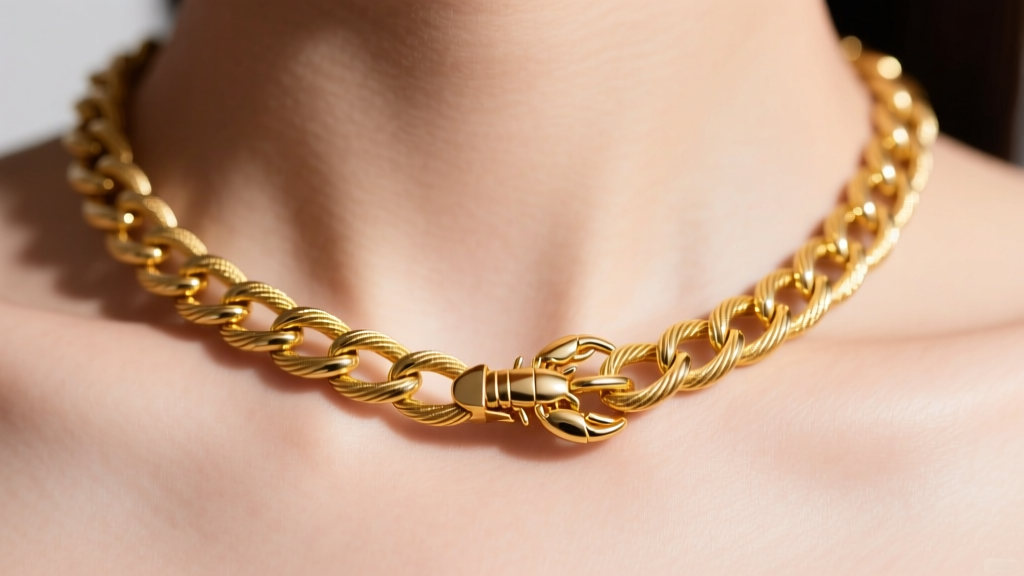
A 20 in necklace occupies a unique architectural space in jewelry design. Sitting precisely on the border between the 'princess' and 'matinee' lengths, a 20-inch chain rests directly on the collarbone (clavicle) while wrapping around the cervical spine at the nape of the neck. This specific geometry creates distinct tension points and friction zones that dictate how different metals will perform, age, and drape over time.
Unlike a tight 16-inch choker that moves with the neck, or a 24-inch chain that hangs freely on the chest, a 20-inch chain experiences lateral pull at the collarbone apex and constant frictional rubbing at the back of the neck. Choosing the right metallurgical composition is not just about color preference; it is about tensile strength, specific gravity, and structural fatigue. In this guide, we break down the exact material properties you need to consider when selecting a 20 in necklace for daily wear.
Precious Metals Breakdown: Weight, Drape, and Tensile Strength
Precious metals remain the standard for fine jewelry, but their alloy compositions drastically alter how they behave at a 20-inch length. According to the Gemological Institute of America (GIA), the specific alloy mix determines a metal's Vickers hardness (HV), which directly correlates to a chain's resistance to stretching and link deformation.
14k vs. 18k Gold: The Stretch Factor
Gold is alloyed with metals like copper, zinc, and silver to increase durability. An 18k gold chain (75% pure gold) has a specific gravity of roughly 15.5 and a Vickers hardness of about 115 HV. While it offers a rich, warm hue, an 18k gold 20-inch chain is relatively soft and heavy. If you attach a pendant weighing more than 4 grams, the constant gravitational pull at the 20-inch drop point will cause the links near the clasp to slowly ovalize and stretch over a period of 12 to 18 months.
Conversely, 14k gold (58.5% pure gold) boasts a higher hardness (approx. 140 HV) and a slightly lower specific gravity (13.5). For a 20 in necklace intended to hold a moderate pendant, 14k gold provides vastly superior tensile strength and resists link distortion, making it the superior choice for structural longevity.
Sterling Silver (925) and the Friction Zone
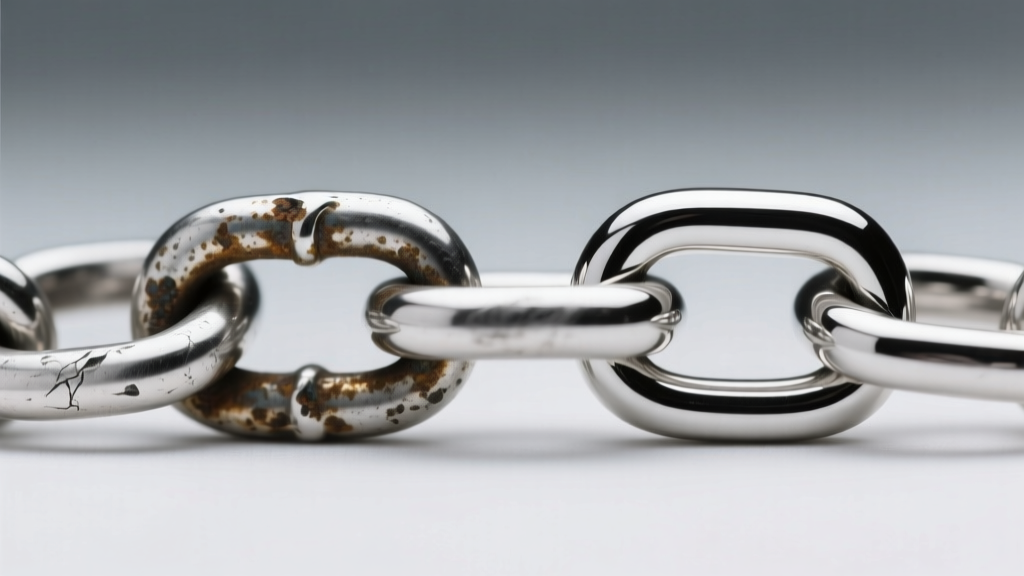
Sterling silver is an alloy of 92.5% silver and 7.5% copper. The copper provides necessary rigidity but introduces a critical vulnerability: oxidation. At the 20-inch mark, the chain rests against the nape of the neck, a zone prone to sweat, hair products, and high friction. This environment accelerates the copper's reaction with sulfur and moisture, leading to localized tarnishing precisely where the chain experiences the most mechanical wear.
To mitigate this, look for 925 silver chains that are heavily rhodium-plated. As noted in the Halstead Bead metals guide, rhodium creates an inert, highly polished barrier that prevents the underlying copper from reacting with skin acids, preserving the chain's integrity at high-friction contact points.
Platinum (950): The Heavyweight Champion
Platinum is exceptionally dense, with a specific gravity of 21.4—nearly double that of 14k gold. A solid, 3mm-wide 20-inch platinum curb chain can easily exceed 45 grams. While platinum offers unmatched tensile strength and will never thin out or lose metal mass when scratched (it merely displaces), the sheer weight of a 20-inch platinum chain can cause neck fatigue and stretch the delicate jump rings connecting the clasp. If choosing platinum for a 20 in necklace, opt for thinner weaves (1.5mm to 2mm) to maintain a comfortable drape without sacrificing the metal's legendary durability.
Alternative & Industrial Metals for Everyday Wear
For those prioritizing extreme durability, hypoallergenic properties, and lightweight comfort, aerospace-grade metals offer compelling alternatives to traditional precious metals.
Titanium (Grade 23 / Ti-6Al-4V)
Grade 23 titanium, also known as Ti-6Al-4V, is an alpha-beta alloy containing aluminum and vanadium. It is significantly stronger and more ductile than commercially pure Grade 2 titanium. With a specific gravity of just 4.4, a 20-inch titanium chain feels virtually weightless on the collarbone. It is entirely impervious to sweat, chlorine, and saltwater. However, the trade-off is repairability: titanium cannot be soldered with a standard jeweler's torch. If a link breaks, it requires specialized laser welding, making on-the-spot repairs impossible.
Surgical Stainless Steel (316L)
316L stainless steel contains molybdenum, which drastically increases its resistance to pitting and corrosion from chlorides (like sweat and seawater). It is highly rigid, meaning a 20-inch 316L chain will maintain its exact structural geometry indefinitely without stretching. It is an excellent, budget-friendly option for heavy pendants, as its high tensile strength easily supports substantial weight at the center drop point.
Comparative Data: Weight and Tension Metrics
The following table illustrates how different metals perform when drawn into a standard 20-inch, 2mm cable chain. Data compiled from wholesale jewelry manufacturing specifications via Rio Grande.
| Metal / Alloy | Specific Gravity | Vickers Hardness (HV) | Avg. Weight (20in, 2mm) | Primary Failure Mode |
|---|---|---|---|---|
| 18k Yellow Gold | 15.5 | 115 - 125 | 14.2 grams | Link stretching under pendant weight |
| 14k Yellow Gold | 13.5 | 135 - 150 | 12.1 grams | Clasp jump-ring distortion |
| 925 Sterling Silver | 10.3 | 60 - 75 | 8.8 grams | Oxidation at nape friction zone |
| 950 Platinum | 21.4 | 110 - 130 | 19.5 grams | Neck fatigue; clasp shear failure |
| Grade 23 Titanium | 4.4 | 300 - 330 | 4.1 grams | Irreparable link fracture |
The Herringbone Hazard: Weave Geometry at 20 Inches
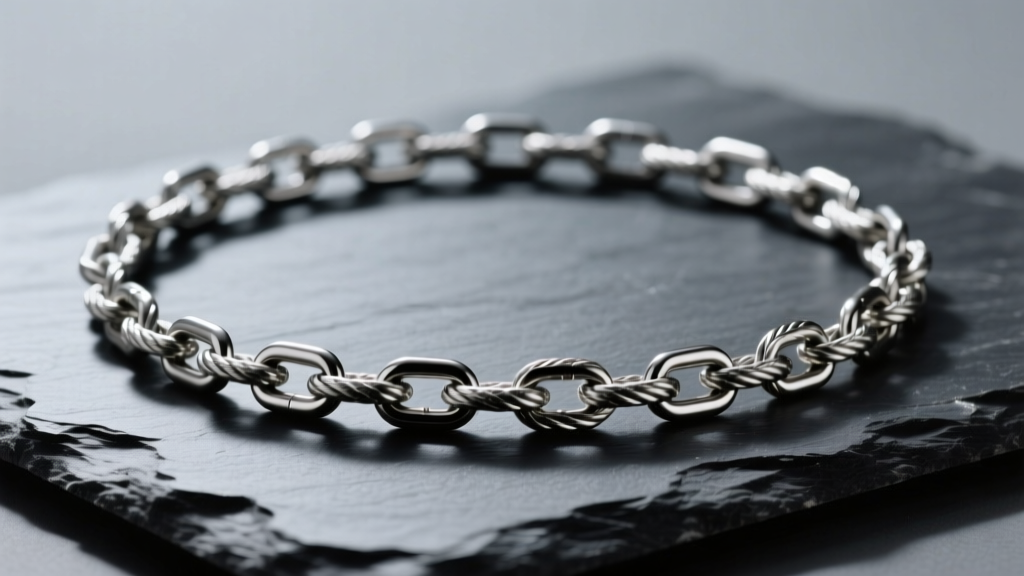
Material is only half the equation; chain weave geometry dictates how a 20 in necklace interacts with human anatomy. The collarbone creates a sharp, convex apex. Flat chain weaves, specifically herringbone and omega chains, are highly susceptible to permanent kinking when they bend over this 20-inch apex. Once a herringbone link is bent backward against its natural articulation, the structural integrity is compromised, leading to a frayed, irreversible crease.
For a 20-inch length, always prioritize multi-dimensional, flexible weaves. Rope, wheat (spiga), and box chains distribute mechanical stress evenly across all axes, allowing the chain to conform to the collarbone's curve without suffering localized metal fatigue or kinking.
Clasp Mechanics and Failure Points
A 20 in necklace generates significant lateral shear force on the clasp when the wearer turns their head quickly or if the chain catches on clothing. Standard 5mm or 7mm spring ring clasps are fundamentally inadequate for this length, as their internal tension springs frequently fail under lateral load, causing the clasp to pop open.
For a secure 20-inch chain, insist on a lobster clasp measuring at least 12mm to 15mm. The internal lever mechanism of a properly sized lobster clasp provides a positive lock that resists lateral shear. Alternatively, high-grade neodymium magnetic clasps with a secondary safety catch offer excellent security and ease of use, particularly for heavier platinum or solid gold chains where manipulating a small lobster clasp with one hand is cumbersome.
Final Verdict: Matching Metal to Your Lifestyle
Selecting the ideal material for a 20 in necklace requires balancing aesthetics with mechanical reality. If you desire a lightweight, everyday chain that can support a moderate pendant without stretching, 14k gold remains the undisputed champion of tensile reliability. For those with active lifestyles or sensitive skin, a Grade 23 titanium rope chain offers an indestructible, featherweight alternative that will never tarnish or react to sweat. By understanding the specific gravity, hardness, and friction vulnerabilities of these metals, you can choose a 20-inch necklace that not only looks perfect on the collarbone but survives the physical demands of daily wear.


