Troubleshooting the 20 Pound Necklace: Weight & Clasp Fixes
Wearing a 20 pound necklace causes neck strain and clasp failure. Learn expert troubleshooting for weight distribution, chain grades, and safety.

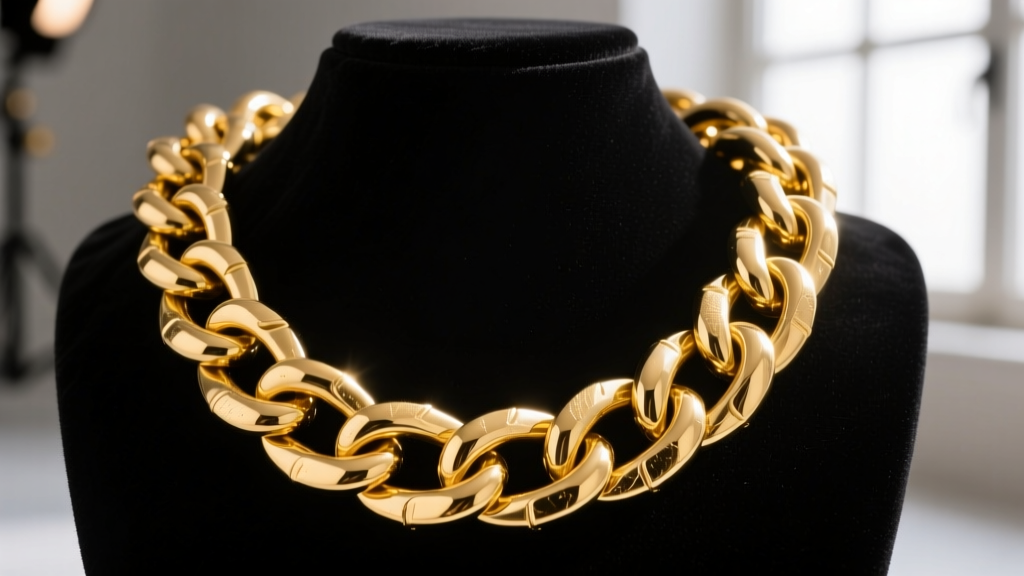
Designing, wearing, and maintaining a 20 pound necklace (approximately 9.07 kilograms) is less about traditional jewelry crafting and more about structural engineering and biomechanics. Whether commissioned for high-fashion runways, hip-hop cultural milestones, or historical museum replicas, ultra-heavy statement neckpieces present severe physical and metallurgical challenges. Standard jewelry manufacturing techniques will inevitably fail under this extreme mass. This guide provides expert troubleshooting for the most common failure modes associated with 20 lb necklaces, from clasp shearing to cervical spine strain.
The Physics of Dynamic Shock Loading
The most critical miscalculation in ultra-heavy jewelry design is assuming the necklace only exerts 20 pounds of force. In a static environment (like a mannequin display), the load is exactly 20 lbs. However, the human body is constantly in motion. When a wearer walks, dances, or even nods, the vertical oscillation of the heavy chain creates a kinetic bounce.
This dynamic shock loading multiplies the effective weight. A 20 lb static load can easily generate 35 to 45 lbs of peak tensile force on the clasp and the nape of the neck during normal movement. If the hardware is rated only for a 20 lb static break-strength, it will experience metal fatigue and eventually snap within hours of active wear.
Troubleshooting Clasp and Link Failure
Hardware failure is the most dangerous and common issue with ultra-heavy chains. Standard findings are entirely inadequate for this weight class.
Why Standard Lobster and Spring Ring Clasps Fail
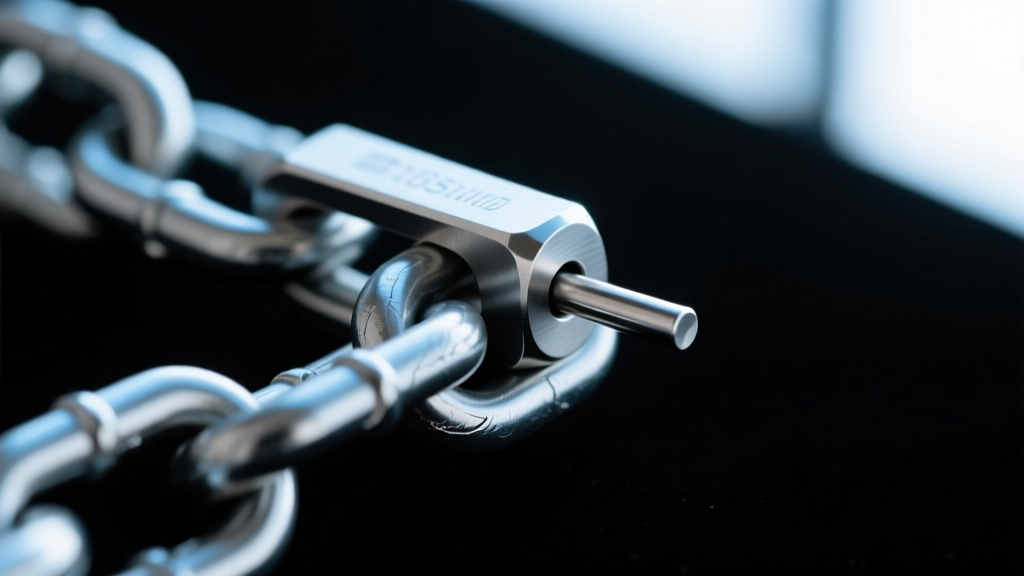
A traditional lobster claw clasp relies on a tiny internal steel spring and a thin cast lever. Under a 35 lb dynamic load, the lever housing deforms, the spring crushes, and the clasp pops open or shears entirely. Similarly, standard bolt rings with thin wire pins will bend, causing the jump ring to slip out.
The Saddle Clasp and Heavy-Duty Bolt Ring Solution
As of 2026, CAD-machined titanium and 316L stainless steel saddle clasps have become the industry standard for securing ultra-heavy pieces. A proper saddle clasp distributes the tensile load across a wide, interlocking bridge rather than a single pin. If a bolt ring must be used for aesthetic reasons, it must be custom-forged with a minimum locking pin diameter of 4mm to 5mm. According to jewelry manufacturing guidelines from Rio Grande, any jump ring connecting to a 20 lb chain must be soldered shut; open jump rings will pull apart under dynamic oscillation, regardless of their gauge thickness.
Chain Link Geometry and Metallurgical Yield
The geometry of the chain links dictates how the 20 lb load is distributed. Certain weave patterns are inherently prone to structural failure when subjected to extreme weight.
Understanding Metal Creep in Gold Alloys
Precious metals are highly susceptible to "creep"—the tendency of a solid material to slowly move or deform permanently under the influence of persistent mechanical stress. While 14k and 18k gold are durable for standard jewelry, a continuous 20 lb downward pull will cause the bottom links of a solid gold chain to slowly elongate and thin out over time. To combat this, master jewelers often use an internal armature of high-tensile 316L stainless steel or aerospace-grade titanium, electroplated or sleeved in gold, to bear the structural load while maintaining the precious metal aesthetic.
Link Style Performance Under Heavy Loads
Not all chain weaves can survive a 9 kg load. The table below breaks down the tensile suitability of common chain styles for ultra-heavy applications.
| Chain Style | Tensile Suitability (20lb+ Load) | Primary Failure Mode |
|---|---|---|
| Solid Cuban | Excellent | Clasp ring deformation; surface scratching |
| Mariner | Good | Link elongation at the center bar |
| Box | Fair | Corner edge stress fractures under torsion |
| Rope | Poor | Wire torsion fatigue and internal snapping |
Expert Insight: Never use rope chains or hollow-puffed links for a 20 pound necklace. Rope chains rely on twisted wire that creates internal torsional stress, while hollow links will instantly crush under the localized pressure of a 20 lb dynamic bounce.
Mitigating Cervical Strain and Skin Abrasion
The human head weighs an average of 10 to 12 pounds. Adding a 20 pound necklace effectively doubles the load on the cervical spine, drastically altering the wearer's center of gravity. This forces the cervical extensor muscles to work in overdrive to keep the head upright, rapidly leading to tension headaches, muscle spasms, and potentially accelerating conditions like cervical spondylosis, as noted by Johns Hopkins Medicine.
Weight Distribution Techniques
To safely troubleshoot the biomechanical hazards of a 20 lb neckpiece, the weight must be dispersed away from the delicate cervical vertebrae (C1-C7) and transferred to the larger, more robust trapezius muscles and clavicles.
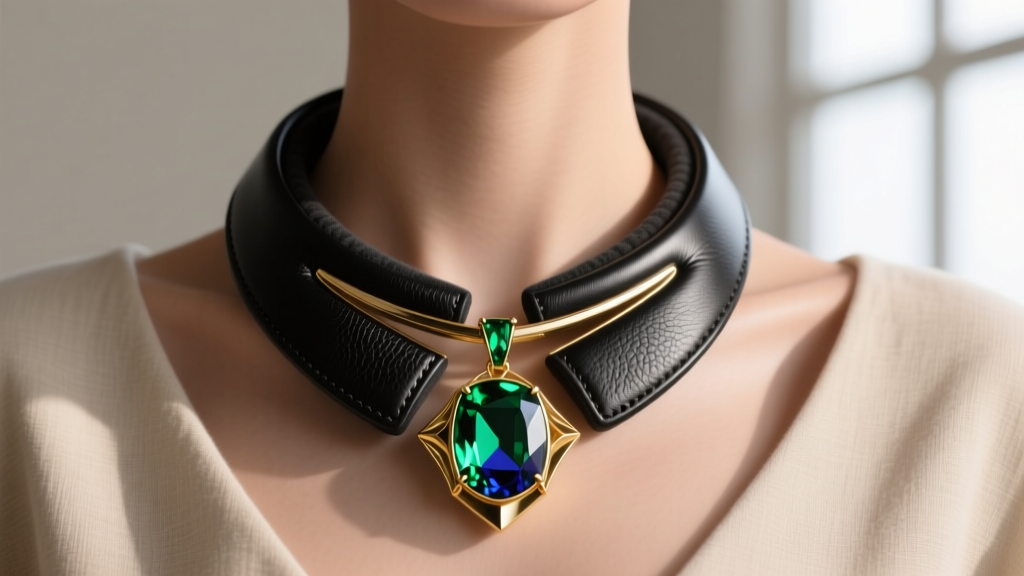
- Wide Leather Backing: Integrate a hidden backing made from 2.5-inch to 3-inch wide bridle leather, lined with high-density memory foam. This increases the surface area, reducing pounds-per-square-inch (PSI) pressure on the skin.
- Frontal Counter-Balancing: Design the necklace with a heavy, rigid front plate or pendant that rests on the sternum. This shifts a portion of the 20 lb load off the back of the neck and anchors it against the chest wall.
- Strict Time Limits: A 20 pound necklace is a "moment" piece, not an all-day garment. Limit continuous wearing to 60–90 minutes to prevent ischemic muscle fatigue and nerve compression.
Emergency Quick-Release Protocols
The final, often overlooked troubleshooting step is planning for catastrophic snagging. If a wearer leaning over a railing or walking through a doorway catches a 20 lb chain, the sudden stop can generate over 100 lbs of localized force. Because the chain and clasps are engineered not to break, this force will be transferred directly to the wearer's trachea and cervical spine, posing a severe strangulation or crushing hazard.
Implementing a Secondary Breakaway Tether
To solve this, ultra-heavy necklaces must incorporate a hidden, secondary quick-release mechanism. This is typically achieved by using a heavy-duty neodymium magnetic safety catch integrated into the leather backing. The magnetic catch is calibrated to hold firmly against the vertical bounce of walking (shear force) but will instantly detach if subjected to a sudden horizontal yank (tensile pull) exceeding 25 lbs. This ensures the structural integrity of the gold or steel chain remains intact while instantly freeing the wearer from a life-threatening snag.
For further research on the material properties of precious alloys and their yield strengths under stress, the Gemological Institute of America (GIA) provides extensive metallurgical data that is invaluable for jewelers attempting to cast custom, load-bearing links. Ultimately, crafting a 20 pound necklace requires abandoning traditional jewelry mindsets in favor of industrial rigging principles, ensuring the piece is as safe to wear as it is visually commanding.


