Understanding the Gold Necklace Rate: 2026 Buyer Guide
Learn how the gold necklace rate is calculated in 2026. We break down karats, gram weight, making charges, and market premiums for beginner buyers.

What Exactly is the Gold Necklace Rate?
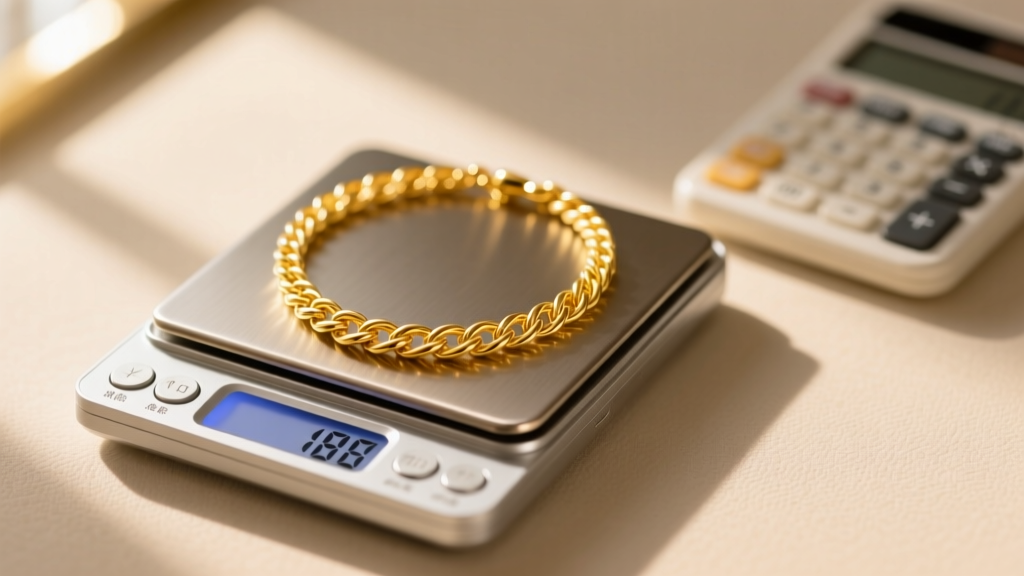
If you have ever shopped for a precious metal chain, you have likely encountered the term 'gold necklace rate' and felt a wave of confusion. Why does a 10-gram chain cost $800 at one store and $1,200 at another? As a beginner, it is easy to assume that you are simply paying for the raw metal based on its weight. In reality, the final retail price is a complex composite metric driven by global commodity markets, metallurgical science, and artisan labor. Understanding this rate is the single most important skill you can develop before making a jewelry investment.
The gold necklace rate is not a single number published on a stock ticker. Instead, it is the localized, retail-adjusted price per gram of a finished piece of jewelry. It takes the baseline global spot price of pure gold and applies a series of multipliers and additions based on purity, craftsmanship, and brand positioning. In 2026, with precious metals experiencing heightened volatility due to global economic shifts, knowing how to deconstruct this rate will save you from overpaying and help you identify genuine value.
The 4 Pillars of Gold Jewelry Pricing
To truly master the gold necklace rate, you must break it down into its four foundational pillars. Each pillar adds a specific layer of cost to the raw material.
1. Spot Price and Karat Purity (The Baseline)
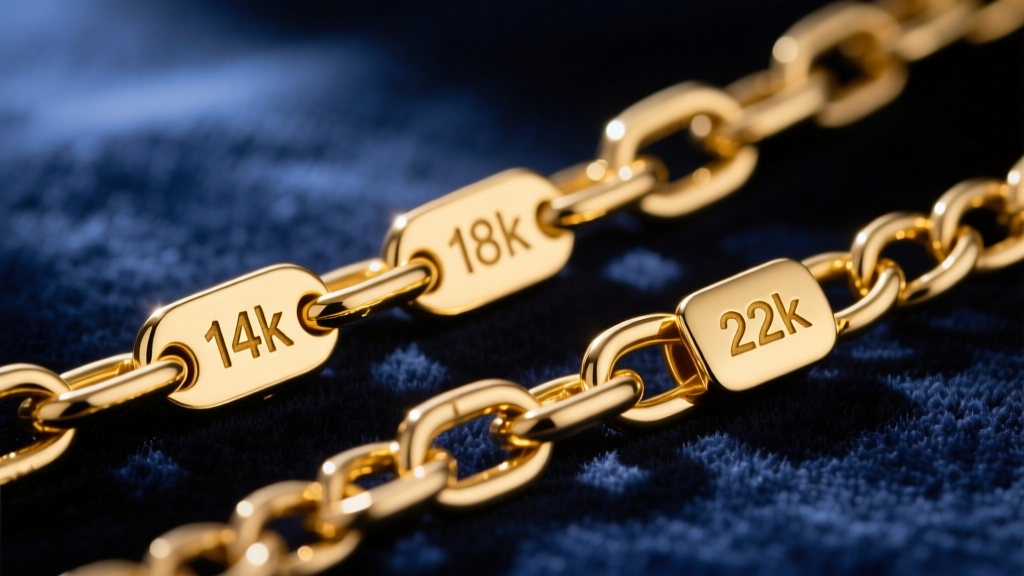
The foundation of any gold jewelry price is the 'spot price'—the live market cost of one troy ounce (31.1 grams) of 24-karat, 99.9% pure gold. However, pure 24k gold is far too soft for everyday jewelry; it will bend, scratch, and lose its shape. To create durable necklaces, jewelers alloy pure gold with metals like copper, silver, and zinc. This reduces the karat purity and proportionally lowers the baseline material cost.
| Karat | Purity Percentage | Common Alloys | Best Use Case |
|---|---|---|---|
| 24k | 99.9% | None | Investment bars, traditional ceremonial jewelry |
| 22k | 91.6% | Copper, Silver | Intricate cultural designs, high-value heirlooms |
| 18k | 75.0% | Palladium, Copper | High-end luxury chains, diamond pendants |
| 14k | 58.3% | Silver, Zinc, Copper | Everyday wear, durable Cuban links, rope chains |
To find the baseline material rate for your necklace, you multiply the current 24k spot price per gram by the purity decimal (e.g., 0.583 for 14k gold). According to live data from Kitco, tracking these daily fluctuations is essential for timing your purchase.
2. Gram Weight vs. Visual Size
A common beginner trap is equating visual thickness with gold weight. The gold necklace rate is always calculated by gram weight, not by the physical dimensions of the chain. Modern manufacturing techniques allow jewelers to create 'hollow' or 'puffed' chains. A 24-inch hollow Puffed Mariner chain might look incredibly thick and heavy, yet weigh only 15 grams. A solid Miami Cuban link of the exact same visual thickness could easily weigh 85 grams.
While hollow chains offer a lower entry price and a bold look, they are highly susceptible to crushing and are nearly impossible to repair if they snap. Solid chains carry a higher upfront gold necklace rate but offer superior longevity, a satisfying drape, and excellent repairability. Always ask the jeweler for the exact gram weight on a calibrated digital scale before discussing price.
3. Making Charges (Labor and Craftsmanship)
This is where the gold necklace rate diverges wildly between different styles. 'Making charges' refer to the labor cost required to transform raw gold alloy into a finished necklace. These charges are typically applied as a percentage of the raw gold value or as a flat fee per gram.
- Machine-Made Chains (5% - 10%): Standard cable, box, and rolo chains are mass-produced by automated machinery. The labor cost is minimal, keeping the making charges low.
- Semi-Handmade Chains (12% - 18%): Chains like the Figaro or standard Rope require machine weaving followed by manual soldering, twisting, or diamond-cutting to add facets and sparkle.
- Hand-Forged & Intricate Chains (20% - 35%+): Styles like the Byzantine, Foxtail, or hand-woven Dragon Scale require a master bench jeweler to individually solder and weave hundreds of tiny links. The labor cost here often exceeds the value of the raw gold itself.
4. Brand Premiums and Retail Markups
The final layer of the gold necklace rate is the retail markup. A local, independent bench jeweler might apply a standard 20% retail margin over their wholesale cost. Conversely, luxury heritage brands or high-end mall retailers will apply a brand premium that can inflate the gold necklace rate by 200% to 500%. When buying from a luxury house, you are paying for the brand name, the retail real estate, and the iconic packaging, rather than the intrinsic value of the gold.
How to Calculate Your Gold Necklace Rate (Step-by-Step)
Let us walk through a real-world calculation so you can confidently negotiate or verify a jeweler's quote. Imagine you are buying a 20-gram, 14k solid Rope chain in 2026.
- Find the Spot Price: Assume the global spot price of 24k gold is currently $75.00 per gram.
- Calculate the Karat Rate: Multiply the spot price by the 14k purity (0.583). $75.00 × 0.583 = $43.72 per gram of 14k gold.
- Calculate Raw Gold Value: Multiply the karat rate by the chain's weight. $43.72 × 20 grams = $874.40.
- Add Making Charges: Assume the jeweler charges 15% for the rope chain's diamond-cutting labor. $874.40 × 0.15 = $131.16.
- Calculate Subtotal: $874.40 + $131.16 = $1,005.56.
- Add Local Taxes: Apply your regional sales tax (e.g., 8%). $1,005.56 × 1.08 = $1,086.00.
Pro Tip: If a jeweler quotes you a flat 'per gram' rate that includes making charges, simply divide their total quote by the gram weight to find their blended gold necklace rate, then compare it against your own math.
2026 Market Trends Affecting Gold Prices
The baseline spot price is not static. Throughout 2025 and into 2026, the gold market has been heavily influenced by aggressive accumulation from central banks in emerging markets, seeking to diversify reserves away from fiat currencies. According to the World Gold Council, this sustained institutional buying has created a high 'price floor' for gold, meaning the days of massive market crashes in precious metals are likely behind us for the foreseeable future.
Furthermore, the rise of 'urban mining' and gold recycling has slightly offset the demand for newly mined gold, stabilizing the supply chain. For the consumer, this means the gold necklace rate is currently reflecting a premium market. Buying high-karat gold jewelry now is increasingly viewed not just as a fashion choice, but as a wearable hedge against inflation.
Beginner Mistakes to Avoid When Buying
Even with the math in hand, beginners often fall prey to deceptive marketing tactics. Avoid these critical errors:
- Confusing Plated with Solid: If the gold necklace rate seems impossibly low (e.g., $50 for a thick chain), it is not solid gold. It is likely gold-plated brass or gold-filled. The Gemological Institute of America (GIA) strictly defines the microns required for vermeil and plating; always look for stamps like '14k' or '750', and avoid stamps like '14k GP' or '14k HGE'.
- Ignoring the Clasp Weight: Some unscrupulous sellers use heavy, steel-reinforced clasps or oversized jump rings on hollow chains, weighing the entire piece together to inflate the gold value. Always ask if the weight provided is for the chain body alone.
- Skipping the Acid Test or XRF Scan: When buying from private sellers or pawn shops, never trust the hallmark stamp blindly. Hallmarks can be faked. Reputable jewelers will happily test the gold in front of you using an X-ray Fluorescence (XRF) spectrometer to verify the exact elemental breakdown.
- Overlooking the Buyback Policy: A fair gold necklace rate should come with a transparent buyback or upgrade policy. If a jeweler refuses to buy back the gold at the prevailing spot rate (minus a small refining fee), they are likely overcharging you on the initial making charges.
Final Thoughts
Mastering the gold necklace rate transforms you from a passive shopper into an informed investor. By understanding the interplay between spot prices, karat purity, physical weight, and artisan labor, you can confidently navigate any jewelry counter in 2026. Remember that the cheapest option is rarely the best value; prioritize solid construction, transparent making charges, and verified hallmarks to ensure your necklace remains a beautiful, enduring asset for decades to come.


