Best Necklace Lengths for Women: A Budget & Value Guide
Discover how necklace lengths for women impact pricing. Compare cost-per-inch, find the best value chains, and budget smartly for your jewelry box.

The Hidden Economics of Chain Lengths
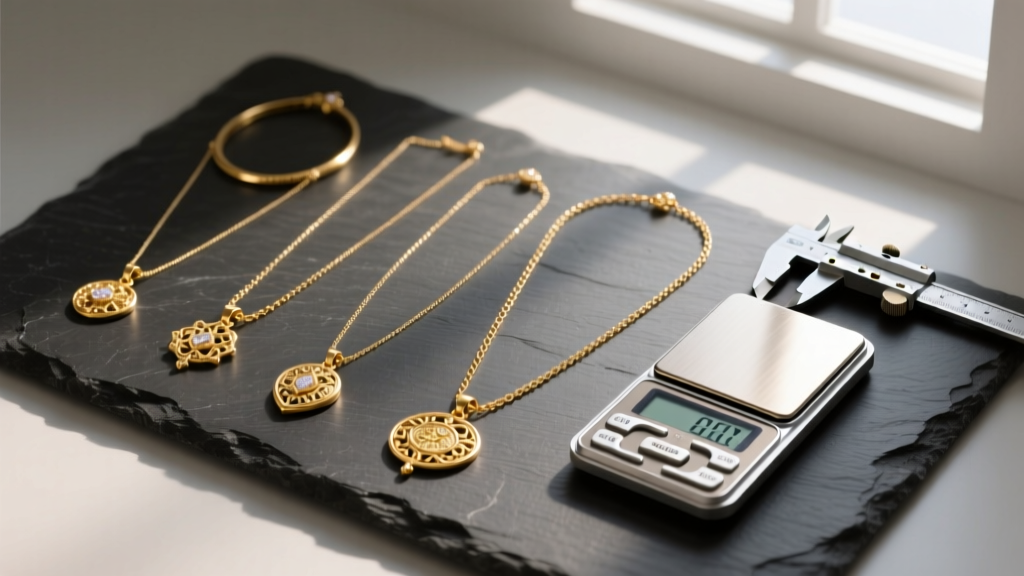
When building a curated jewelry collection, understanding the pricing dynamics of necklace lengths for women is just as critical as knowing your personal style preferences. Most consumers assume that a shorter chain costs proportionally less than a longer one. However, the economics of jewelry manufacturing reveal a more complex reality. The retail price of a precious metal chain is dictated by a combination of fixed manufacturing costs (casting, polishing, clasp assembly, and packaging) and variable material costs (the raw weight of the gold, platinum, or silver).
Because fixed costs remain relatively constant regardless of whether a chain is 14 inches or 18 inches, shorter necklace lengths often carry a higher 'cost-per-inch' markup. Conversely, as you move into matinee and opera lengths, the variable cost of the precious metal begins to dominate the price tag. To make financially sound decisions, buyers must evaluate chain lengths not just by their upfront retail price, but through the lens of cost-per-wear (CPW), structural longevity, and material efficiency. According to the Gemological Institute of America (GIA), understanding metal weight and purity is the first step in accurately assessing jewelry value, and this principle scales directly with chain length.
Cost-Per-Inch Analysis: Standard Necklace Lengths for Women
To illustrate how length impacts your budget, we must look at the actual gram weight of standard chains. The table below breaks down the approximate retail pricing for a standard 1.5mm 14k solid gold rope chain across the most common necklace lengths for women. Prices reflect average 2026 market rates for solid 14k gold, factoring in standard retail markups (typically 2.5x to 4x the raw melt value).
| Length Category | Standard Inches | Avg. Gram Weight (1.5mm 14k) | Approx. Retail Range | Value Rating |
|---|---|---|---|---|
| Collar / Choker | 14' - 16' | 3.2g - 3.8g | $380 - $450 | Moderate |
| Princess | 18' | 4.5g | $520 - $600 | Excellent |
| Matinee | 22' - 24' | 5.8g - 6.2g | $750 - $890 | Good |
| Opera | 28' - 30' | 7.5g - 8.2g | $1,100 - $1,350 | Low (Niche) |
| Rope | 36'+ | 10.0g+ | $1,500+ | Poor (Luxury) |
As the data shows, the jump from an 18-inch Princess chain to a 24-inch Matinee chain results in a nearly 50% increase in retail price, despite only adding 6 inches of length. This exponential price scaling is where budget-conscious buyers must pivot their strategy, either by adjusting the metal gauge, switching to alternative materials, or re-evaluating the necessity of longer lengths.
Value Assessment: Which Length Gives You the Most Wear?
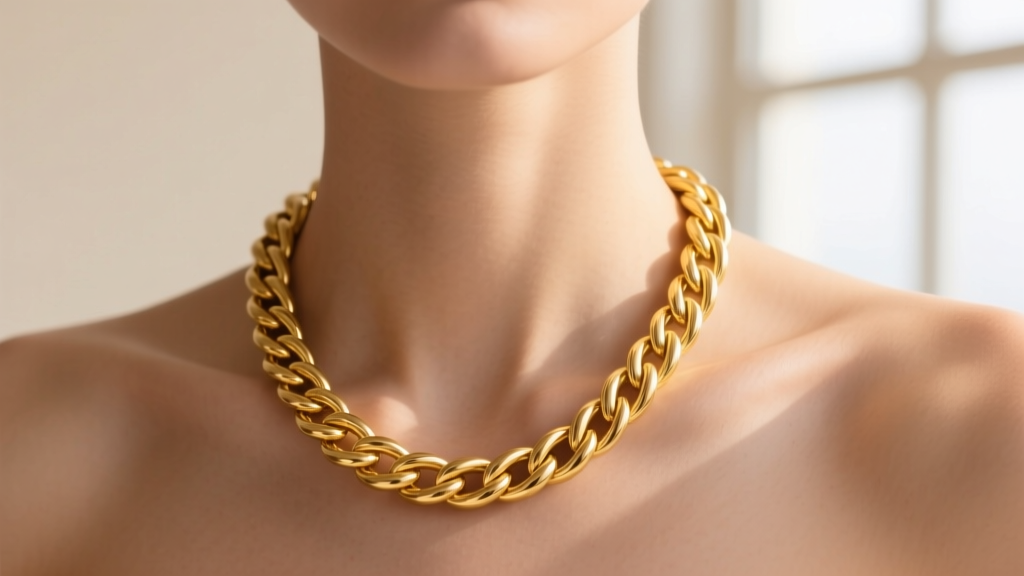
True value in jewelry is calculated by dividing the purchase price by the number of times you wear the piece. A $200 chain worn twice a year has a terrible CPW, while a $600 chain worn daily for five years is a financial steal. Let us assess the practical value of the primary necklace lengths for women.
The 18-Inch Princess: The Undisputed Value Champion
The 18-inch Princess length is the gold standard for everyday wear. It rests perfectly on the collarbone, complementing nearly every neckline from crew necks to deep V-necks. Because it is the most universally produced length, jewelers manufacture 18-inch chains at scale, which slightly reduces the fixed labor costs passed onto the consumer. If you are allocating a strict budget for your first solid gold or platinum piece, an 18-inch chain offers the highest versatility and the best long-term cost-per-wear. As noted in the Blue Nile Necklace Guide, the Princess length remains the most requested size for both standalone wear and pendant hosting.
Chokers (14-16 Inches): High Impact, Lower Upfront Cost
Chokers require the least amount of precious metal, making them the most accessible entry point for buyers wanting solid 14k or 18k gold on a tight budget. However, their value proposition is highly dependent on your wardrobe. Chokers clash with high collars and standard crew necks, meaning they are often relegated to specific outfits (boatnecks, off-the-shoulder tops, or evening wear). Unless you favor a 1990s-inspired or high-fashion aesthetic daily, a choker may suffer from a low wear-frequency, diluting its overall value.
Opera & Rope (28-36 Inches): Luxury Pricing and Structural Risks
Opera and Rope lengths are dramatic and elegant, but they represent the poorest budget value in solid precious metals. Beyond the sheer cost of the metal weight, long chains introduce structural liabilities. Gold is a malleable metal. A 30-inch chain weighing over 7 grams is subject to 'creep deformation'—a metallurgical term where the metal slowly stretches under its own continuous weight, especially if the gauge is under 1.5mm. To prevent stretching and snapping, long chains must be crafted in thicker, heavier gauges, which further inflates the gram weight and the final price. Furthermore, long chains are prone to snagging on doors and car seats, increasing the risk of catastrophic breakage and costly repairs.
Material Multipliers: Hacking the Length-to-Price Ratio
If your heart is set on a 24-inch Matinee or a 30-inch Opera length, but the solid gold pricing exceeds your budget, you must leverage alternative materials. The visual impact of a long chain relies on its drape and luster, not necessarily its intrinsic melt value.
- Gold-Filled (1/20 14k): For lengths over 24 inches, gold-filled wire offers a brilliant budget hack. By law, gold-filled jewelry must contain a layer of solid 14k gold that is at least 5% of the total metal weight. It will not flake or tarnish like plated jewelry, and a 30-inch gold-filled chain typically retails between $60 and $120—a fraction of the $1,200+ solid gold equivalent.
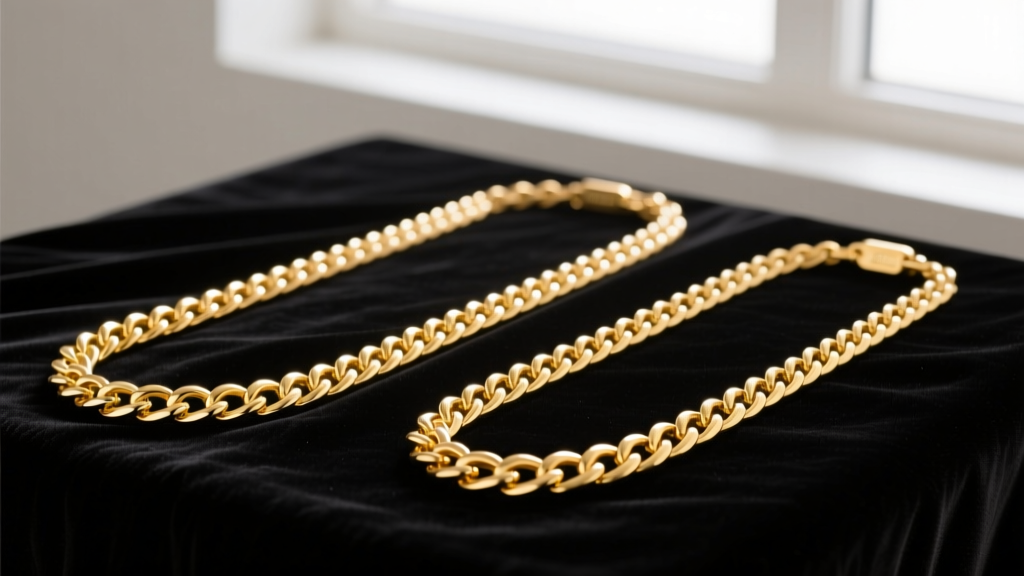
- PVD-Coated Stainless Steel: For chunky, heavy link chains (like Cuban or Figaro styles) in longer lengths, surgical stainless steel with Physical Vapor Deposition (PVD) gold coating is the ultimate value choice. Steel provides the structural rigidity needed for heavy, long chains without the risk of stretching, and PVD coating ensures the color will not fade with daily wear. You can achieve a $2,000 solid gold look for under $150.
- Sterling Silver with Rhodium: If you prefer the cool tone of white gold or platinum, opt for solid 925 sterling silver plated in thick rhodium. White gold requires periodic rhodium dipping (costing $50-$100 every few years), whereas a rhodium-plated silver chain offers the same icy luster with zero long-term maintenance costs.
Smart Buying Framework: Maximizing Your Necklace Budget
To ensure you are getting the highest quality and best value when shopping for necklace lengths for women, apply this three-point decision framework before checking out:
The Gauge-to-Length Rule: Never buy a solid gold chain longer than 20 inches if the gauge is thinner than 1.2mm. The longer the chain, the more kinetic stress it endures from body movement. A 24-inch chain at 0.9mm is a structural failure waiting to happen, rendering your investment worthless if it snaps.
Secondly, scrutinize the clasp hardware. The clasp is the weakest point of any necklace. Shorter, lighter chokers can safely utilize inexpensive spring-ring clasps. However, if you are investing in a heavy 22-inch or 24-inch solid gold chain, ensure it is fitted with a solid lobster clasp or a toggle clasp. Upgrading to a high-quality lobster clasp might add $20 to the retail price, but it prevents the loss of a $800 asset.
Finally, separate your 'investment' lengths from your 'trend' lengths. Allocate 80% of your jewelry budget to acquiring high-quality, solid metal chains in the 16-inch to 18-inch range, as these will serve as your daily workhorses for decades. Reserve the remaining 20% of your budget for gold-filled, vermeil, or PVD-coated pieces in extreme lengths (chokers or opera) to satisfy seasonal trends without compromising your financial prudence. By understanding the intersection of metallurgy, manufacturing costs, and wardrobe utility, you can build a necklace collection that is as financially sound as it is visually stunning.


