VCA Gold Necklace Value: Is It Worth the Price in 2026?
Analyze the true cost, melt value, and 2026 resale data of a VCA gold necklace. Discover if the iconic Alhambra collection justifies its luxury premium.

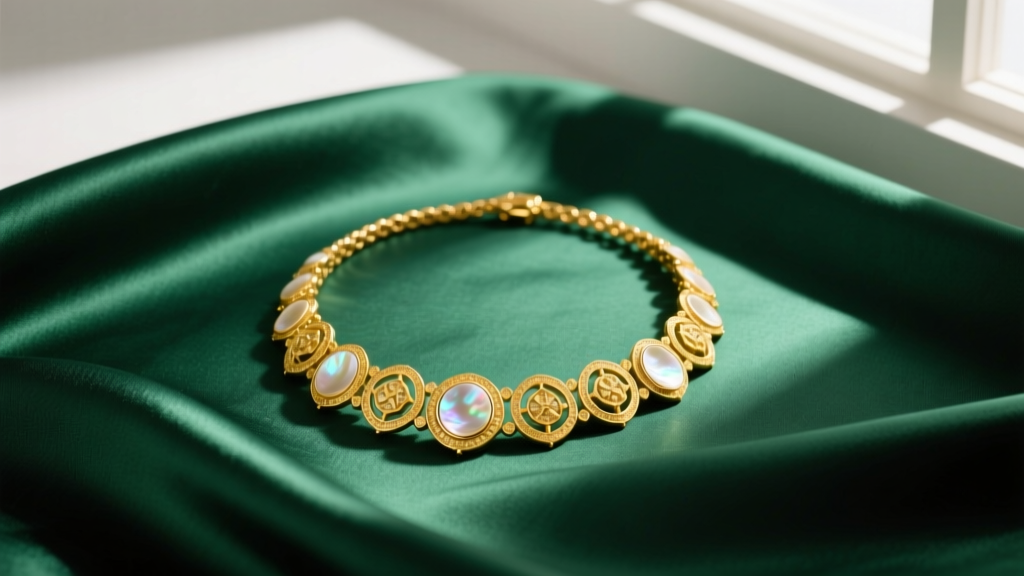
The True Cost of a VCA Gold Necklace in 2026
When evaluating luxury jewelry investments, few pieces command as much attention—and as high a premium—as a Van Cleef & Arpels Alhambra necklace. First introduced in 1968, the iconic four-leaf clover motif has transcended seasonal trends to become a staple of high-end wardrobe curation. However, as we navigate the luxury market in 2026, the financial reality of acquiring a VCA gold necklace requires a pragmatic, data-driven assessment. Van Cleef & Arpels has historically implemented bi-annual price increases (typically in January and September), pushing the baseline retail cost of their entry-level pendants to unprecedented heights.
As of early 2026, a standard Vintage Alhambra pendant featuring one motif in 18k yellow gold and mother-of-pearl retails for approximately $4,450 USD. If you opt for the larger Magic Alhambra pendant, the price leaps to roughly $6,200 USD. For buyers operating on a strict budget, these figures necessitate a critical question: Are you paying for intrinsic material value, or purely for brand equity? To answer this, we must deconstruct the necklace down to its raw components and analyze its performance on the secondary market.
Material Breakdown: Melt Value vs. Brand Equity
To understand the true value of a VCA gold necklace, we must separate the raw commodity value from the craftsmanship and brand premium. A standard Vintage Alhambra pendant (1 motif) weighs approximately 10.5 grams in total. However, the stone inlay (whether onyx, malachite, or mother-of-pearl) accounts for a significant portion of that volume. The actual 18k gold content typically ranges between 6.5 and 7.5 grams.
Because 18k gold is 75% pure (often stamped as 750), a 7-gram pendant contains roughly 5.25 grams of pure 24k gold. With gold spot prices hovering near historic highs in 2026—tracked via resources like Kitco Precious Metals—the melt value of the gold content sits at approximately $380 USD. The remaining $4,070 of the retail price is attributed to VCA’s brand premium, heritage, and meticulous stone sourcing.
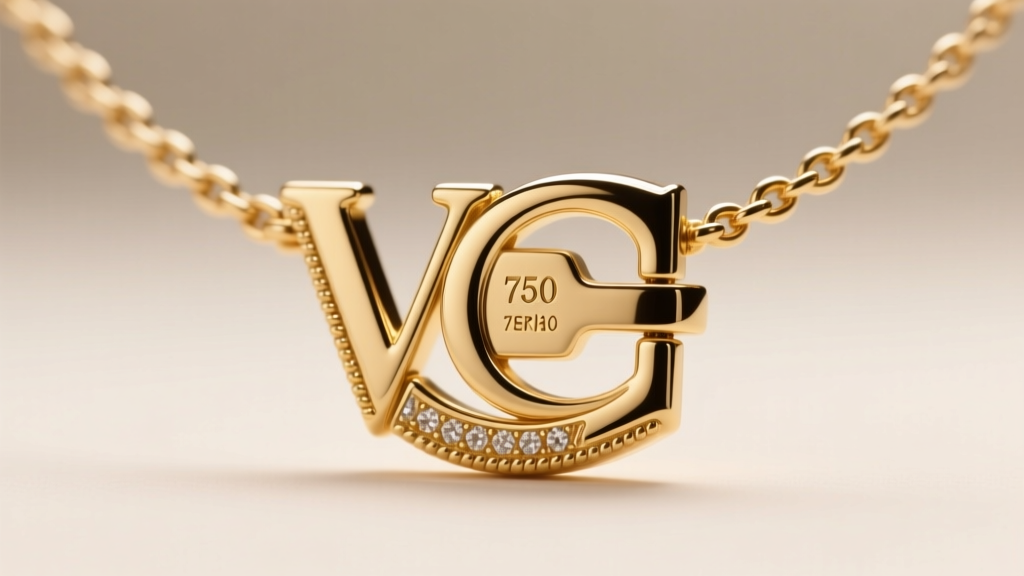
This premium is not arbitrary; it is heavily tied to VCA’s uncompromising material standards. According to the Van Cleef & Arpels Official Alhambra Collection archives, the maison rejects over 90% of harvested mother-of-pearl due to strict requirements for uniform iridescence. Similarly, their malachite must feature distinct, concentric banding without structural fractures, and their onyx must be a deep, uniform black devoid of white quartz inclusions. The gold bezel surrounding each stone is finished with a hand-applied milgrain (beaded) edge, a technique requiring hours of artisanal labor that mass-market jewelers simply cannot replicate.
Value Retention: Retail vs. Secondary Market Data
For budget-conscious buyers, the secondary market offers a compelling alternative to boutique retail. Unlike many contemporary luxury brands that suffer immediate depreciation, VCA gold necklaces—specifically the Alhambra line—exhibit remarkable value retention. Data aggregated from luxury consignment leaders like The RealReal Luxury Resale Index indicates that iconic VCA pieces frequently outperform their peers in the resale sector.
Below is a 2026 market assessment comparing retail estimates with secondary market realities for pieces in excellent, pre-owned condition (complete with original box and authenticity papers):
| Model Specification | 2026 Est. Retail | Avg. Resale (Excellent) | Value Retention |
|---|---|---|---|
| Vintage Alhambra (1 Motif, MOP) | $4,450 | $3,300 - $3,600 | 74% - 80% |
| Magic Alhambra (1 Motif, Onyx) | $6,200 | $4,100 - $4,500 | 66% - 72% |
| Vintage Alhambra (10 Motifs) | $16,500 | $13,500 - $14,800 | 81% - 89% |
| Vintage Alhambra (Discontinued Lapis) | N/A | $8,500 - $11,000 | 150%+ (vs modern equiv) |
The data reveals a clear hierarchy: multi-motif necklaces and discontinued stone variations (such as lapis lazuli or specific agates from the 1980s and 1990s) command massive premiums, often exceeding 100% of current retail equivalents. If your goal is pure financial retention, the 10-motif vintage necklace or rare, discontinued stone variants offer the strongest investment thesis.
Authentication Markers for Pre-Owned Buyers
Purchasing a pre-owned VCA gold necklace on a budget requires rigorous authentication protocols. The high resale value of these pieces has spawned a sophisticated counterfeit market. When evaluating a second-hand piece, inspect the following critical markers:
- Serial Number Formatting: Modern VCA pieces feature a unique alphanumeric serial number (often starting with 'J' or 'M' followed by a numeric string) deeply laser-engraved on the clasp or a dedicated hallmark plate. Counterfeits frequently exhibit shallow, poorly kerned, or incorrectly formatted stamps.
- Hallmark Crispness: Look for the '750' stamp and the French eagle head assay mark. On authentic pieces, these stamps are incredibly crisp and cleanly struck. Fakes often show blurred edges or incorrect font weights.
- Milgrain Bezel Quality: The beaded edge surrounding the stone should be perfectly uniform and seamlessly integrated into the gold bezel. Many counterfeit manufacturers use stamped or glued-on beading that lacks three-dimensional depth and uniformity under a jeweler's loupe.
- Weight and Clasp Mechanics: Authentic VCA clasps operate with a distinct, smooth tension. Furthermore, because fakes often utilize hollow construction or base metals plated in gold, a precise gram scale is an invaluable tool; a pendant weighing significantly less than 10 grams should raise immediate red flags.
The Final Verdict: Is the Premium Justified?

From a strictly metallurgical perspective, a VCA gold necklace carries a massive markup over its melt value. However, luxury jewelry is rarely purchased for its commodity weight. The true value of a VCA gold necklace lies in its unparalleled brand recognition, its flawless artisanal finishing, and its historical resilience on the secondary market.
If you are buying purely as a financial investment, you are better served by purchasing pre-owned, multi-motif pieces or hunting for discontinued vintage stones that have already absorbed their initial retail depreciation. Conversely, if you are purchasing for milestone gratification, the 2026 retail premium buys you the boutique experience, a comprehensive warranty, and the assurance of flawless provenance. Ultimately, a VCA gold necklace remains one of the most stable, recognizable, and culturally enduring assets in the modern jewelry landscape, justifying its premium for those who value heritage as much as hardware.


