VCA Necklace Deep Dive: Materials, Sizing & Authentication
An expert technical breakdown of the VCA necklace, analyzing 18k gold hallmarks, hardstone durability matrices, and forensic authentication markers.

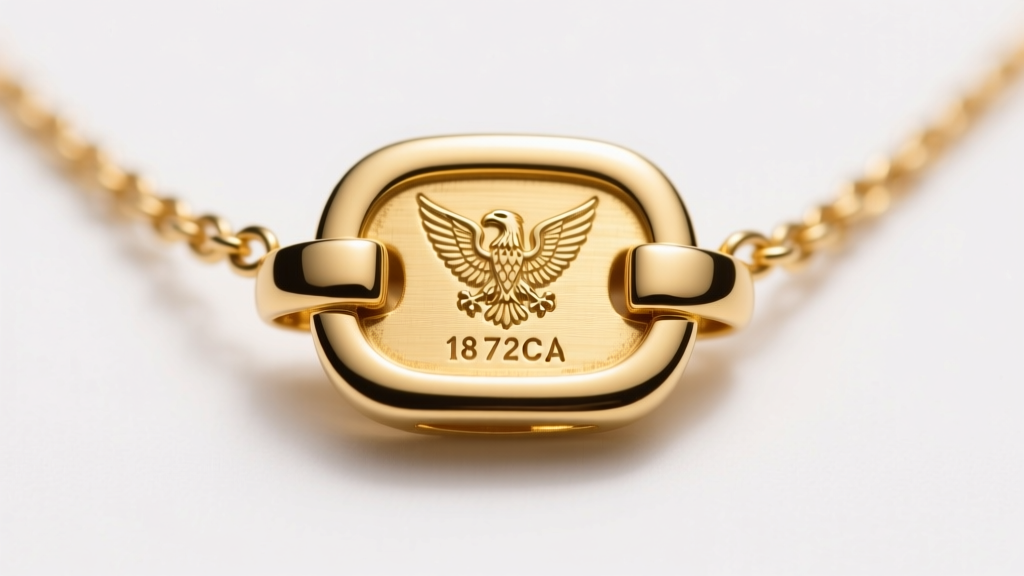
When evaluating high jewelry, the VCA necklace—specifically the iconic Alhambra and Frivole collections by Van Cleef & Arpels—represents a masterclass in metallurgical consistency and lapidary precision. However, the secondary market is increasingly saturated with high-grade counterfeits that mimic the visual motif but fail entirely under technical scrutiny. This expert deep dive bypasses aesthetic commentary to focus strictly on the forensic, material, and structural realities of authentic VCA necklaces. Whether you are a collector, an investor, or a jeweler, understanding the micro-details of French assay marks, hardstone porosity, and chain tensile engineering is mandatory for accurate valuation and authentication.
Metallurgy and Alloy Formulations
Van Cleef & Arpels strictly utilizes 18-karat gold (75% pure gold) across its primary necklace collections. The remaining 25% alloy composition is proprietary but heavily guarded to ensure specific color stability and tensile strength. Unlike standard Italian or American 18k alloys which may lean heavily on copper or silver, VCA’s Parisian workshops utilize precise palladium and zinc ratios in their white gold to prevent the yellowing effect common in lesser alloys, eliminating the immediate need for rhodium plating.
For their signature yellow gold, the copper-to-silver ratio is calibrated to produce a warm, honeyed hue that resists the reddish tint found in high-copper alloys. Rose gold pieces incorporate a higher copper content, but with trace amounts of zinc to prevent oxidation and skin-level allergic reactions. Every authentic VCA necklace will bear the Tête d'Aigle (Eagle's Head) hallmark, the official French state guarantee for 18k gold, alongside the maker’s mark—a lozenge containing the letters VCA and a star, denoting their Paris workshop origin. For a comprehensive breakdown of French assay marks, the Lang Antiques Hallmark Guide remains an indispensable reference for jewelers.
Hardstone Material Matrix: Durability and Sourcing
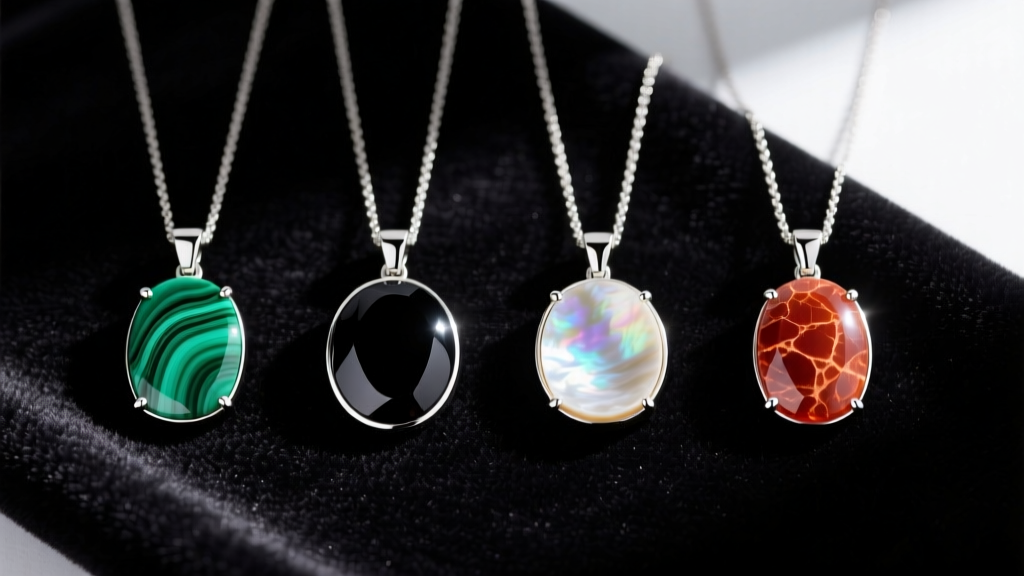
The visual impact of a VCA necklace relies heavily on its hardstone inlays. The maison sources specific grades of chalcedony, carbonate, and silicate minerals, cutting them to exact millimeter tolerances to fit the gold bezels. However, these stones possess vastly different physical properties, dictating how the necklace must be worn and maintained.
| Material | Mohs Hardness | Porosity & Chemical Risk | Primary Sourcing & Grade |
|---|---|---|---|
| Malachite | 3.5 - 4.0 | High. Extremely sensitive to acids, perfumes, and heat. Will degrade if exposed to cosmetics. | Congo & Zambia. VCA selects only deeply banded, non-chalky specimens with high structural integrity. |
| Black Onyx | 6.5 - 7.0 | Low. Highly durable, though dyed black agate can fade under prolonged UV exposure over decades. | Brazil & India. Sourced as natural gray agate and permanently carbon-treated to achieve uniform blackness. |
| Mother-of-Pearl | 2.5 - 4.5 | Very High. Organic calcium carbonate. Dissolves upon contact with acidic skin pH or citrus. | Australia & Indonesia. VCA uses thick, high-nacre Pinctada maxima shells for optimal iridescence. |
| Carnelian | 6.5 - 7.0 | Low. Excellent durability. Heat-treated to enhance the deep red-orange chromophore (iron oxide). | Brazil & India. Selected for translucency and lack of internal fracturing or cloudy banding. |
As noted by the GIA Gem Encyclopedia, organic and carbonate-based stones like Mother-of-Pearl and Malachite require structural isolation from environmental contaminants. VCA engineers a microscopic resin buffer between the gold bezel and the stone edge in modern pieces to absorb minor impacts and prevent the stone from cracking under thermal expansion.
Authentication Forensics: Hallmarks, Serials, and Micro-Details
Authenticating a VCA necklace in 2026 requires moving beyond the basic visual check of the clover motif. Counterfeiters have mastered the visual geometry of the Alhambra, but they consistently fail at the micro-machining and hallmarking stages.
The Maker's Mark and Assay Stamps
Under a 10x jeweler's loupe, the VCA maker's mark must display crisp, sharp interior corners on the lozenge. Counterfeits often show rounded edges or blurred lettering due to inferior stamping dies. The French Eagle Head hallmark is micro-engraved; on fakes, it often resembles a generic bird or blob due to poor laser etching. Furthermore, authentic stamps are applied before the final high-polish, meaning the inside of the stamp should be smooth and blend seamlessly with the surrounding metal. Fakes are often stamped post-polish, leaving sharp, raised burrs around the edges.
Serial Number Evolution
Modern VCA necklaces feature a unique serial number (typically a combination of letters and numbers, such as JE followed by six digits). This is laser-engraved with absolute precision on the jump ring or a dedicated plaque near the clasp. The font is proprietary—a clean, sans-serif typeface with specific kerning. Vintage pieces from the 1970s and 1980s may lack a serialized alphanumeric code, relying instead on a stamped inventory number and the era-specific copyright (©) and trademark (®) stamps. The transition from stamped inventory numbers to laser-etched serials occurred gradually in the late 1990s and early 2000s.
Chain Mechanics and Clasp Engineering
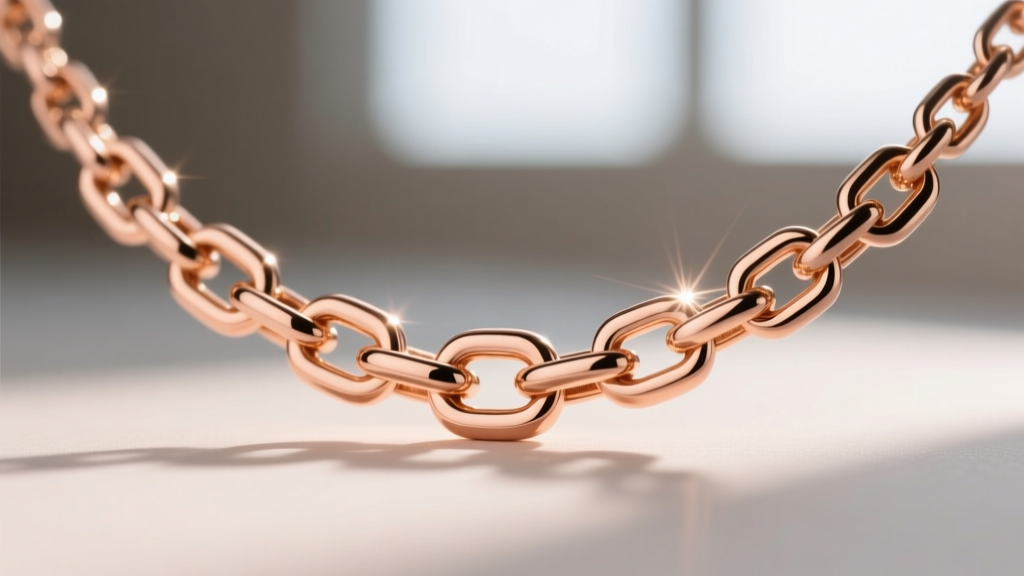
The chain of a VCA necklace is not an afterthought; it is engineered to support the specific weight of the motif while maintaining a fluid drape. The classic Alhambra utilizes a specialized cable chain where every individual link is laser-soldered. This prevents the chain from pulling apart under the pendulum-like stress of the heavy stone motifs.
Clasp Types and Tensile Strength
Depending on the era and the specific collection, VCA employs either a lobster clasp or a friction spring-ring clasp. Modern lobster clasps are cast in 18k gold and feature an internal steel spring mechanism (which will attract a rare-earth magnet, a common point of confusion for amateur authenticators who believe the entire clasp must be non-magnetic). The jump rings connecting the clasp to the chain are seamlessly soldered on authentic pieces. If you can see a visible slit or seam on the jump ring with the naked eye, the piece has either been repaired by a third-party jeweler or is entirely counterfeit.
Market Valuation and Investment Grade Metrics
From an investment perspective, the VCA necklace operates differently than standard diamond jewelry, which suffers steep depreciation upon retail purchase. Due to strict maison price controls and annual retail increases, VCA pieces—particularly the Vintage Alhambra and Magic Alhambra lines—demonstrate high liquidity and value retention on the secondary market.
Pieces featuring discontinued stones, such as deep blue Lapis Lazuli or vibrant red Coral (which VCA phased out in the early 2000s due to CITES regulations and ethical sourcing mandates), command a 40% to 80% premium over current retail equivalents. When evaluating a VCA necklace for acquisition, always demand the original Certificate of Authenticity and the stamped warranty card. The absence of these documents does not inherently prove a piece is fake, but it reduces the secondary market liquidity and necessitates a costly trip to a Van Cleef & Arpels boutique for independent maison verification and archival extraction.


