Victorian Slide Necklace Value Guide: 2026 Pricing & Buying Tips
Discover the true market value of a Victorian slide necklace in 2026. Expert pricing tiers, authentication tips, and condition checks for collectors.

The Mechanics and Allure of the Victorian Slide Necklace
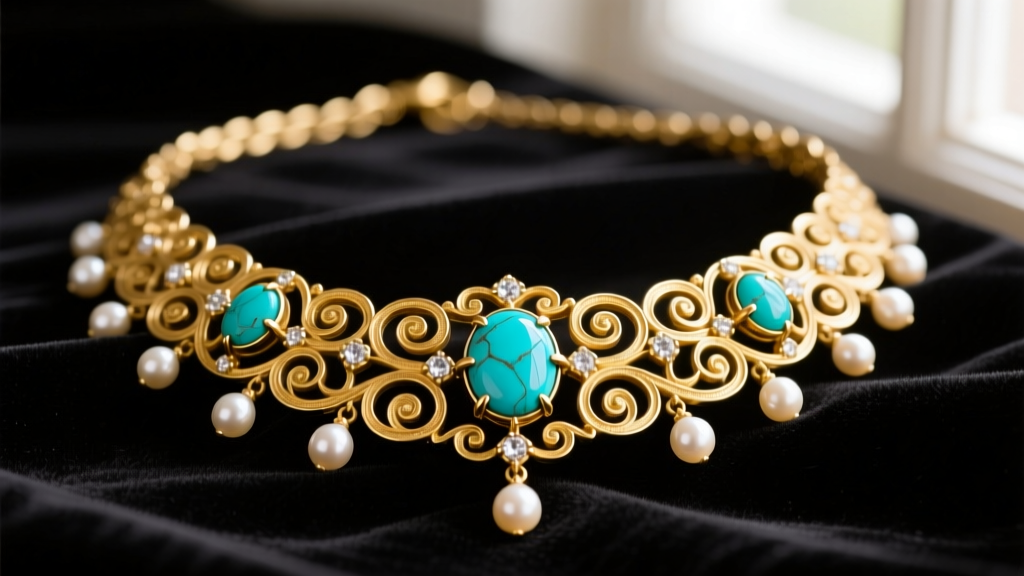
Unlike a standard pendant that hangs fixed from a bail, a Victorian slide necklace features a decorative, often heavily embellished component that glides freely along a chain, ribbon, or strand of beads. Originally designed in the mid-19th century to allow the wearer to adjust the neckline of the jewelry to suit different dress collars and necklines, the slide became a hallmark of Victorian adaptability and sentimentality. Today, as we navigate the 2026 antique jewelry market, the Victorian slide necklace remains a highly sought-after collector's item, but its valuation is fraught with nuances that can easily trap uneducated buyers.
Understanding the true value of these pieces requires looking past the superficial glitter and examining the metallurgy, the condition of the internal friction mechanisms, and the historical accuracy of the accompanying chain. According to the Victoria and Albert Museum's jewelry archives, the Victorian era (1837–1901) saw massive shifts in metalworking and gemstone sourcing, meaning a slide from 1845 differs vastly in composition and value from one crafted in 1895.
2026 Market Valuation: What Are You Actually Paying For?
Pricing a Victorian slide necklace is not a one-size-fits-all endeavor. The market in 2026 has bifurcated sharply between 'wearer' pieces (which have minor condition issues but high aesthetic appeal) and 'collector' pieces (which boast pristine enamel, original chains, and verifiable hallmarks). Below is the current pricing matrix based on recent auction results and specialist dealer listings.
| Condition & Material Tier | Key Characteristics | 2026 Estimated Value (USD) |
|---|---|---|
| Tier 1: Entry / Wearer | Base metal, pinchbeck, or 9k gold. Noticeable enamel loss, missing seed pearls, or paired with a modern replacement chain. | $350 – $750 |
| Tier 2: Mid-Range Collector | 15k or 18k yellow gold. Intact champlevé or guilloché enamel. Minor wear to the internal friction sleeve. Original period chain. | $1,200 – $3,500 |
| Tier 3: High-End / Pristine | Flawless enamel work, complete sets of natural seed pearls or turquoise cabochons. Fully functional original tension mechanism. | $4,000 – $8,500 |
| Tier 4: Museum / Provenance | Documented provenance, exhibition quality, rare gemstones (e.g., demantoid garnets), or exceptional mourning materials like carved Whitby jet. | $10,000 – $25,000+ |
Critical Authentication & Condition Checks (The Value Killers)
When assessing a Victorian slide necklace, the devil is in the details. A piece that looks spectacular from three feet away can lose 60% of its value upon macro-inspection. Here are the specific failure modes and authentication markers you must evaluate before making a purchase.
1. The Gold Standard Act and Hallmarking Realities
Many buyers mistakenly believe that a lack of hallmarks indicates a fake. In reality, prior to the UK Gold Standard Act of 1854, much of the jewelry produced was unmarked, relying on the reputation of the jeweler. Post-1854, 9k, 12k, and 15k gold became legally recognized standards. As noted by Lang Antiques' Victorian Era Education Guide, 15k yellow gold was the premier choice for high-quality mid-Victorian slides. If a piece is stamped '14k', it is likely an American reproduction or a later Edwardian alteration, as 14k was not a standard British hallmark during Victoria's reign. Always request an acid test or XRF (X-ray fluorescence) scan for unmarked pieces to confirm the gold karat.
2. The Internal Friction Mechanism
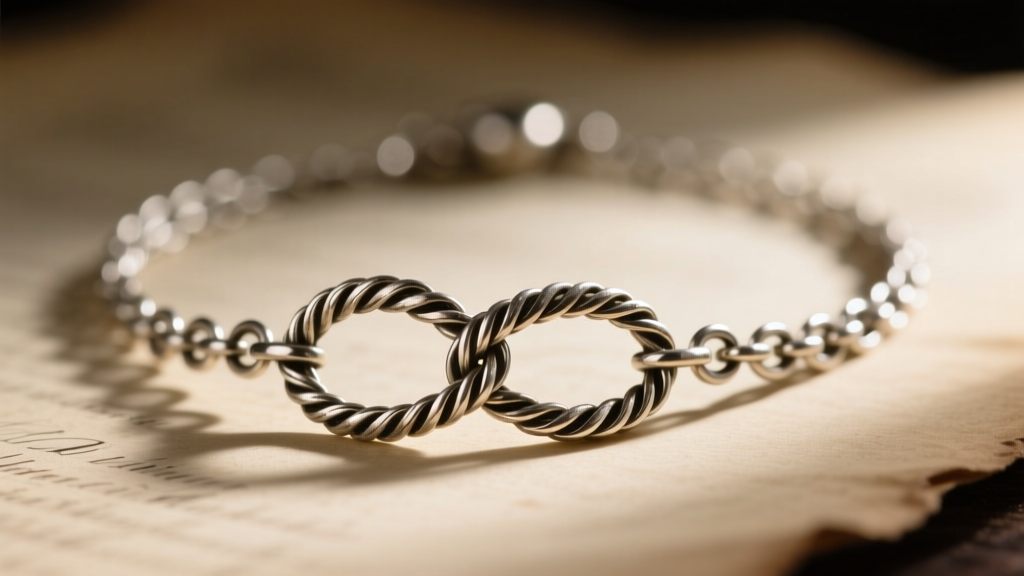
The defining feature of a slide is its ability to stay in place on the chain without a clasp. This is achieved through an internal dual-loop threading system or a tiny steel spring sleeve that grips the chain. Over 150 years, these steel components often rust, degrade, or lose their tension. If the slide slips freely down the chain when held vertically, the internal mechanism has failed. While a master jeweler can re-tension the sleeve or replace the internal spring, this restoration must be disclosed, and it slightly diminishes the 'all-original' collector premium.
3. Enamel Integrity: Guilloché vs. Champlevé
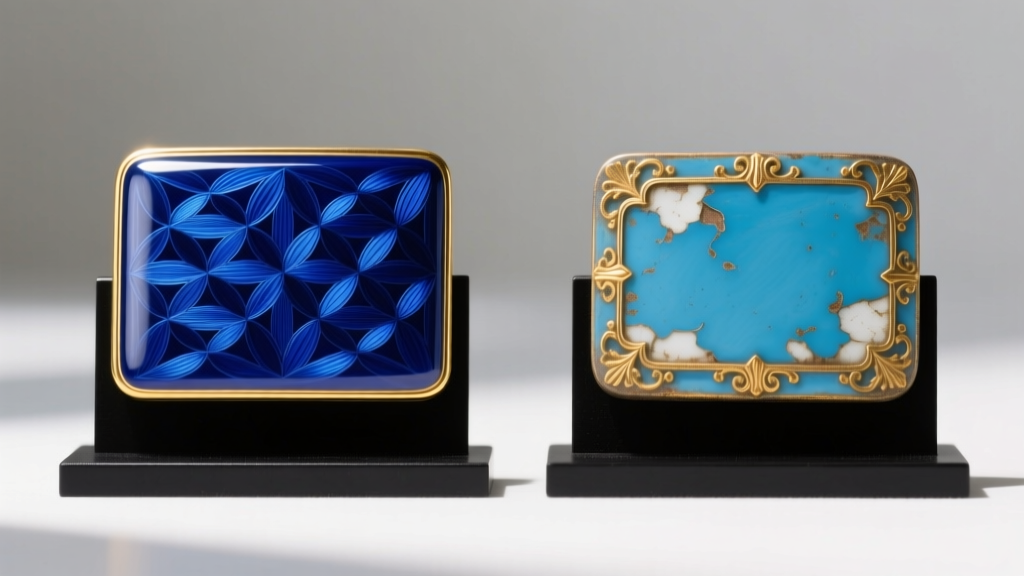
Enamel work is the most fragile element of a Victorian slide. Guilloché enamel (where translucent enamel is laid over an engine-turned geometric metal background) is highly prized but notoriously prone to micro-fractures. When inspecting a piece, use a 10x jeweler's loupe to check the edges where the enamel meets the gold bezel. Any lifting, cloudiness, or chalky white residue indicates moisture intrusion and impending enamel failure. Champlevé enamel (where enamel is carved into recessed metal troughs) is slightly more durable but still susceptible to chipping if the piece was dropped on a hard surface.
Spotting Edwardian and Modern Reproductions
The market is currently flooded with high-quality reproductions manufactured in the 1970s and early 2000s, designed to mimic the Victorian aesthetic. To differentiate a true Victorian slide necklace from a reproduction, examine the chain links and the gemstone cuts.
- Chain Links: Victorian chains were hand-drawn and soldered. Look for slight irregularities in the solder joints of foxtail or belcher chains. Modern reproductions often use machine-made, perfectly uniform links with laser-welded seams.
- Gemstone Cuts: If the slide features diamonds, they should be rose-cut or old mine-cut. Brilliant-cut diamonds with modern, precise faceting are a massive red flag for a 20th-century reproduction.
- Seed Pearls: Authentic Victorian slides utilize tiny, irregular natural seed pearls, often split in half and backed with foil. Perfectly round, uniform cultured pearls indicate a modern piece.
Budgeting Strategies for Collectors and Brides
If you are budgeting for a Victorian slide necklace as an alternative bridal piece or a cornerstone for your antique collection, strategic allocation of funds is essential. Do not blow your entire budget on the slide itself if it necessitates pairing it with a cheap, modern chain. The aesthetic harmony between the slide and the chain is paramount.
For buyers in the $1,500 to $2,500 range, the smartest play is to target 'sleeper' pieces—slides with exceptional 15k gold metalwork and intact enamel, but which are missing a few non-essential seed pearls. Seed pearl replacement is a specialized skill, but it is far less costly than attempting to restore damaged guilloché enamel. Furthermore, consider expanding your search to include mourning slides crafted from vulcanite, gutta-percha, or bog oak. While they lack the flash of gold and turquoise, early mourning slides with intricate hairwork compartments or carved weeping willow motifs hold immense historical value and can often be acquired for under $800, offering a unique, gothic-romantic aesthetic that is highly relevant in 2026 fashion.
"A true Victorian slide is not just a pendant; it is a marvel of micro-engineering and sentimentality. The value lies not just in the gold weight, but in the survival of its delicate internal tension and the flawless execution of its enamelwork." — Antique Jewelry Appraisal Guidelines, 2025 Edition.
Ultimately, purchasing a Victorian slide necklace requires a disciplined, analytical approach. By prioritizing original components, understanding the historical context of gold hallmarking, and rigorously inspecting the enamel and internal mechanisms, you can secure a piece that is not only a breathtaking sartorial asset but a sound financial investment in the evolving antique jewelry market.


