Vintage Alhambra Necklace Materials: Stone & Gold Guide
Compare hard stones and gold alloys in the Vintage Alhambra necklace. Discover Mohs ratings, durability, and pricing for onyx, malachite, and MOP.

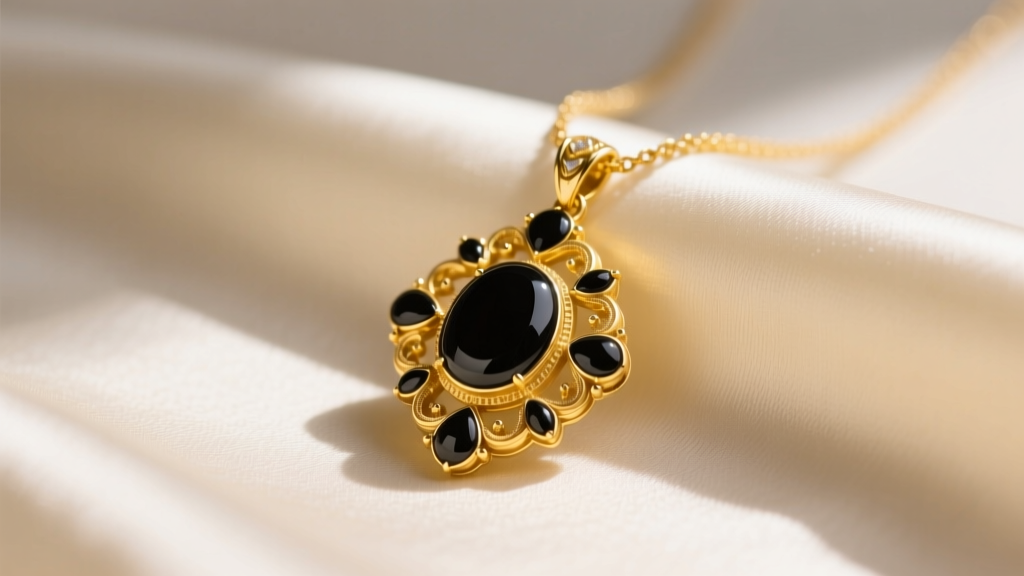
The Anatomy of a Vintage Alhambra Necklace
When collectors and fine jewelry enthusiasts discuss the iconic clover motif, the term vintage alhambra necklace frequently surfaces. However, in the specific nomenclature of Van Cleef & Arpels, the "Vintage" designation does not necessarily refer to the age or second-hand status of the piece. Instead, it defines the exact scale of the motif. The Vintage Alhambra collection features the classic, medium-sized quatrefoil motif measuring approximately 15mm by 15mm. This distinguishes it from the smaller 10mm "Sweet Alhambra" line and the multi-scaled "Magic Alhambra" collections.
Understanding the material properties of a vintage alhambra necklace is critical for both daily wearability and long-term value retention. The piece is a masterclass in lapidary precision, combining meticulously cut hard stones with 18-karat gold alloys. Because the stones are cut into a complex, symmetrical four-leaf shape with a beaded gold border (often referred to as a grain de sable or millgrain edge), the structural integrity and chemical stability of the chosen materials are paramount.
Hard Stone Gemology & Failure Modes
The defining characteristic of any vintage alhambra necklace is its central hard stone. Van Cleef & Arpels sources specific grades of ornamental stones, but each possesses unique gemological vulnerabilities. According to the GIA Gem Encyclopedia, ornamental stones used in fine jewelry must balance aesthetic appeal with structural durability. Below is a deep dive into the most common materials used in the Vintage Alhambra line.
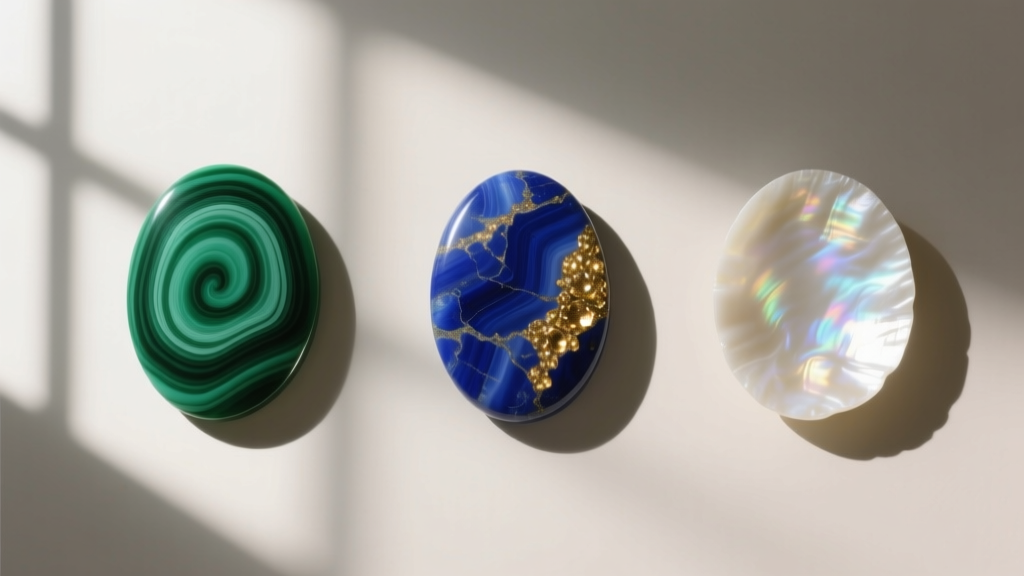
Malachite & Tiger's Eye: The Banded Vulnerables
Malachite (Copper carbonate hydroxide) is arguably the most striking and highly sought-after stone in the collection, characterized by its deep green concentric banding. However, it sits at a mere 3.5 to 4.0 on the Mohs hardness scale. Malachite is highly porous and exceptionally sensitive to acids, heat, and even prolonged exposure to water. The primary failure mode for malachite motifs is surface dulling and chemical etching caused by the natural acidity of human sweat or cosmetic perfumes. Furthermore, because VCA requires perfectly symmetrical banding, the lapidary wastage rate during cutting is immense, which is why malachite commands a premium retail price.
Tiger's Eye, conversely, is a pseudomorph of quartz after crocidolite, rating a 7.0 on the Mohs scale. It is vastly more durable than malachite, resistant to scratching, and chemically stable. Its chatoyancy (the "cat's eye" optical phenomenon) requires precise cabochon-style cutting to ensure the light band sits perfectly horizontal across the 15mm motif.
Onyx & Carnelian: The Quartz Staples
Both Onyx and Carnelian belong to the chalcedony (microcrystalline quartz) family, boasting a Mohs hardness of 6.5 to 7.0. Black onyx provides a stark, high-contrast backdrop to yellow gold, while carnelian offers a warm, translucent reddish-orange hue. These stones are non-porous and highly resistant to chemical degradation. The primary risk to onyx and carnelian in a vintage alhambra necklace is not chemical etching, but rather "cleavage" or chipping if the pendant is dropped on a hard surface like marble or tile, as quartz lacks true cleavage planes but can still fracture upon high-impact trauma.
Mother-of-Pearl & Lapis Lazuli: The Organic & Metamorphic
Mother-of-Pearl (MOP) is an organic material composed of nacre (calcium carbonate platelets bound by conchiolin). Rating between 2.5 and 4.5 on the Mohs scale, MOP is exceptionally vulnerable to acidic environments. The conchiolin can break down over time when exposed to hairspray, perfume, or chlorinated pool water, leading to a permanent loss of its iridescent luster.
Lapis Lazuli is not a single mineral but a metamorphic rock composed primarily of lazurite, calcite, and pyrite (the metallic flecks). While lazurite rates around 5.5 to 6.0, the calcite matrix is much softer (Mohs 3.0). This differential hardness means that aggressive polishing or ultrasonic cleaning can erode the calcite, leaving microscopic pitting on the surface of the clover motif.
Material Comparison Data Matrix
To make an informed purchasing decision, it is essential to weigh the physical properties of these stones against their relative market positioning and care requirements.
| Stone Material | Mohs Hardness | Porosity | Relative Price Tier | Primary Vulnerability |
|---|---|---|---|---|
| Mother-of-Pearl | 2.5 - 4.5 | Low (Organic) | Base Tier | Acid etching, loss of nacre luster |
| Black Onyx | 6.5 - 7.0 | None | Base Tier | Impact chipping, thermal shock |
| Carnelian | 6.5 - 7.0 | None | Base Tier | Impact chipping |
| Lapis Lazuli | 5.0 - 6.0 | Medium | Premium Tier | Calcite matrix erosion, water damage |
| Malachite | 3.5 - 4.0 | High | Premium Tier | Chemical etching, heat, moisture |
| Tiger's Eye | 7.0 | None | Mid Tier | Hard impact fracturing |
18k Gold Alloy Metallurgy
The metalwork of a vintage alhambra necklace is crafted exclusively in 18-karat gold, stamped with the 750 hallmark, indicating 75% pure gold content. The remaining 25% consists of alloying metals that dictate the color, tensile strength, and tarnish resistance of the piece.
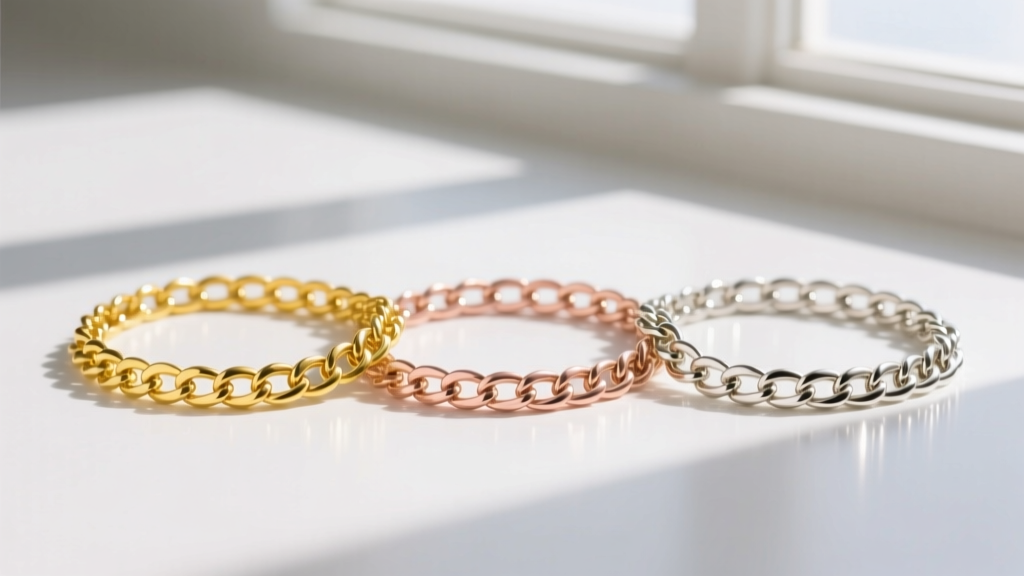
Yellow, Rose, and White Gold Properties
Yellow Gold: Alloyed with roughly equal parts silver and copper (e.g., 12.5% Ag, 12.5% Cu). This maintains the warm, natural hue of pure gold while providing the necessary tensile strength to hold the delicate beaded edges of the Alhambra motif. It is the most hypoallergenic and chemically stable of the three.
Rose Gold: Achieved by significantly increasing the copper content (often up to 20% or more) while reducing silver. The high copper content makes rose gold slightly more durable and resistant to denting than yellow gold. However, individuals with copper sensitivities may experience mild skin reactions, and the metal can develop a subtle patina over decades of wear.
White Gold: Alloyed with palladium, nickel, or zinc to strip the yellow hue. Crucially, 18k white gold is naturally a pale, slightly yellowish-gray. To achieve the brilliant, reflective silver finish seen in modern white gold Alhambra necklaces, the metal is electroplated with a microscopic layer of rhodium. Over time, friction from clothing and skin oils will wear away this rhodium plating, requiring the necklace to be re-dipped by a professional jeweler every 2 to 4 years to maintain its pristine appearance.
Chain Construction & Clasp Mechanics
Beyond the pendant, the chain of a vintage alhambra necklace is an exercise in functional elegance. VCA utilizes a specialized flat cable chain that is designed to resist kinking and tangling. The standard length is 16 inches, but it features an integrated intermediate jump ring at the 14-inch mark, allowing the wearer to adjust the drop to sit perfectly on the collarbone or slightly lower, depending on the neckline.
The clasp is a precision-engineered lobster claw, stamped with the VCA hallmark and a unique serial number that corresponds to the pendant's backing. This serial number is vital for authentication and must match the paperwork provided at the time of purchase. The backing of the Vintage Alhambra motif itself features a smooth, polished gold finish with a subtle, stamped geometric pattern that reduces skin contact area, minimizing heat transfer and sweat accumulation against the stone.
Real-World Maintenance & Ultrasonic Warnings
Proper care is non-negotiable for preserving the structural integrity of ornamental stones. According to Van Cleef & Arpels Care Guidelines, hard stones must be kept away from extreme temperature changes and harsh chemicals.
- Never use ultrasonic cleaners: The high-frequency vibrations can cause micro-fractures in malachite and lapis lazuli, and can completely delaminate the nacre layers of mother-of-pearl.
- Avoid steam cleaning: Thermal shock can cause quartz-based stones like onyx to crack internally, even if the surface appears intact.
- The "Last On, First Off" Rule: Always put your vintage alhambra necklace on after applying perfume, hairspray, and lotions. Remove it before bathing, swimming, or exercising to prevent acidic sweat from etching porous stones.
- Storage: Store the necklace flat in its original felt-lined box. Hanging the necklace long-term can place undue stress on the individual chain links and the solder points connecting the jump rings.
"The longevity of porous ornamental stones like malachite and lapis lazuli relies entirely on the wearer's environmental awareness. Unlike diamonds or sapphires, these materials are active participants in their environment, reacting to the pH levels of the skin and the chemicals in the air." — GIA Gemological Laboratory Reports
Final Verdict: Choosing Your Stone for 2026 and Beyond
Selecting the right vintage alhambra necklace requires balancing your aesthetic preferences with your lifestyle. If you seek a daily-wear piece that can withstand the rigors of an active lifestyle, Onyx, Carnelian, or Tiger's Eye set in 18k yellow gold offer the highest Mohs ratings and the lowest chemical reactivity. They are virtually impervious to cosmetics and require only a soft, damp cloth for cleaning.
Conversely, if you are drawn to the vibrant, organic patterns of Malachite or Lapis Lazuli, you must commit to a rigorous care routine. These premium-tier stones are investment pieces that demand to be worn mindfully, kept strictly away from moisture and acids. By understanding the exact gemological and metallurgical properties of these materials, you ensure that your Alhambra necklace remains not just a symbol of luck, but a pristine, enduring artifact of high jewelry craftsmanship.


