The Vintage Button Necklace: Material Properties & Care
Discover the material properties of glass, bakelite, and shell in a vintage button necklace. Learn stringing, care, and preservation.

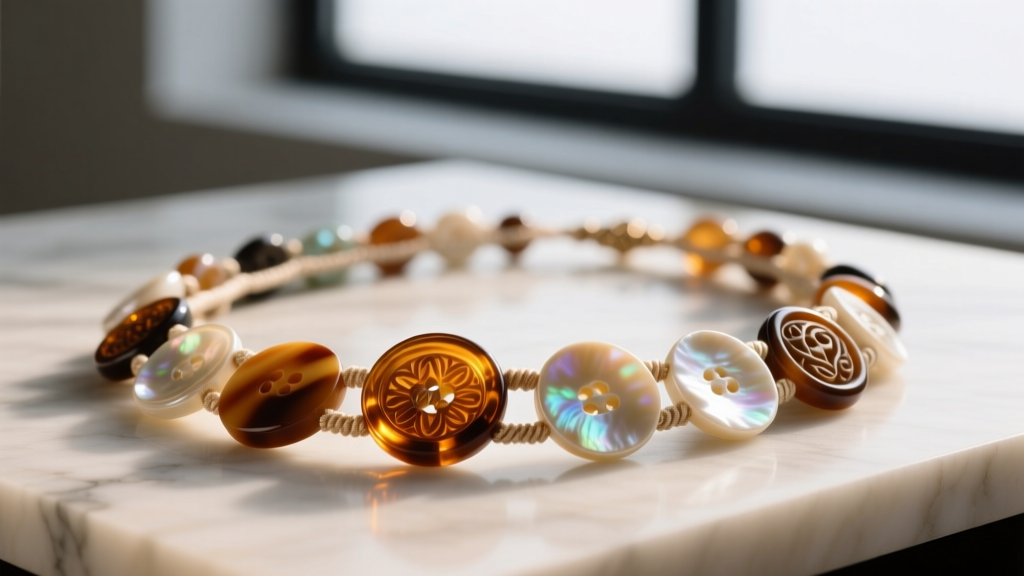
Curating and crafting a vintage button necklace is an exercise in wearable history. However, treating a 1920s celluloid button with the same mechanical and chemical considerations as a Victorian cut-steel button is a fast track to jewelry failure. Upcycling antique and vintage buttons requires a deep understanding of material science. The physical properties of these components—ranging from Mohs hardness to chemical off-gassing—dictate how they must be drilled, strung, and preserved. In this comprehensive guide, we break down the core materials found in vintage buttons and provide actionable frameworks for building a durable, historically respectful necklace.
The Big Five: Core Materials in Vintage Buttons
Before stringing a single bead, you must accurately identify the material of your focal and accent buttons. Each material class presents unique structural challenges and degradation risks.
Glass and Enamel: Weight and Fragility
Vintage glass buttons, particularly those from the Czech Republic and France (circa 1880-1940), are prized for their luster and intricate lampwork or molded designs. Glass sits at a 5.5 to 6.5 on the Mohs hardness scale, making it highly resistant to scratching from everyday wear. However, its primary vulnerability is its density. A single, large molded glass button can weigh upwards of 15 grams. When designing a vintage button necklace heavily reliant on glass, the cumulative weight can cause severe strain on the cervical spine and lead to premature stretching of the stringing medium. Furthermore, if you need to modify the shank or drill a new hole, you must use a diamond-tipped core drill bit with continuous water lubrication to prevent thermal shock and micro-fractures.
Bakelite and Early Plastics: Chemical Stability
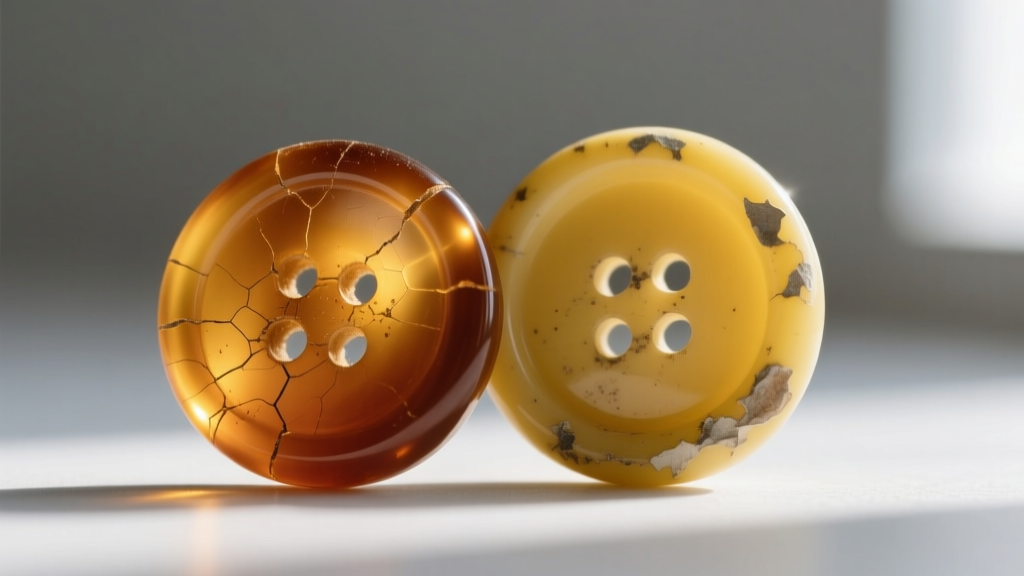
Bakelite (polyoxybenzylmethylenglycolanhydride) was the first synthetic plastic, heavily used in Art Deco jewelry. It is remarkably stable compared to later plastics, but it is soft (Mohs 2.5) and highly sensitive to extreme heat. Authentic Bakelite is heavy, feels warm to the touch, and will yield a bright yellow smear on a cloth when rubbed with Simichrome polish. When incorporating Bakelite into a necklace, avoid leaving the piece in direct sunlight or hot cars, as UV exposure and heat can cause the phenolic resins to craze (develop fine surface cracks) and darken irreversibly.
Celluloid: The Flammability and Degradation Risks
Celluloid (nitrocellulose camphor) was widely used from the 1870s through the 1930s as an ivory and tortoiseshell substitute. It is notoriously unstable. As celluloid ages, it breaks down and off-gasses nitric acid. This acidic vapor is highly corrosive and will rapidly tarnish or even pit adjacent metal findings, such as sterling silver clasps or gold-filled jump rings. According to the Canadian Conservation Institute, celluloid degradation can also lead to spontaneous combustion in tightly enclosed, unventilated spaces. Never store a celluloid button necklace in an airtight plastic bag; it requires a micro-climate with acid-free tissue and ventilation.
Mother-of-Pearl and Shell: Acid Sensitivity
Carved shell and mother-of-pearl (MOP) buttons are composed primarily of calcium carbonate and conchiolin. With a Mohs hardness of just 2.5 to 4.5, they are easily scratched by harder gemstone beads or metal spacers. More critically, calcium carbonate is highly reactive to acids. The lactic acid present in human sweat, as well as the alcohols and oils in perfumes, will slowly dissolve the nacreous layer, leaving the button dull and chalky. Always instruct clients to put their MOP vintage button necklace on after applying cosmetics and fragrances.
Stamped Metals and Pot Metal: Oxidation and Structural Integrity
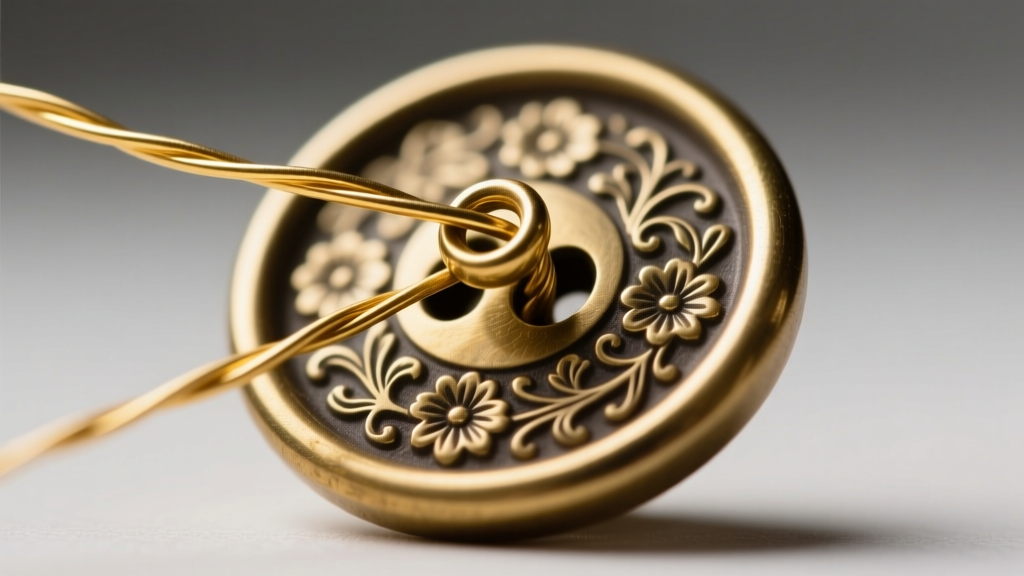
Victorian cut-steel and stamped brass buttons offer incredible durability, but 20th-century “pot metal” (an informal term for cheap zinc, aluminum, and lead alloys) is a structural liability. Pot metal is prone to intergranular corrosion, often called “zinc pest,” where the metal expands, cracks, and turns to powder from the inside out. Always inspect the shanks of metal buttons; if the shank is rusted or the base metal is flaking, the button must be reinforced with a brass cup or bypassed entirely to prevent it from snapping off the necklace mid-wear.
Material Comparison Matrix
Use the following matrix to quickly assess the physical properties of your vintage buttons before beginning assembly. This data is cross-referenced with standard gemological and conservation metrics provided by the Gemological Institute of America (GIA).
| Material | Mohs Hardness | Weight Profile | Drilling Safety | Primary Degradation Risk |
|---|---|---|---|---|
| Glass / Enamel | 5.5 - 6.5 | Heavy | Low (Requires diamond bit & water) | Thermal shock, chipping |
| Bakelite | 2.5 | Medium-Heavy | High (Standard HSS bits) | UV darkening, heat crazing |
| Celluloid | 2.0 | Very Light | High (Hand-drill preferred) | Nitric acid off-gassing, flammability |
| Mother-of-Pearl | 2.5 - 4.5 | Light-Medium | Medium (Prone to chipping at exit) | Acid etching, delamination |
| Pot Metal | 1.5 - 3.0 | Variable | Low (Shatters easily) | Zinc pest, structural collapse |
Stringing Mechanics: Matching Wire to Button Material
The structural integrity of a vintage button necklace relies entirely on the interface between the stringing medium and the button hole. Vintage button holes are rarely smooth; they are often rough, jagged, or lined with corrosive metal shanks that act like tiny saws against standard beading wire.
Heavy Glass and Metal Buttons
For buttons exceeding 10 grams each, or those with rough metal shanks, flexibility and tensile strength are paramount. Use a 49-strand micro-wire, such as Beadalon 49 in a 0.018-inch or 0.021-inch diameter. The 49-strand construction provides the drape of silk while offering up to 40 pounds of tensile strength. To protect the wire from sharp metal shanks, thread a small piece of French wire (bullion) or a sterling silver wire protector through the shank before looping the beading wire.
Shell, Pearl, and Delicate Plastics
Drilled holes in vintage shell and MOP buttons are notoriously abrasive and can sever steel wire over time due to friction and the calcium carbonate dust trapped in the hole. For these materials, traditional knotting is superior. Use Size F or Size G 100% silk cord (like Griffin or Au Ver à Soie). The silk acts as a sacrificial buffer. Knot between every single button using a surgeon’s knot to prevent total loss if the cord is eventually abraded, and to keep heavy buttons from sliding and colliding.
Preservation and Cleaning Protocols by Material
Maintaining a vintage button necklace requires abandoning modern jewelry cleaning shortcuts. Ultrasonic cleaners, steamers, and commercial silver dips are strictly prohibited for mixed-material vintage pieces.
- Glass: Can be safely cleaned with warm water, a drop of mild pH-neutral dish soap, and a soft microfiber cloth. Avoid soaking if the button has a glued-in metal shank, as moisture will compromise the adhesive.
- Bakelite & Celluloid: Never submerge early plastics. Clean only with a barely damp cloth and dry immediately. If Bakelite has oxidized to a dull brown, it can be gently polished with a very fine automotive rubbing compound or Simichrome, followed by a light coat of Renaissance Wax to seal the surface.
- Mother-of-Pearl: Wipe with a soft, dry cloth after every wear to remove skin oils. If heavily soiled, use a slightly damp cloth with a tiny amount of olive oil, then buff dry. Never use ammonia-based glass cleaners, which will strip the nacre.
- Metal Shanks & Findings: Clean brass and copper shanks with a dry polishing cloth. Avoid liquid tarnish removers, which can seep into the crevices between the button face and the shank, causing irreversible staining on porous materials like shell or wood.
Conclusion
Designing a vintage button necklace is a rewarding intersection of art and material science. By respecting the unique physical and chemical properties of glass, early plastics, shell, and metals, you can engineer a piece that not only showcases the beauty of bygone eras but is structurally sound enough to be worn and cherished for decades to come. Always prioritize the preservation of the original artifact over the convenience of modern assembly techniques.


