The Ultimate Vintage Crystal Bead Necklace Gift Guide (2026)
Discover the ultimate 2026 gift guide for a vintage crystal bead necklace. Learn to match styles, authenticate eras, and choose the perfect piece.

Why a Vintage Crystal Bead Necklace Makes the Perfect Gift
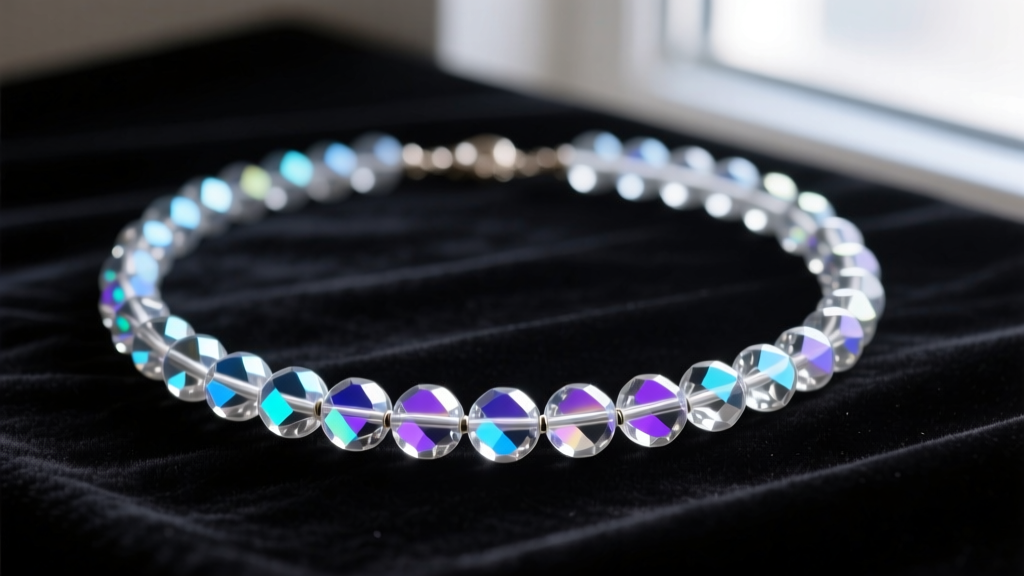
In the landscape of 2026 jewelry gifting, the shift toward sustainable, historically rich, and deeply personal accessories has firmly established the vintage crystal bead necklace as a premier choice for discerning buyers. Unlike mass-produced contemporary pieces, vintage beads carry the distinct weight of specific eras—from the geometric precision and foil-backed brilliance of the 1920s Art Deco movement to the bold, colorful combinations of the 1980s power-dressing era. Gifting a vintage piece is not merely about presenting an accessory; it is about offering a wearable artifact with a unique provenance that cannot be replicated.
For gift-givers, the primary challenge lies in navigating the nuances of authentication, material degradation, and occasion matching. This comprehensive guide breaks down the technical specifications, historical markers, and styling matrices you need to select a flawless vintage crystal bead necklace for any recipient.
Decoding Vintage Crystals: Material Grades and Eras
Not all vintage crystals are created equal. The term 'crystal' in vintage jewelry often encompasses a wide spectrum of materials, each with distinct optical properties and value propositions. According to the GIA Gem Encyclopedia, the refraction and brilliance of vintage glass beads depend heavily on their lead oxide content and cutting techniques.
Czech Glass vs. Austrian Crystal
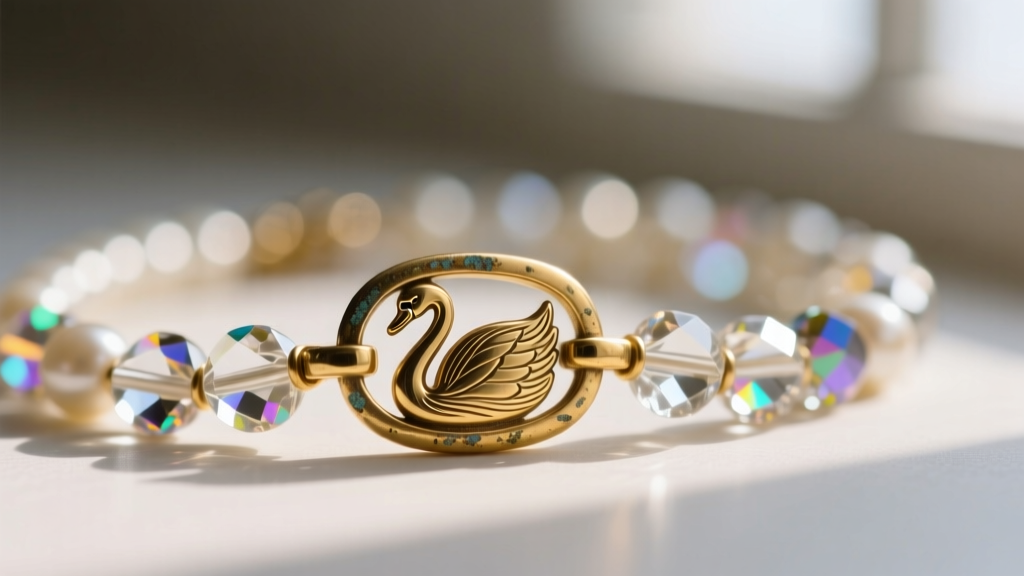
Czech glass beads, primarily produced in the Jablonec region from the 1920s through the 1950s, are renowned for their pressed-glass molds and soft, romantic luster. They often feature intricate shapes like melons, leaves, and teardrops. In contrast, Austrian crystals (most notably early Swarovski) possess a higher lead content, yielding sharper facets and intense prismatic fire. When examining a vintage crystal bead necklace, look for the 'Swarovski Swan' hallmark on the clasp or the tiny, laser-etched swan logo on larger beads, a practice introduced in the late 1980s.
The Allure of Foil-Backed Beads
Many mid-century vintage beads feature a silver or gold foil backing applied to the interior of the glass to amplify light reflection. While breathtaking, these foil-backed beads are highly susceptible to moisture damage. When inspecting a potential gift, hold the beads under direct light to check for 'dead' or cloudy spots, which indicate that the foil has oxidized or peeled away from the inside.
Occasion Matching: A Buyer's Matrix
Matching the specific characteristics of a vintage crystal bead necklace to the recipient's milestone ensures the gift resonates on a personal level. Use the matrix below to align bead size, color, and era with the occasion.
| Occasion | Ideal Bead Size | Color Palette | Era & Material |
|---|---|---|---|
| Bridal Shower | 4mm - 6mm Roundels | Clear, Aurora Borealis, Pearl | 1950s Austrian Crystal |
| 30th Anniversary | 8mm Bicones | Sapphire, Emerald, Ruby | 1920s Art Deco Czech Glass |
| Milestone Birthday | 10mm Barrel Beads | Amber, Multi-color, Jet | 1980s Signed Designer |
| Graduation | 5mm Graduated Rounds | Champagne, Smoky Quartz | 1940s Mid-Century Glass |
When gifting vintage jewelry, you are not just giving an accessory; you are entrusting the recipient with a wearable artifact. Provenance, structural integrity, and preservation must be your highest priorities.
Sizing, Stringing, and Hardware Integrity
The most critical failure point in vintage jewelry is the stringing material. A beautiful 1940s crystal necklace is essentially unwearable if it is still held together by its original, degrading cotton or silk thread. When purchasing a vintage crystal bead necklace as a gift, you must evaluate the structural hardware.
Stringing Materials: What to Look For
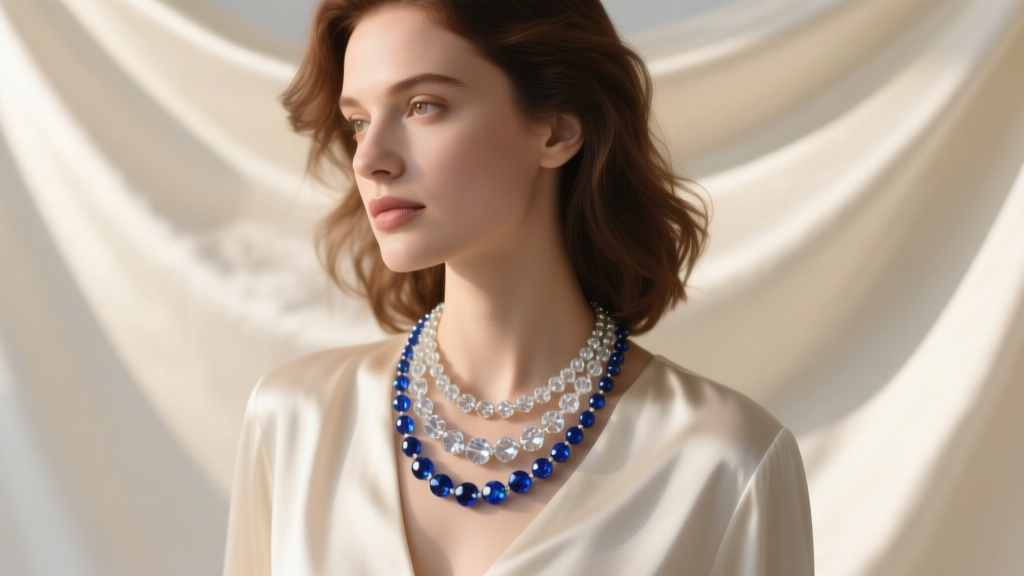
Ideally, the vintage piece you purchase has been professionally restored and restrung on modern, high-tensile beading wire. Look for descriptions that mention 49-strand micro-wire (such as Soft Flex in a 0.018-inch gauge). This material drapes like silk but possesses the tensile strength to support heavy, 8mm+ leaded crystal beads without snapping. If the necklace is knotted between each bead, ensure it is high-grade nylon or modern silk, and that the knots are tight against the bead holes to prevent excessive friction.
Clasp Mechanics and Hallmarks
Vintage barrel clasps and push-box clasps are authentic to the era but notoriously prone to slipping open under the weight of crystal beads. For a secure gift, look for vintage pieces that have been thoughtfully retrofitted with modern lobster clasps and soldered jump rings. The Antique Jewelry University provides excellent resources on identifying period-accurate clasps versus modern replacements, noting that while a replaced clasp lowers strict antique value, it vastly improves everyday wearability.
Red Flags When Buying Vintage
To ensure your gift is a treasure rather than a liability, avoid pieces exhibiting the following warning signs:
- Thread Rot: Gently pull two beads apart. If you see frayed cotton, stretched silk, or excessive gaps, the necklace requires immediate, potentially costly restringing.
- Chipped Drill Holes: Inspect the areas where the beads meet. Rough, chipped edges around the drill holes indicate that the beads were forced onto a wire that was too thick, compromising the glass.
- Cloudy Interiors: Avoid beads with permanent internal clouding or black spots, which indicate irreversible moisture damage to the foil backing.
- Lead Paint Concerns: Extremely cheap, unverified vintage pieces from the mid-20th century may feature surface coatings that contain lead. Stick to reputable vintage dealers who test for safety compliance.
Pricing Tiers and Authentication
The market for a vintage crystal bead necklace is segmented by provenance, designer signatures, and material rarity. Understanding these tiers will help you budget appropriately for your gift.
Under $75: Unsigned Mid-Century Charm
In this tier, you will find beautiful, unsigned Czech glass and early plastic-crystal hybrid necklaces from the 1950s and 60s. These pieces offer incredible aesthetic value and bold colors but lack the collector's premium of a designer hallmark. They are perfect for everyday vintage enthusiasts.
$80 to $250: Signed Designer & Austrian Crystal
This is the sweet spot for high-quality gifting. Here, you can acquire signed pieces from legendary mid-century costume jewelry houses like Miriam Haskell, Trifari, or Coro, as well as early Swarovski pieces featuring the iconic swan hallmark. These necklaces often feature complex, multi-strand designs and pristine aurora borealis (AB) finishes.
$300+: Art Deco & Rare Optical Glass
At the premium tier, buyers are paying for historical rarity. Necklaces from the 1920s featuring uranium glass (Vaseline glass) beads—which emit a vibrant green glow under UV light—or intricate, multi-layered flapper-style lariat designs command top dollar. These pieces should always come with a certificate of authenticity or detailed provenance from a recognized antique dealer.
Care and Preservation Instructions for the Recipient
When presenting a vintage crystal bead necklace as a gift, include a care card to ensure its longevity. Vintage crystals should never be cleaned in ultrasonic machines, as the high-frequency vibrations can shatter the glass or strip away delicate foil backings. Instead, advise the recipient to gently wipe the beads with a slightly damp, lint-free microfiber cloth after wearing them to remove skin oils and perfume residue. Finally, the necklace should always be stored flat in a soft pouch; hanging heavy vintage crystal beads for long periods will cause irreversible stress and stretching to the stringing wire.


