Material Guide: Choosing a Vintage Green Crystal Necklace
Discover the material properties, identification tips, and value of vintage green crystal necklaces, from uranium glass to malachite and chrysoprase.

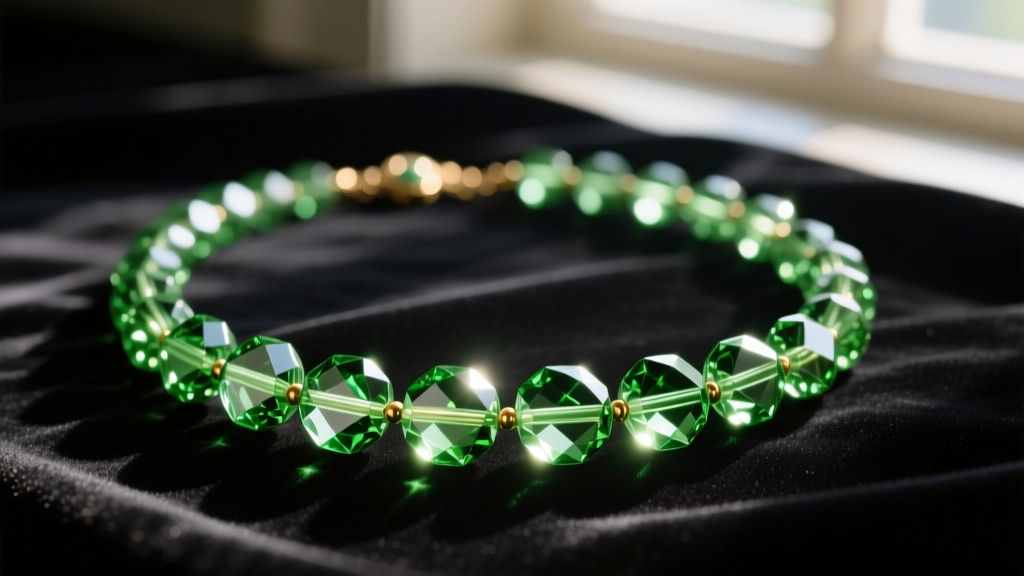
The Allure and Complexity of Green Crystals in Vintage Jewelry
The hunt for a vintage green crystal necklace often leads collectors and stylists down a fascinating path of material science and historical design. In the context of antique and vintage jewelry, the term "crystal" is frequently misapplied. It can refer to natural crystalline gemstones, leaded glass manufactured by heritage houses, or even radioactive uranium glass popular during the Art Deco era. Understanding the exact material composition of your necklace is not merely an academic exercise; it dictates the piece's market value, its structural durability, and the specific care protocols required to prevent catastrophic failure.
As we navigate the current 2026 vintage market, where authenticated Art Deco and Mid-Century pieces are commanding premium prices, distinguishing between natural beryls, copper-based carbonates, and man-made silicates is essential. This guide breaks down the specific material properties, identification frameworks, and preservation techniques for the most common green "crystals" found in vintage necklaces.
Material Breakdown: Glass vs. Natural Gemstones
When evaluating a vintage green crystal necklace, the first diagnostic step is determining whether the beads or pendants are amorphous (glass) or crystalline (natural gemstones). Each material category possesses distinct optical and physical properties.
Uranium Glass (Vaseline Glass)
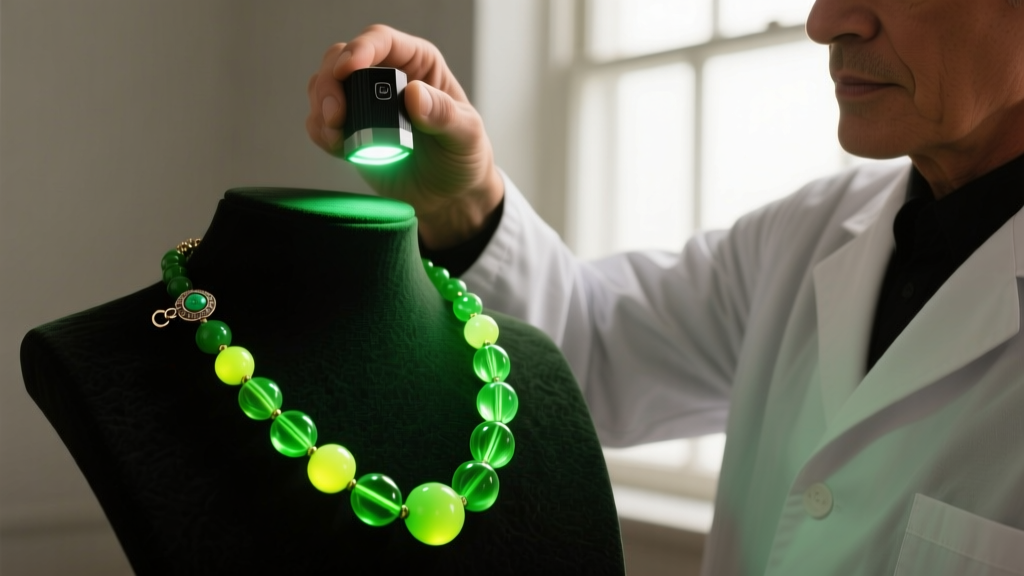
Highly sought after by collectors of 1920s and 1930s jewelry, uranium glass contains uranium dioxide (usually between 2% and 25%) added to the glass melt for coloration. This material exhibits a distinctive yellowish-green hue in natural light but fluoresces a brilliant, neon green under ultraviolet (UV) light. According to the Vaseline Glass Collectors, Inc., the radioactive emission is negligible and safe for wear, but the glass itself is relatively fragile. With a Mohs hardness of 5.5 to 6.5, uranium glass beads are prone to chipping at the drill holes if strung on abrasive wire rather than traditional silk thread.
Malachite and Chrysoprase: The Natural Contenders
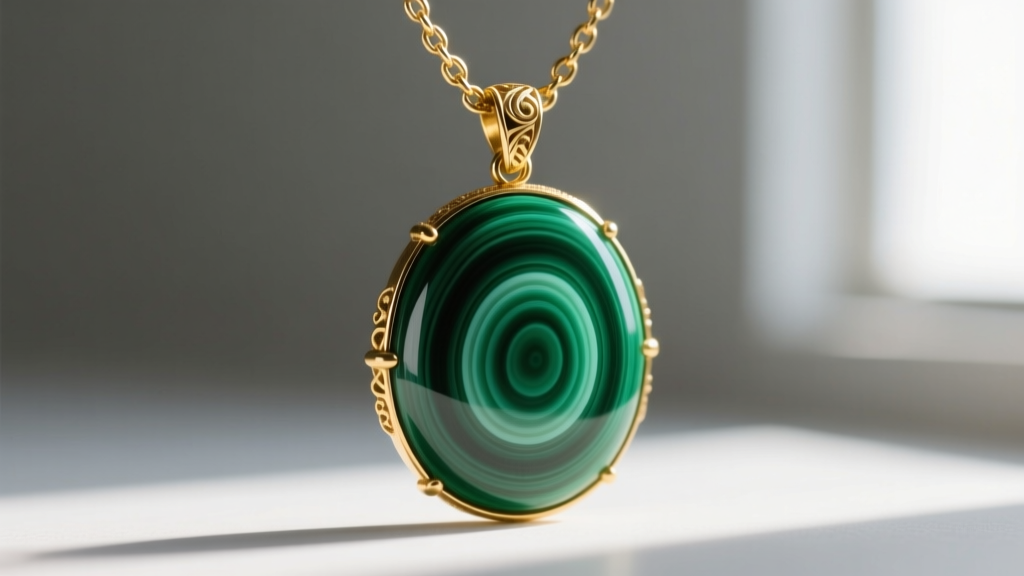
Often mislabeled as "green crystal" in vintage estate listings, malachite and chrysoprase are natural stones with vastly different structural integrities. Malachite is a copper carbonate hydroxide. As detailed by the Gemological Institute of America (GIA), malachite ranks a mere 3.5 to 4.0 on the Mohs scale. It is highly porous, sensitive to heat, and will effervesce (fizz) if exposed to mild acids. A vintage malachite necklace requires extreme caution; ultrasonic cleaners will shatter or dull the stone instantly.
Chrysoprase, conversely, is a cryptocrystalline quartz (chalcedony) colored by nickel impurities. The GIA notes that chrysoprase boasts a Mohs hardness of 6.5 to 7.0, making it vastly superior for daily wear. Vintage Art Nouveau pieces frequently feature carved chrysoprase beads, which maintain their polish far better than malachite over decades of use.
Vintage Leaded Crystal (Swarovski and Baccarat)
In the realm of European vintage jewelry, "crystal" almost exclusively refers to leaded glass. To be classified as full lead crystal, the material must contain a minimum of 24% lead oxide. This high lead content increases the refractive index (often exceeding 1.70) and specific gravity, giving vintage Swarovski or Baccarat green crystal necklaces their signature heavy drape and exceptional light dispersion. However, lead glass is softer than standard quartz (Mohs ~5), meaning vintage faceted beads often show microscopic abrasions along their facet junctions after 80+ years of wear.
Comparative Properties and Durability Matrix
To make informed purchasing or restoration decisions, use the following material matrix. This data is critical for jewelers restringing vintage pieces and collectors assessing condition reports.
| Material | Mohs Hardness | Specific Gravity | UV Reaction (365nm) | Common Failure Modes | 2026 Avg. Vintage Price |
|---|---|---|---|---|---|
| Uranium Glass | 5.5 - 6.5 | 3.1 - 3.9 | Bright Neon Green | Drill-hole chipping, surface scratching | $150 - $450 |
| Malachite | 3.5 - 4.0 | 3.7 - 4.0 | Inert (None) | Acid etching, heat fracturing, polish loss | $200 - $800+ |
| Chrysoprase | 6.5 - 7.0 | 2.58 - 2.64 | Inert (None) | Color fading in prolonged direct sunlight | $300 - $1,200 |
| Leaded Crystal | ~5.0 | 2.8 - 3.1 | Dull Blue/Purple (varies) | Facet abrasion, lead leaching (if damaged) | $80 - $350 |
| Green Tourmaline (Verdelite) | 7.0 - 7.5 | 3.02 - 3.26 | Inert or Weak | Cleavage splitting from hard impacts | $800 - $3,500+ |
Authenticating Your Vintage Green Crystal Necklace
Authentication requires moving beyond visual inspection and employing non-destructive material testing. When evaluating a potential acquisition, follow this three-step diagnostic protocol.
1. The Blacklight and Loupe Test
Always carry a 365nm UV flashlight and a 10x triplet loupe. Shine the UV light on the beads in a darkened room. If the beads glow a uniform, vibrant green, you are likely looking at uranium glass. Next, examine the surface under the loupe. Glass (both uranium and leaded) will often reveal tiny, spherical gas bubbles trapped inside the material or swirl marks from the molding process. Natural gemstones like chrysoprase or tourmaline will instead show natural inclusions, such as microscopic needles, liquid feathers, or crystalline growth structures.
2. Thermal Conductivity and Weight Assessment
Natural crystalline structures conduct heat differently than amorphous glass. When you press a natural stone like chrysoprase or tourmaline against your cheek or inner wrist, it will feel distinctly cool to the touch and take longer to warm to your body temperature. Glass, conversely, will feel closer to room temperature and warm up almost instantly. Furthermore, the high lead content in vintage European crystal gives it a noticeably heavier, more substantial drape compared to standard soda-lime glass beads of the same millimeter diameter.
3. Evaluating the Hardware and Stringing
The materials used in the necklace's construction provide vital clues to its age and authenticity. A true vintage piece from the 1920s to 1950s will typically feature a 14k or 18k gold-filled spring ring clasp (usually 5mm to 7mm in diameter) or an early push-pull box clasp. Modern lobster clasps are a red flag for a restrung or altered piece. Additionally, inspect the drill holes. Vintage hand-cut beads often have slightly irregular, asymmetrical holes, whereas modern machine-cut beads feature perfectly uniform, laser-drilled channels.
Care, Maintenance, and Storage Protocols
Preserving a vintage green crystal necklace requires material-specific care. The most common point of failure in vintage bead necklaces is the degradation of the stringing material. If your necklace is strung on vintage silk, it must be professionally restrung. For heavy beads like leaded crystal or large malachite rounds, jewelers should use Size F or G silk thread with French wire (bullion) at the clasp ends to prevent the metal from cutting the silk. For modern durability without sacrificing the vintage drape, bonded nylon threads (like Silkon) in 0.6mm gauges are highly recommended.
Storage is equally critical. Malachite and uranium glass should be stored in a low-humidity environment, wrapped individually in acid-free tissue paper. Never store malachite in direct contact with harder gemstones, as its low Mohs hardness guarantees it will be scratched. Avoid all commercial jewelry dips, ammonia-based cleaners, and ultrasonic machines. For routine cleaning, a slightly damp, lint-free microfiber cloth is the only safe option for polished vintage green stones and glass alike.
Final Verdict: Which Material Suits Your Collection?
Selecting the right vintage green crystal necklace ultimately depends on your wearability requirements and collecting goals. If you prioritize historical novelty and striking visual effects under UV light, an Art Deco uranium glass necklace is an unparalleled conversation piece. For those seeking the rich, opaque banding of natural earth materials, a malachite pendant offers immense visual depth, provided you commit to its strict, high-maintenance care protocols. However, if you desire a durable, natural green stone that can withstand the rigors of daily modern wear while retaining its vintage charm, a chrysoprase bead necklace remains the superior, structurally sound investment.


