Pricing a Vintage Red Glass Bead Necklace: Value Guide
Learn how to appraise a vintage red glass bead necklace. Discover price tiers, authenticity markers, and budget tips for collectors and buyers.

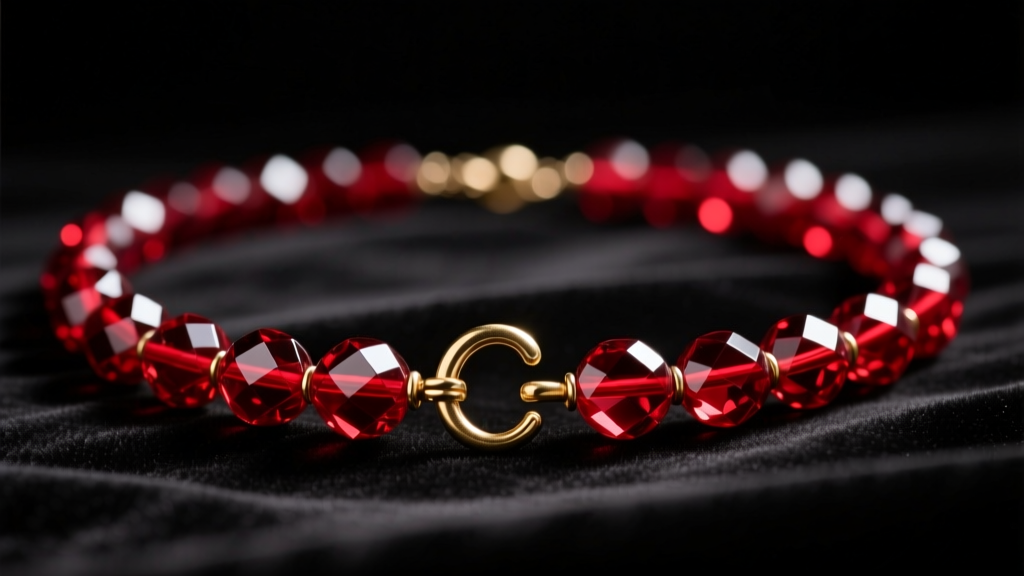
The Allure and Market Reality of Vintage Red Glass
The secondary jewelry market is saturated with mass-produced costume jewelry, making the hunt for a genuine vintage red glass bead necklace both a thrilling and perilous endeavor for collectors. Red glass has historically been one of the most expensive and difficult colors to produce, requiring specific metallic oxides and precise temperature control. Because of this, authentic vintage pieces carry a distinct weight, brilliance, and historical value that modern reproductions simply cannot replicate.
However, assessing the true value of these necklaces requires looking far beyond the color. A piece that sells for $30 at a flea market might be a mid-century reproduction, while a seemingly similar strand could fetch $600 at auction due to its glass composition, era-specific hardware, and provenance. This guide breaks down the exact material markers, hardware identifiers, and pricing matrices you need to accurately appraise and budget for vintage red glass bead necklaces.
Decoding Eras: How Age Impacts Value
The value of a vintage necklace is inextricably linked to its era. Glassmaking techniques evolved rapidly over the 20th century, leaving distinct fingerprints on the beads.
Victorian & Edwardian (1880s–1910s)
During this era, true red glass was often achieved using gold chloride, creating what is known as cranberry glass. These beads are highly prized, featuring a soft, translucent ruby hue that glows under natural light. Because gold was used in the batch, Victorian cranberry glass necklaces are inherently valuable, often starting at $300 for a simple strand and exceeding $1,000 for intact, multi-layered parures.
Art Deco & Mid-Century (1920s–1960s)
The 1920s introduced bold, geometric Czech pressed glass beads, often faceted to mimic rubies and garnets. By the 1950s, the market saw an influx of Murano glass from Italy, including Sommerso (layered glass) and Goldstone (glass with copper inclusions that create a sparkling, reddish-brown effect). Mid-century pieces are the sweet spot for budget-conscious collectors, offering high visual impact and solid craftsmanship in the $75 to $250 range.
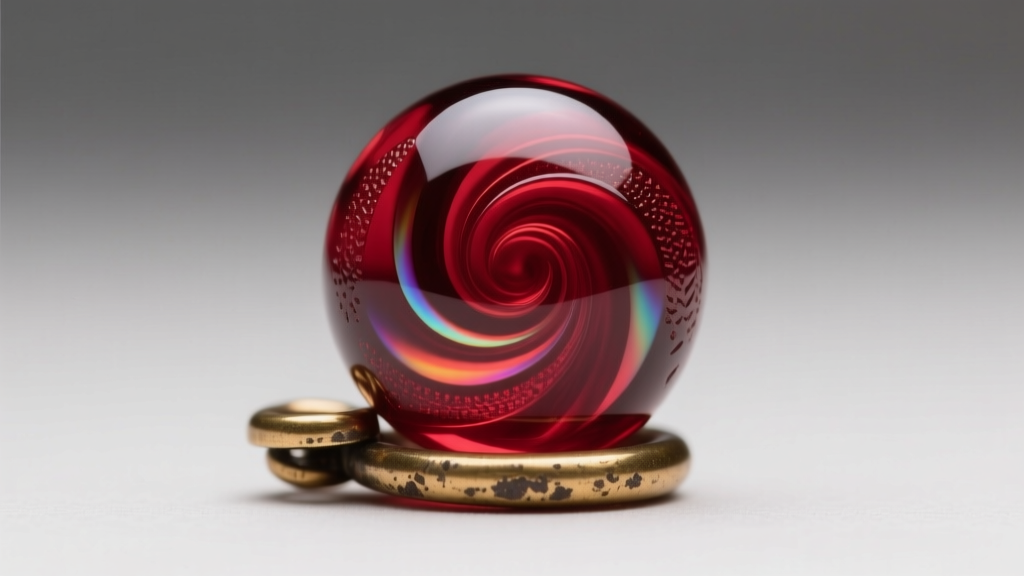
Material Markers: Identifying True Vintage Glass
To accurately assess a vintage red glass bead necklace, you must identify the specific type of glass used. The Corning Museum of Glass notes that historical red glass formulations varied wildly by region and decade, directly impacting modern appraisal values.
| Glass Type | Visual Characteristics | Era / Origin | Value Indicator |
|---|---|---|---|
| Cranberry Glass | Soft, translucent ruby; glows pinkish-red in sunlight. | Victorian (UK/US) | High ($300 - $1,200+) |
| Czech Ruby Pressed | Deep, opaque or semi-translucent red; sharp geometric facets. | Art Deco (1920s-30s) | Medium ($80 - $250) |
| Murano Sommerso | Red core encased in thick, clear or green outer glass layers. | Mid-Century (1950s-60s) | High ($150 - $500) |
| Goldstone | Reddish-brown glass with highly reflective copper flecks. | 19th C - Mid-Century | Medium ($60 - $200) |
| Vaseline / Uranium Ruby | Deep red with a yellowish-green fluorescent glow under UV light. | Early 20th Century | Niche/High ($100 - $400) |
Hardware & Clasps: The Hidden Value Drivers
Amateur buyers focus solely on the beads; expert appraisers look immediately at the clasp and stringing material. The hardware on a vintage red glass bead necklace can confirm its age or expose it as a modern forgery.
- C-Clasp (Pre-1900s): A simple 'C' shaped hook without a locking mechanism. If a necklace claims to be Victorian but features a modern lobster clasp, the piece has either been heavily altered (reducing its value by 40-60%) or is an outright reproduction.
- Spring Ring (1920s-Present): Introduced in the early 20th century. Early spring rings were often smaller and made of base metals plated in gold or silver. Look for wear patterns that match the age of the beads.
- Fold-Over / Box Clasps (1940s-1960s): Common on mid-century European and American costume jewelry. A secure, hinged clasp that folds flat against the neck. Often features safety chains or figure-eight wire catches.
- Trombone Clasp: A push-pull tube mechanism primarily used on European (especially French and Czech) pieces from the late 19th century through the 1930s.
Stringing Material: True vintage necklaces were strung on silk thread, cotton, or early metallic wires. If you see modern nylon fishing line, plastic-coated tiger tail wire, or flexible nylon beading thread, the necklace has been recently restrung or is a modern fake. According to antique jewelry specialists at Ruby Lane, professional restringing on natural silk is acceptable and maintains value, but synthetic modern threads severely depress collector interest.
Budget & Value Assessment Matrix
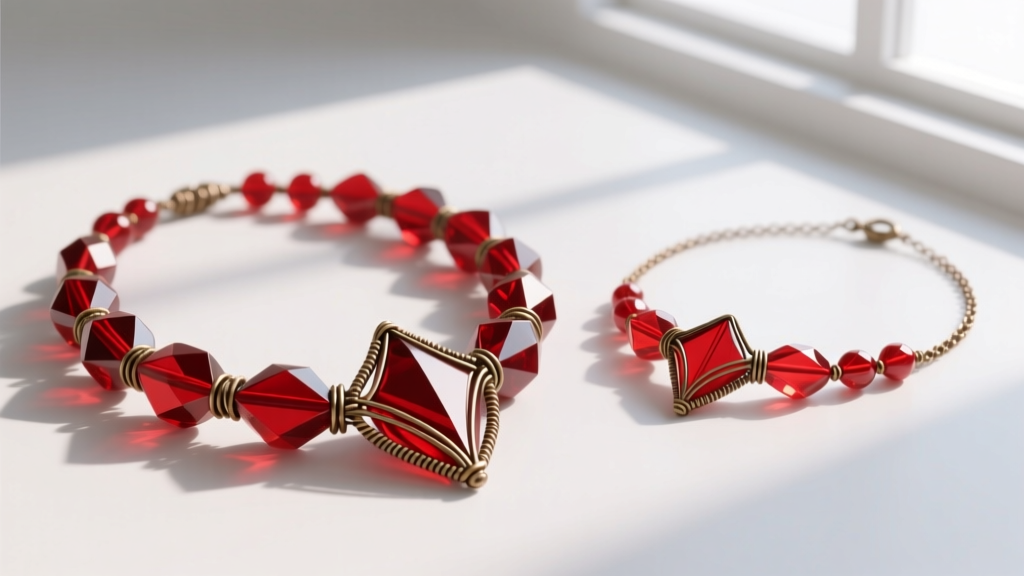
When building a collection or sourcing inventory, use this pricing matrix to determine if a seller's asking price aligns with current market realities. Prices assume the necklace is intact, with original hardware and no missing or chipped beads.
| Condition & Era | Material / Provenance | Budget Tier (Est. USD) | Investment Potential |
|---|---|---|---|
| Late 20th C (1970s-80s) | Mass-produced molded glass, modern clasps. | $25 - $60 | Low (Decorative only) |
| Mid-Century (1940s-60s) | Czech faceted, Murano Sommerso, original fold-over clasps. | $75 - $250 | Medium (Steady collector demand) |
| Art Deco (1920s-30s) | Geometric pressed glass, trombone/spring clasps, metallic thread. | $150 - $400 | High (Appreciating asset) |
| Victorian (1880s-1900s) | True cranberry (gold chloride), C-clasps, silk stringing. | $350 - $1,500+ | Very High (Museum/Archival quality) |
Red Flags: Spotting Reproductions and Overpriced Fakes
The market is flooded with 'vintage-style' necklaces manufactured in the 1990s and 2000s. Protect your budget by watching for these critical failure modes and authenticity red flags:
- Seam Lines: High-end vintage glass beads were often fire-polished to remove mold seams. If you can feel a distinct, sharp ridge running down the side of every bead, it is likely a cheap, modern cast-glass reproduction.
- Hyper-Uniformity: Vintage glass was often hand-cut or pressed in small batches. Slight variations in facet alignment, bead diameter (even by a millimeter), and color depth are hallmarks of age. Perfect, machine-like uniformity suggests modern mass production.
- The 'Clunk' Test: Gently tap two beads together. True vintage lead crystal or dense Czech glass produces a high-pitched, resonant 'clink.' Modern, lightweight plastic or cheap pot-metal glass produces a dull 'clunk.'
- Artificial Wear: Some bad actors sand down clasps to simulate age. Look for unnatural, directional scratching on the metal findings, which differs from the random, micro-abrasions caused by decades of genuine wear.
Final Verdict: Is It Worth the Investment?
A vintage red glass bead necklace is a highly wearable, historically rich asset, provided you buy based on material facts rather than aesthetic assumptions. For buyers on a strict budget (under $100), focus on mid-century Czech faceted glass or 1960s Goldstone pieces. These offer exceptional durability, vibrant color, and authentic vintage charm without the premium attached to Victorian cranberry glass. Always demand clear macro-photographs of the clasp and bead holes before purchasing, and never pay Art Deco prices for a necklace strung on modern nylon.


