Vintage Rhinestone Necklace Buying Guide: Eras & Value
Discover how to authenticate, date, and value a vintage rhinestone necklace. Learn about AB finishes, prong settings, and avoiding rhinestone rot.

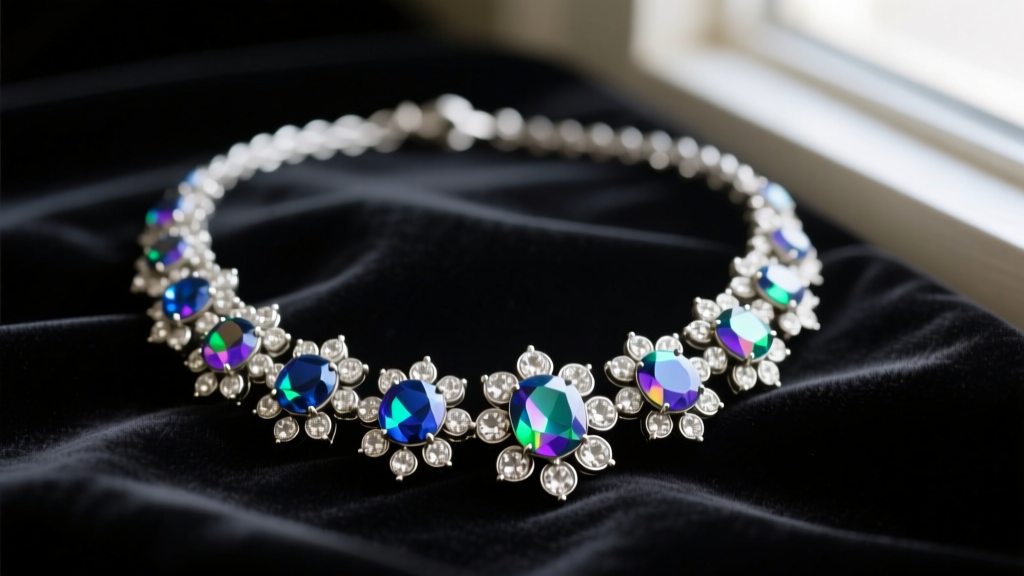
The Anatomy of a Vintage Rhinestone Necklace
When evaluating a vintage rhinestone necklace, understanding the physical anatomy of the piece is your first line of defense against overpaying for a replica. True vintage costume jewelry relies on three core components: the glass, the foil backing, and the metal setting.
Glass vs. Acrylic
Prior to the 1970s, high-quality rhinestones were crafted from leaded glass, primarily sourced from Czechoslovakia or the Swarovski factories in Austria. Leaded glass possesses a high refractive index, meaning it bends light to create deep, prismatic sparkle. In contrast, acrylic and resin stones—which became ubiquitous in the late 1970s and 1980s—are lightweight, prone to micro-scratches, and lack optical depth. If a stone feels warm to the touch and sounds like plastic when tapped gently with a fingernail, it is likely acrylic, significantly lowering the collector value.
The Foil Backing and "Rhinestone Rot"
Unlike fine gemstones, rhinestones rely on a painted or vapor-deposited foil backing to reflect light back through the top facets. Early 20th-century foils often contained silver nitrate or mercury. When moisture breaches the setting, these metallic foils oxidize, turning black or dark brown. Collectors refer to this as "rhinestone rot" or "black death." Once a stone has succumbed to rhinestone rot, it cannot be cleaned; the stone must be replaced, which diminishes the necklace's originality and value.
Dating Your Piece: Key Eras and Identifiers
Dating a vintage rhinestone necklace requires a synthesis of material analysis and design history. According to the Vintage Fashion Guild, construction techniques shifted dramatically across the 20th century.
- Art Deco (1920s–1930s): Characterized by geometric motifs, filigree metalwork, and long sautoir styles. Stones were often unfoiled or backed with silver paint. Base metals and early pot metals were common, though high-end pieces utilized sterling silver.
- Retro (1940s): During WWII, base metals were rationed for the war effort. Consequently, many 1940s necklaces were crafted from sterling silver, often heavily gold-plated (vermeil). Designs were bold, three-dimensional, and featured large "cocktail" style central stones.
- Mid-Century (1950s–1960s): The golden age of American costume jewelry. The most critical E-E-A-T indicator for this era is the Aurora Borealis (AB) finish. Invented in 1955 by Manfred Swarovski in collaboration with Christian Dior, the AB finish applies a micro-thin metallic vapor to the glass, creating an iridescent rainbow effect. Rule of thumb: If a necklace features AB stones, it absolutely cannot predate 1955. Sellers claiming a 1930s Art Deco piece has original AB stones are either misinformed or selling a "franken-piece" (an old setting repaired with newer stones).
- Late Century (1970s–1980s): Quality declined as manufacturers shifted to glue-set acrylic stones and lightweight, hollow-stamped pot metals that are prone to flaking.
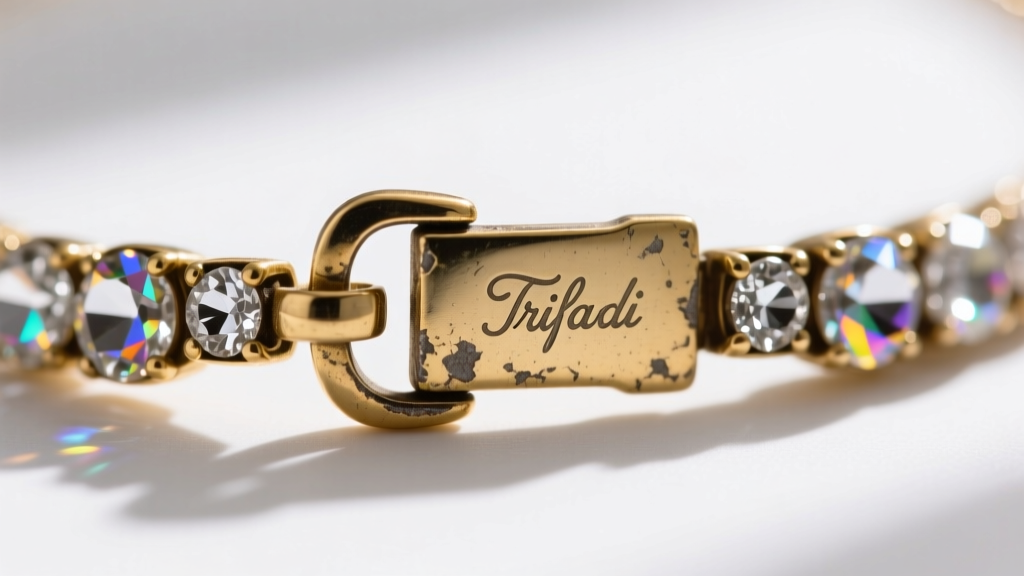
Condition Report: Prongs, Glue, and Clasps
A pristine vintage rhinestone necklace is a rarity. When inspecting a potential purchase, use this structural checklist to identify failure modes and necessary repairs:
- Prong vs. Glue Settings: Premium vintage necklaces feature prong-set stones, where tiny metal claws are folded over the girdle of the glass. Prongs can be tightened by a jeweler. Glue-set stones, common in later decades, rely on cyanoacrylate adhesives that yellow, crystallize, and fail over time. Re-gluing is a temporary fix that often results in cloudy stones.
- Clasp Typologies: The clasp is a primary dating tool. Barrel clasps and simple C-clasps point to the 1920s and 30s. Fold-over clasps with safety chains are hallmarks of the 1940s and 50s. Modern spring-ring clasps are ubiquitous but are frequently replaced during repairs; therefore, a modern clasp on an antique chain is a red flag for heavy restoration.
- Base Metal Oxidation: Copper-heavy alloys will develop verdigris (a green, powdery crust). While mild verdigris can be carefully cleaned with a soft brush and mild solvent, deep pitting compromises the structural integrity of the chain links and stone cups.
Market Value & Pricing Tiers
The market for vintage rhinestone jewelry is highly stratified based on maker signatures, era, and condition. Below is a 2026 pricing framework for standard collar and bib-style necklaces.
| Era | Typical Base Metal | Stone Type | Average Price (Unsigned) | Collector Premium (Signed) |
|---|---|---|---|---|
| 1920s-1930s | Pot Metal / Sterling | Czech Glass, Marcasite | $60 - $150 | $250 - $600+ |
| 1940s | Sterling Silver (Vermeil) | Large Chatons, Baguettes | $120 - $300 | $400 - $1,200 |
| 1950s-1960s | Rhodium-Plated Brass | Aurora Borealis, Navettes | $45 - $120 | $350 - $2,500+ |
| 1970s-1980s | Gold-Tone Alloy | Acrylic, Glue-Set Glass | $15 - $40 | $75 - $200 |
Hallmarks & Maker's Marks to Hunt For
While unsigned pieces can be beautiful, signed pieces from prestigious American and European houses command significant premiums. Turn the necklace over and inspect the reverse of the clasp, the backplate of the central pendant, or any hanging tags for these coveted hallmarks:
- Trifari: Look for the "Crown" mark over the word Trifari, or the early "KTF" (Kruskal, Trifari, Fishel) stamp. Trifari's mid-century floral and fruit-motif collars are highly liquid assets in the vintage market.
- Miriam Haskell: Early pieces were rarely signed, but post-1950s necklaces often feature a horseshoe-shaped plaque or a hanging oval tag. Haskell pieces are renowned for their intricate, hand-wired Russian gold filigree and baroque glass pearls.
- Coro / Corocraft: Often stamped in a flowing script. Coro's "Duette" and "Quette" convertible pieces (which can be broken down into dress clips) are highly sought after.
- Weiss: Usually stamped with a simple "W" or "WEISS" in block letters. Weiss is celebrated for using exceptionally high-quality Austrian glass and precise prong settings.
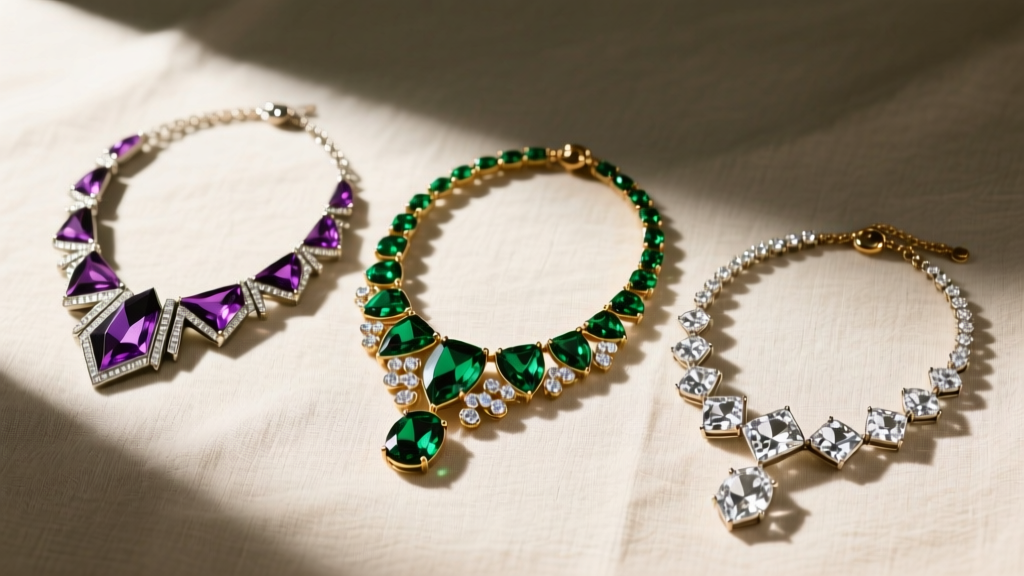
Sourcing Safely in the 2026 Market
The secondary market has evolved drastically. Today, buyers must navigate a landscape saturated with AI-generated product photography and 3D-printed replica molds flooding dropshipping platforms. To ensure you are purchasing an authentic vintage rhinestone necklace, never rely solely on the primary listing photo.
"Always request a macro photograph of the reverse side of the central stone setting and the clasp mechanism. AI image generators currently struggle to accurately replicate the chaotic, hand-soldered joints and specific wear patterns of vintage foil backings."
When sourcing online, prioritize specialized platforms like Ruby Lane or vetted Etsy sellers who provide comprehensive condition reports. If buying at physical estate sales, carry a jeweler's loupe (10x magnification) to inspect the girdle of the stones for glue residue and check the tension of the metal prongs. A loose prong means a missing stone is imminent, and sourcing period-correct replacement glass in specific millimeter sizes (e.g., 14ss or 20ss) can be a costly and time-consuming endeavor.
Final Checklist Before You Buy
Before finalizing your purchase, run the piece through this final authentication matrix:
- Do the stones have optical depth (glass) or are they flat and dull (acrylic)?
- Is the foil backing bright and reflective, or is it clouded with black oxidation?
- Are the stones held by folded metal prongs, or is there visible yellowing glue?
- Does the clasp style align with the purported decade of the piece?
- If AB stones are present, is the piece dated 1955 or later?
By mastering these material and historical indicators, you can confidently build a collection of vintage rhinestone necklaces that are not only visually stunning but historically authentic and structurally sound.


