Vintage Ruby Necklace Buying Guide: What to Look For
Discover how to authenticate, evaluate, and buy a vintage ruby necklace. Learn about ruby treatments, era-specific hallmarks, and pricing tiers.

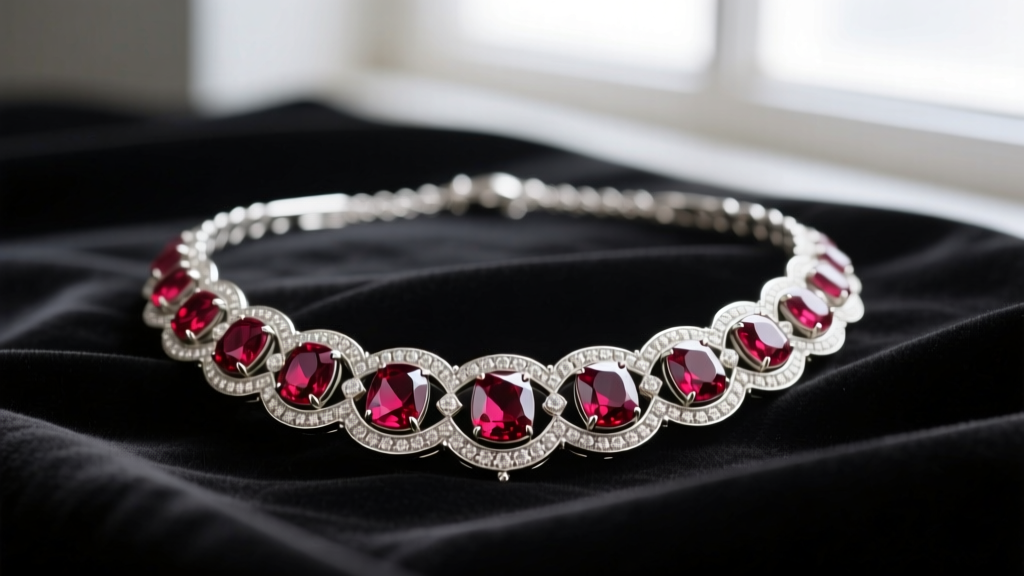
The Allure and Complexity of Antique Rubies
Acquiring a vintage ruby necklace is an exercise in historical appreciation and gemological vigilance. Unlike modern mass-produced jewelry, vintage and antique pieces carry the hallmarks of their respective eras, from the intricate milgrain of the Art Deco period to the bold, sweeping gold designs of the Retro era. However, the secondary market is fraught with misrepresentations, synthetic substitutions, and undisclosed modern treatments. To navigate this landscape, buyers must look beyond the aesthetic appeal and scrutinize the gemological and structural realities of the piece. In the gem trade, 'vintage' typically refers to items between 20 and 99 years old, while 'antique' designates pieces over a century old. Understanding this distinction is your first step in accurately valuing a vintage ruby necklace.
Decoding Ruby Treatments: The Dealbreakers
When evaluating any vintage ruby necklace, understanding gemstone treatments is non-negotiable. The treatment history of a ruby dictates not only its monetary value but also its durability and care requirements.
Heat-Treated vs. Unheated
Historically, heat treatment has been used for centuries to improve the color and clarity of rubies. According to the Gemological Institute of America (GIA), heat treatment is a stable, permanent enhancement that the market generally accepts. However, an unheated, natural ruby with top-tier color commands a massive premium—often 100% to 300% more than its heated counterpart. If a seller claims a Victorian or Art Deco ruby is unheated, demand a report from a top-tier laboratory like AGL or Gübelin. Visual inspection alone cannot confirm the absence of heat treatment.
The Danger of Fracture-Filled (Lead Glass) Rubies
A modern trap in the vintage market is the composite or lead-glass-filled ruby. These are low-grade, heavily fractured corundum stones infused with lead glass to improve transparency. While they may be set in vintage-style mountings or even slipped into authentic antique settings to deceive buyers, they are essentially worthless and highly fragile. Acidic substances like lemon juice or harsh jewelry cleaners will destroy the glass filling. Always inspect the stone under a 10x loupe for blue flash effects along fracture lines, a dead giveaway of glass filling.
The Retro Era Trap: Natural vs. Synthetic Rubies
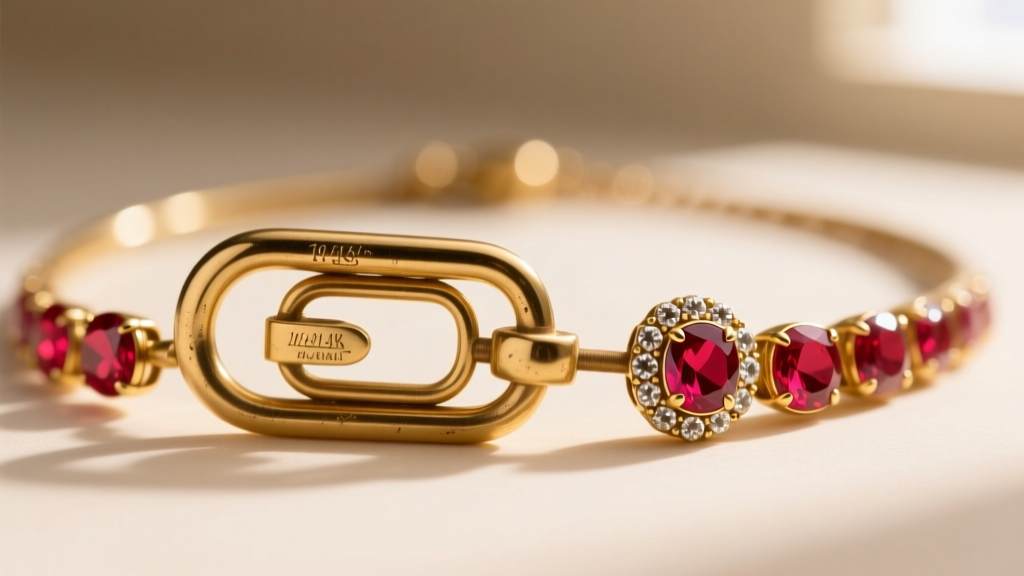
One of the most critical pieces of knowledge for buyers of mid-century jewelry is the prevalence of synthetic rubies in the Retro era (1935-1950). During World War II, the global supply of natural Burmese and Thai rubies was severely disrupted. Furthermore, natural rubies were classified as strategic materials, diverted for industrial uses like compass bearings and precision instruments.
To meet consumer demand, jewelers heavily utilized Verneuil flame-fusion synthetic rubies. These lab-created stones have the exact same chemical composition (aluminum oxide with chromium traces) as natural rubies but are worth a fraction of the price. According to Lotus Gemology, Verneuil synthetics can be identified under magnification by their curved striae (growth lines) and the presence of spherical gas bubbles, whereas natural rubies will exhibit angular growth zoning and natural rutile silk inclusions. If you are looking at a 1940s 14k rose gold cocktail necklace with large, flawless, vivid red rubies, assume they are synthetic unless proven otherwise by a gemological report.
Era-Specific Design and Hallmark Identification
Authenticating a vintage ruby necklace requires matching the design elements, metal purity, and clasp mechanisms to the correct historical period. Anachronistic elements are immediate red flags for franken-jewelry (pieces cobbled together from different eras) or outright counterfeits.
| Era | Common Metals | Ruby Cut & Style | Clasp Mechanism |
|---|---|---|---|
| Victorian (1837-1901) | Silver-topped gold, 15k/18k yellow gold | Cabochon, mine-cut, foil-backed | C-clasp (no safety catch), push-in box |
| Art Deco (1920-1935) | Platinum, white gold | Calibré-cut, geometric, baguette accents | Barrel clasp, early trombone, bolt ring |
| Retro (1935-1950) | 14k/18k rose and yellow gold | Large oval/cushion (often synthetic), bold | Trombone push-pull, wide fold-over |
| Mid-Century (1950-1970) | 18k yellow gold, platinum | Brilliant-cut, cluster settings, star rubies | Lobster claw (later), safety catch box |
Evaluating Setting and Chain Integrity
Vintage jewelry has survived decades of wear, and structural fatigue is a primary concern. Before purchasing a vintage ruby necklace, conduct a rigorous physical inspection focusing on common failure modes:
- Prong Degradation: Rubies are a 9 on the Mohs scale, making them hard but brittle. In older settings, prongs often wear down or snap. Look for flattened or hooked prongs. Re-tipping a prong typically costs between $30 and $60 per stone, which must be factored into your offer price.
- Solder Joint Weakness: Inspect the links of the chain, particularly near the clasp. Vintage chains were often hand-soldered. Look for dark pits or brittle joints indicating galvanic corrosion or failing lead-based solders.
- Clasp Replacements: A modern lobster clasp soldered onto an authentic Art Deco platinum chain diminishes the historical integrity and can reduce the collector value by up to 20%. Original barrel or trombone clasps are highly preferred by serious collectors.
- Silver-Topped Gold Corrosion: Victorian necklaces often feature a layer of silver over gold to enhance the white appearance of diamond accents. Over time, the silver can tarnish deeply or corrode if exposed to harsh chemicals, requiring specialized, non-abrasive cleaning.

Pricing Tiers and Market Value
The pricing of a vintage ruby necklace is highly stratified, driven by the origin of the ruby, its treatment status, and the provenance of the setting. Below is a realistic market breakdown for the current landscape.
| Category | Specifications | Estimated Price Range (USD) |
|---|---|---|
| Commercial Vintage | 14k gold, Verneuil synthetic rubies, Retro/Mid-Century era | $400 - $1,500 |
| Fine Vintage | 18k/Platinum, natural heat-treated rubies (Thai/Mozambique), Art Deco/Retro | $3,500 - $12,000 |
| Investment Antique | Platinum, unheated Burmese (Mogok) rubies, AGL/GIA certified, Art Deco | $25,000 - $150,000+ |
Essential Authentication Checklist Before You Buy
Never rely solely on a dealer's verbal guarantee. Follow this strict checklist when finalizing your purchase:
- Demand an Independent Report: For any vintage ruby necklace priced over $3,000, require a report from GIA, AGL, or Gübelin. The report must explicitly state whether the stone is natural, synthetic, heated, or filled.
- Perform a UV Light Test: Under long-wave UV light, natural Burmese rubies often fluoresce with a strong, organic red glow due to their specific chromium-to-iron ratios. Many synthetic Verneuil rubies will fluoresce differently, and glass-filled stones will show dead, inert patches.
- Examine the Girdle: Use a 10x triplet loupe to check the girdle (the outer edge) of the ruby. Chipped girdles are common in vintage pieces and significantly impact value, as rubies are prone to cleavage fractures if struck at the wrong angle.
- Verify Hallmarks: Cross-reference any maker's marks or purity stamps (e.g., 'PT950', '750', or a specific jeweler's cypher) with historical jewelry databases to ensure the mounting matches the purported era.
Conclusion
Buying a vintage ruby necklace is a rewarding pursuit that connects you to the artisanal mastery of the past. However, the romance of antique jewelry must be balanced with rigorous gemological scrutiny. By understanding the nuances of ruby treatments, recognizing the historical context of synthetic substitutions in the Retro era, and meticulously inspecting the structural integrity of the mounting, you can confidently acquire a piece that is both historically significant and financially sound. Always prioritize laboratory documentation and buy from reputable dealers who offer transparent return policies based on independent gemological verification.


