How to Buy and Maintain a Virgen de Guadalupe Necklace Silver
Learn how to authenticate, pair, and clean your Virgen de Guadalupe necklace silver piece with our expert step-by-step guide on 925 hallmarks and care.

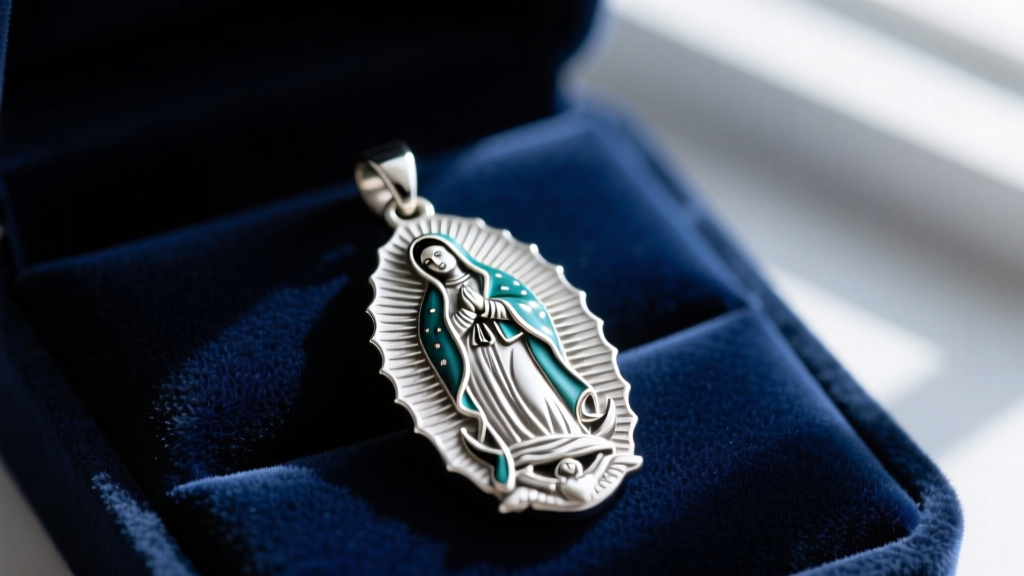
A Virgen de Guadalupe necklace silver piece is more than just an accessory; it is a profound symbol of faith, cultural heritage, and personal devotion. Whether you are purchasing your first medallion as a baptismal gift, a confirmation present, or a personal milestone marker, navigating the silver jewelry market requires a keen eye for quality. Counterfeit metals, improper chain pairings, and harsh cleaning methods can quickly degrade a sacred piece. In this comprehensive step-by-step guide, we break down the exact metallurgical standards, chain tensile strengths, and electrochemical cleaning methods you need to protect your investment for a lifetime.
Step 1: Verifying Silver Purity and Hallmarks
The foundation of any high-quality religious medallion lies in its metallurgical composition. When shopping for a Virgen de Guadalupe necklace silver pendant, you will primarily encounter three types of silver. Understanding the difference is critical to avoiding premature wear and structural failure.
- 999 Fine Silver: Composed of 99.9% pure silver. While it boasts the highest intrinsic metal value, fine silver is exceptionally soft. A heavy Virgen de Guadalupe medallion cast in 999 silver will easily bend, and the bail (the loop that holds the chain) will warp under daily friction.
- 925 Sterling Silver: The industry standard. It contains 92.5% pure silver and 7.5% alloy metals (usually copper). This specific ratio provides the necessary tensile strength to support intricate high-relief engravings of the Virgin Mary without compromising the structural integrity of the bail.
- Argentium 960 Silver: A modern, premium alloy that replaces some copper with germanium. It is highly tarnish-resistant and hypoallergenic, making it an excellent, albeit more expensive, choice for those with sensitive skin or those living in high-humidity climates.
According to the Federal Trade Commission (FTC), any item stamped as "silver" or "sterling" must meet strict purity thresholds. Always inspect the back of the medallion or the inside of the bail for a "925", "STER", or maker's mark stamp. Beware of unmarked pieces sold as "Mexican Silver" or "Tibetan Silver" at tourist markets; these are frequently nickel-brass alloys that can cause severe contact dermatitis and will turn your skin green within hours of wear.
Step 2: Selecting the Correct Chain for Your Pendant
A common failure mode in religious jewelry is the chain snapping under the weight of the pendant. A solid 925 sterling silver Virgen de Guadalupe medallion (typically measuring 20mm to 30mm in diameter) weighs between 3.5 and 8 grams. To ensure safety, the chain's breaking strength should be rated for at least three times the weight of the pendant. Furthermore, the clasp mechanism must be robust; always opt for a solid lobster claw clasp rather than a delicate spring-ring, which is prone to spring fatigue and accidental unhooking.
Chain Type vs. Pendant Weight Compatibility
| Chain Style | Average Thickness | Best For Pendant Weight | Durability & Notes |
|---|---|---|---|
| Rope Chain | 2.0mm - 3.0mm | 5g - 15g | Excellent. The twisted links distribute weight evenly and resist kinking. |
| Cuban Link | 2.5mm - 4.0mm | 8g - 20g+ | Superior. Flat, interlocking links provide maximum tensile strength. |
| Figaro Chain | 2.0mm - 3.5mm | 4g - 12g | Very Good. Classic aesthetic, but solder points on long links can weaken over time. |
| Box Chain | 1.0mm - 1.5mm | 1g - 4g | Poor for heavy medallions. Thin box chains are prone to stretching and permanent deformation. |
Step 3: The Electrochemical Cleaning Method
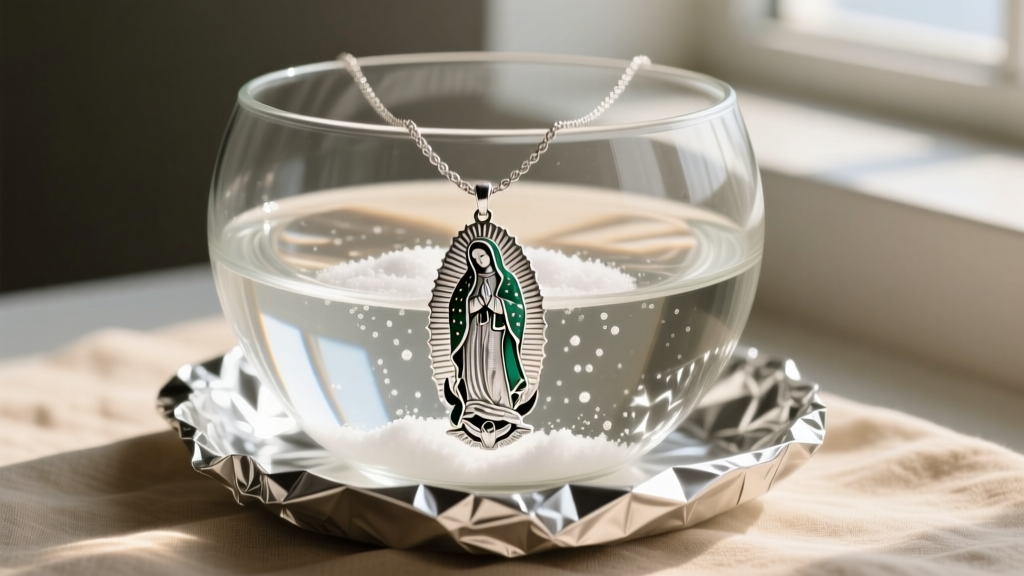
Over time, the copper in 925 sterling silver reacts with sulfur in the air and on human skin, forming silver sulfide—a dark, dull tarnish. While commercial silver dips can remove tarnish, they often contain harsh thiourea chemicals that strip away the intentional oxidation (antiquing) used to highlight the intricate facial details and rays of the Virgen de Guadalupe design. Instead, utilize a safe, non-abrasive electrochemical reaction to reverse the tarnish without removing any base metal.
Step-by-Step Aluminum Foil Bath
- Line the bottom of a glass or ceramic bowl with aluminum foil, shiny side up.
- Place your tarnished silver necklace directly onto the foil, ensuring the metal touches the aluminum.
- Boil water and carefully pour it into the bowl until the necklace is fully submerged.
- Add two tablespoons of baking soda (sodium bicarbonate) and one tablespoon of sea salt. You will see immediate bubbling as the chemical reaction begins.
- Let the piece soak for 3 to 5 minutes. The sulfur transfers from the silver to the aluminum foil.
- Remove the necklace with wooden tongs, rinse thoroughly under distilled water, and pat dry with a microfiber cloth.
Expert Warning: If your Virgen de Guadalupe pendant features cold enamel (epoxy resin coloring, often used for the blue and red robes of the Virgin) or glued-in gemstones, do not use the boiling water method. The extreme heat will melt the adhesive and cloud the enamel. For enameled pieces, use a mild dish soap and a soft-bristled baby toothbrush instead.
Step 4: Sizing, Layering, and Neckline Pairing
The visual impact of your medallion depends heavily on chain length and how it interacts with your wardrobe. The Gemological Institute of America (GIA) notes that the reflectivity of polished silver is best showcased when it rests against contrasting fabrics rather than bare skin, which can sometimes wash out the metal's brilliance.
- 18-Inch Chain (Collarbone Length): Ideal for smaller medallions (15mm-20mm). This length pairs perfectly with V-necklines, open-collared linen shirts, and traditional blouses, keeping the religious symbol close to the heart and highly visible.
- 20-to-22-Inch Chain (Chest Length): The most versatile and traditional length for a standard 25mm Virgen de Guadalupe pendant. It rests comfortably below the collarbone, allowing the medallion to lay flat against the sternum without flipping over.
- 24-to-28-Inch Chain (Rosary/Matinee Length): Best reserved for large, heavy, or double-sided medallions. This length is traditionally worn over clothing, such as dark sweaters or guayaberas, making a bold, outward statement of faith.
Layering with Devotional Scapulars
If you wish to layer your Virgen de Guadalupe necklace silver piece with other devotional items, such as a fabric scapular or a Saint Benedict medal, adhere to the "Rule of Three Inches." Ensure each subsequent chain is at least three inches longer than the previous one. This prevents the metal clasps and bails from tangling, rubbing against each other, and causing micro-scratches on the high-polish surfaces of your silver medallions.
Final Thoughts on Long-Term Preservation
Investing in a high-quality Virgen de Guadalupe necklace silver pendant is a commitment to preserving a beautiful testament of faith. By verifying the 925 hallmark, pairing the medallion with a structurally sound rope or Cuban chain, and utilizing gentle electrochemical cleaning methods, you ensure the piece remains pristine. Store your necklace in an anti-tarnish cloth pouch with a silica gel packet when not in wear, and it will remain a radiant heirloom ready to be passed down to the next generation.


