Virgin Mary Necklace 14k Gold: Troubleshooting & Care Guide
Troubleshoot common issues with your virgin mary necklace 14k gold. Expert fixes for chain tangling, bail wear, clasp failure, and gold care.


The Anatomy and Metallurgy of a 14k Gold Medallion
A virgin mary necklace 14k gold piece is far more than a simple accessory; it is a deeply personal talisman, an heirloom, and a significant financial investment. However, daily wear exposes these delicate items to friction, environmental chemicals, and mechanical stress. To effectively troubleshoot issues, you must first understand the metallurgy of your jewelry. According to the Gemological Institute of America (GIA), 14k gold consists of 58.3% pure gold and 41.7% alloy metals—typically copper, silver, and zinc. This specific alloy ratio is chosen for religious medallions because pure 24k gold is too soft to hold the intricate relief details of the Virgin Mary's visage and would quickly warp or scratch. The copper and silver provide structural integrity, but they also introduce vulnerabilities, such as oxidation and friction wear, which we will address below.
Troubleshooting Chain and Clasp Failures
The chain and clasp are the most mechanically stressed components of any necklace. When a failure occurs, it is rarely due to the gold itself, but rather the mechanical joints and environmental buildup.
The Lobster Clasp Spring Seizure
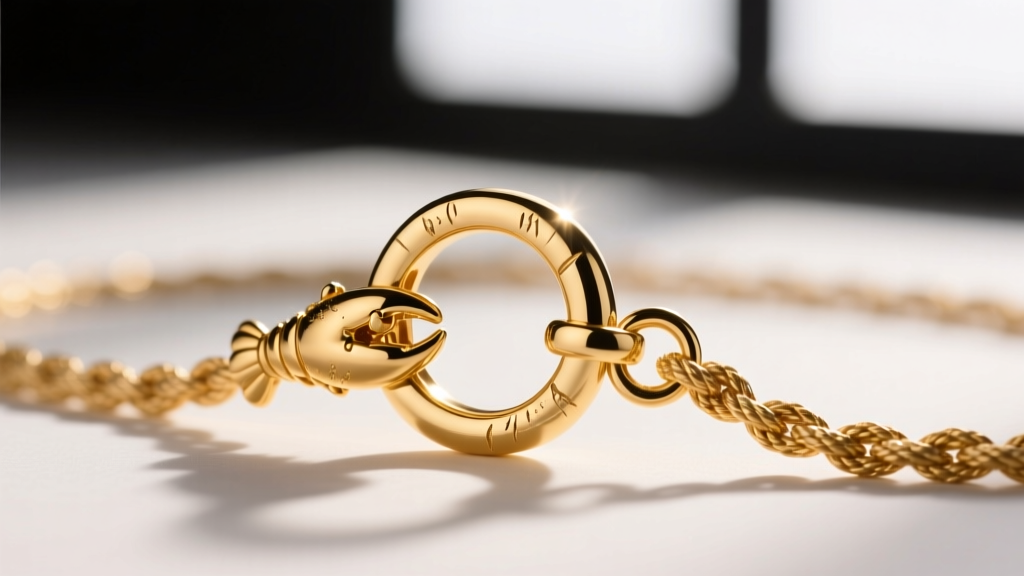
The standard 9mm or 12mm lobster claw clasp relies on a tiny internal steel or white-gold spring. Over time, aerosolized hairspray, sebum, and lotion create a resinous buildup inside the clasp mechanism, causing the trigger to stick or the jaw to fail to close completely. The Fix: Do not use metal tools to pry the mechanism. Instead, submerge the clasp in a small cap of 90% isopropyl alcohol for 15 minutes. Use a soft-bristled baby toothbrush to gently agitate the seam. The alcohol will dissolve the lipid buildup without harming the 14k gold. Once dry, apply a microscopic drop of synthetic watch oil to the trigger hinge to restore smooth tension.
Micro-Knots in Cable and Rope Chains
Chains ranging from 0.9mm to 1.5mm are highly susceptible to micro-knots, especially if stored loosely in a jewelry box. Cable chains tend to knot at the individual link joints, while rope chains snag on themselves due to their twisted geometry. The Fix: Lay the tangled virgin mary necklace 14k gold flat on a glass surface. Apply a single drop of mineral oil or baby oil directly to the knot. Using two fine sewing needles, gently work the center link of the knot outward. The oil reduces the friction coefficient of the gold links, allowing them to slide apart without bending or weakening the solder points. Clean the chain with mild dish soap afterward.
Pendant Bail Wear: Preventing the 'Saw Effect'
The bail is the loop that connects the Virgin Mary pendant to the chain. A common and devastating issue is 'gold-on-gold' friction. When a 14k gold chain rubs against a 14k gold bail day after day, the harder alloy metals in the chain can act like a microscopic saw, eventually wearing a hole through the bail and causing the pendant to fall off and be lost.
Bail Types and Durability
| Bail Type | Durability Rating | Best Chain Pairing | Troubleshooting Tip |
|---|---|---|---|
| Standard Loop (Unsoldered) | Low | Thin Cable (0.8mm) | Check for gaps in the seam; have a jeweler solder it shut. |
| Soldered Jump Ring | High | Rope or Box Chain | Ensure the solder seam is facing outward to prevent chain abrasion. |
| Hidden / Tube Bail | Very High | Thick Curb Chains | Clean the inner tube with a pipe cleaner to remove trapped grit. |
Proactive Maintenance: Inspect the top of your bail every six months using a jeweler's loupe (10x magnification). If you notice a groove forming where the chain rests, take the piece to a bench jeweler to have a small platinum or white gold 'solder bead' applied to the wear point. This sacrificial bead will take the friction instead of your 14k gold.
Surface Issues: Tarnish, Scratches, and Enamel Care
While pure gold does not tarnish, the copper and silver alloys in your 14k gold necklace are highly reactive to sulfur and chlorine. If you notice a dull, coppery, or slightly blackened film on your medallion, this is oxidation.
Safe Cleaning Protocols
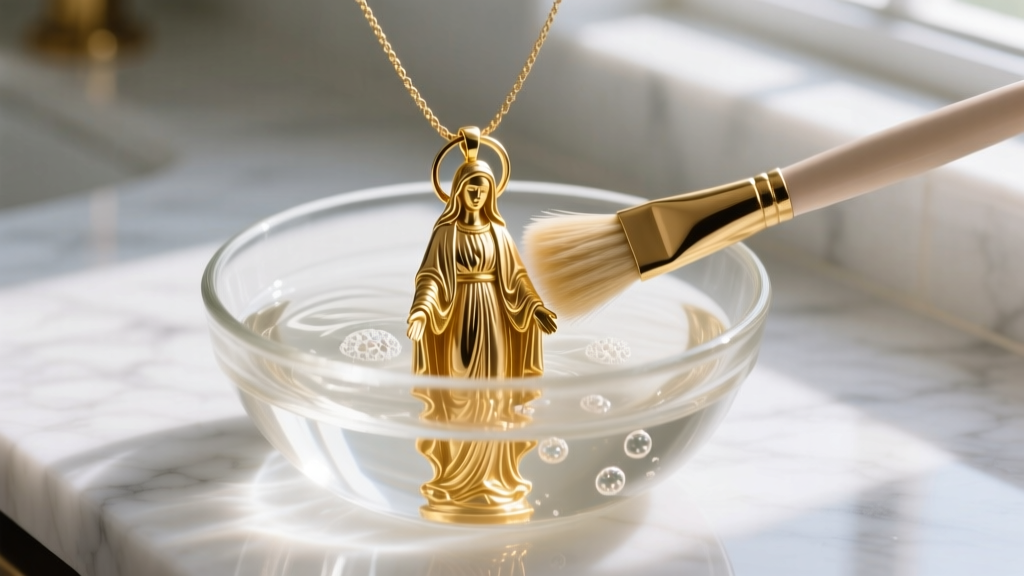
Never use commercial silver dips or ultrasonic cleaners on a virgin mary necklace 14k gold piece, especially if it features vitreous enamel or micro-pave accents. Ultrasonic waves can shatter enamel and shake diamonds loose from their settings. The Fix: Create a cleaning bath using 85°F (lukewarm) water and a few drops of pH-neutral dish detergent (like Dawn). Let the necklace soak for 10 minutes. Gently brush the relief details of the Virgin Mary with a soft makeup brush or baby toothbrush to lift dirt from the crevices. Rinse with distilled water to prevent hard water spots, and pat dry with a lint-free microfiber cloth.
Dealing with Surface Scratches
14k gold is relatively hard, but it will accumulate micro-scratches from contact with zippers, keys, and other jewelry. While a high-polish finish will eventually develop a soft patina from these scratches, you can restore the mirror finish by having a jeweler use a rouge polishing wheel. However, be aware that polishing removes a microscopic layer of gold. Limit professional polishing to once every two years to preserve the crispness of the medallion's engraving.
Verifying Authenticity: Is Your 14k Gold Real?
If you purchased your necklace secondhand or inherited it, verifying the gold purity is a crucial troubleshooting step to ensure you are caring for the correct material. The Federal Trade Commission (FTC) strictly regulates gold hallmarking in the United States.
- Hallmark Inspection: Look for '14k', '14K', or '585' stamped on the back of the medallion or on the clasp tag. Note that vintage European pieces will often use '585' (indicating 585 parts per thousand pure gold), while US pieces typically use '14k'.
- The Magnet Test: Pure gold and its standard alloys are diamagnetic. Hold a strong neodymium magnet near the chain and clasp. If the chain is pulled toward the magnet, it contains a ferrous core (like steel) and is either heavily gold-plated or entirely counterfeit. Note: The tiny spring inside a lobster clasp may be steel and will react to the magnet, but the chain and pendant should not.
- The Ceramic Streak Test: Gently drag an inconspicuous edge of the pendant across an unglazed ceramic tile. Real 14k gold will leave a golden-yellow streak. If the streak is black or gray, the piece is likely pyrite or gold-plated base metal.
Conclusion and Maintenance Schedule
Troubleshooting a virgin mary necklace 14k gold piece requires a blend of gentle chemistry and mechanical awareness. By understanding how the 14k alloy interacts with its environment, you can prevent catastrophic failures like clasp seizures and bail wear. Implement a simple maintenance schedule: wipe the pendant with a microfiber cloth weekly to remove skin oils, soak the clasp in isopropyl alcohol monthly, and inspect the bail with a loupe bi-annually. With this level of expert care, your medallion will remain a pristine, enduring symbol of faith and style for generations to come.


