Virgo Gold Necklace: 2026 Budget & Value Buying Guide
Discover how to evaluate a Virgo gold necklace in 2026. Compare 10k, 14k, and 18k pricing, vermeil vs. solid gold, and avoid overpaying for zodiac pendants.

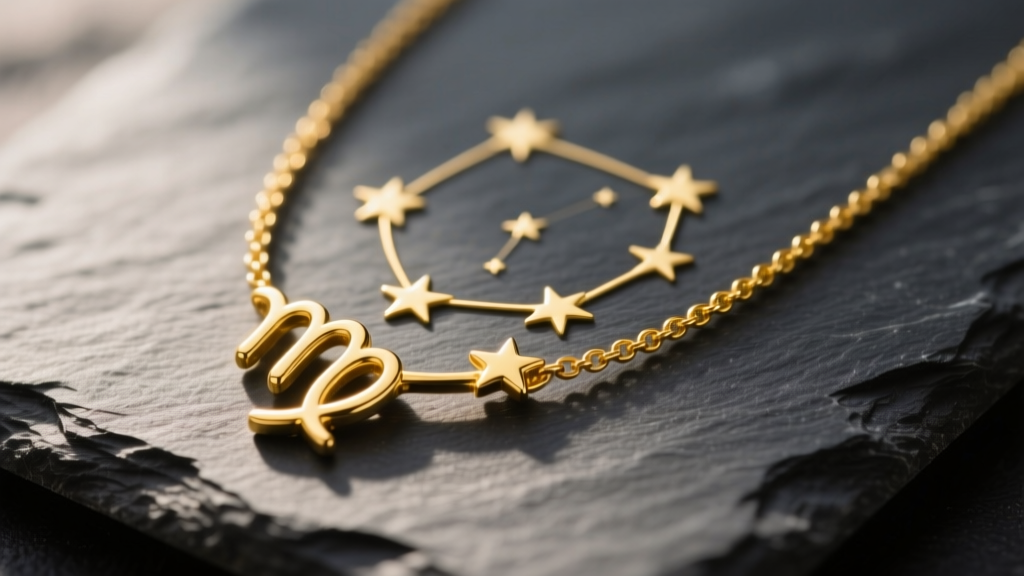
The True Cost of a Virgo Gold Necklace in 2026
Zodiac jewelry is deeply personal, serving as a daily talisman for the wearer. For those born between August 23 and September 22, a Virgo gold necklace represents precision, elegance, and an eye for detail. Naturally, Virgos are discerning shoppers who value quality over fleeting trends. However, navigating the jewelry market in 2026 requires a strategic approach. With global gold spot prices continuing to hover near historic highs, the retail markup on personalized zodiac pendants has widened significantly. Brands often leverage the emotional connection buyers have to their astrological signs, applying a "Zodiac Premium" that can inflate prices by 300% to 500% above the raw melt value. This comprehensive budget and value assessment will help you decode pricing tiers, understand material longevity, and ensure you are paying for genuine craftsmanship rather than clever marketing.
Material Breakdown: Solid Gold vs. Vermeil vs. Plated
When shopping for a Virgo gold necklace, the base metal and gold purity dictate both the upfront cost and the heirloom potential of the piece. The Gemological Institute of America (GIA) outlines strict standards for gold purity, which directly impact the durability and color of your pendant. A Virgo pendant typically weighs between 1.5 and 4.0 grams. At this weight, the difference between 10k, 14k, and 18k solid gold is substantial in both price and wearability.
Gold vermeil is a popular middle-ground for budget-conscious buyers. According to the Federal Trade Commission (FTC) Jewelry Guides, vermeil must consist of a sterling silver base plated with gold that is at least 10k purity and a minimum of 2.5 microns thick. Anything less is considered standard gold plating or "flash plating," which will wear off within months of daily use, exposing the base metal to sweat and friction.
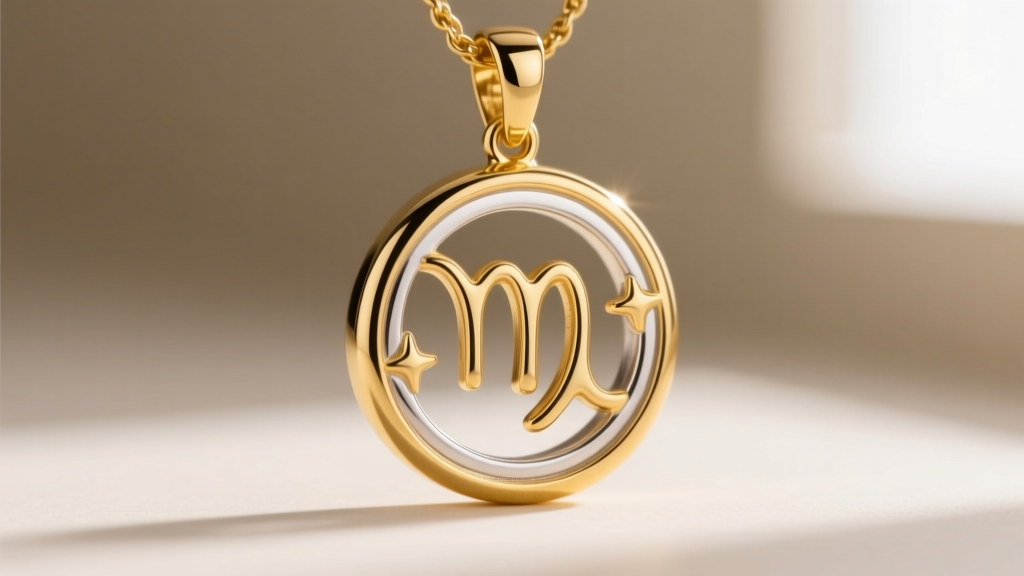
2026 Price & Value Comparison Chart
| Material Type | Gold Purity / Thickness | Expected Lifespan | 2026 Retail Price Range | Value Rating |
|---|---|---|---|---|
| Flash Plated (Brass) | < 0.5 microns | 3 - 6 Months | $35 - $75 | Poor |
| Gold Vermeil | 2.5+ microns over .925 Silver | 2 - 5 Years | $90 - $180 | Good (Budget) |
| 10k Solid Gold | 41.7% Pure Gold | Lifetime | $160 - $280 | Fair (Durability focus) |
| 14k Solid Gold | 58.3% Pure Gold | Lifetime / Heirloom | $280 - $550 | Excellent (Best Overall) |
| 18k Solid Gold | 75.0% Pure Gold | Lifetime / Heirloom | $600 - $1,100+ | Good (Luxury focus) |
Chain Types and Clasp Mechanics: Where Value Hides
A common mistake buyers make when evaluating a Virgo gold necklace is focusing entirely on the pendant while ignoring the chain and clasp. The chain accounts for up to 70% of the total gold weight in a necklace. A delicate 1.0mm cable chain might look elegant, but it is highly susceptible to kinking and snapping under the weight of a 3-gram zodiac pendant. For optimal value and durability, look for a 1.2mm to 1.5mm box chain or a rope chain. Box chains feature interlocking square links that distribute weight evenly and resist tangling, making them ideal for daily wear.
The clasp is another critical failure point. Many budget brands use spring ring clasps to save on manufacturing costs. Spring rings are notoriously difficult to operate with one hand and feature a tiny internal spring that frequently fails. A high-value Virgo gold necklace should always feature a lobster clasp. Lobster clasps are self-closing, secure, and significantly more durable. If a retailer is charging over $300 for a 14k gold necklace but equips it with a cheap spring ring clasp, they are cutting corners to maximize their profit margin.
Accent Materials: Enamel, CZ, and Diamond Melee
Many Virgo pendants incorporate accent materials to highlight the constellation stars or the Maiden motif. Black or navy blue enamel is a popular choice for creating contrast against yellow gold. While enamel adds visual depth, it is essentially painted glass fused to metal. It adds labor costs but zero intrinsic material value. If a pendant with enamel costs $150 more than an identical plain gold version, you are overpaying for the labor.
Conversely, diamond melee (tiny diamonds under 0.10 carats each) adds genuine material value. When assessing a diamond-accented Virgo necklace, look for specifications regarding the diamond quality. Most commercial zodiac jewelry uses SI1-SI2 clarity and I-J color diamonds. A pendant featuring 0.05 total carat weight (tcw) of diamond melee should only add about $75 to $120 to the base gold price. If a brand attempts to charge a $400 premium for a few pinpoint diamonds, the value proposition is severely misaligned.
Calculating Melt Value vs. Retail Markup
To truly assess the budget and value of a Virgo gold necklace, you must understand how to calculate its melt value. Melt value is the raw worth of the gold content if the piece were melted down today. You can track daily spot prices on authoritative market sites like Kitco.
Here is the formula for a 14k gold pendant:
(Weight in Grams) × 0.583 × (Current Spot Price per Gram) = Melt Value
For example, if a 14k Virgo pendant weighs 3.5 grams, and the spot price of 14k gold is roughly $48 per gram, the raw melt value is approximately $97. Retailers typically apply a 2.5x to 4x markup to cover design, manufacturing, packaging, and overhead. Therefore, a fair retail price for this pendant alone (excluding the chain) would be between $240 and $388. If you encounter a lightweight, 2-gram 14k Virgo pendant being sold for $850 without any diamonds or complex gemstone settings, you are falling victim to extreme brand inflation.
3 Red Flags When Shopping Virgo Pendants
- The "Hollow" or "Semi-Solid" Trap: Some manufacturers create large, impressive-looking Virgo pendants by stamping two thin sheets of gold and soldering them together, leaving the inside hollow. These dent easily upon impact and cannot be repaired by a jeweler if crushed. Always ask if the pendant is "solid cast" or "die-struck solid."
- Misleading "Gold Tone" or "Gold Dipped" Labels: These terms are unregulated marketing jargon. They usually indicate a brass or copper base with a microscopic flash of gold that will cause your skin to turn green within weeks. Stick to "Vermeil," "Gold Filled" (which must be at least 5% gold by weight), or solid karat gold.
- Proprietary Chain Attachments: Some brands design pendants with integrated, non-removable chains. This prevents you from swapping the chain if it breaks or upgrading to a thicker chain later. A high-value pendant should have a standard, open bail that allows you to slide it onto any chain of your choosing.
Final Verdict: Best Value Tiers for Every Budget
Finding the right Virgo gold necklace is about aligning your budget with your expectations for longevity. If you are spending under $150, your best value is a heavy gold vermeil piece (minimum 2.5 microns) on a sterling silver box chain. It will last for years with proper care and avoidance of harsh chemicals.
For the $300 to $500 range, you should absolutely expect a solid 14k gold pendant and chain. This is the sweet spot for daily wear, offering the perfect balance of rich color, structural integrity, and reasonable retail markup. Finally, if your budget exceeds $800, you enter the realm of 18k solid gold and independent artisan jewelers. At this tier, you are paying for superior gold purity, bespoke design, and heirloom-quality craftsmanship that will easily outlast a lifetime. By focusing on gram weight, clasp quality, and transparent material sourcing, you can secure a Virgo necklace that is as enduring and precise as the zodiac sign itself.


