Wave Necklace Sterling Silver: The Ultimate Gift Guide
Discover how to choose the perfect wave necklace in sterling silver for any occasion. Our gift guide covers chain gauges, silver grades, and styling.

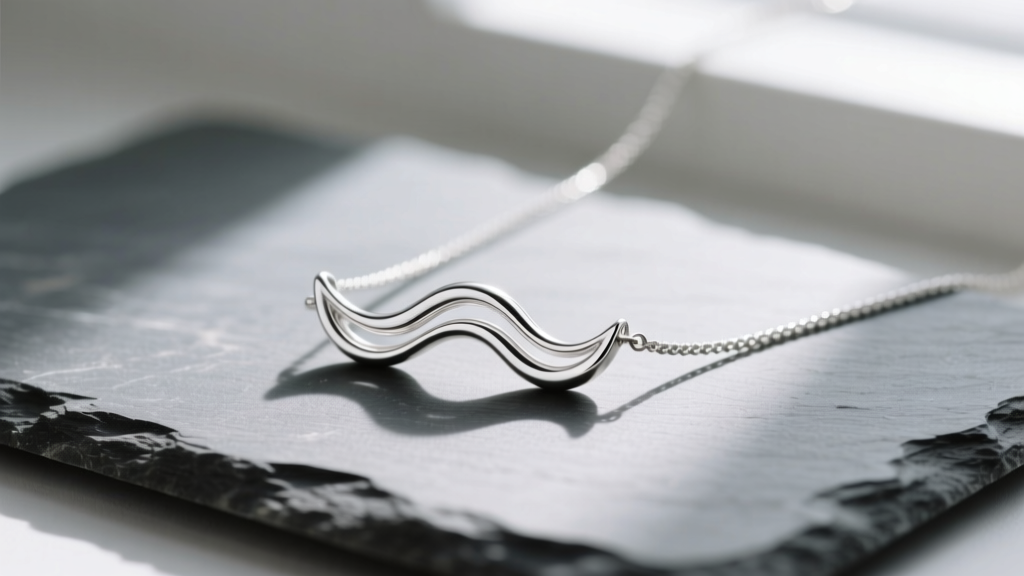
The Metallurgy of Gifting: Why 925 Sterling Silver?
When selecting a wave necklace sterling silver as a gift, understanding the metal's composition is the first step toward making an informed purchase. Pure silver (999 fine silver) is too malleable for daily wear; a delicate ocean-wave motif cast in pure silver would bend and lose its structural integrity within weeks. To solve this, the jewelry industry relies on the 925 sterling standard, an alloy comprising 92.5% pure silver and 7.5% copper. According to the Gemological Institute of America (GIA), this specific copper ratio provides the necessary tensile strength to hold intricate details—like the cresting edges of a wave pendant—while maintaining the brilliant white-grey luster of the precious metal.
However, that 7.5% copper is also the culprit behind tarnish. When gifting sterling silver, you are not just giving a piece of jewelry; you are giving an heirloom that requires a basic understanding of metallurgy and care. In 2026, advancements in anti-tarnish alloys (such as the addition of trace amounts of germanium or platinum) have made modern sterling silver more resilient than ever, but the fundamental rules of gifting this metal remain rooted in matching the finish to the recipient's lifestyle.
Occasion Matching: Which Wave Profile Fits Best?
A wave necklace is inherently symbolic, representing fluidity, resilience, and the power of nature. Yet, not all wave designs are created equal. A minimalist, single-line wave conveys a vastly different message than an intricate, oxidized cresting wave. To ensure your gift resonates with the specific milestone you are celebrating, use the decision matrix below to match the design profile to the occasion.
| Occasion | Wave Design Profile | Chain Recommendation | Finish & Details |
|---|---|---|---|
| Graduation / New Career | Minimalist single-line wave | 1.2mm Cable Chain (16') | High-polish, Rhodium-plated |
| Beach Wedding (Bridal Party) | Cresting wave with sea-foam texture | 1.5mm Rolo Chain (18') | Oxidized patina, Matte edges |
| Milestone Anniversary | Interlocking double-wave | 1.0mm Box Chain (17') | Pavé lab-grown diamond accents |
| Surfer / Ocean Lover Birthday | Chunky, solid barrel-wave | 2.0mm Figaro or Rope Chain | Brushed satin finish, Heavyweight |
For graduations, the minimalist single-line wave is a subtle nod to navigating life's new currents without overpowering professional attire. Conversely, for beach weddings, an oxidized finish highlights the intricate textures of the water, offering a rustic yet elegant aesthetic that pairs beautifully with linen and barefoot formalwear.
Chain Mechanics: Gauges, Links, and Clasp Hardware
The most common failure point in gifted necklaces is not the pendant itself, but the chain and clasp hardware. When you buy a wave necklace sterling silver, the pendant is typically suspended by a 'bail'—the loop at the top of the design. The internal diameter of this bail dictates your chain options. Most artisan wave pendants feature a bail hole between 3.0mm and 4.5mm.
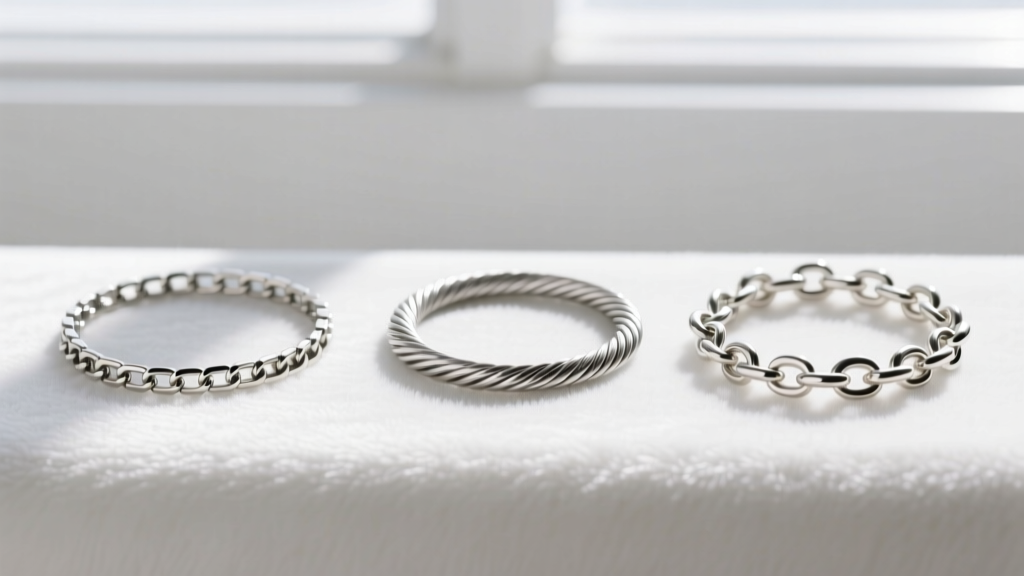
If you opt for a chain thicker than 2.0mm, it may not pass through the bail, or worse, it may get stuck, causing friction wear on the silver. For delicate wave pendants, a 1.0mm to 1.2mm chain is ideal. However, gauge size is only half the battle; link structure matters immensely.
- Cable Chains (1.0mm - 1.2mm): The classic choice. Uniform oval links lay flat and are easy to repair if snagged.
- Box Chains (1.0mm - 1.5mm): Woven square links offer a modern, geometric contrast to the organic curves of a wave pendant. They are highly durable but can kink if folded improperly in a jewelry box.
- Rolo Chains (1.5mm+): Featuring alternating round, thick links, rolo chains provide a vintage, nautical feel that perfectly complements heavy, oxidized wave motifs.
Finally, inspect the clasp. Many mass-market jewelers cut costs by attaching a 5mm spring-ring clasp to a sterling silver chain. Spring rings are notorious for failing, as the internal tension spring degrades and the tiny latch bends. As a domain expert, I always recommend upgrading to a 10mm or 12mm lobster clasp. The lobster mechanism is far more secure, easier for the recipient to fasten, and signals a higher tier of craftsmanship.
2026 Pricing Tiers for Sterling Silver Wave Pendants
Understanding the market landscape ensures you do not overpay for mass-produced items disguised as artisan work, nor do you underpay and end up with silver-plated brass. Based on current precious metal markets and artisan labor rates in 2026, here is what you should expect to pay for a genuine 925 sterling silver wave necklace:
- Mass-Market / Commercial ($35 - $85): Usually die-struck or cast in large batches overseas. These often feature thin, hollow-backed pendants to save on metal weight. They are perfectly fine for casual gifts but may lack structural longevity.
- Artisan / Handmade ($110 - $280): The sweet spot for meaningful gifts. These pieces are often cast using the lost-wax method by independent jewelers. You are paying for solid metal weight, soldered jump rings, and unique, copyrighted wave designs that cannot be found in big-box stores.
- Designer / Fine Jewelry ($350 - $800+): At this tier, you are paying for brand prestige, premium hardware (like 18k gold vermeil accents on the silver wave), and high-grade gemstone melee (such as VS-clarity diamonds set into the crest of the wave).
Tarnish, Wear, and the Rhodium Plating Debate
One of the most critical decisions when gifting a wave necklace sterling silver is whether to choose a raw, un-plated finish or a rhodium-plated one. Rhodium is a rare, platinum-group metal that is electroplated onto sterling silver to create a brilliant, mirror-like shield against tarnish. According to guidelines from Jewelers of America, rhodium plating significantly enhances the scratch resistance and brightness of silver jewelry.
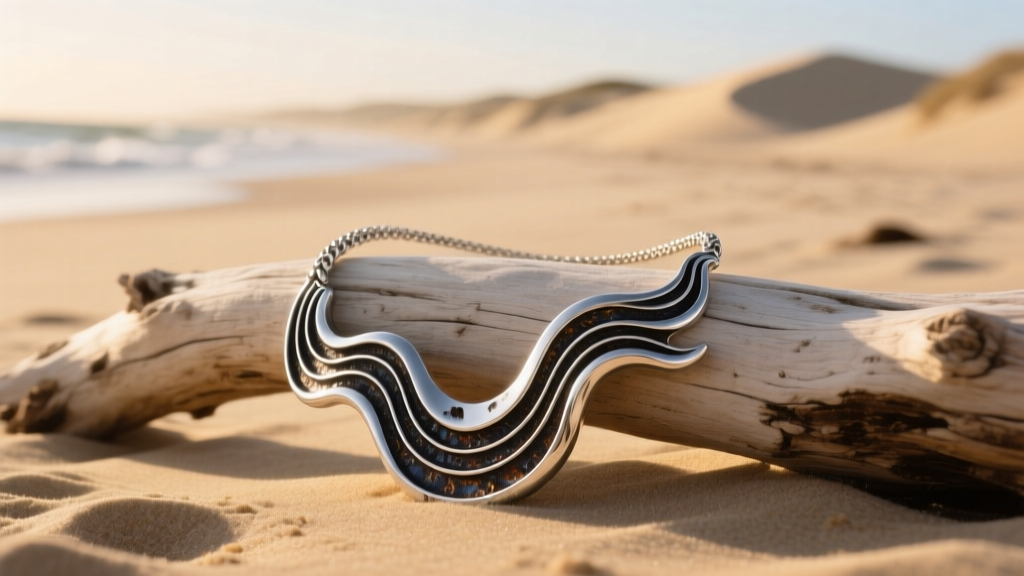
However, rhodium is not permanent. On a necklace, the plating typically lasts 1 to 3 years before wearing thin at the back of the neck, where friction against the skin and clothing is highest. Once the rhodium wears off, the underlying silver will begin to oxidize, requiring the recipient to have the piece re-plated by a jeweler (a service that typically costs $40 to $75).
For a gift, consider the recipient's maintenance preferences. If they prefer a 'wear it and forget it' lifestyle, look for a wave necklace that utilizes e-coating (electrophoretic coating). E-coating is a 2026 industry favorite; it applies a microscopic, clear polymeric layer that prevents tarnish without altering the natural, slightly warmer white-grey hue of raw sterling silver. Alternatively, if you are gifting an oxidized wave necklace—where the dark black patina is intentionally rubbed into the crevices of the wave to highlight the texture—rhodium plating should be strictly avoided, as it would ruin the contrasting antique effect.
Final Verdict: Choosing the Right Wave
A wave necklace in sterling silver is more than a fleeting trend; it is a timeless emblem of momentum and natural beauty. By paying close attention to the 925 alloy composition, selecting a chain gauge that respects the pendant's bail, and choosing a finish that aligns with the recipient's lifestyle, you elevate your gift from a simple accessory to a deeply considered, expertly curated keepsake. Whether you choose a diamond-studded crest for an anniversary or a raw, oxidized barrel-wave for a surfer's birthday, the silver will carry the memory of the occasion for decades to come.


