Is It Disrespectful to Wear a Rosary as a Necklace? Expert Guide
Wondering if it is disrespectful to wear a rosary as a necklace? Explore Catholic etiquette, styling alternatives, and respectful jewelry choices.

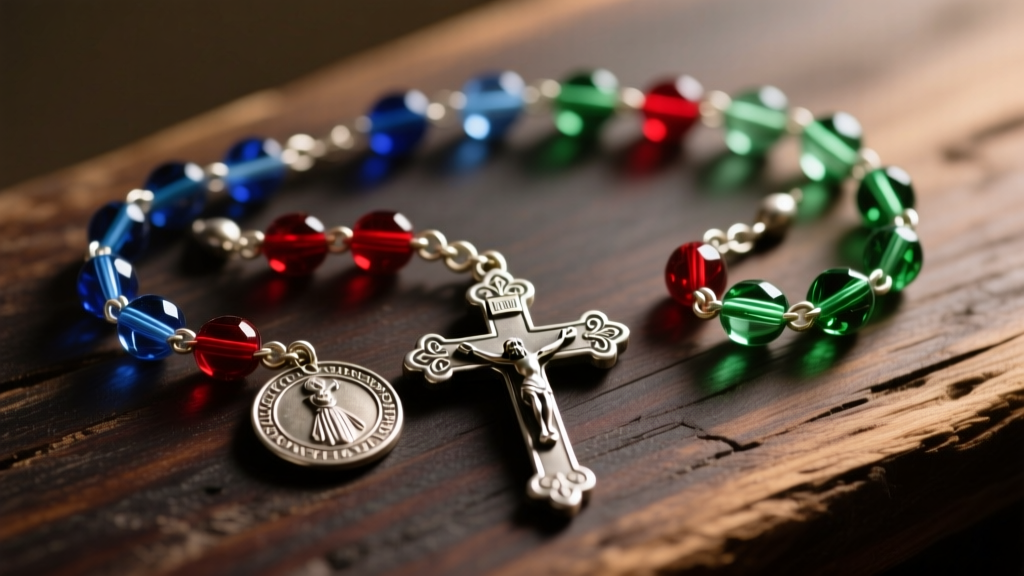
The intersection of faith and fashion has long been a subject of debate, particularly when sacred items are repurposed as everyday accessories. Among the most frequently asked questions in jewelry and cultural etiquette circles is: is it disrespectful to wear a rosary as a necklace? The answer is not a simple yes or no; it requires an understanding of Catholic theology, cultural nuances, and the material realities of vintage religious artifacts. As a jewelry style guide, we approach this topic by examining the ethical guidelines, the physical anatomy of the rosary, and actionable alternatives for expressing faith through adornment without crossing the line into disrespect.
The Core Question: Is It Disrespectful to Wear a Rosary as a Necklace?
To understand the etiquette, we must first look at the intended purpose of a rosary. In the Catholic tradition, a rosary is not a piece of jewelry; it is a sacramental. According to the United States Conference of Catholic Bishops (USCCB), sacramentals are sacred signs that bear a resemblance to the sacraments and are meant to dispose individuals to receive grace and sanctify different circumstances of life.
Canon Law (specifically Canon 1171) dictates that sacred objects designated for divine worship must be treated with reverence and not employed for secular or inappropriate use. Therefore, wearing a traditional five-decade rosary purely as a fashion statement, a clubwear accessory, or a prop is widely considered highly disrespectful by practicing Catholics. The flashpoint for this debate often traces back to 1980s pop culture, where religious iconography was heavily commercialized and stripped of its devotional context.
However, context matters immensely. In many Latino and Hispanic Catholic cultures, wearing a rosary around the neck can sometimes be an earnest, public declaration of faith, a plea for protection, or a way to keep a deceased loved one's heirloom close to the heart. Even then, theologians generally advise that if it is worn, it should be tucked beneath the shirt, kept close to the skin, and treated with the utmost personal reverence rather than displayed as an outfit enhancer.
Understanding the Anatomy and Material Vulnerabilities
From a jewelry construction standpoint, traditional rosaries are not engineered to withstand the mechanical stress of being worn as a necklace. A standard Dominican rosary consists of exactly 59 beads, a center medal (often depicting the Virgin Mary or the Sacred Heart), and a crucifix.
Material Breakdown and Wear Troubleshooting
If you have inherited a vintage rosary and are considering wearing it, you must troubleshoot its structural integrity. Vintage rosaries were rarely built for the friction and skin acids associated with daily neck wear.
- Silk Thread Knotting: Many mid-century rosaries are strung on silk thread. Human sweat and natural skin oils will rapidly degrade silk, leading to catastrophic snapping and the loss of irreplaceable heirloom beads.
- Wire-Linked Chains: Higher-end vintage rosaries use wire-wrapped links (often 24-gauge or 26-gauge dead-soft silver or copper wire). When worn as a necklace, the continuous pulling at the nape of the neck will cause the wire loops to pull open, dropping beads.
- Organic Beads: Beads carved from Jerusalem olive wood or rosewood are highly porous. Wearing them against the skin will cause them to absorb oils, darkening the wood unevenly and potentially warping the material over time.
- Glass and Lampwork: Vintage Czech glass or lampwork beads can chip if they strike against zippers, buttons, or other pendants while swinging freely on the chest.
Expert Fix: If you must wear an heirloom rosary for deeply personal, devotional reasons, have a professional jeweler or rosary maker restring the beads onto a durable, flexible beading wire (like 0.018-inch 49-strand Accu-Flex) with protective wire guards at the crucifix and center medal junctions.
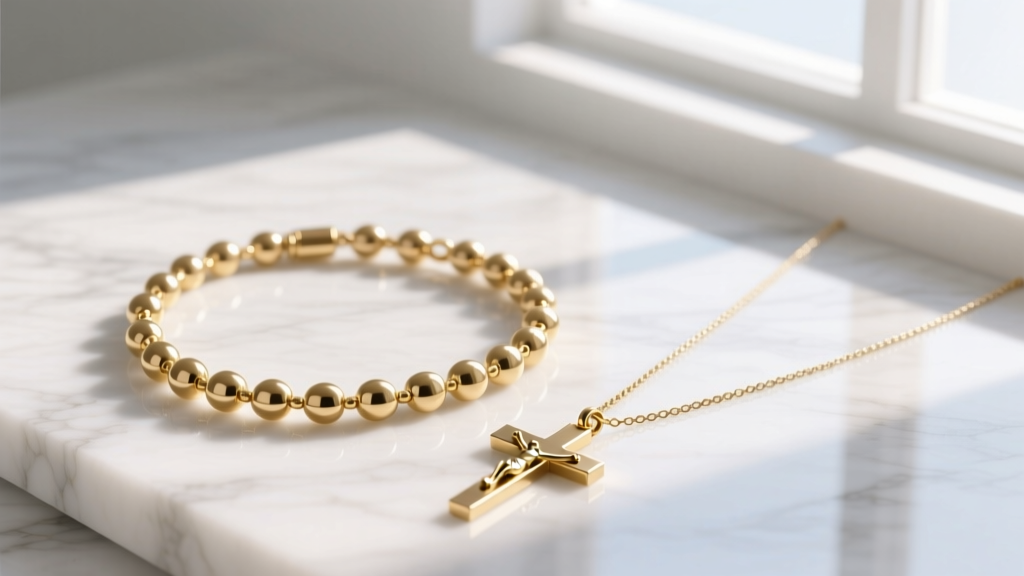
Respectful Alternatives: Rosary-Inspired Jewelry
If your goal is to express your faith, honor your heritage, or incorporate religious aesthetics into your wardrobe respectfully, there are several jewelry alternatives that avoid the ethical pitfalls of wearing a full sacramental as a fashion accessory. The EWTN Global Catholic Network frequently highlights the use of single-decade bracelets and standard crucifix pendants as appropriate, reverent alternatives for daily wear.
| Jewelry Type | Structure & Gauge | Primary Use | Respect Factor | Avg. Price Range |
|---|---|---|---|---|
| Traditional 5-Decade Rosary | 59 beads, crucifix, medal | Prayer / Devotion | High (when used for prayer) | $25 - $150+ |
| Single-Decade Bracelet | 10 beads, 1.2mm chain links | Prayer / Subtle Wear | Very High | $15 - $85 |
| Crucifix Pendant Necklace | Single pendant on 18-20 inch chain | Faith Expression | Very High | $40 - $300 |
| Rosary-Style Chain Necklace | Continuous beaded cable chain | Fashion Accessory | Low (Often seen as mocking) | $20 - $60 |
The Single-Decade Bracelet: Often called a 'rosary ring' or 'decade bracelet,' this features 10 beads (representing one decade of the Hail Marys) and a small cross. It is designed to be worn on the wrist or carried in a pocket, allowing the wearer to pray the Rosary discreetly throughout the day without treating a full sacramental as a necklace.
The Crucifix or Cross Pendant: Wearing a beautifully crafted crucifix on a standard 18-inch or 20-inch sterling silver (.925) or 14k gold cable chain is universally accepted as a respectful declaration of faith. It separates the tool of prayer (the beads) from the symbol of the faith (the cross).
How to Style Faith-Based Jewelry Respectfully
When styling religious pendants or single-decade pieces, the key is modesty and intentionality. Avoid the 'layered streetwear' trend where sacred symbols are tangled with secular charms, heavy Cuban links, or zodiac pendants.
Neckline Pairing Guide
- Crew Necks and High Collars: Pair a delicate 16-inch or 18-inch crucifix pendant (approx. 15mm x 10mm) in polished gold or silver. Let it rest just at the collarbone. This draws the eye upward and maintains a clean, reverent silhouette.
- V-Necks and Scoops: A slightly longer 20-inch chain with a heavier, solid-cast crucifix or a Miraculous Medal pendant works beautifully. Ensure the pendant sits flat against the skin rather than flipping outward.
- Button-Down Shirts: For a professional or academic setting, wear your pendant tucked inside the shirt, resting against the chest. This aligns with the traditional Catholic advice of keeping sacramentals and sacred symbols close to the heart and shielded from casual public scrutiny.

Troubleshooting Common Ethical Dilemmas
Scenario 1: I am not Catholic, but I appreciate the aesthetic of the beads. Can I wear it?
From an ethical jewelry perspective, adopting a specific, sacred prayer tool of a marginalized or historically persecuted religion purely for its 'boho' or 'gothic' aesthetic is widely viewed as cultural appropriation and disrespect. Instead, opt for standard beaded necklaces made from onyx, lapis lazuli, or mother-of-pearl that mimic the color palette and texture without co-opting the sacred geometry of the Rosary.
Scenario 2: I inherited my grandmother's rosary and want to keep her close to me.
This is a beautiful sentiment. However, to preserve the physical item and respect its spiritual weight, consider having a jeweler carefully remove the crucifix and center medal. These two components can be soldered onto a durable, modern chain and worn as a necklace. The remaining beads can be restringed into a proper five-decade rosary to be kept in a prayer box, or crafted into a set of single-decade bracelets to be shared among family members. This solves the structural vulnerability of the heirloom while honoring both the ancestor and the faith.
Final Verdict
So, is it disrespectful to wear a rosary as a necklace? If worn as a mere fashion accessory, layered with secular jewelry, or displayed as a provocative statement piece, the consensus among theologians and cultural historians is a resounding yes. A rosary is a spiritual tool, not an adornment. However, by pivoting to respectful alternatives—such as a single-decade bracelet, a standalone crucifix pendant, or a carefully re-engineered heirloom medal—you can honor your faith, your heritage, and your personal style with dignity, reverence, and impeccable taste.


