Troubleshooting Your Wedding Dress and Necklace Pairing
Fix common wedding dress and necklace pairing mistakes. Expert troubleshooting for necklines, metals, lengths, and clasp failures on your big day.

The Anatomy of a Neckline Mismatch
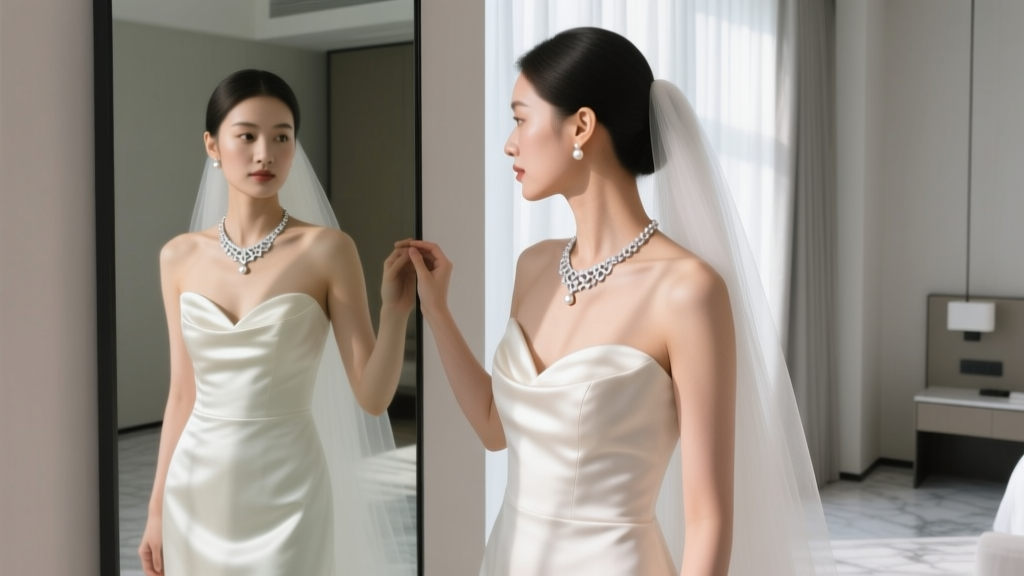
The final bridal fitting is a moment of truth, and nowhere is this more apparent than when evaluating your wedding dress and necklace combination. A mismatch here is rarely about the beauty of the individual pieces; it is almost always a failure of proportion, scale, or spatial awareness. Many brides select a necklace based on how it looks against a bare neck in a jewelry store, completely ignoring the architectural reality of their gown's bodice. To troubleshoot this, we must break down the spatial geometry of the most common bridal necklines and apply precise chain lengths to correct visual imbalances.
Sweetheart and Strapless Bodices
A sweetheart neckline creates a horizontal curve that frames the collarbone. The most common mistake is pairing this with a 14-inch or 15-inch choker, which visually chops the neck and competes directly with the dress's upper hem. The troubleshooting fix is to opt for an 18-inch princess length or a 20-inch matinee length with a Y-drop silhouette. This creates a vertical anchor that draws the eye downward, elongating the torso and allowing the sweetheart curve to remain the primary focal point. If you prefer a shorter look, a 16-inch chain with a lightweight, horizontal bar pendant (no wider than 1.5 inches) will parallel the neckline without crowding it.
Halter, High-Neck, and Illusion Bodices
When dealing with a halter or a high-neck illusion lace bodice, the immediate troubleshooting advice from master jewelers is often to abandon the necklace entirely. The fabric and embellishments are already doing the work of framing the face. However, if a necklace is non-negotiable for sentimental or stylistic reasons, avoid traditional metal chains that will tangle with lace appliqués or beadwork. Instead, troubleshoot the clash by switching to a 14-inch velvet ribbon or a delicate, 1.0mm platinum cable chain featuring a single, flush-bezel-set diamond solitaire that rests exactly at the hollow of the throat, avoiding the decorated zones of the dress.
Fabric Friction and Metal Snags
The physical interaction between your jewelry and your gown's textiles is a frequent source of day-of disasters. A wedding dress and necklace pairing must account for the microscopic topography of the fabric. Intricate lace, delicate tulle, and raw silk mikado all present unique snag hazards that can ruin both the gown and the jewelry.
Chain Link Topography vs. Textile Weave
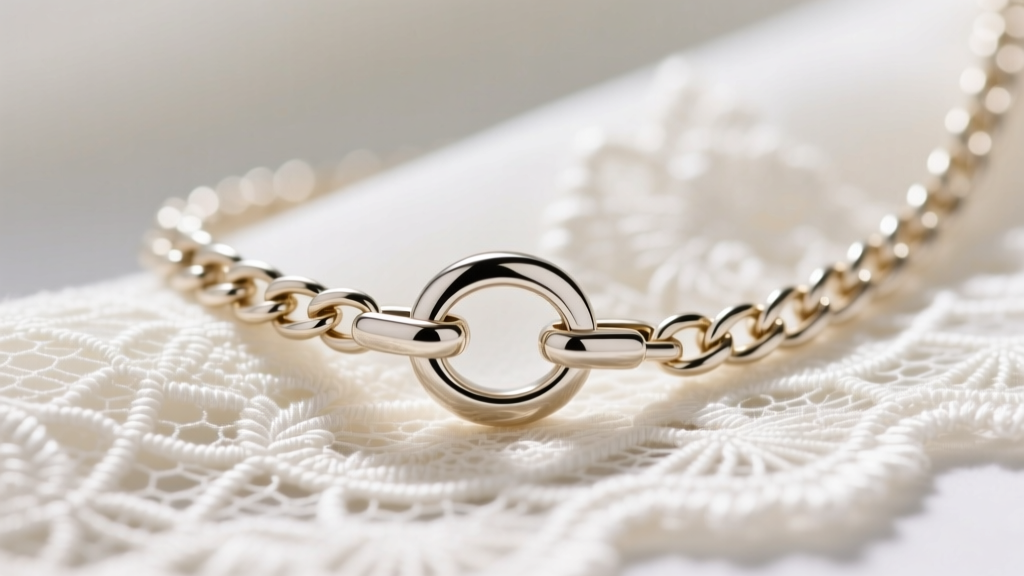
Not all chains are created equal when it comes to fabric friction. Box chains, while sleek and modern, feature sharp 90-degree interior angles that act like tiny saws against delicate tulle and illusion netting. Rolo chains, with their rounded links, are safer but can still catch on the raised threads of Alençon lace. For high-friction fabrics, the ultimate troubleshooting solution is a smooth wheat chain (spiga) or a continuous snake chain in a 1.2mm to 1.5mm gauge. These surfaces are virtually frictionless and will glide over silk and tulle without catching.
| Fabric Type | Chain Link Style | Clasp Recommendation | Stone Setting |
|---|---|---|---|
| Silk Mikado / Satin | Snake or Box (1.5mm+) | 12mm Lobster Claw | Prong or Bezel |
| Tulle / Illusion Net | Wheat (Spiga) 1.2mm | Hidden Barrel / Push | Flush / Bezel Only |
| Chantilly Lace | Smooth Cable 1.0mm | 10mm Lobster Claw | Bezel (No Prongs) |
| Heavy Crepe | Rolo or Curb 2.0mm | Magnetic (if heavy) | Any Setting |
Furthermore, the stone setting plays a critical role. Traditional four-prong settings, especially on pear or marquise-cut diamonds, feature microscopic metal claws that will aggressively snag loose-weave lace. According to styling experts at Brides.com, opting for bezel-set stones or flush-mounted gems eliminates these protrusions entirely, ensuring your jewelry remains a safe companion to delicate textiles.
Troubleshooting Hardware and Clasp Failures
Nothing induces panic quite like a broken clasp thirty minutes before walking down the aisle. The structural integrity of your necklace is just as important as its aesthetic. Many commercial bridal necklaces are fitted with standard 5mm or 7mm spring-ring clasps to maintain a dainty appearance. However, spring rings are notoriously unreliable; the internal tension spring can weaken, and the tiny lever is difficult for a bridesmaid to operate with trembling hands.
Upgrading the Connection Point
The definitive fix for clasp anxiety is upgrading to a 10mm or 12mm lobster claw clasp. Lobster claws feature a robust, spring-loaded mechanism that locks securely into the jump ring and is far easier to manipulate. If you are wearing a heavy pendant (over 5 grams), a standard jump ring can bend and open under the dynamic movement of hugging and dancing. Troubleshoot this by ensuring the jeweler has soldered the jump ring completely shut, or by using a reinforced oval jump ring that distributes weight more evenly.
The Sliding Pendant Dilemma
A persistent annoyance with V-neck and plunge necklines is the sliding pendant. Gravity and body movement cause the bail to slip off-center, requiring constant, distracting adjustments. To solve this without resorting to visible silicone stoppers, consult a bench jeweler to solder two tiny metal beads onto the interior of the chain, exactly equidistant from the center clasp. This creates a physical track that keeps the pendant perfectly centered while allowing the chain to move naturally.
Sweat, Skin Sensitivities, and Summer Ceremonies
Outdoor and summer weddings introduce environmental variables that can turn a beautiful wedding dress and necklace pairing into a dermatological nightmare. Emotional stress, heavy studio lighting, and high ambient temperatures cause increased perspiration, which accelerates metal oxidation and exposes underlying skin sensitivities.
The most common culprit for bridal contact dermatitis is nickel, which is frequently alloyed with white gold to increase hardness and whiteness. According to the Gemological Institute of America (GIA), even trace amounts of nickel can cause severe reactions when mixed with sweat. If you are wearing 14k or 18k white gold, ensure it has been freshly rhodium-plated within two weeks of the wedding to create a hypoallergenic barrier. For absolute peace of mind, troubleshoot potential allergies by switching to platinum or high-palladium white gold alloys, which are naturally white and entirely nickel-free.
Additionally, sweat can cause sterling silver to tarnish rapidly, leaving a greyish smudge on the skin and potentially staining the inner collar of a pristine white or ivory gown. If silver is your chosen metal, apply a micro-thin layer of clear, jewelry-safe anti-tarnish lacquer to the back of the pendant and the chain links that rest directly against the skin.
The Day-Of Emergency Troubleshooting Kit
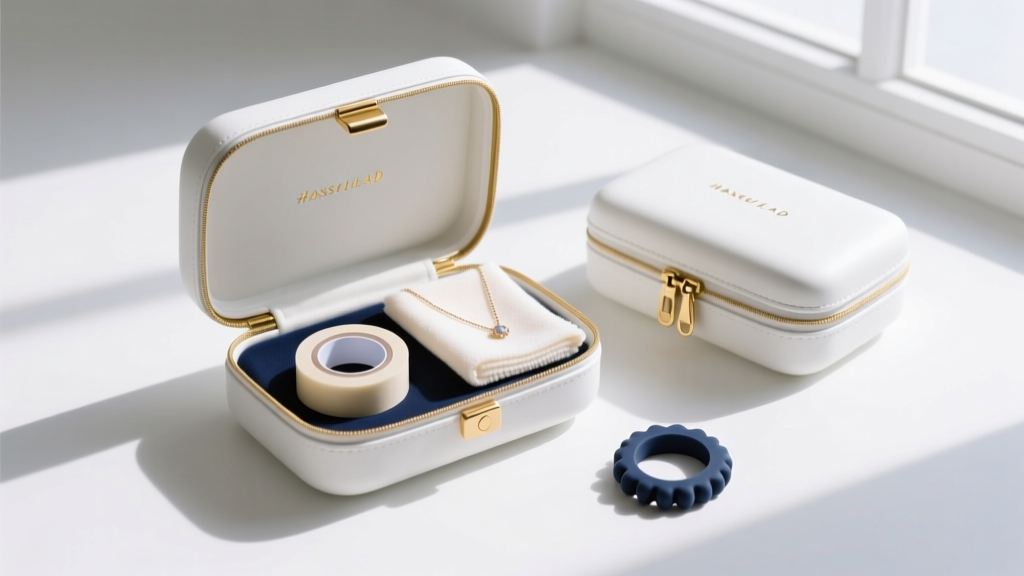
Even with meticulous planning, mechanical failures and styling mishaps can occur. Every bridal suite should be equipped with a specialized jewelry troubleshooting kit to handle last-minute wedding dress and necklace crises. Assemble the following items:
- Silicone Necklace Spacers: Invisible, flexible discs that slide onto the chain behind the neck to prevent sliding pendants and adjust length by a half-inch.
- Jewelry Polishing Cloth: A treated microfiber cloth to instantly remove sweat-induced oxidation or makeup smudges from platinum and gold.
- Clear Nail Polish or Anti-Tarnish Spray: For emergency sealing of base-metal clasps or silver chains that begin to react with the bride's skin.
- Micro-Jeweler's Pliers: To gently squeeze open a bent jump ring or secure a loose lobster claw lever in the event of a mechanical failure.
- Double-Sided Fashion Tape: While primarily for the dress, a tiny strip can be used to temporarily anchor a lightweight pendant to the skin if the chain breaks and a full repair is impossible before the ceremony.
By approaching your bridal jewelry with the mindset of a troubleshooter rather than just a shopper, you ensure that your accessories enhance your gown flawlessly. For more comprehensive advice on coordinating your entire bridal look, consult the master styling guides available at The Knot. Ultimately, the perfect pairing is one that feels as structurally sound as it looks visually breathtaking, allowing you to focus entirely on the moment rather than your neckline.


