Weight Lifting Necklace Guide: Safe Materials & Breakaway Tech
Discover the technical specs, metallurgy, and breakaway safety mechanisms required for a secure weight lifting necklace in high-intensity gym environments.

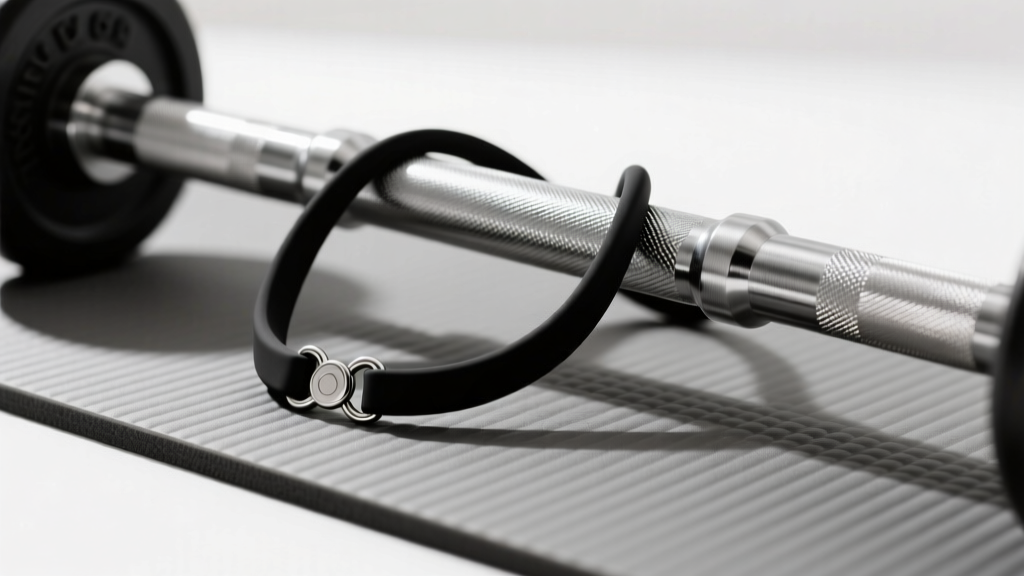
When evaluating a weight lifting necklace, aesthetics must take a backseat to biomechanical safety, material endurance, and kinetic predictability. The gym environment is uniquely hostile to traditional jewelry. Between the abrasive nature of barbell knurling, the corrosive chemistry of human sweat, and the high-velocity pendulum effects of Olympic lifting, standard chains and pendants pose severe laceration and strangulation hazards. According to injury reports cataloged by the National Center for Biotechnology Information (NCBI), sports-related jewelry injuries frequently involve degloving, cervical trauma, and localized dermatitis. This expert deep dive explores the material science, breakaway engineering, and structural profiling required to build a safe, high-performance weight lifting necklace.
The Biomechanical Hazards of Standard Chains
To understand why a specialized weight lifting necklace is necessary, we must first analyze the failure modes of traditional jewelry in a resistance training environment. The primary culprit is the "knurling catch." Modern powerlifting and Olympic barbells feature aggressive knurling patterns—such as volcano or mountain peaks—designed to tear into the calluses of your hands for grip security. If a standard cable chain (e.g., a 2.0mm rolo or curb chain) drops onto the barbell during a deadlift or bench press, the knurling acts like a metal file, instantly snaring the interlocking links.
Common Failure Modes in the Gym
- Cervical Whiplash: If the chain is strong enough not to snap, the sudden deceleration transfers kinetic energy directly to the cervical spine, causing severe whiplash or tracheal crush injuries.
- Shrapnel Lacerations: Standard lobster clasps are rated for roughly 15-20 lbs of lateral tension. When snagged on a 500-lb deadlift, the clasp housing shatters, sending microscopic steel shrapnel toward the face and eyes.
- Degloving and Friction Burns: Thin chains can wrap around fingers or wrists during dynamic movements like kettlebell snatches, leading to localized ischemia or friction burns.
Because of these inherent risks, the Consumer Product Safety Commission (CPSC) heavily regulates breakaway thresholds for children's neckwear. While adult gym gear lacks strict federal oversight, applying these same safety engineering principles is non-negotiable for serious athletes.
Material Science: Sweat, Friction, and Metallurgy
The chemical composition of human sweat is a complex matrix of water, urea, lactic acid, ammonia, and sodium chloride, with a pH ranging from 4.5 to 7.0. This makes sweat a highly effective electrolyte that accelerates galvanic corrosion and pitting in base metals.
316L Surgical Steel vs. Grade 5 Titanium
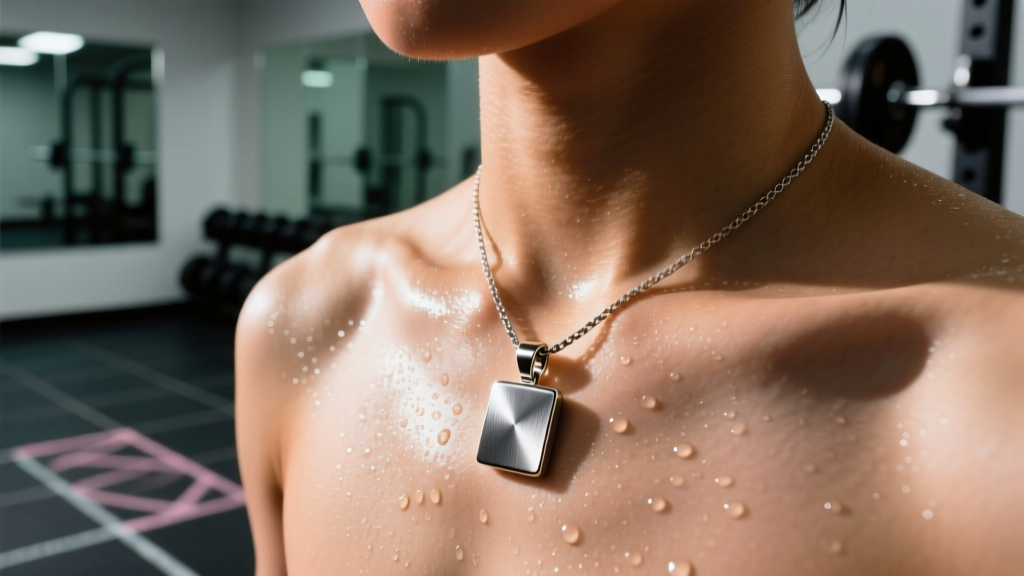
The jewelry industry standard for "hypoallergenic" steel is 316L, which contains molybdenum to resist corrosion. However, in the high-chloride, high-friction environment of a weightlifting session, 316L can still develop micro-pitting over time, harboring bacteria and causing contact dermatitis. The superior choice for a weight lifting necklace is Grade 5 Titanium (Ti-6Al-4V). As detailed by AZoM Materials Science, Grade 5 Titanium is an alpha-beta alloy that is entirely biocompatible, non-magnetic, and impervious to chloride-induced pitting. Furthermore, its tensile strength (approx. 1170 MPa) allows for ultra-thin, lightweight pendant profiles that do not burden the neck during high-repetition conditioning.
The Silicone Alternative: Shore A Durometer Ratings
For the chain or cord itself, medical-grade silicone is the gold standard. When selecting a silicone cord, pay attention to the Shore A Durometer rating. A rating of 40A to 50A provides the ideal balance: it is supple enough to drape comfortably and flex during movement, but possesses enough structural integrity to resist tearing from accidental snags before the breakaway clasp engages.
Breakaway Technology: Engineering for Failure
A safe weight lifting necklace must be engineered to fail before the human body does. The goal is to utilize a clasp mechanism that separates cleanly under a specific lateral shear force, preventing strangulation or spinal trauma. We apply the 5-7 lbs lateral shear force rule to adult gym wear.
| Clasp Mechanism | Shear Force Threshold | Durability & Maintenance | Snag Risk Profile |
|---|---|---|---|
| Neodymium Magnetic (N42) | 4 - 6 lbs | High; requires occasional wiping of metal dust | Low (smooth cylindrical housing) |
| Mechanical Shear Pin | 7 - 9 lbs | Medium; pins can bend or warp over time | Medium (exposed pin joints) |
| Standard Lobster Claw | 15 - 25 lbs (Fails via shattering) | Low; internal springs rust from sweat | High (sharp edges, snags easily) |
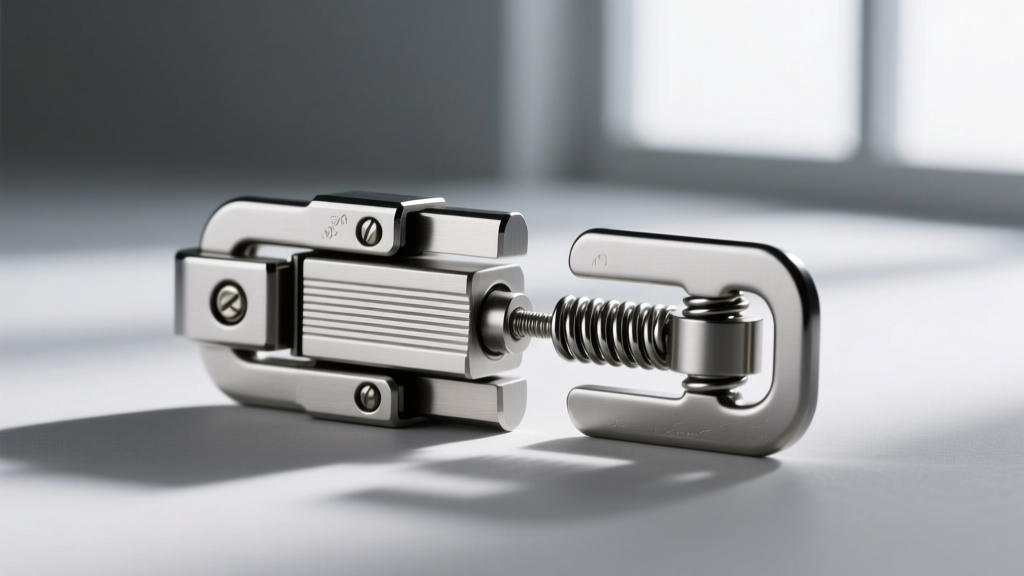
Magnetic breakaway clasps utilizing N42 Neodymium cores are currently the apex of gym jewelry engineering. They hold securely against the vertical pull of gravity and the pendulum swing of a jogging pace, but will instantly decouple when caught on a barbell or squat rack. Crucially, the housing must be molded from high-density polycarbonate or vulcanized rubber to prevent the magnets from attracting metallic chalk dust and iron shavings from the gym floor.
Pendant Profiling: Aerodynamics and Barbell Clearance
The pendant itself dictates the kinetic behavior of the necklace. During a back squat or a clean and jerk, a heavy, poorly profiled pendant will swing outward, striking the barbell or the athlete's chin. This "pendulum effect" disrupts focus and can chip the knurling on expensive barbells.
The Dog Tag and Silencer System
Military-style dog tags are a popular choice for weight lifting necklaces due to their flat, low-profile geometry. However, bare metal tags clink together, creating an auditory distraction and risking micro-fractures in the metal at the stamping points. The technical solution is the use of silicone silencers. These stretchy, 30A-durometer silicone rings encase the perimeter of the tag, dampening sound, eliminating sharp edges, and providing a high-friction surface that rests flush against the sternum without sliding during inverted movements like decline bench presses.
Beveled Edges and Chamfering
If opting for a custom-machined titanium or tungsten carbide pendant, ensure the edges are heavily chamfered (beveled). A 45-degree chamfer reduces the surface area that can catch on a shirt collar or a lifting belt during a sumo deadlift, ensuring the pendant remains flat against the pectoral fascia.
The 2026 Protocol: Building Your Safe Setup
To assemble a weight lifting necklace that meets modern safety and performance standards, follow this exact specification protocol:
- The Cord: Select a 3mm to 4mm medical-grade silicone cord (Shore 50A) in a high-visibility or matte black finish. Avoid paracord, as it absorbs sweat, breeds bacteria, and lacks a clean breakaway failure point.
- The Clasp: Integrate an inline N42 Neodymium magnetic breakaway clasp. Position it at the nape of the neck, ensuring the magnetic poles are shielded by a sweat-proof polymer housing.
- The Pendant: Choose a Grade 5 Titanium (Ti-6Al-4V) flat-bar pendant, laser-engraved rather than deeply stamped to maintain structural integrity. Maximum dimensions should not exceed 2.0 x 1.0 inches.
- The Hardware: Use titanium split rings or wire-wrapped loops to connect the pendant to the cord. Never use cheap steel jump rings, as they will undergo galvanic corrosion when in contact with the titanium pendant and sweat.
Conclusion
A weight lifting necklace should never be an afterthought or a repurposed fashion accessory. By treating your neckwear as a piece of functional gym equipment—subject to the same rigorous material and safety standards as your lifting belts and wrist wraps—you eliminate catastrophic failure modes. Prioritizing Grade 5 titanium, medical-grade silicone, and precision-tuned magnetic breakaway clasps ensures that your jewelry survives the hostility of the gym while keeping your cervical spine entirely protected.


