White Amber Necklace Troubleshooting: Fakes, Cracks, and Cloudiness
Discover expert troubleshooting for your white amber necklace. Learn to spot fakes, fix cloudy beads, prevent cracking, and properly restring vintage pieces.

The Unique Vulnerabilities of White (Bone) Amber
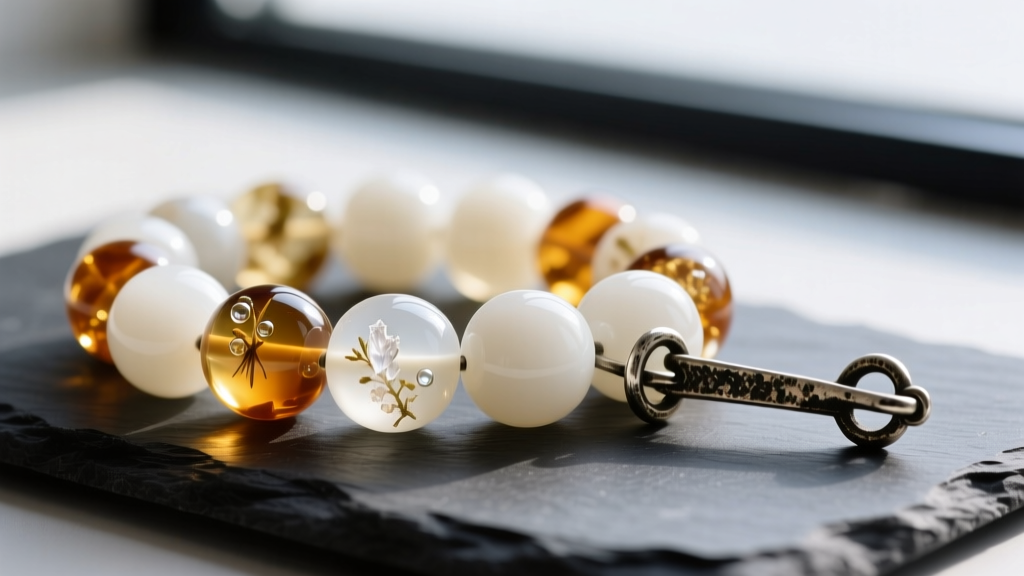
White amber, often referred to as bone amber, royal amber, or buttermilk amber, is not a distinct botanical species. It is authentic Baltic amber (Pinus succinifera) that contains millions of microscopic gas bubbles and terpene inclusions. These microscopic voids scatter light, giving the resin its opaque, creamy white appearance. While visually stunning, this unique internal structure makes white amber slightly more porous and brittle than its clear or cherry-red counterparts.
With a Mohs hardness of just 2.0 to 2.5 and a specific gravity of 1.05 to 1.10, a white amber necklace requires highly specialized care. Standard jewelry cleaning methods will destroy it. Whether you are dealing with a vintage heirloom that has developed surface crazing, a newly purchased strand that you suspect is a plastic imitation, or a necklace suffering from structural string failure, this comprehensive troubleshooting guide will help you diagnose and resolve the issue using gemological best practices.
Authentication Troubleshooting: Real vs. Fake White Amber
Because genuine white amber commands a premium price—often 30% to 50% more than clear Baltic amber of the same size—the market is flooded with imitations. Common fakes include copal (immature tree resin), phenolic resins, casein (milk protein plastic), and glass. Here is how to definitively troubleshoot authenticity without damaging your beads.
The 365nm UV Fluorescence Test
This is the safest and most reliable non-destructive test. You must use a true 365nm UV flashlight, not a standard 395nm purple light. When exposed to 365nm UV light, genuine Baltic white amber will fluoresce a pale, milky blue or greenish-white. Because the microscopic bubbles scatter the UV rays, the glow of white amber is softer and more diffused than the sharp blue glow of clear amber. Copal is usually inert or shows a weak, chalky white glow, while plastic imitations remain completely dead under UV light.
The Saltwater Float Test
Amber is one of the few gemstones that floats in saturated saltwater but sinks in fresh water. To perform this test, mix exactly one part table salt (NaCl) to four parts lukewarm water. This creates a solution with a specific gravity of approximately 1.12. Genuine white amber (SG 1.05-1.10) will float to the surface. Glass, most heavy plastics, and casein will sink. Note: Copal will also float, so this test must be combined with the UV test for definitive proof.
Authentication Comparison Chart
| Material | UV Reaction (365nm) | Saltwater Float | Static Charge | Hot Pin Odor |
|---|---|---|---|---|
| Genuine White Amber | Milky blue / greenish-white | Floats | Attracts paper | Pine / resinous |
| Copal (Immature Resin) | Inert or weak chalky white | Floats | Weak attraction | Sweet / sticky |
| Phenolic Resin / Plastic | Dead (no glow) | Sinks (usually) | None | Acrid / chemical |
| Glass / Quartz | Dead (no glow) | Sinks rapidly | None | No odor |
Note: The hot pin test involves heating a needle and touching it to an inconspicuous area of the bead. While it produces a distinct pine scent in real amber, it permanently damages the bead. Gemologists at the Gemological Institute of America (GIA) strongly advise against destructive testing.
Troubleshooting Surface Damage: Cloudiness and Micro-Cracks
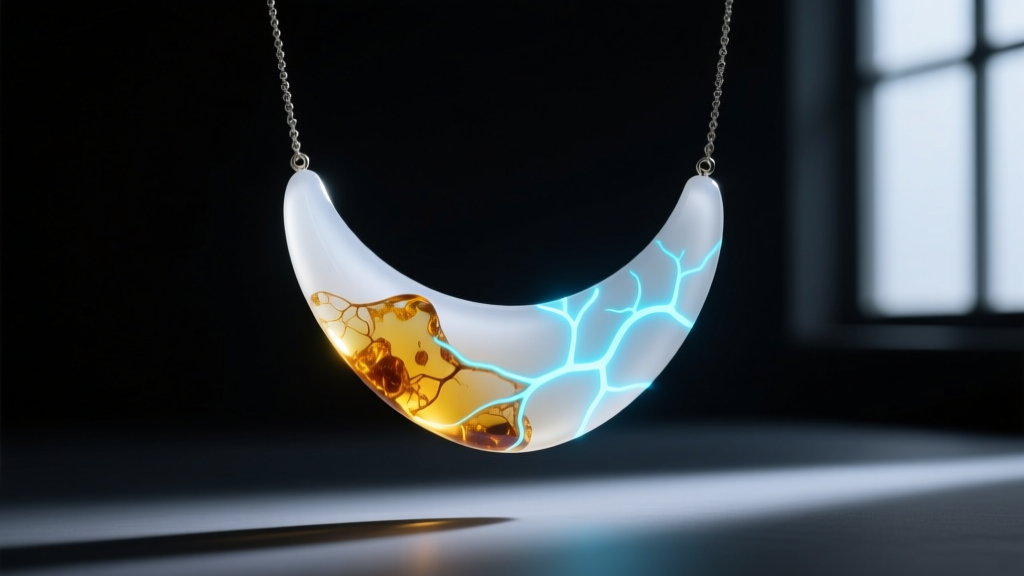
If your authenticated white amber necklace has lost its luster or developed surface defects, the damage is usually environmental. Amber is highly sensitive to chemicals and extreme humidity fluctuations.
Reversing Surface Cloudiness
Cloudiness in white amber is rarely internal; it is almost always a buildup of oxidized skin oils, lotions, or environmental grime trapped in the microscopic surface pores. Never use ultrasonic cleaners, steam cleaners, or commercial jewelry dips. The high-frequency vibrations will shatter the beads, and the chemicals will cause environmental stress cracking.
- The Fix: Wash the necklace in lukewarm (never hot) water with a single drop of pH-neutral dish soap (like Dawn). Gently agitate with your fingers. Rinse thoroughly and pat dry with a clean microfiber cloth. Buff the beads gently with the dry microfiber to restore the natural resinous luster.
Stabilizing Micro-Cracks (Crazing)
Crazing appears as a network of fine, superficial cracks on the surface of the beads. This is caused by rapid temperature changes, prolonged exposure to direct sunlight, or extreme dryness (often seen in vintage pieces stored in heated winter homes). You cannot "glue" these cracks invisibly, but you can stabilize them to prevent moisture ingress and further splitting.
- The Fix: Apply a micro-crystalline wax, such as Renaissance Wax, using a soft cotton swab. Work the wax into the cracks, let it sit for 10 minutes, and gently buff off the excess. This museum-grade wax is pH-neutral, will not yellow over time, and effectively seals the micro-fissures against atmospheric moisture.
Structural Failures: Restringing and Clasp Issues
Because amber is so soft (Mohs 2.0-2.5), the edges of the drill holes can act like tiny saws against the stringing material. Furthermore, bead-on-bead friction will slowly grind away the edges of the drill holes, enlarging them and ruining the symmetry of the necklace.
Choosing the Right Thread for Amber
If your white amber necklace has snapped or the beads are clicking loosely together, it requires immediate restringing. Never use beading wire (tiger tail) or monofilament fishing line. The metal wire will eventually saw completely through the soft amber drill holes.
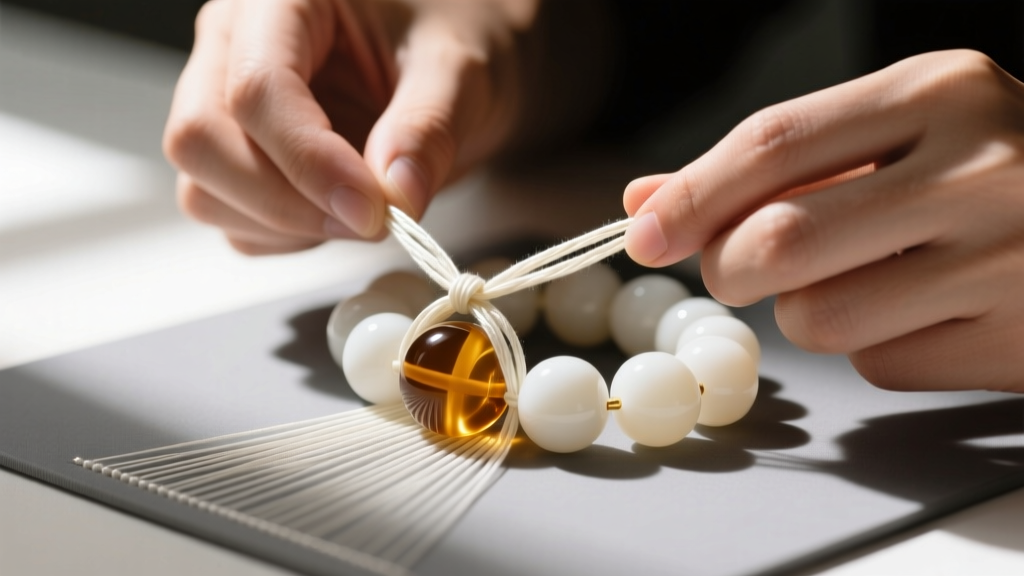
According to data compiled by gemological conservationists at Mindat, organic resins require flexible, shock-absorbing threads. Use high-quality natural silk or bonded nylon cord. For standard 6mm to 10mm white amber beads, a size F or G silk cord (such as Griffin Silk) is ideal.
The Mandatory Knotting Technique
Every single bead on a white amber necklace must be individually knotted. Knotting serves two critical troubleshooting functions:
- Friction Prevention: The knots act as physical buffers, preventing the soft amber beads from rubbing against each other and enlarging the drill holes.
- Damage Containment: If the silk cord snaps due to age or tension, the knots ensure you lose only one bead rather than the entire strand scattering across a hard floor, which would instantly shatter the brittle white amber.
Preventative Care: What Destroys White Amber
Troubleshooting is only necessary when preventative care fails. To maintain the structural integrity and opaque beauty of your white amber necklace, strictly avoid the following hazards:
- Solvents and Alcohols: Perfumes, hairsprays, hand sanitizers, and acetone will instantly dull the surface of white amber and can trigger severe environmental stress cracking. Always put your amber necklace on after applying cosmetics and fragrances.
- Extreme Heat: Amber begins to soften at just 150°C (302°F) and will melt or burn at higher temperatures. Never leave your necklace on a car dashboard in the summer or near a radiator.
- Improper Storage: Do not store white amber in airtight plastic bags, as some plastics off-gas chemicals that can react with the resin. Store the necklace flat in a soft, breathable cotton or linen pouch, away from direct sunlight, which can slowly oxidize and darken the white beads into a yellowish hue over decades.
Summary Checklist for Amber Longevity
By understanding the specific gemological properties of white amber, you can preserve its opaque, buttermilk beauty for generations. Authenticate using 365nm UV light, clean only with pH-neutral solutions, stabilize cracks with micro-crystalline wax, and always ensure the strand is knotted on silk cord. For further reading on the physical properties of organic gemstones, consult the International Colored Gemstone Association (ICA) archives.


