White and Yellow Gold Necklace Value: A Buyer's Guide
Assess the true cost, durability, and resale value of a white and yellow gold necklace. Learn how karat weight and two-tone labor impact your budget.

The Economics of Two-Tone Gold Necklaces
When evaluating the true market value of a white and yellow gold necklace, buyers must look far beyond the daily spot price of gold. Two-tone jewelry represents a unique intersection of raw material costs and specialized metallurgical labor. Unlike a standard single-alloy chain that can be cast in one continuous pour or drawn through a single die, a two-tone piece requires the manipulation of two distinct alloys with different melting points, thermal expansion rates, and chemical compositions.
According to the World Gold Council, the baseline cost of gold is universal, but the manufacturing premium for two-tone designs typically adds 15% to 30% to the final retail price compared to a monochromatic equivalent. This premium covers the precision laser-welding or hard-soldering required to fuse the white and yellow components without compromising the structural integrity of the links. For budget-conscious buyers, understanding where this premium goes is the first step in determining if a specific piece is fairly priced or artificially inflated by brand markup.
14K vs. 18K: How Karat Weight Shifts the Budget
The karat weight of your white and yellow gold necklace dictates not only the initial purchase price but also the long-term durability of the piece. In two-tone jewelry, the alloying metals used to create the white and yellow hues behave differently depending on the gold purity. 18K gold (75% pure) is inherently softer and more malleable, while 14K gold (58.5% pure) relies heavily on copper, silver, nickel, or palladium to achieve its color and structural rigidity.
| Attribute | 14K Two-Tone Necklace | 18K Two-Tone Necklace |
|---|---|---|
| Gold Purity | 58.5% Pure Gold | 75.0% Pure Gold |
| Yellow Alloy Mix | Copper, Silver, Zinc | Copper, Silver (Higher ratio) |
| White Alloy Mix | Nickel or Palladium, Zinc | Palladium, Silver (Nickel avoided) |
| Vickers Hardness (Approx) | 110 HV (Yellow) / 135 HV (White) | 90 HV (Yellow) / 120 HV (White) |
| Retail Price Premium | Base Market Rate + 20% Labor | Base Market Rate + 45% Labor |
| Best Use Case | Everyday wear, high-tension chains | Occasion wear, intricate pendants |
From a budget perspective, 14K offers superior value for everyday chains like ropes or cubans. The higher presence of alloy metals in 14K white gold (often nickel-based) yields a harder metal that resists the micro-abrasions that plague daily-wear necklaces. However, buyers with nickel sensitivities must opt for 18K or specifically seek out 14K palladium-white alloys, which carry a 10-15% surcharge due to the high cost of palladium.
Hidden Costs: Rhodium Plating and Long-Term Maintenance
A critical factor often omitted from the initial budget assessment of a white and yellow gold necklace is the ongoing maintenance of the white gold sections. White gold is not naturally white; it is a grayish-yellow alloy that relies on a microscopic layer of rhodium to achieve its brilliant, reflective white finish.
The Two-Tone Masking Penalty
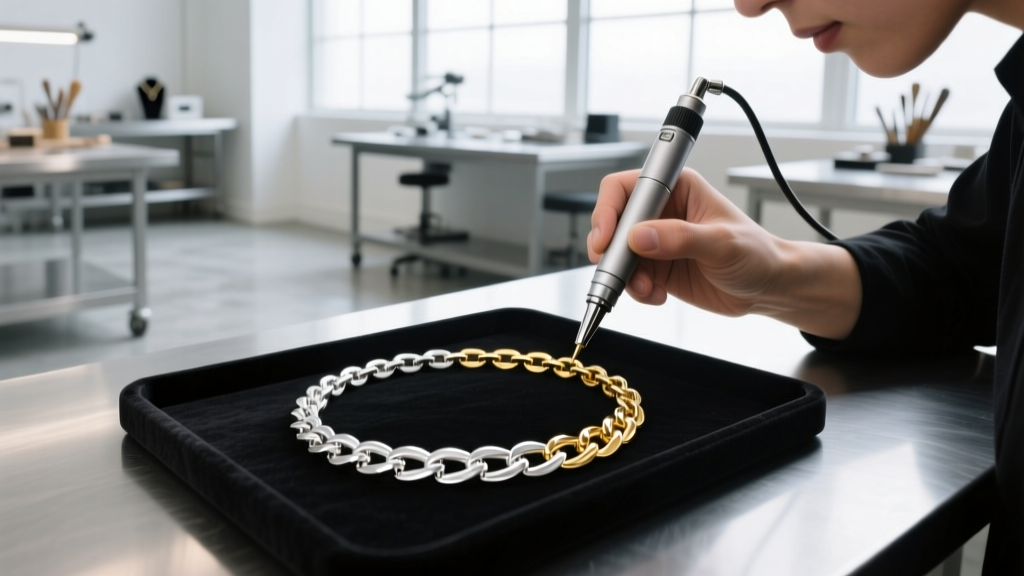
When a solid white gold necklace requires re-plating, the jeweler simply cleans and dips the entire piece into a rhodium bath. With a two-tone necklace, this process is significantly more complex. The jeweler must meticulously mask the yellow gold sections using a specialized resist lacquer or utilize a precision electroplating pen to apply the rhodium only to the white links. This manual labor typically pushes the cost of a rhodium service from the standard $35-$50 up to $75-$120 per session. Over a 20-year ownership period, assuming a re-plating every three years, you must budget an additional $400 to $600 just to maintain the optical contrast of the necklace.
Metallurgical Stress and Wear Patterns
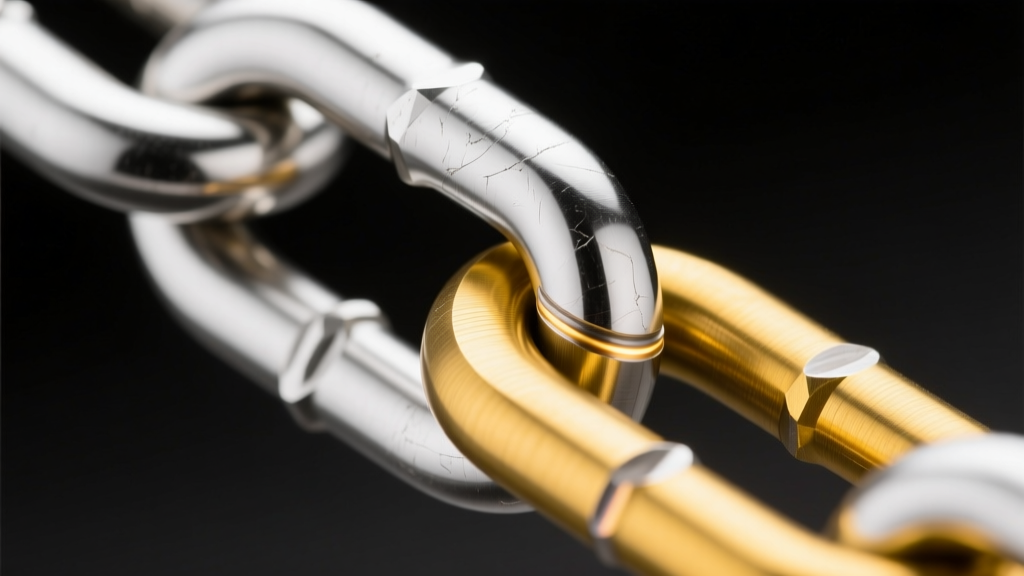
Expert gemologists and bench jewelers recognize a specific failure mode in two-tone chains: differential wear at the solder joints. Because the 14K white gold alloy (rich in nickel or palladium) is significantly harder than the 14K yellow gold alloy (rich in copper and silver), the friction between interlocking links causes the softer yellow gold to wear away faster at the connection points.
If you are investing in a heavy two-tone Cuban link or rope chain, inspect the joints. Pieces manufactured using laser-welding with a matching-karat solder paste will outlast those assembled using traditional lower-karat hard solders. According to industry benchmarks tracked by Kitco and jewelry manufacturing guilds, a poorly soldered two-tone chain can lose up to 8% of its structural mass at the joints within a decade of daily wear, leading to premature stretching or snapping.
Resale Value and Scrap Assessment
When it comes time to liquidate, a white and yellow gold necklace presents unique challenges in the secondary market. Precious metal refiners and pawn shops calculate payouts based on the melt value of the gold. However, mixed-alloy scrap is less desirable than single-alloy scrap.
- The Separation Penalty: Refiners use chemical processes (like aqua regia) to separate pure gold from base metals. The presence of both copper/silver (from the yellow links) and nickel/palladium (from the white links) in the same crucible complicates the chemical separation, sometimes resulting in a 3% to 5% processing penalty on your final payout.
- The Rhodium Factor: The rhodium plating on the white gold sections burns off during the smelting process and holds zero scrap value. You are strictly paid for the underlying gold weight.
- Brand Retention: To avoid the scrap penalty, your best route for resale is selling the piece intact on the secondary market (e.g., specialized jewelry exchanges) where the aesthetic value of the two-tone design commands a premium over raw melt value.
Decision Framework: Is the Premium Justified?
To determine if a specific white and yellow gold necklace aligns with your budget and value expectations, run it through this practical checklist before purchasing:
- Verify the Hallmark: Ensure the clasp is stamped with a single karat mark (e.g., 14K or 585). In two-tone pieces, this stamp legally guarantees that both the white and yellow sections meet the minimum purity threshold for that karat weight.
- Assess the Clasp Mechanism: Two-tone necklaces often feature a solid yellow gold lobster clasp with a white gold jump ring, or vice versa. Ensure the spring mechanism is forged from stainless steel or high-tension white gold, as standard yellow gold springs lose their temper and fail quickly.
- Calculate the Gram Price: Weigh the piece and divide the retail price by the gram weight. Subtract the current daily spot price of gold (adjusted for 14k or 18k purity). If the remaining margin exceeds 40%, you are paying a heavy brand premium rather than a fair labor premium.
Expert Insight: When budgeting for a two-tone piece, always ask the jeweler if the white gold is alloyed with palladium or nickel. Palladium-white gold requires less frequent rhodium plating because its natural underlying color is a darker, cooler gray, making the eventual wear-through far less noticeable than the brassy yellow of nickel-white gold. This single choice can save you hundreds of dollars in maintenance over the lifespan of the necklace.
Ultimately, a white and yellow gold necklace is a brilliant stylistic choice that bridges the gap between warm and cool skin undertones. By understanding the hidden labor costs, the metallurgical realities of differential wear, and the long-term maintenance requirements, you can accurately assess the true value of your investment and negotiate with confidence in any jewelry market.


