White Opal Necklace Guide: Natural vs Lab-Created vs Opalite
Compare natural, lab-created, and opalite white opal necklaces. Discover durability, play-of-color, pricing, and care tips for your pendant.

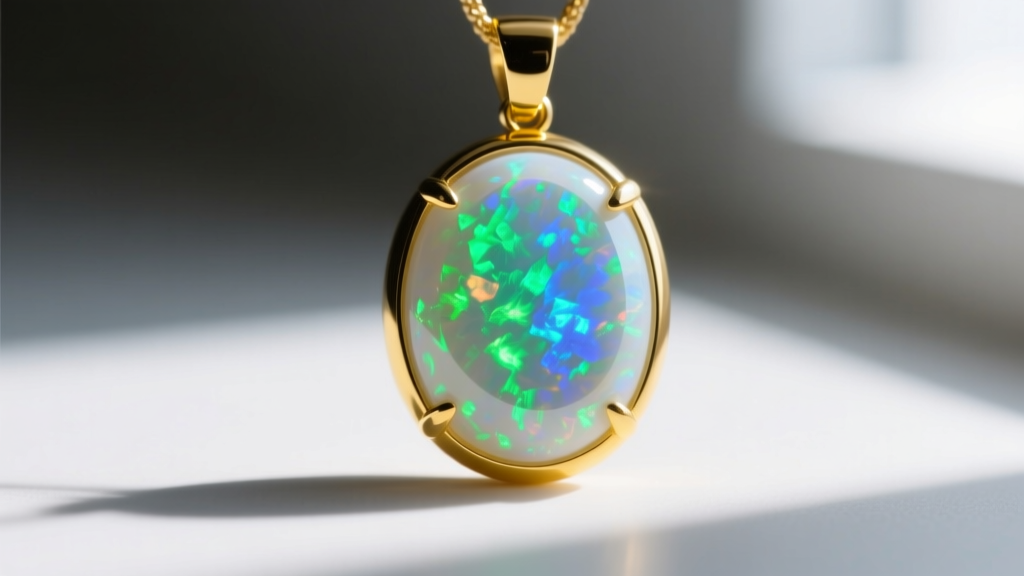
The Allure of the Milky Gem
When shopping for an ethereal, light-catching pendant, the white opal necklace remains a top contender in the 2026 jewelry market. Known for its milky base and mesmerizing play-of-color, this gemstone captures light in a way that crystalline stones simply cannot. However, the modern jewelry market is saturated with misleading terminology. Buyers frequently encounter 'natural' white opals, 'synthetic' lab-created alternatives, and 'opalite' imitations, often without understanding the vast differences in their chemical makeup, durability, and value.
As a pendant rests against the skin, it is exposed to body heat, perfumes, and environmental humidity shifts. Understanding the material science behind your white opal necklace is not just an academic exercise; it is critical for ensuring the longevity of the stone. This guide breaks down the mineralogical properties, failure modes, and pricing structures of the three most common 'white opal' materials on the market today.
Mineralogy: Amorphous Silica and Water Content
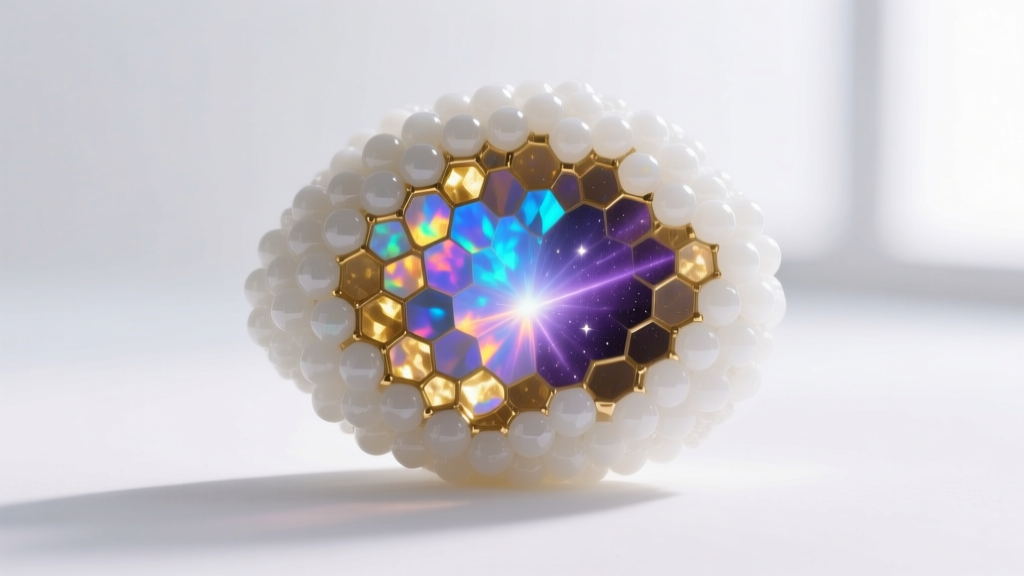
Unlike diamonds or sapphires, true opal is not a crystalline mineral. According to Mindat.org, opal is a mineraloid composed of hydrated amorphous silica (SiO2·nH2O). Its internal structure consists of microscopic silica spheres stacked in a three-dimensional grid. When light enters these spheres, it diffracts, creating the spectral flashes known as 'play-of-color'.
The 'white' designation refers to the gem's body tone. A white opal has a light, milky, or pale background, which serves as a canvas for the diffracted light. Crucially, natural opals contain between 3% and 21% water by weight, typically averaging around 6% to 10%. This water content is locked within the microscopic voids between the silica spheres and dictates the stone's long-term stability in a necklace setting.
Material Breakdown: The 2026 Market Landscape
Natural White Opal (Precious Opal)
Natural white opals are primarily mined in Australia, with Coober Pedy and Lightning Ridge being the most famous locales. These stones are formed over millions of years as silica-rich water seeps into rock crevices and slowly evaporates.
- Optical Properties: High-quality natural white opals display broad, rolling flashes of green, blue, and occasionally red. The milky base scatters light, giving the stone a soft, glowing appearance.
- Durability: Ranging from 5.5 to 6.5 on the Mohs hardness scale, natural opal is relatively soft. It is highly susceptible to scratching and thermal shock.
- Pricing: Depending on the brightness and coverage of the play-of-color, natural white opals range from $50 to over $500 per carat.
Synthetic (Lab-Created) White Opal
First successfully produced by Pierre Gilson in 1974, synthetic white opals share the exact same chemical composition and silica sphere structure as their natural counterparts. However, they are grown in controlled laboratory environments over a period of 12 to 18 months.
- Optical Properties: Lab-created opals often exhibit a highly uniform, almost 'too perfect' play-of-color. Under 10x magnification, gemologists look for a 'lizard skin' or columnar growth structure to identify them, as noted by the Gemological Institute of America (GIA).
- Durability: Because they are often backed with a resin or polymer binder to hold the silica spheres together, synthetic opals are slightly less porous than natural ones, making them marginally more resistant to crazing (cracking due to moisture loss).
- Pricing: Highly accessible, typically ranging from $20 to $80 per carat.
Opalite: The Glass Imitator
Despite the name, 'opalite' is not an opal. It is a man-made glass, typically composed of potassium fluosilicate or standard soda-lime glass, sometimes infused with metallic oxides to create a milky, iridescent sheen.
- Optical Properties: Opalite lacks the silica sphere structure required for true diffraction. Its 'glow' is merely a surface-level iridescence or internal light scattering, lacking the distinct spectral fire of real opal.
- Durability: Glass sits at about 5.5 to 6 on the Mohs scale but lacks the cleavage and water-sensitivity issues of real opal. It will not craze, but it will shatter upon hard impact.
- Pricing: Extremely cheap, usually $1 to $5 per piece, regardless of carat weight.
Comparative Data Table: Performance & Pricing Metrics
| Property | Natural White Opal | Lab-Created (Gilson) | Opalite (Glass) |
|---|---|---|---|
| Chemical Composition | Hydrated Amorphous Silica | Hydrated Silica + Binder | Potassium Fluosilicate / Glass |
| Water Content | 3% - 21% | Variable / Low | 0% |
| Mohs Hardness | 5.5 - 6.5 | 4.5 - 5.5 (softer due to binder) | 5.5 - 6.0 |
| Crazing Risk | Moderate to High | Low | None |
| Avg. Pendant Price | $250 - $2,500+ | $80 - $300 | $15 - $45 |
Durability and Failure Modes in Pendants
While rings and bracelets subject gemstones to constant blunt force trauma, a white opal necklace pendant faces a different set of environmental hazards. The primary failure mode for natural white opal is crazing—a network of fine, internal fractures that occur when the stone loses its internal water too rapidly.
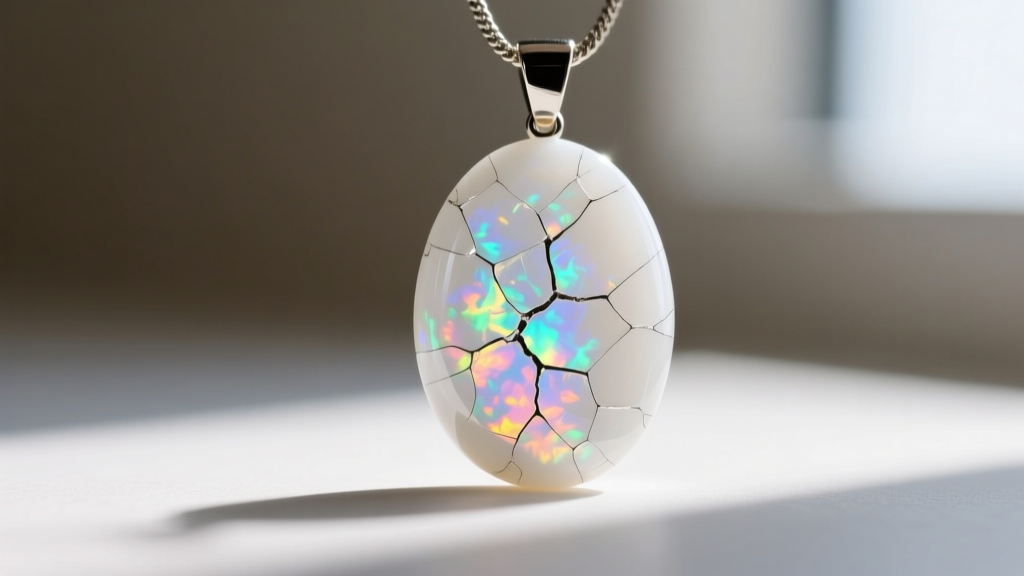
Wearing an opal pendant outdoors in dry, freezing winter air, or leaving it on a vanity near a heating vent, can trigger catastrophic moisture loss. Furthermore, the 2026 trend of layering necklaces increases the risk of the opal pendant striking the metal clasps or chains of adjacent necklaces, leading to surface abrasions. The GIA Care and Cleaning Guide explicitly warns against exposing opals to extreme temperature fluctuations and harsh chemicals, both of which are common when applying perfumes or hairsprays while wearing a necklace.
'The primary enemy of a natural opal pendant is not impact, but rapid thermal shock and extreme desiccation. Always put your opal jewelry on after applying cosmetics and fragrances.'
Setting Styles and Metal Pairings
The way your white opal is set dramatically impacts its survival rate and visual appeal. Because opals have a low Mohs hardness, the edges (girdle) of the cabochon are highly vulnerable to chipping.
- Bezel Settings: A full or partial bezel setting in 14k or 18k gold is the gold standard for opal pendants. The metal rim completely protects the girdle from accidental bumps against desks or doorframes.
- Prong Settings: While prongs allow more light to enter the stone, they leave the opal's edges exposed. If you choose a prong-set white opal necklace, ensure the pendant features a protective bail and hangs low enough to avoid collarbone impacts.
- Metal Color: Yellow gold enhances the warm, milky base tone of a white opal, making it look richer and more vintage. Conversely, white gold or platinum amplifies the cool blue and green spectral flashes, creating a high-contrast, modern aesthetic.
Chain Lengths and Environmental Exposure
The length of your necklace chain dictates where the pendant rests, which in turn dictates its exposure to skin oils and environmental hazards. A 16-inch choker keeps the opal high on the chest, reducing the chance of it swinging and striking objects, but increases its exposure to neck perspiration. An 18-inch princess length or 20-inch matinee length allows the pendant to rest over clothing, providing a physical barrier against skin oils and cosmetics, while also reducing the amplitude of the pendulum swing during movement.
Final Verdict: Choosing Your Necklace
If you are seeking an heirloom piece with genuine geological history and are committed to meticulous care, a natural white opal necklace is an unparalleled choice. Its unique internal fire cannot be perfectly replicated. However, if you want the opal aesthetic for daily, carefree wear without the anxiety of crazing or scratching, a lab-created synthetic opal offers the best balance of authentic material properties and modern durability. Avoid opalite unless you are strictly on a budget and fully understand you are purchasing iridescent glass, not a precious gemstone. By matching the material to your lifestyle and maintenance habits, your white opal pendant will remain a luminous staple in your wardrobe for years to come.


