Witches Knot Necklace Value: Pricing & Metal Guide
Discover the true value of a witches knot necklace. We break down 2026 pricing tiers, metal grades, and how to avoid overpaying for mass-produced silver.

The Anatomy and Geometry of the Knot
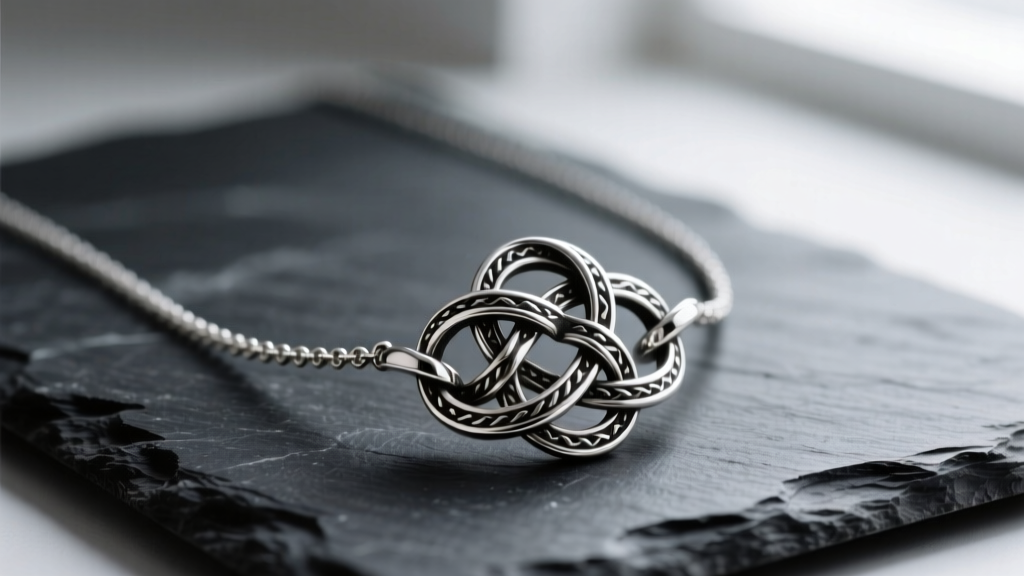
The witches knot, historically rooted in Celtic and pagan traditions, represents the interconnectedness of earth, sea, and sky, or the tripartite nature of the goddess. In the modern jewelry market of 2026, it has surged in popularity, transitioning from niche esoteric shops to mainstream artisan marketplaces. However, this surge in demand has flooded the market with varying qualities of craftsmanship. To accurately assess the budget and value of a witches knot necklace, you must first understand its structural anatomy.
A true witches knot is not merely a flat, stamped piece of metal. It is a continuous line or a series of interlocking loops that require precise geometry and structural integrity. The wire gauge used to form the knot is the primary indicator of value. Mass-produced, budget-friendly pendants often use 20-gauge (0.8mm) or 18-gauge (1.0mm) wire, which is highly susceptible to bending and warping under daily wear. A high-value, artisan-crafted witches knot should utilize at least 14-gauge (1.6mm) or 12-gauge (2.0mm) wire for the outer loops, ensuring the piece maintains its shape and tension over time.
Metal Grades: Melt Value vs. Retail Markup
When evaluating the price of a silver witches knot necklace, it is crucial to separate the intrinsic melt value of the metal from the craftsmanship premium. With silver spot prices fluctuating—track current rates via Kitco—a standard 10-gram sterling silver pendant contains roughly $8 to $10 worth of raw silver. If a retailer is charging $150 for a lightweight, 10-gram cast pendant with no visible artisan hallmark, you are paying an unjustified markup.
Traditional Sterling (925) vs. Argentium (960)
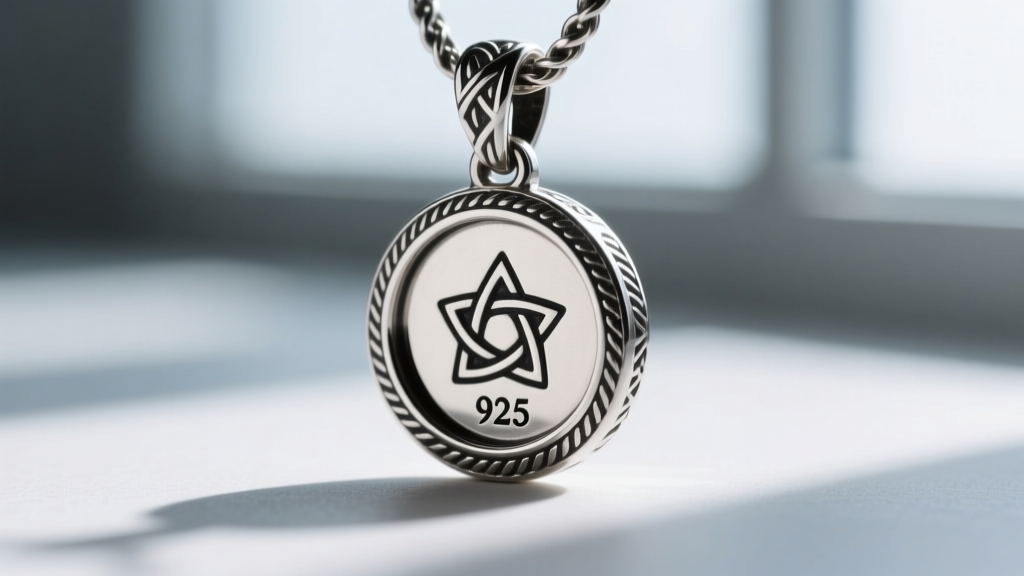
Most witches knot necklaces are crafted from traditional 925 sterling silver (92.5% silver, 7.5% copper). While durable, the copper content makes it prone to tarnishing, especially when exposed to sweat and humidity. For buyers seeking long-term value and reduced maintenance, Argentium silver is a superior investment. Argentium replaces some of the copper with germanium, resulting in a 96% silver alloy that is highly tarnish-resistant and naturally brighter. Expect to pay a 20% to 30% premium for Argentium over traditional sterling, a markup that is entirely justified by the longevity and reduced upkeep of the metal.
Always verify the metal purity. According to GIA guidelines on precious metal hallmarks, a legitimate piece should bear a clear '925' or '960' stamp, often accompanied by a maker's mark. If the pendant is merely stamped 'Tibetan Silver' or 'Alpaca,' it contains zero actual silver and holds virtually no intrinsic value.
2026 Pricing Tiers: What Should You Pay?
To help you navigate the market, we have categorized the current pricing landscape for witches knot necklaces into three distinct tiers. This framework will help you determine if a piece is fairly priced based on its manufacturing origin and material weight.
| Tier | Price Range | Material & Weight | Manufacturing Method | Value Assessment |
|---|---|---|---|---|
| Fast Fashion / Import | $18 - $35 | 925 Silver (3g - 6g) or Silver-Plated Brass | Die-Struck or Thin Lost-Wax Cast | Poor long-term value. High risk of chain snapping and plating wear. |
| Mid-Level Artisan | $65 - $140 | Solid 925 or Argentium (8g - 15g) | Quality Lost-Wax Cast, Hand-Finished | Excellent daily-wear value. Good structural integrity and fair markup. |
| Master Hand-Fabricated | $250 - $600+ | Heavy 925, Argentium, or 14k Gold (15g+) | Hand-Soldered, Forged, Custom Patina | Heirloom quality. High value for collectors and esoteric practitioners. |
Manufacturing Methods and Structural Failure Modes
The method used to create the pendant dictates its structural lifespan. The vast majority of mid-tier witches knot necklaces are produced via lost-wax casting. While this allows for intricate, seamless-looking loops, it introduces specific vulnerabilities. When molten silver is poured into a mold, improper cooling can cause 'gas porosity' or 'shrinkage porosity'—microscopic air pockets trapped within the metal.
Red Flags in Budget Castings
In a witches knot, the crossover points where the wires intersect bear the most structural tension. If porosity occurs at these nodes, the pendant becomes a ticking time bomb. When assessing a budget necklace, inspect the crossover points under a jeweler's loupe or macro lens. If you see tiny pits, a dull or grainy texture in the crevices, or uneven seams that have been poorly sanded, the piece is likely a low-quality casting prone to snapping.
- Bail Solder Joint Failure: The bail (the loop connecting the pendant to the chain) is often soldered on as an afterthought in cheap manufacturing. Look for a seamless integration or a heavily reinforced solder joint.
- Crossover Fracture: Thin castings will develop micro-fractures where the metal overlaps. Avoid pendants that feel hollow or unusually light for their physical footprint.
- Plating Delamination: Budget 'silver' knots are often brass plated with a microscopic layer of silver or rhodium. Once this wears off (usually within 3 to 6 months), the underlying brass will oxidize green against the skin.
Evaluating the Patina and Oxidation
A high-value witches knot necklace relies heavily on contrast to make the interlocking geometry pop. Artisans achieve this through intentional oxidation. The most respected method involves using 'Liver of Sulfur,' a chemical compound that creates a deep, rich, dark grey or black patina in the recessed areas of the knot, while the high points are polished to a brilliant shine. This contrast is essential for highlighting the continuous weave of the design.
Cheaper manufacturers may use 'Black Max' or spray-on antiquing paints that sit on the surface rather than chemically bonding with the silver. You can test the quality of the patina by gently rubbing a recessed area with a soft polishing cloth. If the black residue comes off easily and reveals bright, unoxidized silver underneath, the patina was poorly applied and will wear away quickly with daily wear.
The Chain and Clasp: Hidden Value Drivers
A $120 artisan pendant is rendered useless if it is hung on a $4 hollow chain. When assessing the overall value of a witches knot necklace bundle, scrutinize the chain and clasp. Mass-market sellers frequently pair heavy pendants with flimsy 0.8mm cable chains equipped with weak spring-ring clasps. This is a primary failure point; the chain will inevitably snap under the pendulum-like motion of the heavy knot.
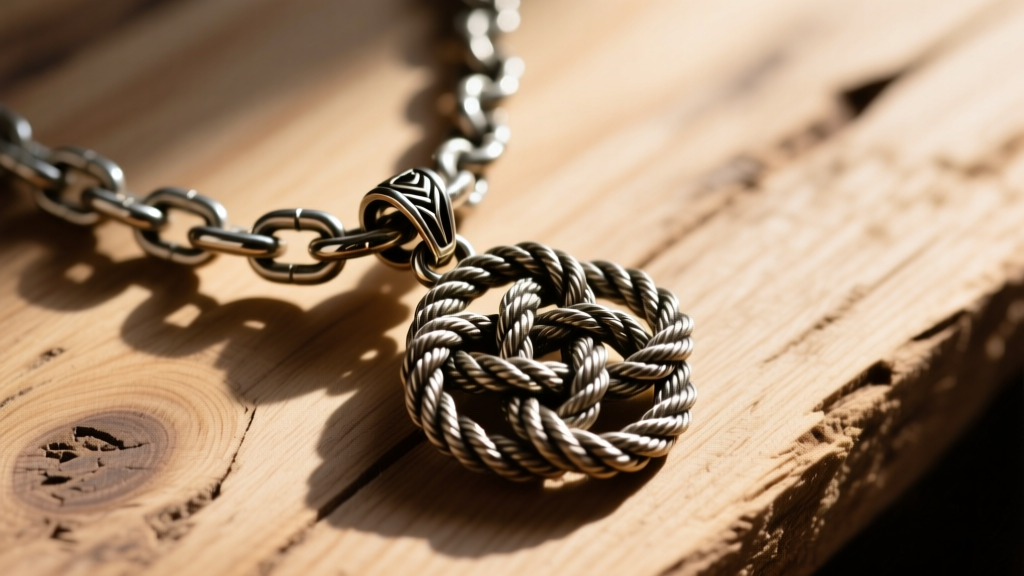
For a pendant weighing over 10 grams, the chain should be a minimum of 1.2mm to 1.5mm in thickness. A solid rope chain or a reinforced box chain offers the best tensile strength and complements the woven aesthetic of the witches knot. Furthermore, the clasp must be a sturdy lobster claw or a locking carabiner clasp. Spring-ring clasps lack the internal spring tension to securely hold heavier esoteric pendants and are a hallmark of corner-cutting manufacturers.
Final Appraisal Checklist
Before purchasing a witches knot necklace, run it through this quick value-assessment checklist to ensure your budget is being allocated toward quality craftsmanship rather than inflated brand marketing:
1. Verify the Gauge: Ensure the wire thickness is at least 14-gauge (1.6mm) for structural integrity.
2. Check the Hallmarks: Look for a crisp '925' or '960' stamp alongside a maker's mark.
3. Inspect the Crossovers: Examine the intersecting loops for porosity, pitting, or weak solder joints.
4. Assess the Patina: Ensure the oxidation is chemically bonded (Liver of Sulfur) and not painted on.
5. Evaluate the Chain: Confirm the chain is solid (not hollow) and at least 1.2mm thick with a lobster clasp.
By focusing on these metallurgical and structural details, you can confidently navigate the 2026 market, avoiding overpriced fast-fashion trinkets and investing in a witches knot necklace that offers genuine material and spiritual value.


