Why Every Woman Wearing Necklace Layers Faces Chain Flips
Discover why your chains flip and tangle. Expert troubleshooting for every woman wearing necklace layers, including weight fixes and metal grades.

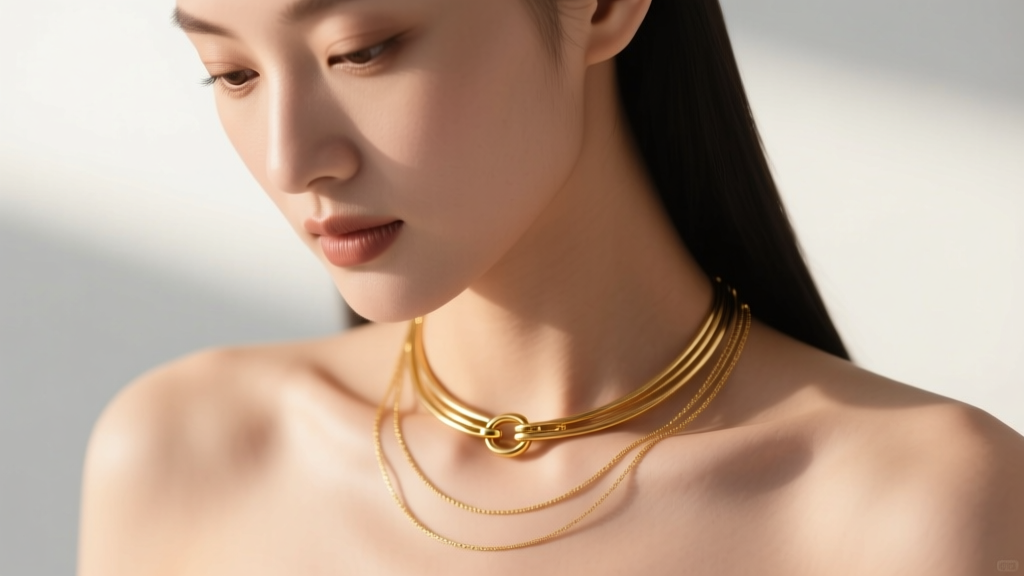
When you search for style inspiration, the phrase 'woman wearing necklace' usually brings up flawless editorial photoshoots. But the reality of daily wear is governed by physics, friction, and metallurgy. If you are a woman wearing necklace layers daily, you have likely experienced the frustrating 'floating clasp' phenomenon, micro-tangles that require a jeweler's loupe to undo, or unexplained skin irritation along your collarbone. These are not just annoyances; they are mechanical failures caused by improper weight distribution, chain weave incompatibility, and reactive base metals.
As jewelry styling experts, we approach these daily annoyances as engineering problems. Below is a comprehensive troubleshooting guide to solving the most common structural and material failures in modern necklace layering.
The Physics of the 'Floating Clasp'
The most common complaint from any woman wearing necklace chains is the clasp migrating from the nape of the neck to the front of the collarbone. This is not a curse; it is a simple issue of center-of-mass distribution. A necklace acts as a pendulum. The heaviest point of the chain will naturally seek the lowest gravitational point.
Consider the anatomy of a standard 18-inch 14k yellow gold cable chain (1.0mm width). The chain itself weighs approximately 1.4 grams. However, a standard 5mm brass spring ring clasp weighs roughly 0.4 grams, while a 14k gold lobster clasp can weigh up to 1.1 grams. If you attach a lightweight pendant (e.g., a 0.3 gram diamond solitaire), the clasp is now the heaviest component on the entire circumference of the chain. Gravity will inevitably pull the clasp to the front.
Engineering the Counterweight Solution
To fix this, you must artificially manipulate the center of gravity. You have two primary options:
- The Silicone O-Ring Method: Slide a microscopic, size #00 silicone O-ring (1.5mm inner diameter) onto the chain, positioning it exactly one inch away from the clasp. The friction of the silicone against the skin and clothing creates an anchor, preventing the chain from gliding through the natural oils on your neck.
- The Metallic Counterweight: Have a bench jeweler solder a 2mm to 3mm solid gold or sterling silver 'counterweight bead' directly opposite the pendant bail. According to the Jewelers of America, adding just 0.8 grams of weight to the back of the chain permanently rebalances the axis, ensuring the clasp stays hidden.
The Tribology of Chain Tangling
Tangling is a study in tribology—the science of friction and wear. When a woman wearing necklace layers experiences severe knotting, it is usually because the chains share identical surface friction coefficients and similar drop lengths. When two chains with high surface area rub against each other, the micro-welds of the links act like tiny gears, interlocking and creating a knot that tightens under tension.
To troubleshoot this, you must pair chains with opposing physical geometries. Never layer two flat chains together, and never layer two chains of the exact same length. A minimum drop variance of 2.5 inches is required to keep the pendant bails from crossing paths.
Chain Weave Friction Matrix
Use this data table to select compatible layering partners based on their structural geometry and friction profiles:
| Chain Weave | Surface Geometry | Friction Risk | Tangle Severity | Best Layering Partner |
|---|---|---|---|---|
| Herringbone | Flat / High Area | High (0.85) | Severe | Solitaire Pendant Only |
| Box | Square / Low Area | Low (0.32) | Minimal | Twisted Rope Chain |
| Cable | Round / Medium | Medium (0.55) | Moderate | Figaro or Curb Chain |
| Snake | Smooth / Flush | High (0.78) | High (Kinking) | Beaded Strand |
| Rope | Twisted / Textured | Low (0.40) | Low | Smooth Box Chain |
Pro-Tip: If you must wear two high-friction chains (like a cable and a herringbone), apply a microscopic layer of clear, non-yellowing jewelry anti-tangle spray or a single drop of synthetic watch oil to the links. This reduces the friction coefficient and allows the chains to glide past one another rather than catch.
Contact Dermatitis: When Metal Meets Skin pH
The third major troubleshooting category involves skin irritation. If a woman wearing necklace jewelry develops a red, itchy rash or a greenish tint on her décolletage, she is experiencing a galvanic reaction or contact dermatitis. Human sweat and sebum have a pH ranging from 4.5 to 7.0, making them mildly acidic. When this acid interacts with copper or nickel alloys commonly found in 10k gold, gold-plated brass, or sterling silver (which contains 7.5% copper), it creates metallic salts that stain the skin and trigger immune responses.
Material Upgrade Matrix
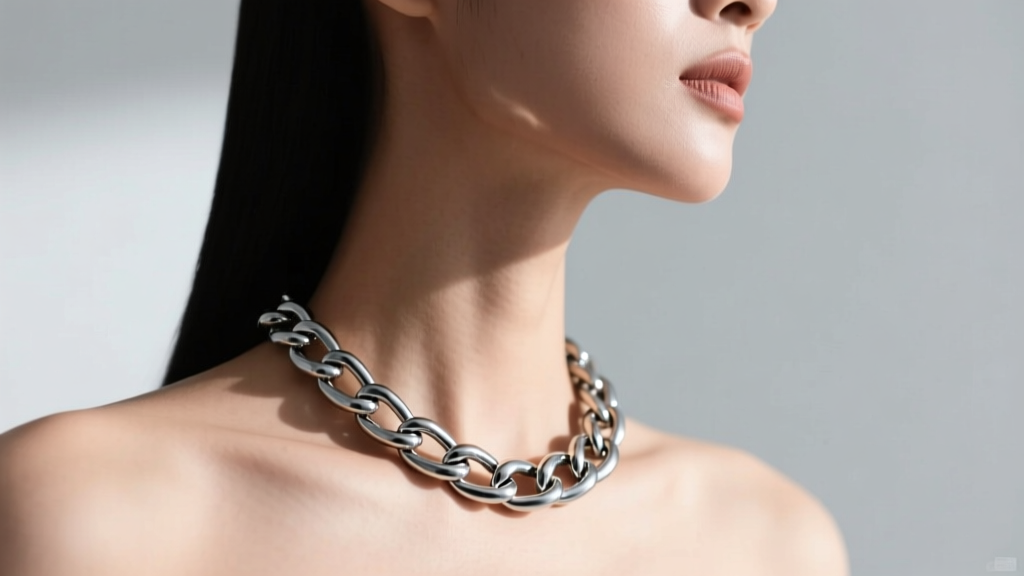
To permanently solve skin irritation, you must upgrade to bio-inert metals. The Gemological Institute of America (GIA) notes that purity and alloy composition are the primary drivers of metal stability. Here is how to troubleshoot your material choices:
- ASTM F136 Implant-Grade Titanium: This is the gold standard for sensitive skin. It contains zero nickel and is entirely immune to the acidic pH of human sebum. It is lightweight, hypoallergenic, and will never oxidize.
- Platinum (950 Grade): Composed of 95% pure platinum and 5% ruthenium or iridium, this metal is naturally white and bio-inert. It is heavy, which also naturally solves the 'floating clasp' issue mentioned earlier.
- 18k or 24k Gold: While 14k gold contains enough copper and silver to cause reactions in highly sensitive individuals, 18k gold (75% pure gold) is generally safe. For absolute certainty, 24k gold is completely non-reactive, though its softness makes it unsuitable for heavy pendants.
- Avoid 'Gold Vermeil' for Daily Wear: Vermeil is simply gold plated over sterling silver. Once the microscopic layer of gold wears away from friction against the collarbone, the underlying copper in the silver alloy will immediately react with your skin.
The 5-Minute Daily Troubleshooting Checklist
Maintaining a flawless look requires a quick mechanical check. Before leaving the house, run through this rapid troubleshooting protocol to ensure your jewelry performs perfectly all day:
- The Pendulum Test: Hold the chain by the pendant and let it hang. If the clasp immediately swings to the front, apply your silicone O-ring or counterweight before putting it on.
- The Tension Check: Run your fingers lightly over the layering bails. Ensure there is at least a 2.5-inch gap between the pendants to prevent interlocking during movement.
- The Clasp Integrity Test: Open and close the lobster or spring ring clasp. If it does not snap back with a sharp, audible 'click', the internal spring is failing. Replace the clasp immediately to prevent catastrophic loss of the chain.
- The Skin Barrier: If you are wearing a vintage or lower-karat gold piece and anticipate sweating, apply a thin layer of clear liquid bandage to the inside of the chain where it rests against your nape. This creates a temporary, invisible bio-barrier against acidic sweat.
By treating your jewelry as a mechanical system rather than just an accessory, you eliminate the daily frustrations of flipping, tangling, and irritation. Understanding the physics and metallurgy behind your pieces ensures that your style remains as flawless in motion as it is in photographs.


