The 2026 Guide to Women's Necklace Lengths & Layering Trends
Master the art of proportion with our 2026 guide to women's necklace lengths. Discover exact measurements, neckline pairings, and expert layering formulas.

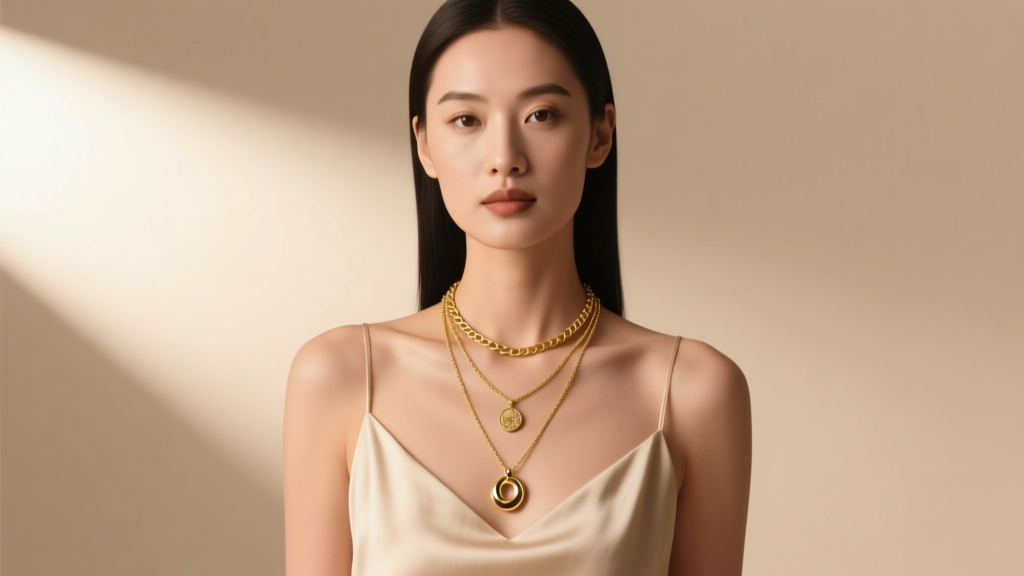
When it comes to curating a flawless jewelry wardrobe, understanding women's necklace lengths is the foundational skill that separates amateur styling from expert curation. In 2026, the industry has moved far beyond the basic 18-inch chain. Today's trend analysis reveals a highly calculated approach to proportion, drape, and asymmetrical layering. Whether you are investing in a vintage 14k gold piece or a modern titanium lariat, the exact millimeter width, specific gravity of the metal, and precise chain length will dictate how the piece interacts with your anatomy. According to the Jewelers of America, consumer demand for customizable, multi-length layering sets has surged, requiring a deeper understanding of how different lengths behave under varying conditions.
The Anatomy of Women's Necklace Lengths: Exact Measurements
Standard jewelry sizing is based on a baseline neck circumference of 13.5 to 14 inches. However, the way a chain falls on the décolletage depends entirely on the standardized length categories. Below is the definitive matrix for standard women's necklace lengths and their optimal styling applications.
| Length Category | Exact Measurement | Ideal Neckline | Pendant Compatibility |
|---|---|---|---|
| Collar | 12 - 13 inches | Boatneck, Off-shoulder | None (wear bare or with a slide) |
| Choker | 14 - 16 inches | V-neck, Scoop, Button-down | Small charms (under 10mm) |
| Princess | 17 - 19 inches | Crew neck, Sweetheart | Medium pendants (15-25mm) |
| Matinee | 20 - 24 inches | High neck, Turtleneck | Large statement pieces |
| Opera | 28 - 36 inches | Any (layered or knotted) | Long bar pendants, tassels |
The Princess length (17-19 inches) remains the most universally flattering, resting just below the collarbone. However, for individuals with a broader chest or longer torso, a standard 18-inch chain may visually shrink, appearing closer to a choker. In such cases, sizing up to a 20-inch Matinee is critical for maintaining the intended drape.
2026 Trend Analysis: The Shift Towards Asymmetrical Layering
According to recent runway reports and market data from Vogue Jewelry Trends, the perfectly symmetrical, evenly spaced layering of the early 2020s has been replaced by deliberate asymmetry and mixed-metal tension. Stylists are no longer adhering to the strict 'two-inch gap' rule between chains. Instead, the 2026 aesthetic clusters a heavy mid-layer closely with a delicate base layer, while allowing a third, much longer chain to hang freely, creating an unbalanced but highly intentional silhouette.
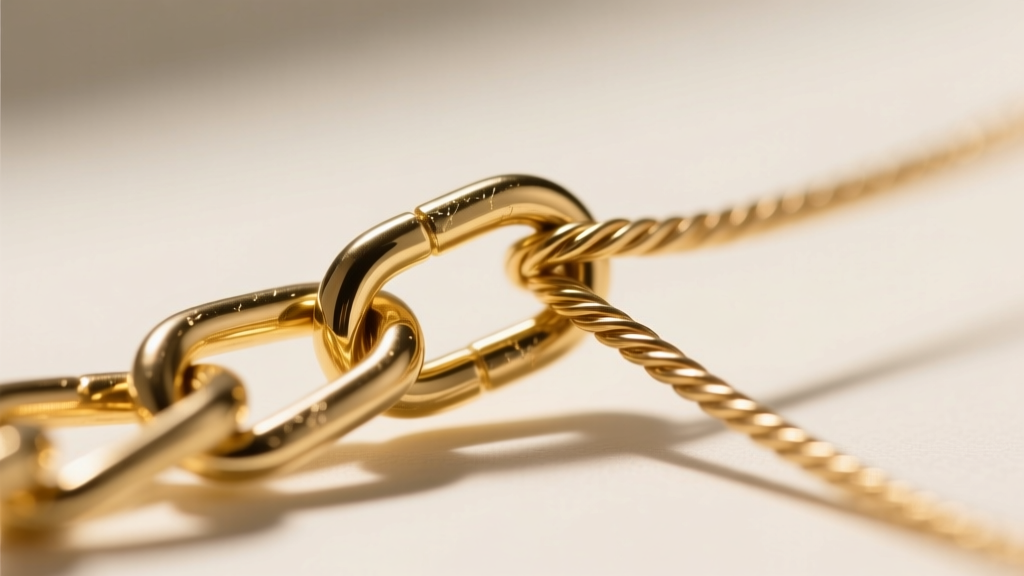
The 3-Chain Formula: Gauges and Textures
To execute the modern layered look without tangling, you must vary both the length and the chain link structure. Tangling occurs when chains of similar gauge and link type catch on one another's micro-joints. Use this exact specification guide:
- Base Layer (14-15 inches): A 1.2mm to 1.5mm cable or rolo chain. This sits tight on the collarbone. The small, uniform links prevent it from catching on larger chains.
- Mid Layer (18-20 inches): A 3.5mm to 4.0mm paperclip or Cuban link chain. The heavier gauge and elongated links provide visual weight and lay flat against the sternum.
- Statement Layer (24-28 inches): A 5.0mm+ oxidized silver, bead, or mixed-metal lariat. This length bypasses the bust line entirely, drawing the eye downward and elongating the torso.
Material Weight and Drape: How Metal Density Affects Length
A critical yet often overlooked factor in evaluating women's necklace lengths is the specific gravity of the chosen metal. A 20-inch chain does not drape identically across different materials. The Gemological Institute of America (GIA) notes that metal density directly impacts the tensile behavior of jewelry links.
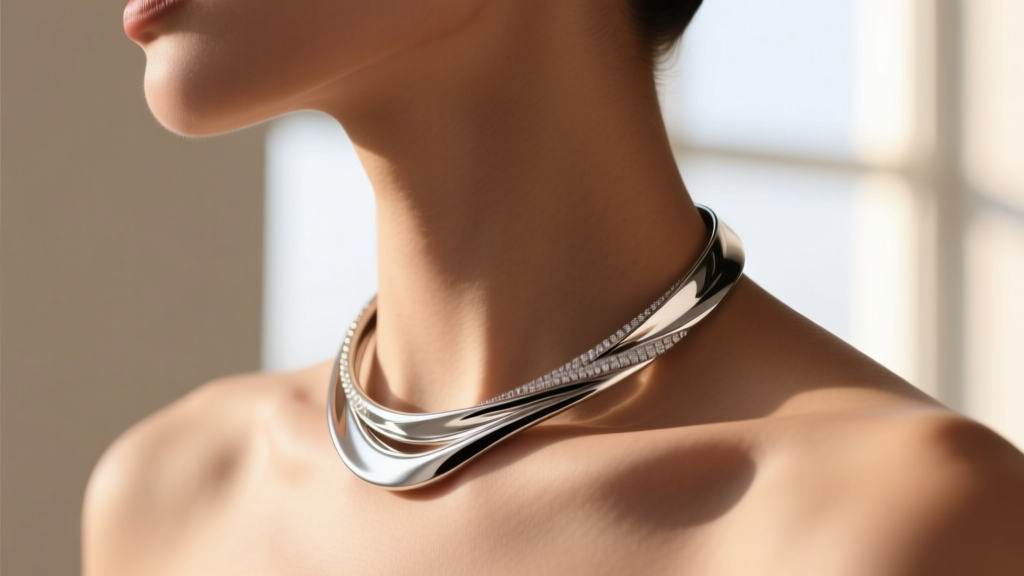
Platinum, with a specific gravity of 21.45 g/cm³, is exceptionally dense. A 20-inch platinum chain will naturally pull downward, creating a deeper, sharper V-shape on the chest. Conversely, a 20-inch chain crafted from lightweight aluminum or hollowed-out 10k gold will sit stiffer and higher, resisting gravity and potentially bunching up around the clavicle.
Stylist Insight: If you are purchasing a lightweight metal chain in a Matinee length (20-24 inches), opt for a chain with a heavier clasp or add a weighted pendant (minimum 8 grams) to the bail. This added weight at the nadir of the chain forces the lightweight metal to drape correctly, mimicking the natural fall of solid 18k gold.
Neckline Pairing Matrix for Standard and Extended Lengths
Matching women's necklace lengths to garment necklines requires an understanding of negative space. The goal is to frame the face and fill the void without competing with the garment's structural lines.
- Deep V-Necks: Require a Princess (18-inch) or Matinee (22-inch) chain with a Y-drop or lariat pendant that mirrors the garment's plunge. Avoid chokers, which create a harsh horizontal line that cuts off the neck's elongation.
- Boatnecks and Bateau: These wide, horizontal necklines demand vertical interruption. A 28-inch Opera length, worn long and unknotted, provides the necessary vertical line to balance the broad shoulder exposure.
- Crew Necks and Turtlenecks: A tight crew neck leaves minimal skin exposed. Layer a 16-inch choker tightly against the fabric's collar, followed by a heavy 24-inch Matinee chain resting over the sweater. The fabric friction will grip the metal, so ensure the Matinee chain is at least 3.0mm thick to prevent it from twisting.
Troubleshooting Common Fit Issues and Hardware Failures
Even with precise measurements, anatomical variations and hardware limitations can compromise the fit of your necklace. Here is how to troubleshoot the most common issues encountered with standard women's necklace lengths.
The Bail-to-Chain Ratio
If your pendant constantly flips backward, hiding the gemstone, your bail is too small for your chain width. The inner diameter of the pendant bail must be at least 1.5 times the width of the chain. For example, if you are using a 4.0mm paperclip chain, the bail must have an inner clearance of at least 6.0mm to allow the chain to move freely and the pendant to lay flush against the skin.
Clasp Mechanics and Security
For chains exceeding 18 inches and weighing over 15 grams, abandon the standard 8mm spring ring clasp. Spring rings rely on a tiny internal coil spring that degrades over time, leading to accidental unclasping. Upgrade to a 12mm or 15mm lobster clasp, which utilizes a cast lever mechanism for superior grip. For heavy opera-length chains, a neodymium magnetic clasp with a minimum pull force of 8 lbs offers the best balance of security and ease of use.
The 2-Inch Extender Rule
Always ensure your chains feature a 2-inch extender chain. Human bodies fluctuate; water retention, humidity, and even the thickness of a winter scarf can alter your effective neck circumference by up to half an inch. The extender provides crucial micro-adjustability, ensuring your 16-inch choker doesn't become a tourniquet on a humid summer day.
Conclusion
Mastering women's necklace lengths is an exercise in geometry, physics, and personal style. By moving beyond generic sizing and paying close attention to link gauge, metal density, and hardware mechanics, you can curate a collection that not only aligns with 2026's asymmetrical layering trends but also functions flawlessly in everyday wear. Whether you are anchoring a look with a heavy platinum collar or weaving a delicate 1.2mm gold cable through a complex three-layer stack, precision in measurement is the ultimate luxury.


