Wooden Necklace Stand Buying Guide: What to Look For
Discover how to choose the perfect wooden necklace stand. Learn about wood hardness, safe finishes, base stability, and ideal dimensions for your jewelry.

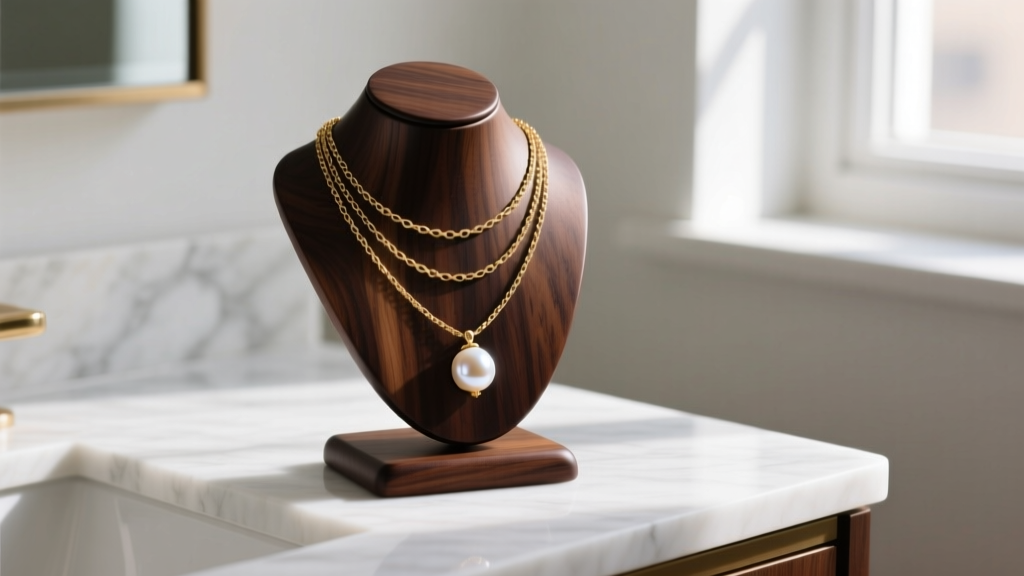
The Chemistry of Wood and Precious Metals
As we navigate the jewelry trends of 2026, the resurgence of heavy, artisan-crafted pendants and layered vintage chains has made proper display more critical than ever. However, storing precious metals on raw or improperly treated wood can lead to disastrous chemical reactions. According to the Smithsonian Museum Conservation Institute, raw wood naturally off-gasses volatile organic compounds (VOCs), primarily acetic acid and formaldehyde. When sterling silver is exposed to these acidic vapors in an enclosed space or direct contact, it accelerates tarnishing and can even cause micro-pitting on delicate pearl surfaces.
This is why selecting a high-quality wooden necklace stand is not merely an aesthetic choice; it is a preservation strategy. You must look for stands that have been properly kiln-dried and sealed with an inert, non-off-gassing finish to create a barrier between the organic material and your precious metals. The Gemological Institute of America (GIA) consistently recommends keeping porous materials away from soft gems and reactive metals unless a proper physical barrier is in place.
Critical Dimensions: Matching Stand Height to Chain Length
A common mistake buyers make is purchasing a stand that is too short for their collection, resulting in bunched-up chains and tangled pendants. To maintain the structural integrity of your clasps and chains, the stand's vertical pole must accommodate your longest pieces without forcing them to fold. Use the following framework to match your collection to the right wooden necklace stand dimensions.
| Necklace Style | Standard Chain Length | Minimum Stand Height Required | Best Pole Design |
|---|---|---|---|
| Collar / Choker | 14" - 16" | 12" - 14" | Single top hook or narrow tier |
| Princess | 18" | 16" | Single pole with mid-tier hooks |
| Matinee | 20" - 24" | 18" - 20" | Tall single pole or wide T-bar |
| Opera | 28" - 36" | 24"+ | Extra-tall pole or multi-tiered cascading stand |
If your collection spans multiple lengths, opt for a tiered wooden necklace stand where the highest tier is at least 24 inches, allowing opera-length chains to drape freely while shorter chokers occupy the lower rungs.
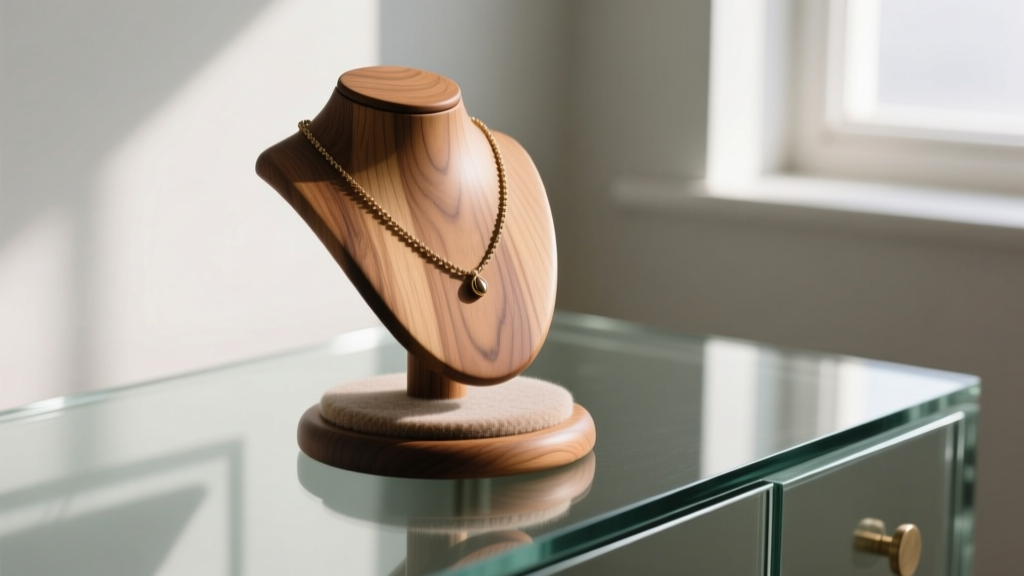
Wood Species and the Janka Hardness Scale
Not all woods are created equal. The durability of your stand, its resistance to scratching, and its ability to hold heavy gold or gemstone pendants without warping depend on its Janka hardness rating. The Wood Database defines the Janka scale as the measure of force required to embed a steel ball into the wood, which directly correlates to how well the stand will resist dents from heavy jewelry clasps.
Top Wood Choices for Jewelry Stands
- Black Walnut (Janka: 1,010 lbf): The premium choice for high-end jewelry. Its rich, dark chocolate hue provides a stunning contrast for bright yellow gold and diamonds. It is dense enough to resist clasp dents but workable enough for intricate carved designs.
- Hard Maple (Janka: 1,450 lbf): Exceptionally hard and light-colored. Maple is ideal for displaying colorful beaded necklaces or oxidized silver, as the pale wood makes the jewelry pop. It is highly resistant to surface scratching.
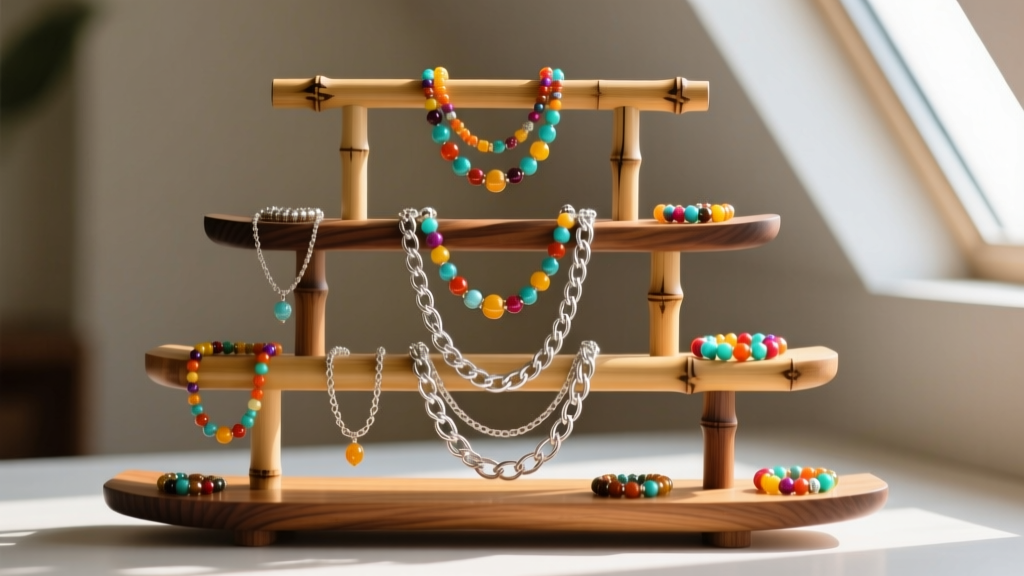
- Bamboo (Janka: 1,380 lbf): Technically a grass, bamboo is a highly sustainable, eco-friendly option that offers incredible tensile strength. It is perfect for multi-tiered, minimalist stands that need to support significant weight without bowing.
- Pine (Janka: 380 lbf): Generally avoid pine for heavy jewelry. It is a softwood that will easily dent when struck by heavy metal clasps, and it often contains resin pockets that can leak and stain fabrics or pearls over time.
The Finish Factor: Sealing and Protection
The finish applied to a wooden necklace stand dictates both its visual appeal and its chemical safety. In 2026, eco-friendly and non-toxic finishes are the industry standard, but they must be fully cured before use.
Water-Based Polyurethane: This is the gold standard for jewelry stands. It dries crystal clear, does not yellow over time, and creates a completely inert plastic-like shell that traps any residual wood acids. It is perfectly safe for direct contact with sterling silver and porous opals.
Natural Oils (Tung or Linseed): While these provide a beautiful, hand-rubbed matte finish, they require weeks to fully polymerize. If you place pearls or porous turquoise on an uncured oiled stand, the wood will leach oil into the gemstones, causing permanent dark spotting. Only buy oil-finished stands if the manufacturer guarantees a full 30-day curing period prior to shipping.
Beeswax and Carnauba Blends: Often used on artisan, hand-turned stands. Wax offers a soft luster and is chemically inert, but it requires annual reapplication and can melt or become tacky in direct sunlight or warm, humid environments, potentially transferring residue to your chains.
Base Stability and Weight Distribution
A wooden necklace stand is essentially a cantilevered structure. When you load one side with heavy, oversized pendants or thick Cuban link chains, the center of gravity shifts dramatically. If the base is inadequate, the stand will tip, potentially pulling other jewelry to the floor and causing severe damage.
Apply the 1:3 Base-to-Height Ratio Rule. The diameter or width of the base should be at least one-third the total height of the vertical pole. For example, a 24-inch tall stand requires a base that is at least 8 inches across. Furthermore, premium manufacturers embed a steel or lead weight inside the wooden base, lowering the center of gravity. Always check the product specifications for a "weighted base" or look for a thick, dense hardwood base (like a solid block of oak) rather than a thin, hollowed-out plywood disc.
2026 Buyer's Final Checklist
Before finalizing your purchase, run through this quick E-E-A-T verified checklist to ensure you are investing in a stand that protects and beautifully displays your collection:
- Verify the Finish: Ensure it is sealed with water-based polyurethane or a fully cured, jewelry-safe lacquer.
- Check the Janka Rating: Confirm the wood species has a hardness rating above 900 lbf to prevent clasp denting.
- Measure Your Longest Chain: Ensure the top tier is at least 2 inches taller than your longest necklace.
- Inspect the Base: Look for a weighted insert or a solid hardwood base that meets the 1:3 ratio rule.
- Examine the Hooks: Ensure the hooks are smoothly sanded or lined with soft silicone to prevent scratching delicate link chains.
By prioritizing material science and structural integrity over mere aesthetics, you will secure a wooden necklace stand that serves as both a functional guardian and a beautiful showcase for your most prized necklaces and pendants.


