Yellow Bakelite Necklace Value Guide 2026: Pricing & Authentication
Discover the true market value of a yellow bakelite necklace in 2026. Learn authentication tests, pricing tiers, and condition factors for collectors.

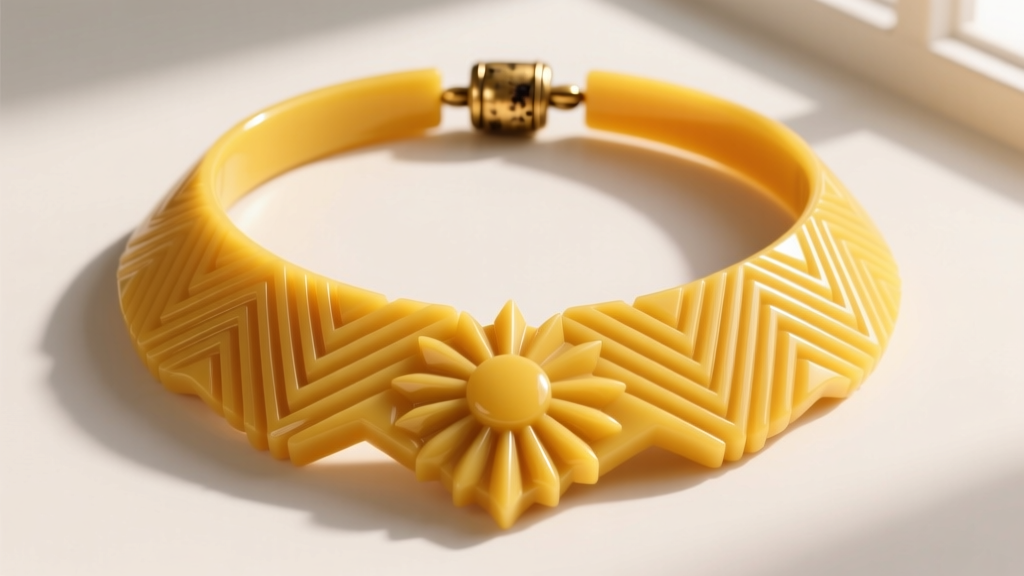
The Allure of Yellow Bakelite: Butterscotch, Apple Juice, and Creamed Corn
When evaluating vintage plastics, no material commands the reverence, collector frenzy, or premium pricing of authentic phenolic resin. Invented by Leo Baekeland in 1907, Bakelite was the world's first fully synthetic plastic. While it was initially utilized for industrial insulators and radio casings, by the 1920s and 1930s, it had become the defining medium of Art Deco jewelry. Today, a yellow bakelite necklace remains one of the most highly sought-after categories in the vintage market. However, as we navigate the 2026 collector landscape, distinguishing genuine period pieces from later Lucite imitations or modern phenolic fakes requires a rigorous, expert-level approach to budget and value assessment.
The yellow spectrum in vintage bakelite is categorized by collectors into three distinct visual profiles, each carrying its own market premium. Apple Juice refers to a translucent, warm amber-yellow that mimics the color of fresh cider. Butterscotch is a rich, opaque, creamy yellow with deep undertones. Creamed Corn is a paler, more pastel yellow that often exhibits subtle marbling. It is critical to understand that much of this yellow coloration is the result of 80 to 90 years of UV exposure and oxidation. Many pieces originally manufactured in stark white or pale cream have naturally yellowed over decades. This natural patina is highly prized and serves as a secondary authentication marker that modern fakes struggle to replicate convincingly.
2026 Market Valuation Matrix: What Should You Actually Pay?
Pricing a yellow bakelite necklace is rarely straightforward. Value is dictated by a complex matrix of color rarity, carving depth, lamination, and hardware originality. According to data from Lang Antiques University, the market for high-end Art Deco plastics has stabilized after the post-pandemic surge, making 2026 an excellent year for strategic acquisitions. Below is a realistic pricing framework based on current auction results and dealer inventories.
| Necklace Style & Complexity | Condition Grade | Estimated 2026 Market Value | Key Value Drivers |
|---|---|---|---|
| Simple Round Bead Strand (Endless) | Good to Excellent | $150 - $350 | Bead size (over 12mm commands premium), color uniformity, knotting quality. |
| Carved Link or Flexi-Bracelet/Necklace | Very Good | $450 - $950 | Depth of hand-carving, intricate motifs (e.g., blackamoor, geometric), original elastic or wire cores. |
| Laminated / Inlaid Art Deco Pendant | Excellent | $1,200 - $3,800 | Complexity of color layering, precision of inlay work, rarity of specific color combinations. |
| Signed / Designer Pieces (e.g., Hattie Carnegie) | Museum Quality | $2,500 - $6,000+ | Verifiable provenance, designer signatures, exceptional sculptural quality, exhibition history. |
Authentication Framework: Separating True Bakelite from Catalin and Lucite
The most critical aspect of your budget assessment is ensuring you are actually buying Bakelite (or its jewelry-grade sister company, Catalin). Modern phenolic resins and vintage Lucite (acrylic) are frequently misidentified or intentionally misrepresented as Bakelite. Relying on a single test is a rookie mistake; professional authenticators use a tripartite testing protocol.
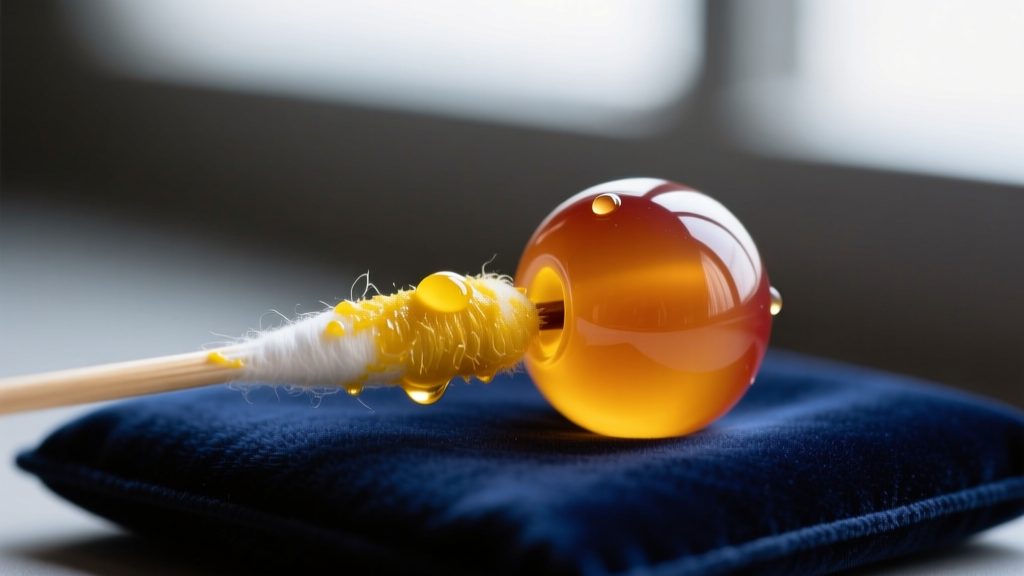
The Simichrome Polish Test
Simichrome is a mildly abrasive metal polish containing oxalic acid. When applied to a cotton swab and rubbed vigorously against a hidden area of the plastic, it reacts with the oxidized surface layer of genuine phenolic resin. On a yellow bakelite necklace, the swab will almost immediately turn a bright, unmistakable mustard yellow. Important Caveat: If the piece has been heavily lacquered or recently machine-polished by an overzealous restorer, the Simichrome test may yield a false negative. Furthermore, while red and black bakelite sometimes fail this test, yellow and orange variants are highly reliable indicators.
The Thermal and Olfactory Test
Bakelite is a thermosetting plastic, meaning it will not melt under heat, but it will release a distinct odor. Run the necklace under hot tap water (approximately 150°F or 65°C) for 15 to 20 seconds. Friction and heat will cause genuine Bakelite to emit a sharp, chemical scent reminiscent of formaldehyde, camphor, or carbolic acid. Lucite will smell like nothing, while modern cellulose acetate or casein plastics will emit a sour, milky, or burnt hair odor. As noted in the 1stDibs Bakelite Identification Guide, the hot water test is universally preferred by conservators because it is entirely non-destructive.
The Acoustic Test (The Clunk)
Genuine cast and machined Bakelite is incredibly dense. When two bakelite beads or links are gently tapped together, they produce a deep, resonant, low-pitched "clunk." Conversely, Lucite and modern molded plastics produce a higher-pitched, hollow "click." While subjective, this acoustic profile is a vital secondary confirmation when evaluating heavy, chunky yellow bead necklaces.
Condition Reports and Value Killers
When assessing the budget for a yellow bakelite necklace, you must aggressively inspect for structural and cosmetic flaws. Phenolic resin is remarkably durable, but it is not immune to the ravages of time. The following condition issues will drastically impact your valuation:
- Crazing: This is the appearance of a microscopic network of surface cracks, resembling a spiderweb. Crazing occurs as the resin continues to cure, shrink, and lose internal moisture over nearly a century. Minor crazing is expected and accepted, but deep crazing that catches dirt or compromises structural integrity can reduce the necklace's value by 40% to 60%.
- Pot Metal Rot and Expansion: Many Art Deco necklaces feature internal armatures or clasps made from pot metal (a cheap zinc alloy). Over decades, pot metal can oxidize and physically expand. This expansion exerts immense internal pressure on the rigid Bakelite, leading to catastrophic, unrepairable splits. Always inspect the areas immediately surrounding metal clasps and inlays for hairline fractures.
- Bakelite Disease (Exudate): In poorly stored pieces, the resin can begin to exude acidic salts, leaving a sticky, white, or yellowish crust on the surface. While this can sometimes be carefully cleaned by a professional conservator, it indicates advanced chemical breakdown and severely limits the piece's investment grade.
Collector Maxim: Never purchase a yellow bakelite necklace with replaced hardware. A modern lobster clasp on a 1930s Art Deco piece instantly strips it of its historical integrity and slashes its collector value by at least 30%.
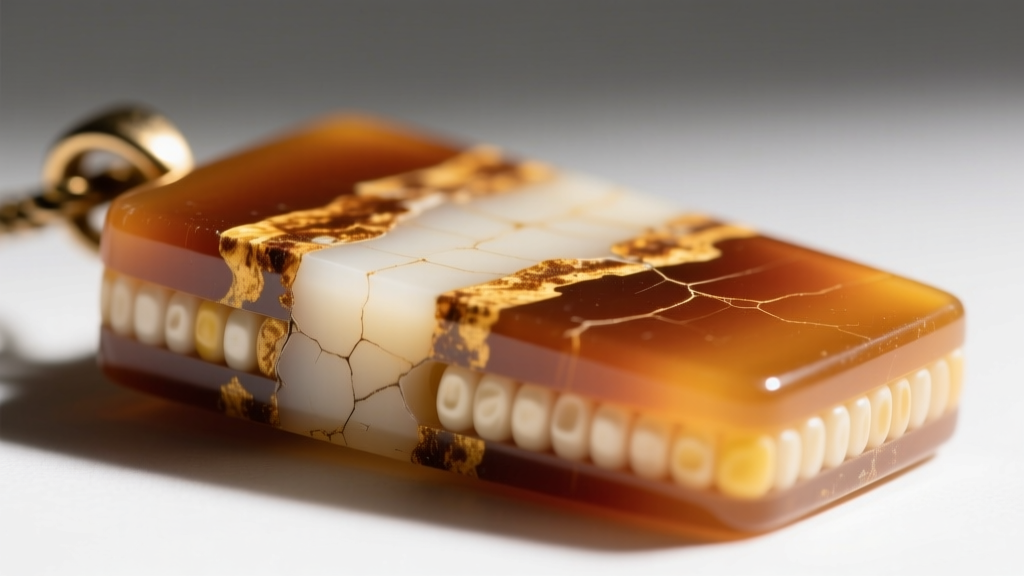
The Lamination Premium: Why Layered Resin Commands Top Dollar
If you are looking to allocate a higher budget toward a true investment-grade piece, seek out laminated yellow bakelite. Unlike simple molded beads, laminated pieces were created by casting large blocks of resin in alternating layers of different colors (such as butterscotch and creamed corn). These blocks were then sliced, carved, and polished to reveal striking, geometric striations. Because this process was incredibly labor-intensive and required master craftsmen to machine the hardened plastic, laminated yellow bakelite necklaces are exceptionally rare. In 2026, a well-preserved, deeply carved laminated pendant or link necklace will reliably outperform standard bead strands in long-term value retention and auction appreciation.
Final Verdict: Is a Yellow Bakelite Necklace a Sound Investment?
From a budget and value assessment perspective, a yellow bakelite necklace represents a tangible, historically significant asset class. Unlike mass-produced modern luxury jewelry, which suffers from steep retail markups and immediate depreciation, vintage Bakelite has a finite supply. The material is no longer manufactured for jewelry due to the toxicity of its original production process involving formaldehyde and phenol. As existing pieces are absorbed into permanent museum collections or private vaults, the available pool of high-quality, apple juice and butterscotch necklaces continues to shrink. By strictly adhering to non-destructive authentication protocols, demanding original hardware, and carefully evaluating the structural integrity of the phenolic resin, collectors can confidently acquire pieces that offer both profound aesthetic joy and robust long-term financial value.


