Expert Guide: Anatomy and Metals in a Fine Yorkie Necklace
Discover the technical details behind a fine Yorkie necklace, from lost-wax casting and micro-pave settings to matching chain gauges and metal alloys.

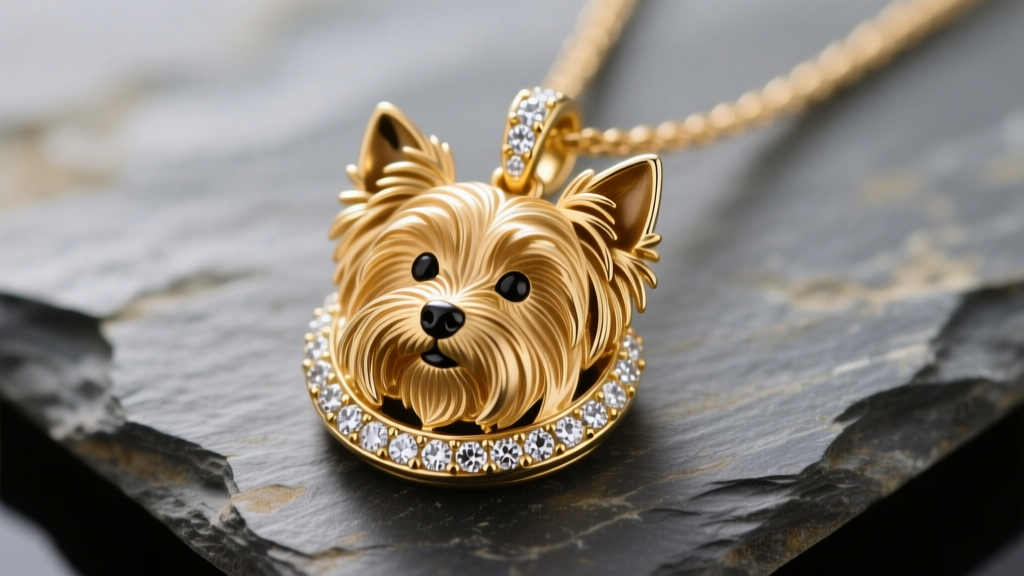
Breed-specific jewelry has evolved far beyond simple, flat-profile silhouettes. Today, a premium Yorkie necklace is a masterclass in micro-sculpting, metallurgy, and precision casting. For Yorkshire Terrier enthusiasts and fine jewelry collectors alike, understanding the technical architecture of these pendants is crucial for making an informed investment. In 2026, the intersection of advanced CAD modeling and traditional lost-wax casting allows jewelers to capture the distinct silk-coated elegance of the Yorkie with microscopic accuracy. This expert deep dive explores the engineering, material science, and mechanical pairing required to create a flawless Yorkshire Terrier pendant.
The Engineering of Breed-Specific Jewelry
Creating a lifelike Yorkie pendant begins long before molten metal is poured. It starts in the digital realm with Computer-Aided Design (CAD). The Yorkshire Terrier possesses a highly specific anatomy: erect, V-shaped ears, a compact button nose, and a distinctively plush topknot. Translating these organic shapes into a 12mm to 18mm metal pendant requires extreme precision.
CAD Tolerances and Burnout Cycles
Modern jewelry CAD software operates with tolerances down to 0.01mm. However, the digital model must be adapted for the physical realities of casting. When a 3D-printed castable resin model is placed in a flask and surrounded by investment plaster, it undergoes a burnout cycle. According to Rio Grande Casting Resources, the burnout temperature for high-detail resins typically peaks around 732°C (1350°F). If the Yorkie's delicate ear tips are modeled thinner than 0.7mm in the CAD file, the resin will leave behind micro-ash residue or fail to cast completely, resulting in rounded, melted-looking ears. Expert jewelers intentionally thicken the ear geometry by 0.15mm in the digital file to account for metal shrinkage during the quench phase, ensuring the final gold or silver ears remain sharp and anatomically correct.
Mimicking the Silky Coat Texture
The Yorkshire Terrier's coat is famously fine and silky, lacking an undercoat. To replicate this in metal, master casters avoid standard high-polish finishes, which make the dog look artificial. Instead, they employ a combination of directional matte sandblasting and micro-engraving. By using a 0.05mm carbide burr to carve flowing, overlapping striations into the wax model, the final cast piece catches the light in a way that perfectly mimics the flow of a Yorkie's parted hair.
Metallurgy and Material Grades
The longevity and aesthetic of a Yorkie necklace are entirely dependent on the base metal and plating techniques used. Because these pendants are often worn daily, resting against the skin and exposed to cosmetics, perfumes, and natural oils, the metallurgical choices must prioritize tarnish resistance and structural integrity.
Silver Alloys: Standard Sterling vs. Argentium
Traditional 925 sterling silver is an alloy of 92.5% silver and 7.5% copper. The copper content is the culprit behind firescale during casting and rapid tarnishing during wear. For a high-end Yorkie necklace, experts increasingly turn to Argentium 960 silver. Argentium replaces a portion of the copper with germanium. When exposed to oxygen, the germanium forms a transparent, self-healing layer of germanium dioxide on the surface. This makes Argentium highly resistant to tarnish and eliminates firescale, ensuring the intricate fur textures of the Yorkie pendant remain crisp and bright without the need for constant chemical polishing.
Gold Vermeil vs. Solid Alloys
If you prefer the look of gold but are working within a specific budget, gold vermeil is a common choice. However, not all vermeil is created equal. The Federal Trade Commission (FTC) strictly mandates that for a piece to be legally marketed as 'vermeil,' it must consist of a sterling silver base plated with at least 10k gold that is a minimum of 2.5 microns thick. Cheap imitations often use flash plating (under 0.5 microns) over brass, which will wear through to the base metal within months of friction against the collarbone. For a pendant meant to last a lifetime, solid 14k or 18k gold remains the superior choice, offering excellent tensile strength for the delicate bail and prongs.
| Metal Type | Composition / Plating | Tarnish Resistance | Durability (Mohs/Vickers) | Estimated Price Range (15mm Pendant) |
|---|---|---|---|---|
| 925 Sterling Silver | 92.5% Ag, 7.5% Cu | Low (Requires Rhodium) | ~60-70 HV | $85 - $140 |
| Argentium 960 | 96% Ag, Ge, Cu | Very High | ~75-85 HV | $130 - $190 |
| 14k Gold Vermeil | 925 Base, 2.5μm+ 14k Au | Moderate | Base: ~70 HV | $110 - $160 |
| Solid 14k Yellow Gold | 58.5% Au, Ag, Cu, Zn | Excellent | ~120-140 HV | $450 - $700+ |
Chain Gauge and Clasp Mechanics
A common failure point in delicate animal pendants is not the pendant itself, but the chain and clasp assembly. A standard 15mm Yorkie pendant cast in solid 14k gold weighs approximately 1.8 to 2.4 grams. Pairing this with an improperly gauged chain leads to kinking, bail wear, and eventual breakage.
Matching Chain Tensile Strength to Pendant Weight
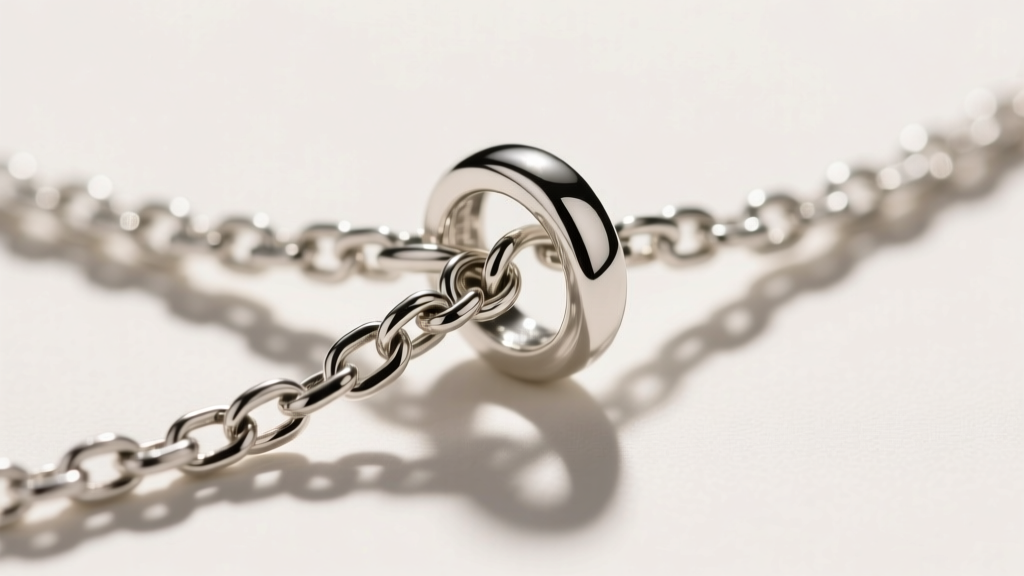
For a 2-gram pendant, a chain with a breaking strength of at least 8 pounds is recommended to account for accidental snags on clothing. A 1.2mm box chain is the industry standard for this weight class. Box chains are constructed from interlocking square links that distribute tension evenly, making them highly resistant to the kinking that plagues standard cable or rope chains. Avoid chains thinner than 1.0mm; while they look delicate, their solder joints are microscopic and prone to snapping under minimal lateral torque.
Clasp Engineering: Lobster vs. Spring Ring
Never pair a fine Yorkie pendant with a spring ring clasp. Spring rings rely on a thin, stamped brass internal spring that loses tension and corrodes over time. Instead, insist on a 5mm or 6mm solid lobster clasp. High-quality lobster clasps feature a stainless steel internal spring and a precisely milled jaw that snaps shut with a definitive click, ensuring the necklace remains secure during active wear.
Enamel and Gemstone Micro-Setting
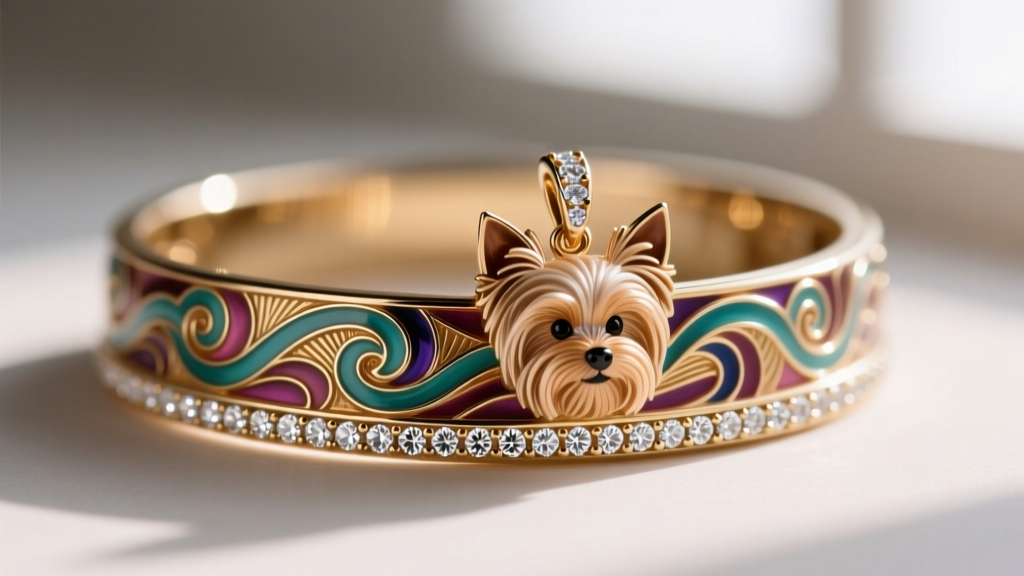
To elevate a Yorkie necklace from a simple silhouette to a piece of fine art, jewelers often incorporate enamel or micro-pave diamonds, typically focusing on the dog's collar or signature topknot bow.
Vitreous Enamel vs. Cold Epoxies
According to the Gemological Institute of America (GIA), true vitreous enamel is essentially glass fused to metal at temperatures exceeding 800°C. Guilloché enamel, where a geometric pattern is engine-turned into the metal collar before the translucent enamel is applied, creates a stunning depth of color that will never fade. Conversely, 'cold enamel' is merely a two-part epoxy resin. While cheaper to produce, cold enamel is highly susceptible to UV degradation, often yellowing or chipping after two to three years of daily wear. Always verify that the pendant uses kiln-fired vitreous enamel.
Micro-Pave Prong Integrity
If the Yorkie's collar features diamonds, they are likely set in a micro-pave arrangement using stones between 0.8mm and 1.2mm in diameter. At this scale, the prongs are barely visible to the naked eye. The jeweler must use a high-yield gold alloy and set the stones under high magnification. A common failure mode in mass-produced micro-pave is 'shallow seating,' where the diamond's girdle is not fully supported by the bearing, leading to stones popping out upon minor impact. Hand-cut beads and properly burnished prongs are non-negotiable for long-term stone retention.
Real-World Troubleshooting and Maintenance
Even the most meticulously engineered Yorkie necklace requires proper maintenance and an understanding of potential mechanical vulnerabilities.
- Bail Friction: The bail (the loop connecting the pendant to the chain) acts as a hinge. Over years of wear, a 1.2mm box chain can act like a saw, slowly cutting through a soft 24k or high-karat bail. If purchasing a high-karat pendant, ensure the bail is lined with a hardened steel jump ring or cast in a durable 14k alloy.
- Ultrasonic Cleaning Dangers: While ultrasonic cleaners are excellent for removing sebum and lotion from bare metal, the high-frequency vibrations will shatter vitreous enamel and loosen micro-pave diamonds. Clean your Yorkie pendant using a soft baby toothbrush, warm water, and a drop of mild, phosphate-free dish soap.
- Storage Protocols: Argentium and sterling silver pendants should be stored in anti-tarnish flannel pouches containing activated charcoal or silver cloth strips. Never store the necklace in a humid bathroom environment, as the combination of moisture and sulfur from personal care products accelerates silver sulfide formation.
Ultimately, a fine Yorkie necklace is a convergence of zoological accuracy and horological-level precision. By scrutinizing the CAD tolerances, demanding proper metal thicknesses, and understanding the mechanics of chain pairing, you can secure a piece of jewelry that honors the beloved breed with uncompromising technical excellence.


