Zuni Bird Necklace Trends 2026: Style & Collector Guide
Explore 2026 Zuni bird necklace trends, styling tips, and collector guides. Learn to authenticate petit point turquoise and coral inlay.

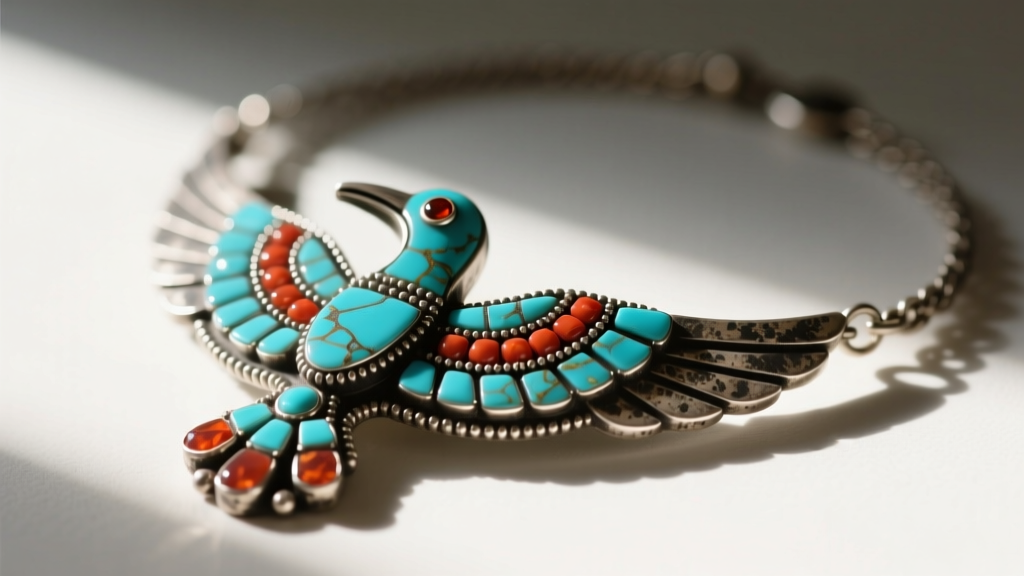
The 2026 Resurgence: Why Zuni Bird Necklaces Are Dominating High Fashion
Once relegated to the realm of Southwestern souvenir shops and vintage estate cases, the Zuni bird necklace has experienced a monumental renaissance in 2026. Driven by the broader "heritage luxury" movement and a collective pivot toward artisanal, slow-fashion accessories, high-end stylists are now treating authentic Zuni lapidary work as wearable art. The intricate avian motifs—ranging from the agile hummingbird to the commanding eagle—offer a masterclass in color theory and micro-sculpture that mass-produced jewelry simply cannot replicate.
Unlike the heavy, silver-dominant squash blossom necklaces of their Navajo neighbors, Zuni artisans are celebrated for their meticulous stone-on-stone inlay and cluster work. In 2026, the fashion elite are bypassing the traditional bolo tie or heavy naja pendant, opting instead for medium-sized Zuni bird pendants layered over minimalist silk blouses, structured blazers, and monochromatic knitwear. This juxtaposition of indigenous heritage craftsmanship with contemporary European silhouettes has created a surging demand for both vintage 1970s pieces and modern masterworks.
Anatomy of Authenticity: Decoding Zuni Stone Inlay Techniques
To truly appreciate the value of a Zuni bird necklace, one must understand the grueling lapidary techniques required to bring these avian designs to life. Zuni silversmiths and stone cutters spend decades mastering three primary methods, each demanding absolute precision down to the millimeter.
Petit Point: The Teardrop Illusion
Petit point involves setting tiny, uniformly shaped cabochons—typically round or teardrop—into individual silver bezels. In a high-quality Zuni hummingbird necklace, you will find dozens of these stones, often measuring a mere 2mm to 4mm in diameter. The silver bezels must be filed perfectly flush with the stone's dome, requiring the use of 18-gauge or 20-gauge sterling silver sheet to maintain structural integrity without overwhelming the delicate turquoise.
Needlepoint: The Lapidary Tightrope
Needlepoint is the ultimate test of a Zuni artisan's steady hand. The stones are cut into elongated, razor-thin ovals with sharply pointed ends, usually measuring just 1.5mm wide by 8mm long. Setting these without fracturing the turquoise or coral is a high-risk endeavor. A single slip of the bezel roller can shatter the stone, meaning a complex Zuni eagle pendant might require the cutting and setting of over 150 individual needlepoint stones, with a 20% attrition rate during assembly.
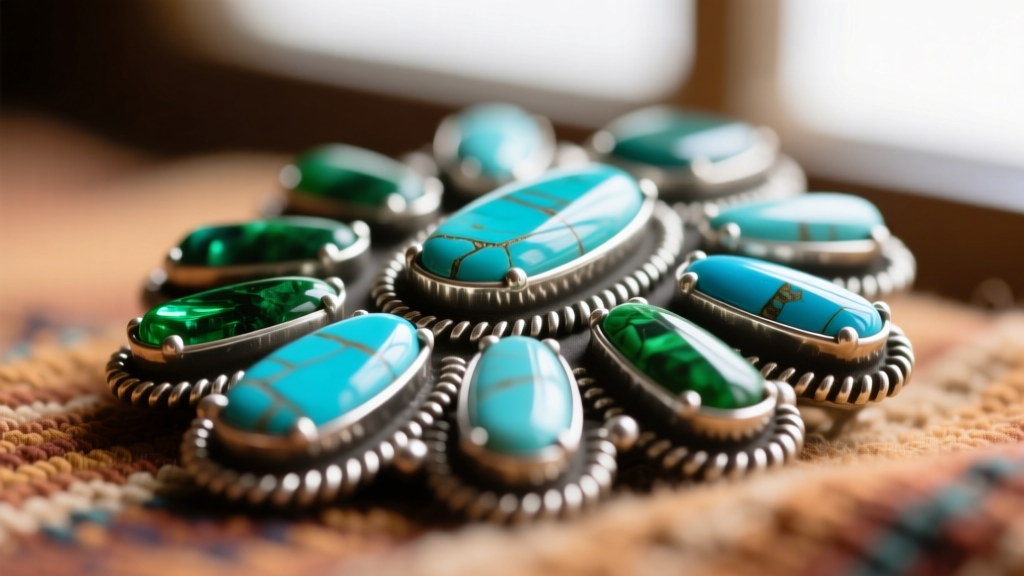
Channel Inlay: The Modern Mosaic
For larger bird motifs like the Roadrunner or Falcon, artisans utilize channel inlay. Thin strips of sterling silver are soldered onto a backplate to create a maze-like grid. Stones are then cut, sanded, and glued into these channels. The piece is ground completely flat on a lapidary wheel, resulting in a seamless, glass-smooth surface where the silver lines act as the "grout" defining the bird's feathers and anatomy.
Material Grades & Sourcing: The Turquoise and Shell Spectrum
The investment value of a Zuni bird necklace is inextricably linked to the provenance and grade of its raw materials. With several historic mines closed or heavily restricted, the 2026 market heavily penalizes dyed howlite or stabilized block turquoise, rewarding natural, untreated stones with massive premiums.
| Material | Origin / Mine | 2026 Scarcity | Market Impact |
|---|---|---|---|
| Sleeping Beauty Turquoise | Globe, Arizona (Closed) | Extremely High | Commands a 40-60% premium; highly sought by collectors. |
| Kingman Turquoise | Kingman, Arizona | Moderate | The industry baseline; prized for its deep blue and black matrix. |
| Spiny Oyster Shell | Sea of Cortez, Mexico | High | Ethical harvesting limits have driven prices up 25% since 2023. |
| Acoma Jet | Acoma Pueblo, NM | Moderate | Stable; essential for the deep black accents in bird eye detailing. |
| Mother-of-Pearl | Global Sourcing | Low | Abundant; used for the white/breast feather sections of the inlay. |
The Symbolism of the Avian: Choosing Your Motif
Beyond aesthetics, the specific bird depicted in a Zuni pendant carries deep cultural and spiritual resonance. Understanding these motifs adds a layer of intentionality to your styling and collecting.
- The Hummingbird: Symbolizing joy, healing, and agility. Hummingbird pendants are typically smaller, lighter, and feature vibrant combinations of Sleeping Beauty turquoise and orange spiny oyster. They are the most popular choice for everyday, subtle layering.
- The Eagle: Representing vision, power, and divine connection. Eagle pendants are usually larger, statement-making pieces utilizing grand channel inlay or expansive petit point wings. They demand a heavier chain and a broader neckline.
- The Owl: The guardian of the night and a symbol of wisdom. Often incorporating darker materials like Acoma jet and deep green serpentine, owl pendants are favored in autumn and winter wardrobes, pairing beautifully with oxidized silver.
Styling the Zuni Bird Pendant: Modern Layering & Neckline Pairings
The most common mistake collectors make is pairing a heavy, 40-gram Zuni pendant with an inadequate chain. To properly support the weight and honor the craftsmanship, chain gauge and length are critical.
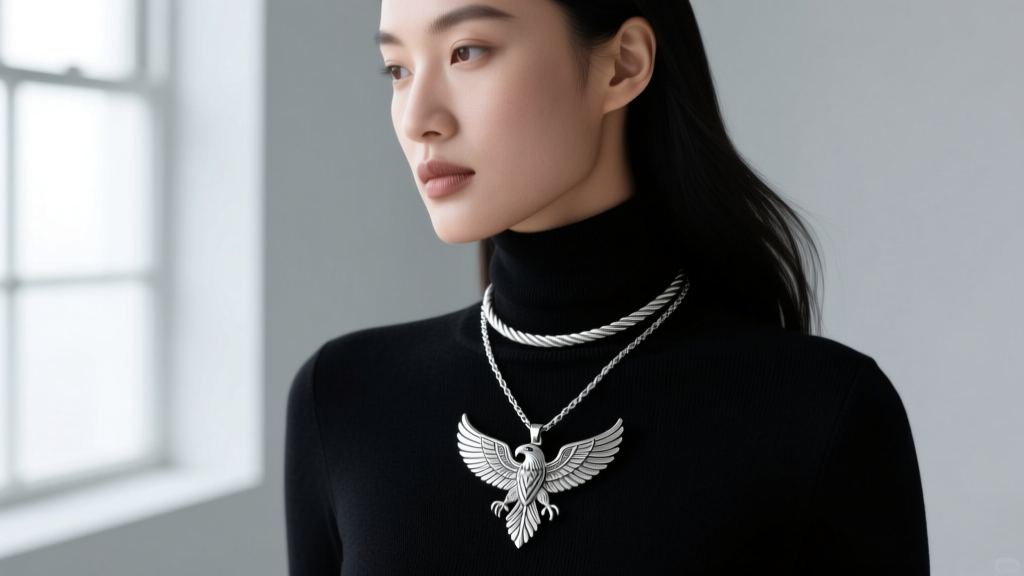
Chain Gauge and Material
Never use a flimsy 0.8mm or 1.0mm cable chain for a genuine Zuni inlay pendant; the weight will warp the links and eventually snap the clasp. Opt for a 2.5mm to 4.0mm sterling silver rope, snake, or box chain. These weaves distribute the pendant's weight evenly and provide a visually substantial frame that matches the density of the stone inlay. Ensure the clasp is a heavy-duty lobster or a secure hook-and-eye mechanism, stamped with ".925".
Length and Neckline Matrix
The 18-Inch Collarbone Drop: Best for petit point hummingbirds and owls. This length sits perfectly above the crewneck of a cotton tee or the collar of a button-down shirt, keeping the intricate stonework in the direct line of sight.
The 24-Inch Mid-Chest Drape: The ideal length for large channel-inlay eagles or falcons. A 24-inch chain allows the pendant to rest over the sternum, making it the ultimate pairing for a black turtleneck, a tailored wool blazer, or a flowing silk maxi dress. This length prevents the heavy silver backplate from catching on delicate fabrics.
Collector’s Matrix: Pricing, Hallmarks, and Investment Value
As the market for indigenous jewelry matures, provenance and hallmarks have become the primary drivers of value. According to the Indian Arts and Crafts Board (IACB), authenticating the artist is paramount, as the market is flooded with overseas imitations.
Notable Zuni Families and Hallmarks
When evaluating estate pieces, look for the stamped or engraved hallmarks of legendary Zuni families. The Leekya family is world-renowned for their intricate stone carving and petit point work. The Hustito and Tsosie families have produced generations of master lapidaries whose channel inlay and needlepoint pieces are highly documented in the Smithsonian National Museum of the American Indian archives.
2026 Pricing Tiers
- Entry-Level Modern ($250 - $500): Smaller hummingbird or owl pendants, typically featuring stabilized turquoise or lesser-known artisan hallmarks. Excellent for daily wear.
- Mid-Tier Masterwork ($600 - $1,500): Large eagle or falcon pendants featuring complex needlepoint, high-grade natural Kingman turquoise, and coral, crafted by recognized Zuni families.
- Vintage/Estate Investment ($2,000 - $5,000+): 1960s-1980s pieces featuring now-extinct Sleeping Beauty turquoise, heavy 30+ gram silver backplates, and documented provenance from master silversmiths like Daisy Nampego or the elder Leekyas.
Avoiding Counterfeits: The Acid Test for Imported Fakes
The global proliferation of "Southwestern style" jewelry has made authentication a necessary skill for any serious collector. Here is how to spot a fake Zuni bird necklace in seconds:
The Bezel Test: Authentic Zuni petit point and needlepoint rely on individual, hand-soldered silver bezels for every single stone. If you look closely and see a single sheet of silver with holes punched out, or stones held in by clear epoxy glue without metal bezels, it is a mass-produced import.
Furthermore, examine the silver backplate. Authentic pieces use solid sterling silver, often featuring a hand-soldered bail (the loop the chain goes through). Fakes frequently use "Tibetan Silver," "Alpaca," or "Nickel Silver"—alloys that contain zero actual silver and will turn your skin green. Always demand a ".925" stamp, and use a rare earth magnet; genuine sterling silver is non-magnetic, while many cheap base-metal fakes will exhibit a slight magnetic pull.
By understanding the profound lapidary skill, material scarcity, and cultural weight behind the Zuni bird necklace, you transition from a mere consumer to a custodian of indigenous artistry. Whether you are layering a vibrant spiny oyster hummingbird over a summer linen dress or anchoring a winter wardrobe with a jet-and-turquoise eagle, you are wearing a masterpiece of American heritage.


