Mastering Needle Nose Pliers Jewelry Adjustments for Nose Rings
Learn how to safely use needle nose pliers for jewelry adjustments. Step-by-step guide to opening seamless nose hoops and segment rings without damage.

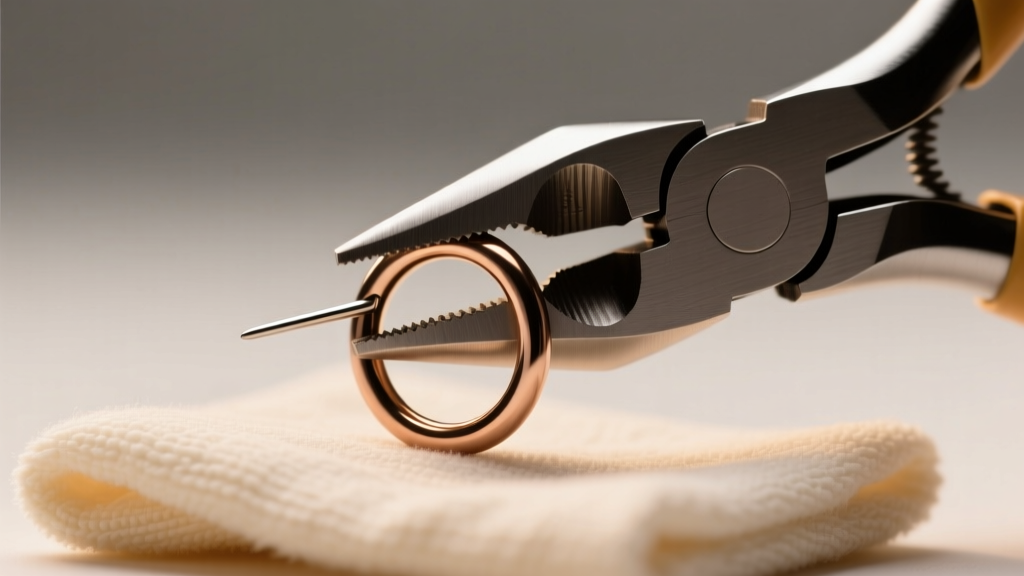
Adjusting nose piercing jewelry at home can feel like a high-stakes operation. Whether you are swapping out a healed nostril hoop, adjusting the tension on a septum clicker, or resizing a custom-fitted seamless ring, the tools you use dictate the lifespan of your jewelry. While many DIY enthusiasts reach for whatever is in their household toolbox, mastering the use of specialized needle nose pliers jewelry tools is critical for preserving both the structural integrity of your metals and the health of your piercing fistula.
In this comprehensive 2026 guide, we break down the exact techniques professional piercers and jewelers use to manipulate nose rings. From handling delicate ASTM F-136 titanium to protecting fragile PVD gold coatings, this step-by-step walkthrough will ensure your jewelry remains pristine and safe for long-term wear.
Why Standard Hardware Pliers Ruin Nose Piercing Jewelry
The most common mistake consumers make is using standard, serrated hardware-store needle nose pliers on body jewelry. Standard pliers feature aggressive teeth designed to grip wire and nails. When applied to body jewelry, these teeth cause catastrophic micro-damage.
- Surface Scratching: Serrated jaws will instantly gouge 14k or 18k solid gold, creating deep scratches that harbor bacteria.
- Coating Stripping: For 316L surgical steel jewelry featuring a PVD (Physical Vapor Deposition) gold or rose gold finish, standard pliers will peel the coating right off, exposing the base metal to your skin.
- Burr Creation: Gripping the ends of a seamless ring with toothed pliers creates sharp metal burrs. When you reinsert the ring, these microscopic blades will tear the delicate tissue inside your nostril or septum piercing.
According to the Association of Professional Piercers (APP), maintaining a mirror finish on implant-grade jewelry is essential for preventing irritation bumps and allergic reactions. Using improper tools directly compromises this finish.
The Essential Toolkit for Nose Hoop Adjustments
To properly execute needle nose pliers jewelry adjustments, you must build a specialized toolkit. Below is a comparison of the pliers required for safe nose ring manipulation.
| Plier Type | Best Used For | Material Safety | Price Range (2026) |
|---|---|---|---|
| Smooth-Jaw Needle Nose | Precision bending, shaping nose screws, adjusting small jump rings | Safe for all metals; will not mar polished surfaces | $18 - $35 |
| Nylon-Jaw Flat Pliers | Closing seamless hoops, flattening gaps, adjusting segment rings | 100% safe for PVD coatings, soft gold, and anodized titanium | $22 - $40 |
| Ring Opening Pliers | Expanding heavy-gauge (14G-10G) septum rings laterally | Safe; distributes pressure evenly across the ring curve | $25 - $50 |
| Standard Serrated Pliers | Never use on body jewelry | Will destroy finishes and create tissue-tearing burrs | N/A |
Step-by-Step: Opening and Closing Seamless Nose Hoops
Seamless rings (also known as continuous rings) are incredibly popular for nostril and septum piercings due to their sleek, hardware-free look. However, they require a specific technique to open and close without warping the circle into an oval.
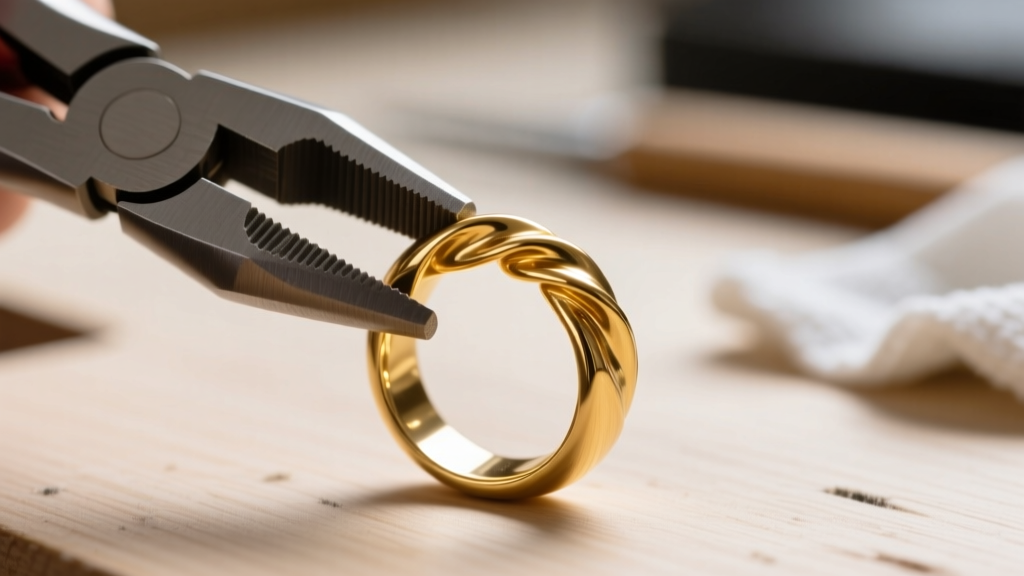
Step 1: The Lateral Twist Technique
Never pull the ends of a nose hoop outward away from each other. This stretches the metal, weakens the molecular structure, and permanently warps the ring. Instead, use the lateral twist method:
- Hold the ring firmly with your non-dominant hand, placing your thumb and index finger on either side of the seam.
- Take your smooth-jaw needle nose pliers and grip one side of the seam gently.
- Push the pliers laterally (to the left or right), twisting the metal so the ends slide past one another horizontally.
- The ring should open like a spiral staircase, maintaining its perfect circular shape from the front view.
Step 2: Inserting and Closing the Gap
Once the jewelry is threaded through your piercing, you must close it flush. A gap that is too wide will catch on hair and towels; a gap that is misaligned will scratch the fistula.
- Twist the ends back horizontally until they meet.
- Switch to your nylon-jaw pliers. The soft nylon pads will grip the metal without scratching it.
- Gently squeeze the seam to ensure the ends are perfectly flush.
- Run your fingernail over the seam. If it catches, use the smooth-jaw needle nose pliers to make micro-adjustments until the transition is completely seamless.
Protecting Delicate Materials: Titanium and PVD Coatings
Modern nose jewelry relies heavily on advanced metallurgy. Understanding how your tools interact with these materials is a cornerstone of safe jewelry maintenance.
ASTM F-136 Implant-Grade Titanium
Titanium is the gold standard for fresh and healed piercings. It is lightweight, hypoallergenic, and can be anodized to create vibrant colors. However, titanium is softer than surgical steel. If you use excessive force with standard needle nose pliers, you can easily flatten the wire, ruining the roundness of a 16-gauge (1.2mm) or 18-gauge (1.0mm) hoop. Always use padded or smooth-jaw tools and apply slow, steady pressure.
PVD Coated 316L Steel
Physical Vapor Deposition (PVD) creates a stunning, durable gold finish over steel. While PVD is harder than traditional electroplating, it is still a microscopic layer. Gripping PVD jewelry with bare metal pliers will cause micro-fractures in the coating, leading to flaking over time. Always wrap the tips of your pliers in heat-shrink tubing or use dedicated nylon-jaw pliers when working with PVD pieces.
'The biggest issue we see in the studio is clients bringing in warped, scratched seamless rings that they tried to force open with bathroom vanity pliers. Taking ten seconds to wrap your tool tips in Teflon tape or using proper smooth-jaw pliers saves hundreds of dollars in ruined jewelry.' — Senior Piercer & Studio Owner
Troubleshooting Common Nose Ring Plier Mistakes
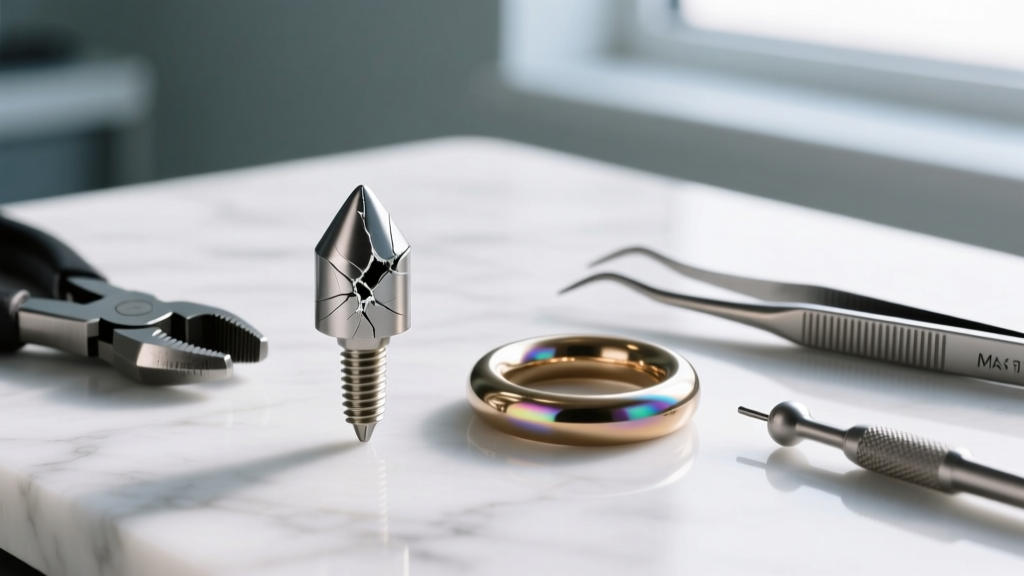
Even with the right tools, mistakes happen. Here is how to troubleshoot the most common issues encountered during needle nose pliers jewelry adjustments, as recommended by expert jewelers at Halstead Jewelry Tools.
- The Ring Became Oval-Shaped: You pulled the ends outward instead of twisting laterally. Fix: Place the ring on a steel ring mandrel and gently tap it with a rawhide mallet to restore the circular geometry.
- The Seam Won't Close Flush: The ends are misaligned vertically. Fix: Use two pairs of smooth-jaw pliers. Grip both sides of the seam and apply gentle opposing vertical pressure until the ends align perfectly on the same plane.
- The Plier Jaws Keep Slipping: The metal is too smooth or the angle is wrong. Fix: Never squeeze harder, as this will launch the ring across the room. Clean the jewelry with isopropyl alcohol to remove skin oils, and ensure you are gripping the wire flatly, not on a curved edge.
- Segment Ring Cap is Stuck: The O-ring or segment cap on a captive bead ring is jammed. Fix: Do not pry it with the tip of a needle nose plier. Use specialized ring opening pliers to expand the ring's diameter by just 1mm, allowing the cap to drop out effortlessly.
Final Thoughts on Tool Hygiene and Care
Before your pliers ever touch your nose jewelry, they must be sanitized. Wipe down the jaws of your smooth-jaw and nylon-jaw pliers with 70% isopropyl alcohol. Furthermore, ensure your hands are washed and the jewelry itself has been sterilized or cleaned with a sterile saline solution. By combining proper tool selection, the lateral twist technique, and strict hygiene, you can safely manage your nose piercing jewelry collection at home with professional-level precision.


